Subscribe to my Substack

Wednesday, June 23, 2021

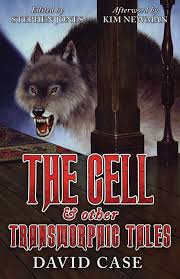
Peerless David Case: The Cell & Other Transmorphic Tales

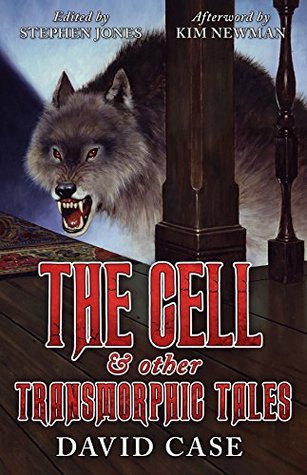
The Cell & Other Transmorphic Tales by David Case

(Valancourt Books 2015)


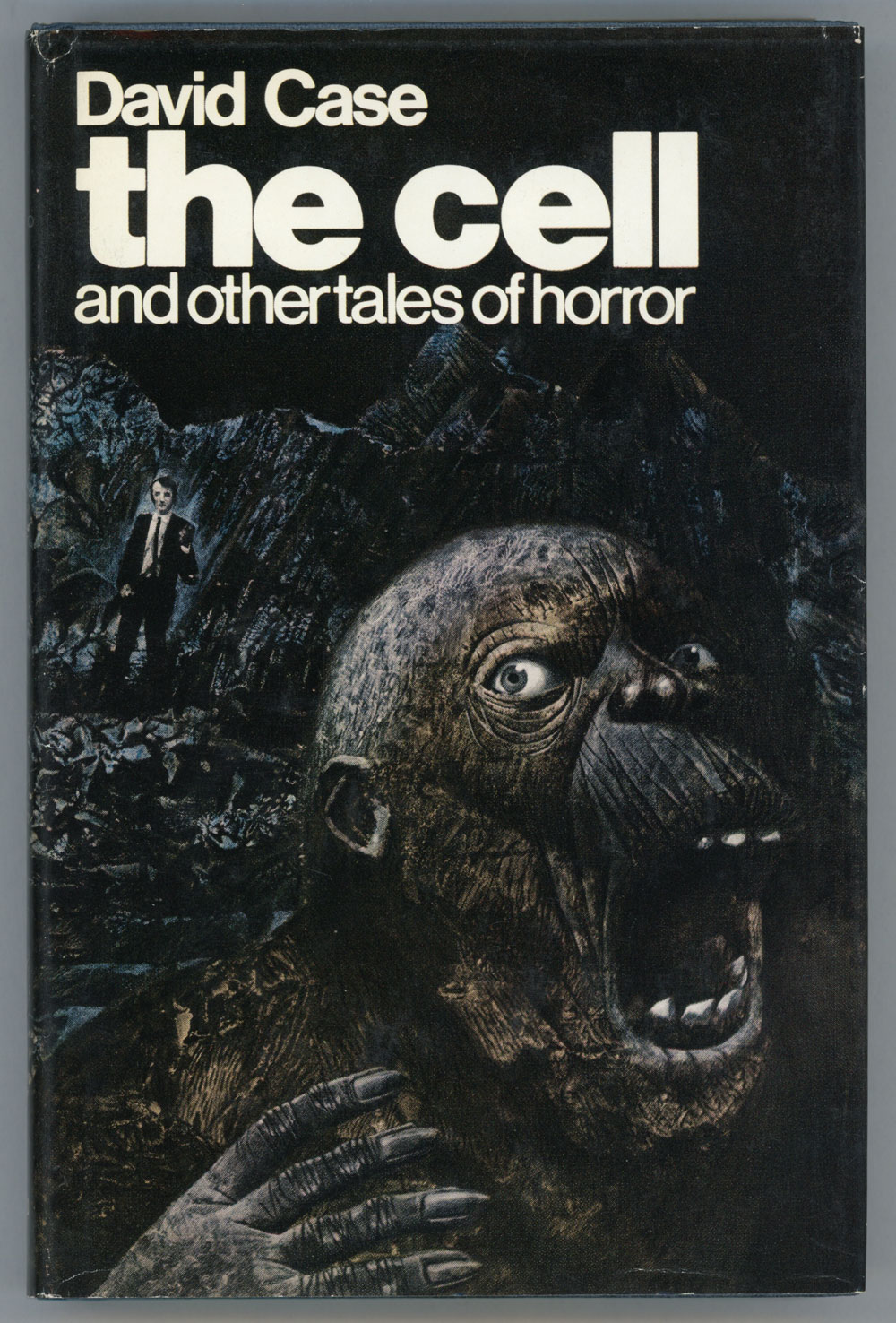
The Cell (1969)


The diary of a madman? Of an underground man? Of a married man stricken with moon madness who kills women when possessed by the idea that he suffers an ancestral lycanthropic curse?


Case's novella brilliantly balances everything folklore, psychiatry, and genre woodcraft could bring to a document found in a deserted house. This is a misanthropist's memoir condensed into an ingot of blackest antihumanism.


....He was in the yard, by the woodshed. He saw me coming and picked up a stone and began to yell tauntingly, calling me unmentionable names. It enraged me to hear him use those foul words, and I knew for the first time how truly evil he was. I didn't understand why I had tolerated him before, how I could have let such a wicked person annoy me. I wanted to punish him for annoying me but, more strongly, I wanted to punish him for being a deplorable creature, a foul-mouthed and evil-minded creature. He had to be taught a lesson.

     I walked right up to him. He continued to taunt me until I was quite close, and then he must have realized with his slow, dim mind that this was not the same as the other times, because he began to back away. I went after him, walking slowly. When he threw the stone it struck me in the face, but I hardly felt it. He ran backwards to the woodshed and I moved between him and the house. I remember how his eyes darted around as he looked for help, for a path to escape. I was much bigger and stronger than him — I was bigger than anyone else of my age at school — and he became very frightened. His fear did not satisfy me; for some reason it made me all the more anxious to punish him . . . I felt he realized that he must be punished, that he knew he was evil and, if he were not punished, he would think that it was all right to do as he did. I would not have that. I went at him and he tried to run, but I am very fast and nimble even now, and in those days I could move like a cat. I caught him with both hands. I caught him by the neck and threw him down on the ground. He tried to kick me but I brushed his feet aside and fell over him. He hit me in the face with his small fists but it was less than an insect sting. I got my hands very firmly around his neck and began to punish him. I intended to punish him greatly, in proportion to his sins. I squeezed, and his eyes got very large and that made me feel satisfied. Or almost satisfied — as if satisfaction were on the way, and the harder I squeezed the more rapidly it came. It seemed to run up from my fingertips to my shoulders, and then diffuse throughout my body. He stopped hitting me. His small hands were wrapped around my wrists, but they could do nothing. I put all my weight into my arms and pressed.

     It was then that the savage brute attacked me.

     I had not seen it sneak up behind me. It was sly and vicious and the first that I was aware of it was when it pounced at me. I had to release the boy, and the dog and I rolled over. It was a powerful creature, but it was no match for me in an equal struggle. I got over it and got my hands under its collar and twisted. I turned the collar right round, choking the brute. It had torn my forearm with its teeth and the blood ran down my arm and splattered over the dog. The sight of the blood drove me into a frenzy. I realized then how dangerous that animal was, and how necessary it was that it should be destroyed. I twisted the collar around again and it bit into the hairy throat. The tongue slid from its muzzle and I banged its head against the ground so that its own teeth buried themselves in that laughing tongue that was no longer laughing so slyly. The look in the creature's eyes was delightful! It knew that it was going to die then. It knew that it was going to pay for its viciousness, and the eyes rolled and bulged out like two yellowish hard-boiled eggs. It made me laugh to see that, but I did not laugh so much that I had to release my grip. I did not let the dog go until it was very dead.

     When I stood up finally I saw that the boy had recovered and run away. He must have gone into his house. I would have followed him, but for some reason I no longer hated him. Perhaps I felt that he had been punished enough. I was sure that he would torment me no more. The dog was like a limp and oil-stained rag in the moonlight and I felt very good. A good job well done. I felt warm and satisfied and I turned and walked home. My arm did not begin to hurt until later.

     In the morning the boy's father came to our house and talked with my father. After he had gone my father spoke to me. He seemed angry. I explained to him that it had been self-defence, and that the beast had tried to kill me, but he had the strange idea that I had attacked the boy first, and that the dog had died protecting its master. Even my father was fooled by that common lie about dogs being faithful and true, and I could not make him understand. I showed him the slash in my forearm, but it made no difference. He seemed to really believe that I had tried to kill the boy, ridiculous though it seems. But that was the only time that my father was ever unjust, and he forgot about it after a while.

     And no one ever taunted me or threw rocks at me again.


*     *     *


Strange Roots (1971)


A doorslamming romp, perhaps by Billy Wilder or Howard Hawks? Case is in his element here: droll third-person narration in which the reader can see he's enjoying himself.


Our scientist hero Anton administers an experimental glandular derangement serum to his wife. After a night of mutual nibbling with her lover, the tables turn.


....Together they looked out at the moon. It was very bright, a silver disc behind shredding clouds. There were a few stars. Anton stood quietly for a time. Beta seemed tense beneath his hand. Usually, at the slightest touch, she took it as encouragement and began to squirm. But now she was still and taut. He wondered what occupied her thoughts — told himself, with a twinge of sadness, that she must be thinking of her lover. Then anger replaced the anguish. She would think of him, perhaps, but she would never again rest in his arms. She would never again come home flushed and weary with love, her pure throat blemished with those marks of passion . . . 

     Anton stiffened.

     Those marks of love . . . 

     His mouth dropped open, his heart stopped for a moment and then thundered. His terrible oversight came cascading into his mind. If Beta had infected her lover and he, in turn, had kissed her in that manner . . . afterwards . . . when his glands were already secreting the hormones . . . 

     Anton looked down at his wife.

     She sat very still. He saw only the side of her face. But he saw her hand, as well, and her hand was hooked over the edge of the armrest. Hooked like a claw. The veins stood out in the back of her hand and ran in pronounced ridges up her forearms. Anton stepped back. Beta did not move. Beta was looking at the moon. The moonlight fell over her face. Anton walked backwards to the door, his eyes fixed upon her. She did not move at all. He reached behind his back and grasped the doorknob. But the door was locked. The key was in the desk and the desk was in the center of the room. Anton stood there for some time, unable to advance. And then, with the fibre of his body blurred by terror, he started to tiptoe towards his desk. He made no sound. But he had not yet reached the desk when his wife stood up. She stood up quickly and stiffly, facing the window. Anton halted. He had not reached the desk. He stood motionless and looked at his wife and she stood motionless and looked at the moon.

     And then his wife turned around.

     What had once been his wife turned around.


*     *     *


Among the Wolves (1971)


"Among the Wolves" is a crackerjack thriller, a novella with the amplitude of a novel by Geoffrey Household or David Morrell; I do not make that comparison lightly, and those who follow my posts know I prize Household and Morrell only slightly below John Buchan.


"Among the Wolves" begins as a forensic crime story about weird murders where the perpetrator is clearly aping wild animal killings. But by turns it journeys into a ferocious recounting of a scientific expedition to the Canadian North, and there we enter into an aleatory stream of atavism and transformations of consciousness through primal crsis.


Claymore, relating his showdown with the Wild in the wild, concludes: "I was more than a man, because I had become less and it was more than a leg that I cut away."


*     *     *


A Cross to Bear  (1981)


A trio of retired gents meet to exchange... anecdotes. On this occasion, it is a Conradian tale from the heart of darkness.


Case is a beautifully facile stylist, perfectly at ease with first and third person, tales within tales, and reanimating the hoariest old cliches. There's no finer example than this story. Superb. 


"As soon as we drew up to the wharf, we could tell that there was trouble. It was a tense scene — so tense that no one had even seen us approach. The villagers were banded together in a sullen group with the headman at the front and Stanford was facing them, obviously furious and gesturing at heaven and hell. He was shouting in English and stamping his foot to accent the incomprehensible words. Sam and I stood at the rail and we were both struck by various small changes in the village. The plantation was almost completely overgrown now and tentacles of jungle reached to the palisade. A roof had been erected over the altar Stanford had made, much sturdier than any of the other buildings, and the bell was suspended over this roof in a little wooden tower. All the women wore cotton dresses, and wore them correctly, covering their breasts. But these impressions registered superficially in our minds, for we were concentrating on the strange tableau in the clearing. We didn't know what to do. The boat nudged and bumped against the makeshift platform, causing us to sway and grip the rail. I don't know how long we remained there but at length someone saw us and pointed. The headman looked in our direction and then Stanford turned, his face dark with rage. He squinted for a moment, then seemed to realize who we were and with a final violent gesture directed at the natives he came running towards us. His face was streaked with sweat and dust, the first time I'd seen him less than clean, and his features were contorted. He pounded over the planks and grasped the rail with one hand.

     " 'Thank God you've come,' he gasped, tilting his head back to look up at us. 'You're just in time.'

     " 'In time for what?' Sam asked.

     " 'To prevent sacrilege.'

     "I told him to calm down and explain, but he wouldn't listen. He kept saying that we must hurry and that we were to bring our firearms. Well, that surprised us. We remembered, you see, how he hadn't wanted us to use our rifles even in self-defence and so we assumed this must be something very bad indeed. He had both hands on the rail now and was shaking the boat frantically, and shouting for us to hurry before it was too late. Well, we didn't like to take the rifles into the village, but what could we do? It was all so sudden, and we hadn't any idea what it was all about. So finally we got the two carbines and followed Stanford up to the village. We were very careful to keep the weapons pointed at the ground but all the natives moved away, looking at the guns with big eyes. They knew what guns could do . . . knew they were the militant arm of Christianity. As the crowd broke up we saw the old witch doctor, squatting over some bones and feathers in front of his hut. He glanced up at us and glowered, then dropped his face and spat fiercely and concentrated on his incantations and charms.

     "Stanford led us past the makeshift church and paused at the door of his own hut. He looked in and took a deep breath, then stepped back and pointed into the interior. I moved to the door and looked in. Sam looked over my shoulder and I heard his breath rasp sharply. It was not a pretty sight. A mangled body never is.

     "It was a young fella, quite dead of course. The body was stretched out on the floor and someone — obviously Stanford — had made an attempt to position the limbs in a peaceful attitude. The hands were folded over the chest and the eyes had been closed. But somehow this attitude only added to the horror. It seemed a mockery to have positioned such a horribly mutilated body in that manner. The throat had been torn out, the torso was shredded with ghastly wounds and I saw the white arch of his ribcage — unbelievably white — through the gashes in the dark flesh...."


*     *     *


The Hunter  (1969)


"The Hunter" is a brilliantly conceived and very modern handling of the subject of manliness as the most dangerous game. Retiring Wetherby and adamantine Byron are the players facing-off is; it is play for mortal stakes all along the line.


That among the half dozen main characters there might be a marauding Dartmoor werewolf is just an extra joker for our players to contend with.


It's all about codes and subtexts, and Case executes his observations like a master.


     "I thought you'd be around," Byron said.

     His grip was as firm as ever. Byron hadn't changed at all, he was as timeless as his home. He was tall and lean, an immensely powerful man with the long muscles of endurance defined without bulk. His face was weathered leather and his eyes were bright with life; his hair was clipped short and his clothing was ancient. He rested the axe against the ground and leaned on the handle.

     "So Bell has persuaded you to join the witch hunt, eh?"

     Wetherby smiled and shrugged.

     "I rather thought you might. I'm pleased to see you haven't lost the urge to action."

     Byron's eyes moved up and down, and Wetherby had the uncomfortable thought that he was being critically inspected. He puffed on his pipe and stared back. Then Byron laughed and clapped a big hand on Wetherby's shoulder and they walked back up to the house.

     "I'm surprised you declined the offer," Wetherby said.

     "Oh, I have other interests. I haven't stopped living yet, John. I'm planning a South American trip early next year, as a matter of fact. Interested?"

     "No, I'm still retired."

     Byron shook his head. They went into the house and down a cold and impersonal hallway with an atmosphere like a National Trust castle. They turned into a huge room hung with trophies. A wood fire was burning fiercely and the comfortable leather chairs drew the light deeply below the polished surface. They sat by the fire. Wetherby noticed the Kodiak bear he had watched Byron bring down with a single shot from a gun which was far too light for the job. It was mounted upright in the corner, its gigantic head snarling some nine feet above the floor, and Wetherby felt again that awe of a man facing that monster with one bullet in a .30-06.

     "Drink?" Byron asked.

     "I'd like some coffee."

     "Grant!" Byron barked.

     A man appeared at the doorway. His clothing was, if anything, more ancient than Byron's, his hands large and gnarled and his face etched with deep lines. He had a twisted leg.

     "Bring some coffee," Byron said.

     The man nodded sullenly and moved off, his leg wheeling after him.

     "My servant," Byron said.

     "I thought you disapproved of servants?"

     Byron shook his head.

     "No, I disapprove of servile men. Grant is a most inefficient servant, but he isn't servile. He used to be a Cornish tin miner, a man who has experienced life to the limits. Restricted within those limits, of course. I hired him because he almost beat me hand wrestling."

     "What?"

     "You remember the game, surely?"

     Byron raised his forearm, hand open and fingers extended upwards, and made a pressing motion across his chest. Wetherby nodded.

     "Oh, that. Yes, I remember."

     "We had a contest once."

     "You beat me."

     "Yes. It's not a game I lose. But it took seven minutes by the stop watch before I put your arm down, and I gained a great respect for you, John. I put Grant down in five minutes, by the way. Can you still hold your own?"

     Byron placed his elbow on the table; he looked expectant, almost hopeful. But Wetherby laughed and shook his head, and Byron sighed.

     "You look fit enough."

     "I'm all right," Wetherby said.

     "A pity you've given up life."

     "Just moved on to a different life."

     "Oh, it's the same thing," Byron said.

     "You can't expect everyone to agree with your ideas."

     "Never mind. What of this man-killer? What do you think?" 

     "I don't really know. You've heard that it killed again last night?"

     "Yes. I heard."

     "I came down from London with Bell just afterwards."

     "You saw the tracks?"

     "Yes. They looked vaguely familiar."

     Byron leaned back in his chair.

     "Couldn't you identify them?" he asked.

     "No, I believe I've seen similar tracks before, but I couldn't place them."

     "You should have been able to, John. Ten years ago you would have."

     Wetherby didn't like that.

     "Bell told me you didn't recognize the casts," he said.

     Byron smiled, started to speak and then shrugged.

     "Well? Did you?"

     "Oh, casts are a different thing," he said. "I dare say I would have recognized the tracks themselves."

     "But you couldn't be bothered."

     "Exactly."

     Wetherby wanted to say more. Instead he refilled his pipe. It was hard to know just how much to say to Byron. Grant returned with the coffee on a silver tray, swaying from good leg to bad with a curiously rapid gait. He banged the tray down on the table. The coffee spilled into the saucers, hands accustomed to ravaging the earth were not suited to the more delicate tasks of a servant. He swivelled about and clumped out of the room without speaking.

     "I'm sure you'll be able to track this animal, anyway, John," Byron said. "You won't have lost all your skill."

     "I didn't this morning."

     "Oh, you'll probably have another chance."

     Wetherby stared at him.

     "Well, if an animal kills twice, it's a good bet it will kill again, eh? I'm just being practical."

     "You think it is an animal, then?"

     "Undoubtedly."

     "I suppose so. But what animal could have severed the heads that way?"

     "It should prove interesting, finding out."

     "Interesting? My God, Byron. Two men have been brutally killed. This isn't a pleasure trip."

     Byron sipped his coffee placidly.

     "Hunting should always be a pleasure, John. You know that. If it's necessary, that should merely add to the pleasure. And if it's dangerous, all the better."

     "I am rather excited about it," Wetherby admitted.

     "And it could be dangerous," Byron said.

     "Well, it certainly has the ability to kill a man."

     "What gun are you using?"

     "I have the Winchester with me."

     "Too much gun," Byron said. He sighed and sipped his coffee. "You've seen the tracks, it isn't a large animal. You always did tend to carry too much firepower. It makes a man careless about his shooting."

     "But it will stop it," Wetherby said.

     "Oh, it will do that. If efficiency is what you look for. And if you hit it, of course."

     "I'll hit it. I haven't lost everything."

     "That's good. How do you propose to find it?"


*     *     *


Jay

23 June 2021


Sunday, June 20, 2021

[Review] The Ghost Stories of Oliver Onions and the case for "Tragic Casements"

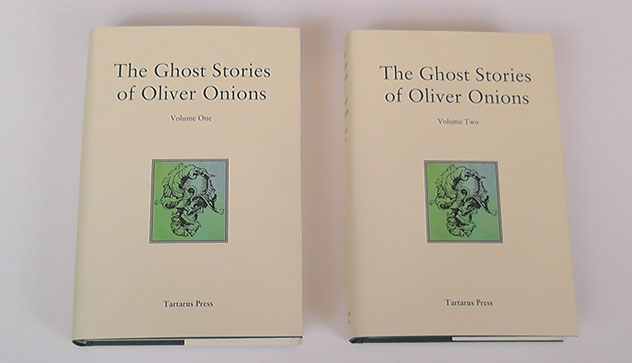
Tartarus Press has just released a new two-volume edition of their The Ghost Stories of Oliver Onions


I have written previously about Onions here.


The new edition features the first publication of the novella "Gambier." No date is provided for the story, but in her introduction editor Rosalie Parker says it is an early work. 


Parker goes on to say that "Gambier" will "be of interest to enthusiasts of Folk Horror." It certainly has elements that Folk Horror has gone back to claim: an isolated rural setting; old ways that are peculiarly maintained.


"Gambier" is the first person narrative of a new-minted country doctor, John Wilson. It begins:


Few, even, of my friends, have looked on me as a man whose nerves are lightly set a-start; and for this, I fancy, I have to thank a certain heaviness and immobility of countenance, together with a bigness of frame, not generally associated with high-strung natures. And, indeed, my training as a doctor of medicine has ridded of all terrors for me such things as deathbeds, wounds, and the like, regarded by most folks as dreadful. Nevertheless, I confess here that this big, bragging body of mine holds a spirit sometimes bold (I hope), but sometimes timorous as a child's. And in particular, I have always been extremely sensitive to that kind of Spirit of a Place, be it gay or gloomy, which has its commonest manifestation in the desire folks have to cast themselves from heights, as if an imp within them urged them to their end.

     The most remarkable instance of this sensitiveness that I can remember happened to me in the year 1778. I am able to give the month, from the fact that I was at the time hastening, fresh from college, to take up my first practice, that of my friend James Rewell, who had lately died; and it would be the first or second week in September. As the incident is all of a piece with my story, I will begin at that point.


Wilson finds that the village of Wastley is ruled by Father Gambier, and that the area was untouched by the Reformation and Cromwell's rule. 


"Gambier" presents the struggle between Wilson and a few local allies against Gambier's personal dictatorship. It is a no-quarter-given battle between the two men: a battle of wits and brute force with plenty of shocking and bloody violence. I have only read Onions' supernatural fiction, and "Gambier" has an eloquently ferocious tone that the reader of stories like "The Beckoning Fair One" and "The Cigarette Case" will be completely unprepared for.


*     *     *


In her introduction to the new edition, Rosalie Parker writes:


Selecting the stories for this volume has been a positive joy. We have been able to adopt a policy of inclusivity wherever possible, but, in order to maintain the quality of the collection, four stories which might have been included have been omitted. These are 'The Master of the House', a mystery novella included in the original Collected Ghost Stories of 1935, 'Two Trifles' ('The Mortal' and 'The Ether Hogs') and the recently rediscovered 'Tragic Casements'.


(The missing stories are available in The Dead of Night: The Ghost Stories of Oliver Onions [Wordsworth, 2010].)


The omission of "Tragic Casements" is a serious mistake. While the story does not have the scope or aesthetic authority of earlier Onions tales, it is an accomplished story of supernatural horror, well-organized and finely executed. On these strengths, and as a rarity, it deserves inclusion in any Onions collection that hopes to present the scope  of the author's career. (Especially when the collection has two volumes of space to work with.)


Jay

20 June 2021


Saturday, June 19, 2021

"Pelican Cay" by David Case

     Larsen grabbed my arm and maybe he said it to impress the urgency on me, or to frighten me, or maybe he just felt like saying it. He said: 'None of us may get out of this, Harland ... we may never leave this island. And, believe me, it won't be a tropical paradise then...'


Zombie apocalypse


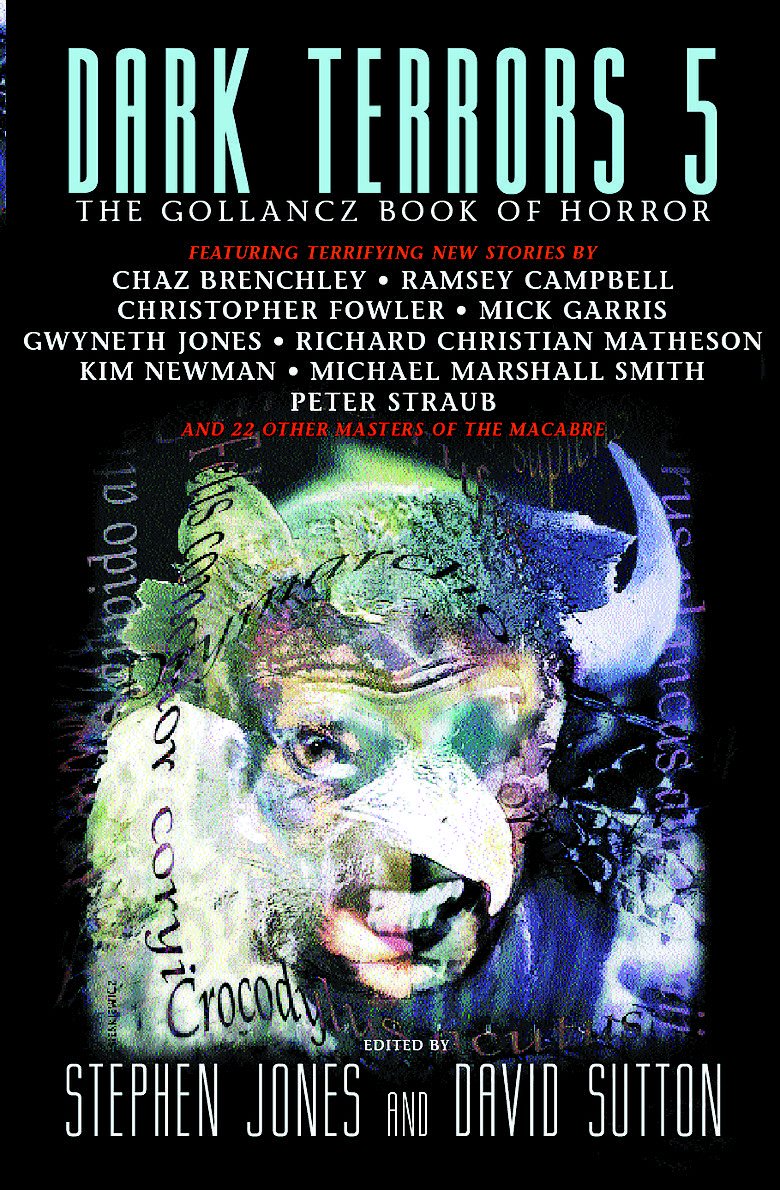
"Pelican Cay" by David Case, written in the eighties and published in Dark Terrors 5: The Gollancz Book of Horror in 2000, is all that the Fulci/Romero-verse daydreamer could wish. 


'How long does it take?' I asked.


     Larsen and I were alone behind the table. The guard on the door had his back to us, hands clasped, looking down the corridor. No one had been brought in for the last ten minutes.


     'What?'


     'For the disease to take effect?'


     'That's not. . .' He paused, leaning towards me so that his face came into the light as if he now were being identified, waiting for my dreaded nod. 'Oh, hell, it's a bit late in the game to play classified information, isn't it? I appreciate your help, Harland. The time ... it varies according to the subject's weight and metabolism and, to a lesser degree, the body area where the...infection...was transferred. Say an average of...three hours.'


     'That soon?'


     'That soon,' he said, playing with the lamp, manipulating the shadows, twisting the flexible neck from side to side in his strong hands. I felt the same need to do something with my own hands. I got my pipe out and began to fill it carefully. He twisted the lamp and I stuffed tobacco in the bowl and lit it. A great cloud of smoke billowed out and hung over us. I remembered how Larsen had spoken of the cloud of guilt that often enveloped him. The drifting smoke made filigreed shadows up the wall. The shadows moved; they were not as enduring as guilt.


     He was fairly strangling the lamp.


     'It must be very virulent,' I said.


     'Of course. Harland, it's a disease such as the world has never known. A disease that never should have been known...and we created it here.'


     'What is it? Viral?'


     'Chemical.'


     Chemicals that warp the fabric of the mind ... I said, 'Chemical? But how can that be contagious?'


     Larsen dropped his head, twisting his own neck just as he'd twisted the lamp. He said, 'I don't know. But it is.' The light, reflecting from his taut face, seemed to come from within his skull. 'It's directly infectious, by contact. It's not...well, it's not the Black Death, say. It won't sweep across the world and decimate the population. Thank God for that. And yet, in its way it's far more horrible. It's so—' he sought the word '—so personal! Yes, that's it, exactly. Personal.' The word itself seemed anathema to this bureaucratic man. 'It goes beyond disease, Harland; it reaches into the realm of superstition and snatches up the stuff of legend, the dark fears that evolved with man. Werewolves, Harland...and vampires...' His face rose and fell as if under heavy blows. He looked sick. He said, 'These men...the man who contract this thing...officially, in the reports, they are termed subjects of Chemically Modified Behaviour. Informally...' he looked at me. 'We call them ghouls.'


     I winced.


     He said, 'An ugly word, and not just terminology. Yet when you've seen them ... it is a word that caught on quite easily, amongst the guards and attendants, at first...until even the doctors use it. I use it. You...' He looked at me with a hint of a smile. 'You, no doubt, will use it in your story...'


     'You know who I am, then?'


     '...if you ever get to write it.'


     No threat was intended in his words - no threat from him. I puffed and smoke flowed laterally across the table, crossing the lamp like clouds shredding before the face of the moon.


     I said, 'How soon must the antidote be administered?'


     Larsen looked as if he didn't understand the question. His thin lips drew back from his teeth and he snapped the light off. From the sudden shadows, he said, 'Not my field ... I only know we have to have them before the damned thing takes effect. And...' he looked at his watch. 'I don't guess we're going to do it.'


     He stood up and moved around the end of the table.


     'I have things to arrange,' he told me. 'Will you wait here? They may bring a few more in before it's too late.'


     'Of course,' I said.


     He nodded and walked out. The guard saluted. I heard his footsteps drum hollow down the corridor and I didn't envy him his task...the arrangements he must make.


Jay

19 June 2021


The Hunter by David Case (1969)


David Case is a new writer to me, and I look forward to reading more of his work.


I begin with "The Hunter" (1969), a story about murders on Dartmoor. Accumulating evidence points to a killer stalking prey on two feet, then making the kill on four.


The main duel in the tale is between two seasoned big game hunters: complacent and retiring Wetherby and his old friend Byron, a man for whom the hunt is performative life philosophy and a constant measure of worth. For Byron it is a measure against which Wetherby and every other man comes up short.


Case provides a deep roster of interesting characters: police inspector Bell, reporter Rose, and Grant, publican and owner of The King's Torso.


It's a rich story, treating the material with all the resources of complication, characterization, and atmospherics normally employed in a novel. Case has plenty of time for touches like this:


Wetherby smiled faintly. They had come to the turning on to the lane, and followed it along between the hedgerows. An old man on a bicycle pedalled past, going home earlier than usual from the pub. No one stayed out late now. They walked on in silence until they were at The King's Torso.

     "Want a drink before you start?" Rose asked.

     Wetherby looked at the sky. There was still some light low in the east—as good an excuse as any for delaying.

     "All right," he said.

     There was only one customer in the pub—Grant the ex-miner, sitting in the corner with a pint of beer. He didn't look at them as they entered, his eyes were turned to the past, towards the bowels of the earth. Rose had a whisky and Wetherby drank a brandy. It tasted good, and he wanted another, but he knew that would not be wise. There was no light left in the east and he set out with forced determination.

     "Good man, that," Rose said.

     "Hasn't done Hazel Lake much good," Bruce said.

     "Who has? He's trying."

     "Yeah, I guess that's right. If I had a gun, I'd get out after it myself. Don't have a gun. Read your story in the paper on Sunday. Load of old rubbish, you ask me."

     Rose didn't argue.

     "Werewolves! Ain't no werewolves. Leastwise, not in England. Might be an immigrant, though, you can't never tell. Or some animal that was sneaked in to avoid quarantine."

     Grant looked up. His eyes were deep set in curiously hollow sockets, as if he had come to resemble the holes he had gouged in the earth.

     "It's no animal," he said.

     His voice was hollow, too, as though he carried his own echoes in his throat.

     "What do you think it is, then?" Bruce asked.

     "They're making a mistake, looking for it above the ground. That's all I'll say."

     "You think it lives in a cave?" Rose asked, looking for an angle.

     "Not a cave. In the earth. None of you ever been down in the earth. You don't know. No one knows, if he's never been down in the earth. There are strange things there."

     "Like what?" Rose asked.

     Grant looked at his empty mug.

     "Will you have a drink with me?"

     Grant nodded sullenly, taking no favours. He came up to the bar. Bruce filled his mug.

     "You were saying?" Rose prompted, jotting the price of a pint on his expense account.

     "Eh?"

     "These subterranean creatures?"

     "Oh, aye. Strange things. You can hear them moving in the shafts and tunnels. And in the rocks, too. They know how to move along the veins. Strange, slimy creatures, oozing through the earth. And stink! You can smell 'em for days after they've been in a tunnel."

     "Have you ever seen one?"

     "Not me. Once a man's seen one . . . they got him!"

     He grasped Rose's jacket suddenly, pulling his face close and hissing the final words. Rose leaped in his strong hands.

     "Once they got a man in their slimy claws, you never see him again. They suck him back into the rocks. Just like that. Slurp and he's gone. They hate men, because men have come down to their home, you see. Men disturb them with explosions and drills, and they get even by causing cave-ins. We wake them up, tunnelling through their level, and they don't like it. Oh, we know all about them. We know."

     "Why haven't the miners told anyone about these things?"

     "We have. But it's all hushed up, you see. The mine owners won't let it get out. They're all in league with the politicians. If people knew what lurks down there, well pretty soon no one would become a miner, see. They're bloody clever, those mine owners. They don't give a damn how many men get slurped into the rock."

     Grant stared intensely at Rose. Rose wriggled free from his ■hands.

     "You think this killer comes from under the ground, then?" 

     "Where else could it come from? Eh? Where else? It figures, don't it? We dig down there, and pretty soon they were bound to start coming up here. And there are thousands of 'em, too. Millions, maybe."

     "Are there any recorded instances?"

     Grant smiled crookedly. He had said enough for one beer. He went back to his table without reply.

     "You don't want to take no notice of him," Bruce said. "Crazy. Works for that mad bastard Byron, so I guess he's crazy, too. Contagious, maybe."

     "Byron is surely unbalanced."

     "Yeah. The bastard."

     Rose sipped his drink contemplatively, his narrow shoulders twitching. He contemplated a subterranean approach in his next article, looked absently towards the window and started. He had suddenly realized that it was dark, and it startled him. It was a considerable walk back to the hotel, and Rose was a man who had never taken a chance in his life, who worried about the statistical chance of being struck by meteors as much as he did motor-cars. He was amazed that his preoccupation, even with the pursuit of success, had left him in his position.

     "I'd better be off now," he said, sliding from the stool.

     "Say, you on foot?" Bruce asked.

     Rose nodded unhappily.

     "Well, you better be careful."

     "Yeah. I'll hurry."

     "Don't do no good to be careful," Grant said.

     Rose looked at him nervously.

     "You won't see it coming. That's 'cause it don't come at you on the ground, see. It can suddenly pop up right under your feet. That's the way they get you. Pop! Just like that. One minute you're all alone, the next it's got you. Slurp! And down into the ground you go. It's a horrible death."

     Rose shuddered as he went out....


Jay

19 June 2021


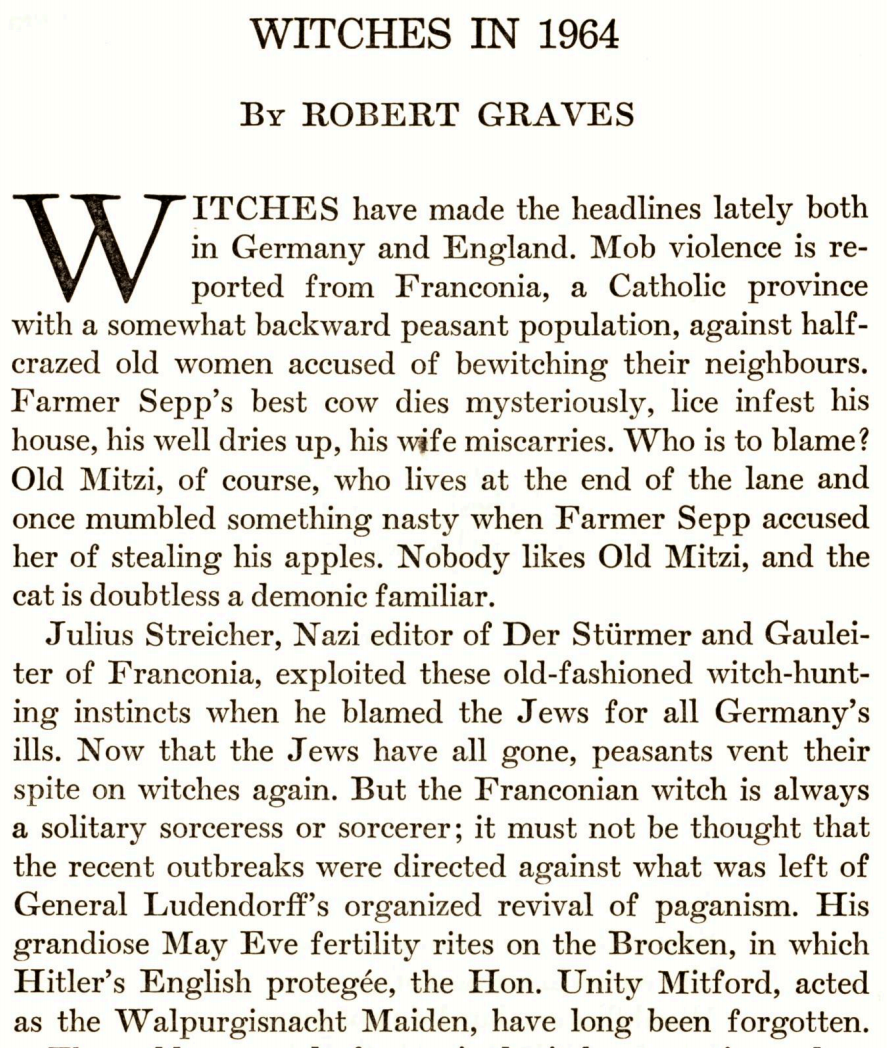
"Witches in 1964" by Robert Graves

Graves gives us a long, telescoped view of witches in this 1964 article from Virginia Quarterly.


Readers interested in the works of writers like Margaret Murray, M. R. James, Montague Summers, and Charles Williams will find the piece interesting. 


Graves was writing in 1964, before the recrudescence of witchcraft in the late 1960s as a form of atomized petty bourgeois "dropping out."


Jay

19 June 2021


Monday, June 14, 2021

A Fortean cowpat

As a reader (and devotee) of Blackwood and Machen, I have a serious (if amateur) interest in woodland Forteana. 


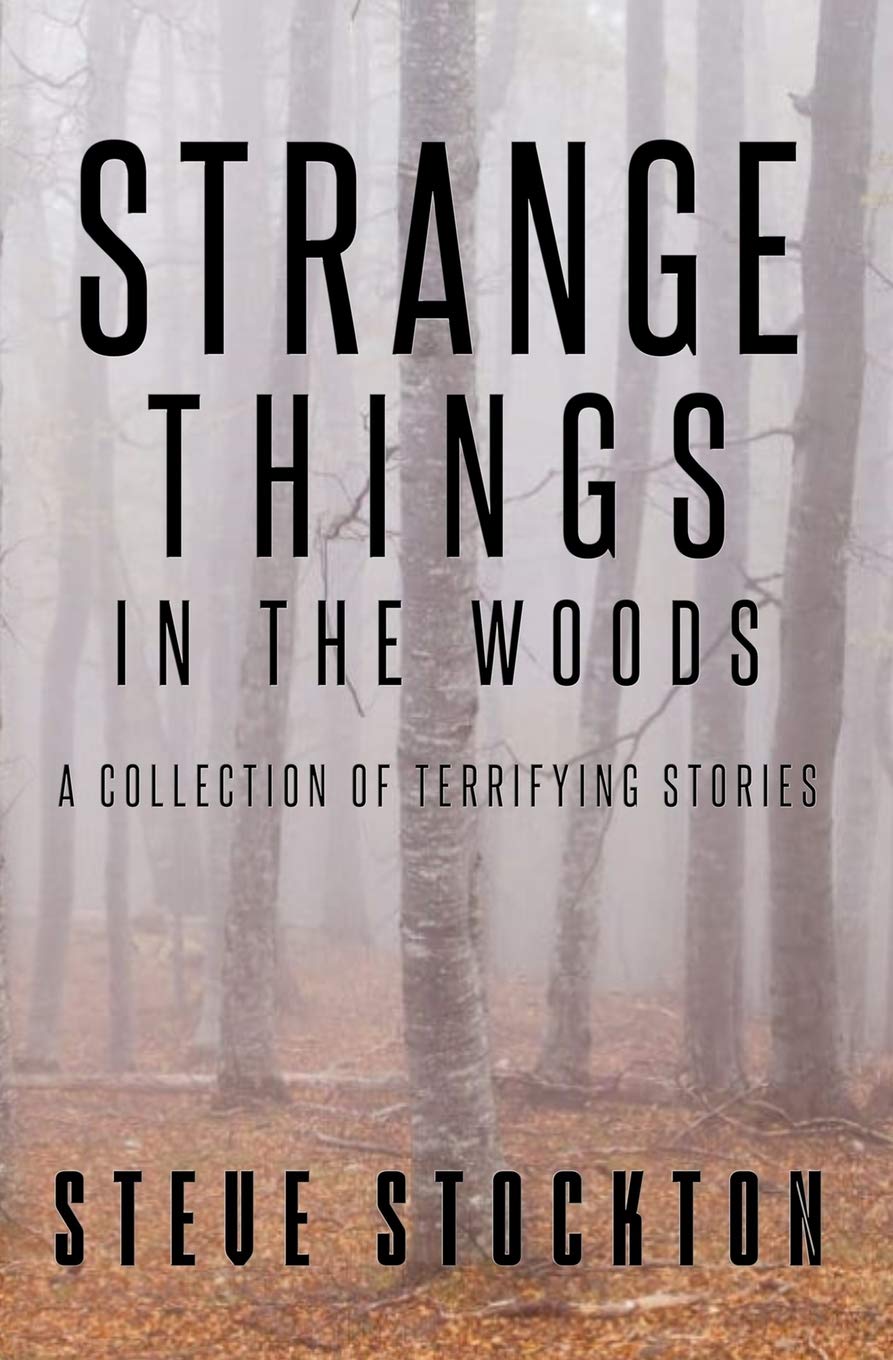
Steve Stockton's Strange Things in the Woods (2020) is a collection of experiencer anecdotes from kids, hunters, hikers, and others who saw, heard, felt, smelled, or fled from something strange in the woods.


     This one is both funny and weird, but it happened anyway. Some friends and I were messing around in the woods, miles from anywhere, when we came upon an old barn. There had been a dairy farm in this particular place decades ago, but the river had been dammed up to make a lake, and now everything except for the barn and accompanying silo was under a dozen or more feet of water.

     The barn looked like it was about ready to fall over, but being adventurous boys with more curiosity than good sense, we decided to explore it anyway.

     We went inside, but there wasn't a lot to see—not much excitement in an old abandoned barn. I figured we should leave, but then one of the guys got the bright idea that we should climb up into the loft and look around.

     Like I said, the barn was dead old and looked on the verge of collapse—I wasn't too keen on the idea of climbing around up in the top of it. But, ah, youth…

     Rather than be called yellow or chicken, I decided to climb up with the rest of the guys.

     If the barn had been boring, the loft was doubly so. Just a bunch of wobbly boards with gaps big enough to see the dirt floor some distance below. It looked like a good place to fall and break a leg or even your neck. I was getting ready to climb back down, hoping the wooden rungs would support my weight for the return trip, when one of the guys called out, "Look! Come and look at this! You won't believe it!"

     The rest of us hurriedly made our way over to the corner and up to a higher side loft, where the one kid had found something exciting. It was a cow pile.

     And a fresh one at that.

     Now this may not seem very exciting to you. If you've ever lived on or been around a farm, you come to know cow manure as a fact of life, and you'd better watch where you step. But here, in the top loft of an ancient barn that hadn't been used in decades, was an unmistakable fresh pile of cow flop.

     If you stop and think about this for a little while, you'll realize just how weird this discovery was. Number one, like I said before, the barn hadn't been in use for at least twenty or thirty years. Number two (no pun intended), even if it had still been a working farm, there would be no way for a cow to get into the upper loft on its own, nor any reason for putting one up there by manual means—the upper side loft was just a little platform under the eave of the barn, maybe twenty or thirty feet off the ground.

     Yet there it was. We even poked it with a stick to ensure that, yes, it was indeed fresh. Some things are better left to the imagination, and we never could come up with a plausible reason for our discovery.


All of which recalls Blackadder: "The path of my life is strewn with cowpats from the devil's own satanic herd."


Jay

15 June 2021