Subscribe to my Substack

Thursday, April 15, 2021

Father and daughter: "The Ghostly Rental" (1876) by Henry James


"The Ghostly Rental" (1876) by Henry James shocks the reader of supernatural fiction. All our expectations are overthrown.


Reading a Henry James ghost story is a fraught process. When will the ghost make an appearance? Has it already? Did I miss the clues? Were there clues?


As you can see, the reading process quickly degenerates into a paperchase. I do not think this process is exclusive to readers of Henry James, but I do think those choosing a James tale in an anthology or collection know the author has a reputation for being a tricky devil. (Alas, that reputation is based on a century of critical reception of only one story, "The Turn of the Screw").


"The Ghostly Rental" does have a ghost, but not a supernatural one. At least not at first. Capt. Diamond, convinced he is having repeated encounters, tells the narrator this is all based on causing the death of his daughter years before. He is convinced his dead daughter is paying him rent on the rural family home, and that he encounters her spirit every three months when he makes the trip on foot to collect. Diamond has been reduced to a shadow of his former self, living in a shack and surviving on this rent.


Months later, when Capt. Diamond is too ill to collect the rent, the narrator volunteers to make the trip himself rather than see the old man starve. 


....When I reached the house, I made a propitiatory bow in front of it, in emulation of Captain Diamond. I had timed my walk so as to be able to enter without delay; night had already fallen. I turned the key, opened the door and shut it behind me. Then I struck alight, and found the two candlesticks I had used before, standing on the tables in the entry. I applied a match to both of them, took them up and went into the parlor. It was empty, and though I waited awhile, it remained empty. I passed then into the other rooms on the same floor, and no dark image rose before me to check my steps. At last, I came out into the halt again, and stood weighing the question of going upstairs.


The staircase had been the scene of my discomfiture before, and I approached it with profound mistrust. At the foot, I paused, looking up, with my hand on the balustrade. I was acutely expectant, and my expectation was justified. Slowly, in the darkness above, the black figure that I had seen before took shape. It was not an illusion; it was a figure, and the same. I gave it time to define itself, and watched it stand and look down at me with its hidden face. Then, deliberately, I lifted up my voice and spoke.


"I have come in place of Captain Diamond, at his request," I said. "He is very ill; he is unable to leave his bed. He earnestly begs that you will pay the money to me; I will immediately carry it to him." The figure stood motionless, giving no sign. "Captain Diamond would have come if he were able to move," I added, in a moment, appealingly; "but, he is utterly unable."


At this the figure slowly unveiled its face and showed me a dim, white mask; then it began slowly to descend the stairs. Instinctively I fell back before it, retreating to the door of the front sitting-room. With my eyes still fixed on it, I moved backward across the threshold; then I stopped in the middle of the room and set down my lights. The figure advanced; it seemed to be that of a tall woman, dressed in vaporous black crape. As it drew near, I saw that it had a perfectly human face, though it looked extremely pale and sad. We stood gazing at each other; my agitation had completely vanished; I was only deeply interested.


"Is my father dangerously ill?" said the apparition.


At the sound of its voice — gentle, tremulous, and perfectly human — I started forward; I felt a rebound of excitement. I drew a long breath, I gave a sort of cry, for what I saw before me was not a disembodied spirit, but a beautiful woman, an audacious actress. Instinctively, irresistibly, by the force of reaction against my credulity, I stretched out my hand and seized the long veil that muffled her head. I gave it a violent jerk, dragged it nearly off, and stood staring at a large fair person, of about five-and-thirty. I comprehended her at a glance; her long black dress, her pale, sorrow-worn face, painted to look paler, her very fine eyes, — the color of her father's, — and her sense of outrage at my movement.


"My father, I suppose," she cried, "did not send you here to insult me!" and she turned away rapidly, took up one of the candles and moved toward the door. Here she paused, looked at me again, hesitated, and then drew a purse from her pocket and flung it down on the floor. "There is your money!" she said, majestically.


I stood there, wavering between amazement and shame, and saw her pass out into the hall.


Then I picked up the purse. The next moment, I heard a loud shriek and a crash of something dropping, and she came staggering back into the room without her light.


"My father — my father!" she cried; and with parted lips and dilated eyes, she rushed toward me.


"Your father — where?" I demanded.


"In the hall, at the foot of the stairs."


I stepped forward to go out, but she seized my arm.


"He is in white," she cried, "in his shirt. It's not he!"


"Why, your father is in his house, in his bed, extremely ill," I answered.


She looked at me fixedly, with searching eyes.


"Dying?"


"I hope not," I stuttered.


She gave a long moan and covered her face with her hands.


"Oh, heavens, I have seen his ghost!" she cried.


She still held my arm; she seemed too terrified to release it. "His ghost!" I echoed, wondering.


"It's the punishment of my long folly!" she went on.


"Ah," said I, "it's the punishment of my indiscretion — of my violence!"


"Take me away, take me away!" she cried, still clinging to my arm. "Not there" — as I was turning toward the hall and the front door — "not there, for pity's sake! By this door — the back entrance." And snatching the other candles from the table, she led me through the neighboring room into the back part of the house. Here was a door opening from a sort of scullery into the orchard. I turned the rusty lock and we passed out and stood in the cool air, beneath the stars.


Here my companion gathered her black drapery about her, and stood for a moment, hesitating. I had been infinitely flurried, but my curiosity touching her was uppermost. Agitated, pale, picturesque, she looked, in the early evening light, very beautiful.


"You have been playing all these years a most extraordinary game," I said.


She looked at me somberly, and seemed disinclined to reply. "I came in perfect good faith," I went on. "The last time — three months ago — you remember? — you greatly frightened me."


"Of course it was an extraordinary game," she answered at last. "But it was the only way."


"Had he not forgiven you?"


"So long as he thought me dead, yes. There have been things in my life he could not forgive."


I hesitated and then — "And where is your husband?" I asked.


"I have no husband — I have never had a husband."


She made a gesture which checked further questions, and moved rapidly away. I walked with her round the house to the road, and she kept murmuring — "It was he — it was he!" When we reached the road she stopped, and asked me which way I was going. I pointed to the road by which I had come, and she said — "I take the other. You are going to my father's?" she added.


"Directly," I said.


"Will you let me know to-morrow what you have found?"


"With pleasure. But how shall I communicate with you?"


She seemed at a loss, and looked about her, "Write a few words," she said, "and put them under that stone." And she pointed to one of the lava slabs that bordered the old well. I gave her my promise to comply, and she turned away. "I know my road," she said. "Everything is arranged. It's an old story."


Both the daughter and father "know their road." 


Jay

15 April 2021
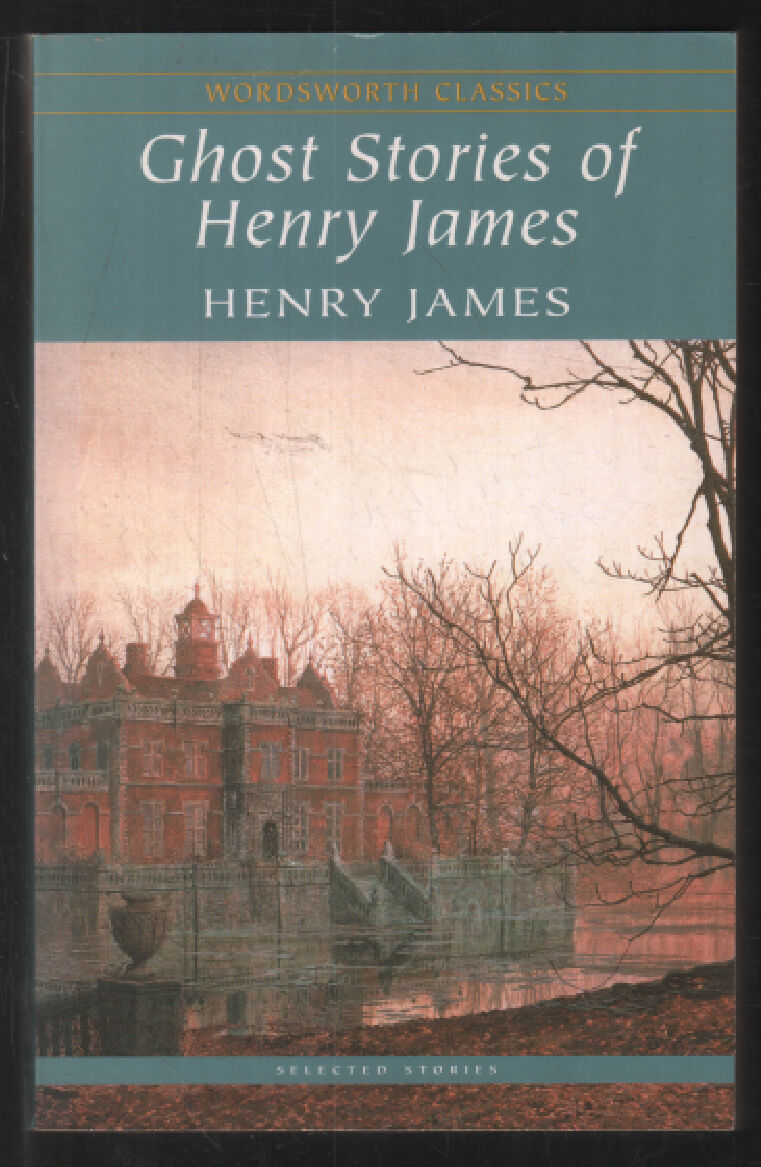


Sister horror: "The Romance of Certain Old Clothes" (1868) by Henry James

"The domain of the soul has its vampires."


--George Steiner

Lessons of the Masters The Charles Eliot Norton Lectures 2001–2002 


*     *     *


"The Romance of Certain Old Clothes" (1868) by Henry James is a beautifully executed short story. Every element is balanced and in correct proportion to the overall plan. In making a short story there is no substitute for plain hard work, guile, and cunning, all of which James excels at here. 


In the tale, older sister ViolaWilloughby covets the wardrobe, jewelry, and husband of her younger married sister Perdita. Both women are still young, and Perdita has just died after giving birth.


…. [Perdita] trusted her husband very nearly as well as she loved him; but now that she was called away forever, she felt a cold horror of her sister. She felt in her soul that Viola had never ceased to envy her good fortune; and a year of happy security had not effaced the young girl's image, dressed in her wedding garments, and smiling with coveted triumph. Now that Arthur was to be alone, what might not ​Viola do? She was beautiful, she was engaging; what arts might she not use, what impression might she not make upon the young man's melancholy heart? Mrs. Lloyd looked at her husband in silence. It seemed hard, after all, to doubt of his constancy. His fine eyes were filled with tears; his face was convulsed with weeping; the clasp of his hands was warm and passionate. How noble he looked, how tender, how faithful and devoted! "Nay," thought Perdita, "he's not for such as Viola. He'll never forget me. Nor does Viola truly care for him; she cares only for vanities and finery and jewels." And she dropped her eyes on her white hands, which her husband's liberality had covered with rings, and on the lace ruffles which trimmed the edge of her night dress. "She covets my rings and my laces more than she covets my husband."


At this moment the thought of her sister's rapacity seemed to cast a dark shadow between her and the helpless figure of her little girl. "Arthur," she said, "you must take off my rings. I shall not be buried in them. One of these days my daughter shall wear them,—my rings and my laces and silks. I had them all brought out and shown me to-day. It's a great wardrobe,—there's not such another in the Province; I can say it without vanity now that I've done with it. It will be a great inheritance for my ​daughter, when she grows into a young woman. There are things there that a man never buys twice, and if they're lost you'll never again see the like. So you'll watch them well. Some dozen things I've left to Viola; I've named them to my mother. I've given her that blue and silver; it was meant for her; I wore it only once, I looked ill in it. But the rest are to be sacredly kept for this little innocent. It's such a providence that she should be my color; she can wear my gowns; she has her mother's eyes. You know the same fashions come back every twenty years. She can wear my gowns as they are. They 'll lie there quietly waiting till she grows into them,—wrapped in camphor and rose-leaves, and keeping their colors in the sweet-scented darkness. She shall have black hair, she shall wear my carnation satin. Do you promise me, Arthur?"


"Promise you what, dearest?"


"Promise me to keep your poor little wife's old gowns."


"Are you afraid I'll sell them?"


"No, but that they may get scattered. My mother will have them properly wrapped up, and you shall lay them away under a double-lock. Do you know the great chest in the attic, with the iron bands? There's no end to what it will hold. You can lay them all there. My mother and the housekeeper will ​do it, and give you the key. And you'll keep the key in your secretary, and never give it to any one but your child. Do you promise me?"


"Ah, yes, I promise you," said Lloyd, puzzled at the intensity with which his wife appeared to cling to this idea.


"Will you swear?" repeated Perdita.


"Yes, I swear."


"Well—I trust you—I trust you," said the poor lady, looking into his eyes with eyes in which, if he had suspected her vague apprehensions, he might have read an appeal quite as much as an assurance.


Viola marries Perdita's husband Lloyd a year after the latter's death. But as Lloyd's business fortunes decline and the household budget is retrenched, Viola boils with resentment.


....Viola's thoughts hovered lovingly about her sister's relics. She went up and looked at the chest in which they lay imprisoned. There was a sullen defiance in its three great padlocks and its iron bands, which only quickened her desires. There was something exasperating in its incorruptible immobility. It was like a grim and grizzled old household servant, who locks his jaws over a family secret. And then there was a look of capacity in its vast extent, and a sound as of dense fulness, when Viola knocked its side with the toe of her little slipper, which caused her to flush with baffled longing. "It 's absurd," she cried; "it 's improper, it 's wicked"; and she forthwith resolved upon another attack upon her husband. On the following day, after dinner, when he had had his wine, she bravely began it. But he cut her short with great sternness.


Lloyd is ultimately worn down by Viola and surrenders the keys to the chest.


....Mrs. Lloyd hastily took possession of the key.


​At the habitual supper-hour Arthur Lloyd came back from his counting-room. It was the month of June, and supper was served by daylight. The meal was placed on the table, but Mrs. Lloyd failed to make her appearance. The servant whom his master sent to call her came back with the assurance that her room was empty, and that the women informed him that she had not been seen since dinner. They had in truth observed her to have been in tears, and, supposing her to be shut up in her chamber, had not disturbed her. Her husband called her name in various parts of the house, but without response. At last it occurred to him that he might find her by taking the way to the attic. The thought gave him a strange feeling of discomfort, and he bade his servants remain behind, wishing no witness in his quest. He reached the foot of the staircase leading to the topmost flat, and stood with his hand on the banisters, pronouncing his wife's name. His voice trembled. He called again, louder and more firmly. The only sound which disturbed the absolute silence was a faint echo of his own tones, repeating his question under the great eaves. He nevertheless felt irresistibly moved to ascend the staircase. It opened upon a wide hall, lined with wooden closets, and terminating in a window which looked westward, and admitted the last rays of the sun. Before the window stood the great ​chest. Before the chest, on her knees, the young man saw with amazement and horror the figure of his wife. In an instant he crossed the interval between them, bereft of utterance. The lid of the chest stood open, exposing, amid their perfumed napkins, its treasure of stuffs and jewels. Viola had fallen backward from a kneeling posture, with one hand supporting her on the floor and the other pressed to her heart. On her limbs was the stiffness of death, and on her face, in the fading light of the sun, the terror of something more than death. Her lips were parted in entreaty, in dismay, in agony; and on her bloodless brow and cheeks there glowed the marks of ten hideous wounds from two vengeful ghostly hands.


It's a superb resolution to the story. 


As a passionate reader of the other James, I am reminded of the last lines of "The Residence at Whitminster."


'We left that curious room not unwillingly, I think. Uncle Oldys's orders were carried out that same day. And so,' concludes Mr. Spearman, 'Whitminster has a Bluebeard's chamber, and, I am rather inclined to suspect, a Jack-in-the-box, awaiting some future occupant of the residence of the senior prebendary.'


*     *     *


In its opening "The Romance of Certain Old Clothes" gives us the widowed Mrs. Willoughby raising her children: Bernard, Viola, and Perdita. Fate provides only one suitor for the daughters: Bernard's English school friend and trader Arthur Lloyd. At first the competition between the sisters is balanced, but once the scales tip Viola realizes she has become a woman with no prospects or expectations.


....One afternoon Miss [Viola] Willoughby sat alone before her toilet-glass combing out her long hair. It was getting too dark to see; she lit the two candles in their sockets on the frame of her mirror, and then went to the ​window to draw her curtains. It was a gray December evening; the landscape was bare and bleak, and the sky heavy with snow-clouds. At the end of the long garden into which her window looked was a wall with a little postern door, opening into a lane. The door stood ajar, as she could vaguely see in the gathering darkness, and moved slowly to and fro, as if some one were swaying it from the lane without. It was doubtless a servant-maid. But as she was about to drop her curtain, Viola saw her sister step within the garden, and hurry along the path toward the house. She dropped the curtain, all save a little crevice for her eyes. As Perdita came up the path, she seemed to be examining something in her hand, holding it close to her eyes. When she reached the house she stopped a moment, looked intently at the object, and pressed it to her lips.


Poor Viola slowly came back to her chair, and sat down before her glass, where, if she had looked at it less abstractedly, she would have seen her handsome features sadly disfigured by jealousy. A moment afterwards the door opened behind her, and her sister came into the room, out of breath, and her cheeks aglow with the chilly air.


Perdita started. "Ah," said she, "I thought you were with our mother." The ladies were to go to a tea-party, and on such occasions it was the habit of ​one of the young girls to help their mother to dress. Instead of coming in, Perdita lingered at the door.


"Come in, come in," said Viola. "We've more than an hour yet. I should like you very much to give a few strokes to my hair." She knew that her sister wished to retreat, and that she could see in the glass all her movements in the room. "Nay, just help me with my hair," she said, "and I'll go to mamma."


Perdita came reluctantly, and took the brush. She saw her sister's eyes, in the glass, fastened hard upon her hands. She had not made three passes, when Viola clapped her own right hand upon her sister's left, and started out of her chair. "Whose ring is that?" she cried passionately, drawing her towards the light.


On the young girl's third finger glistened a little gold ring, adorned with a couple of small rubies. Perdita felt that she need no longer keep her secret, yet that she must put a bold face on her avowal. "It's mine," she said proudly.


"Who gave it to you?" cried the other.


Perdita hesitated a moment. "Mr. Lloyd."


"Mr. Lloyd is generous, all of a sudden."


"Ah no," cried Perdita, with spirit, "not all of a sudden. He offered it to me a month ago."


"And you needed a month's begging to take it?" said Viola, looking at the little trinket; which indeed ​was not especially elegant, although it was the best that the jeweller of the Province could furnish. "I should n't have taken it in less than two."


"It is n't the ring," said Perdita, "it's what it means!"


"It means that you 're not a modest girl," cried Viola. "Pray does your mother know of your conduct? does Bernard?"


"My mother has approved my 'conduct', as you call it. Mr. Lloyd has asked my hand, and mamma has given it. Would you have had him apply to you, sister?"


Viola gave her sister a long look, full of passionate envy and sorrow. Then she dropped her lashes on her pale cheeks and turned away. Perdita felt that it had not been a pretty scene; but it was her sister's fault. But the elder girl rapidly called back her pride, and turned herself about again. "You have my very best wishes," she said, with a low curtsey. "I wish you every happiness, and a very long life."


Perdita gave a bitter laugh. "Don't speak in that tone," she cried. "I'd rather you cursed me outright. Come, sister," she added, "he could n't marry both of us."


"I wish you very great joy," Viola repeated mechanically, sitting down to her glass again, "and a very long life, and plenty of children."


​There was something in the sound of these words not at all to Perdita's taste.


All that remains for Viola is subterfuge and matrimonial parasitism.


Jay

15 April 2021


Friday, April 9, 2021

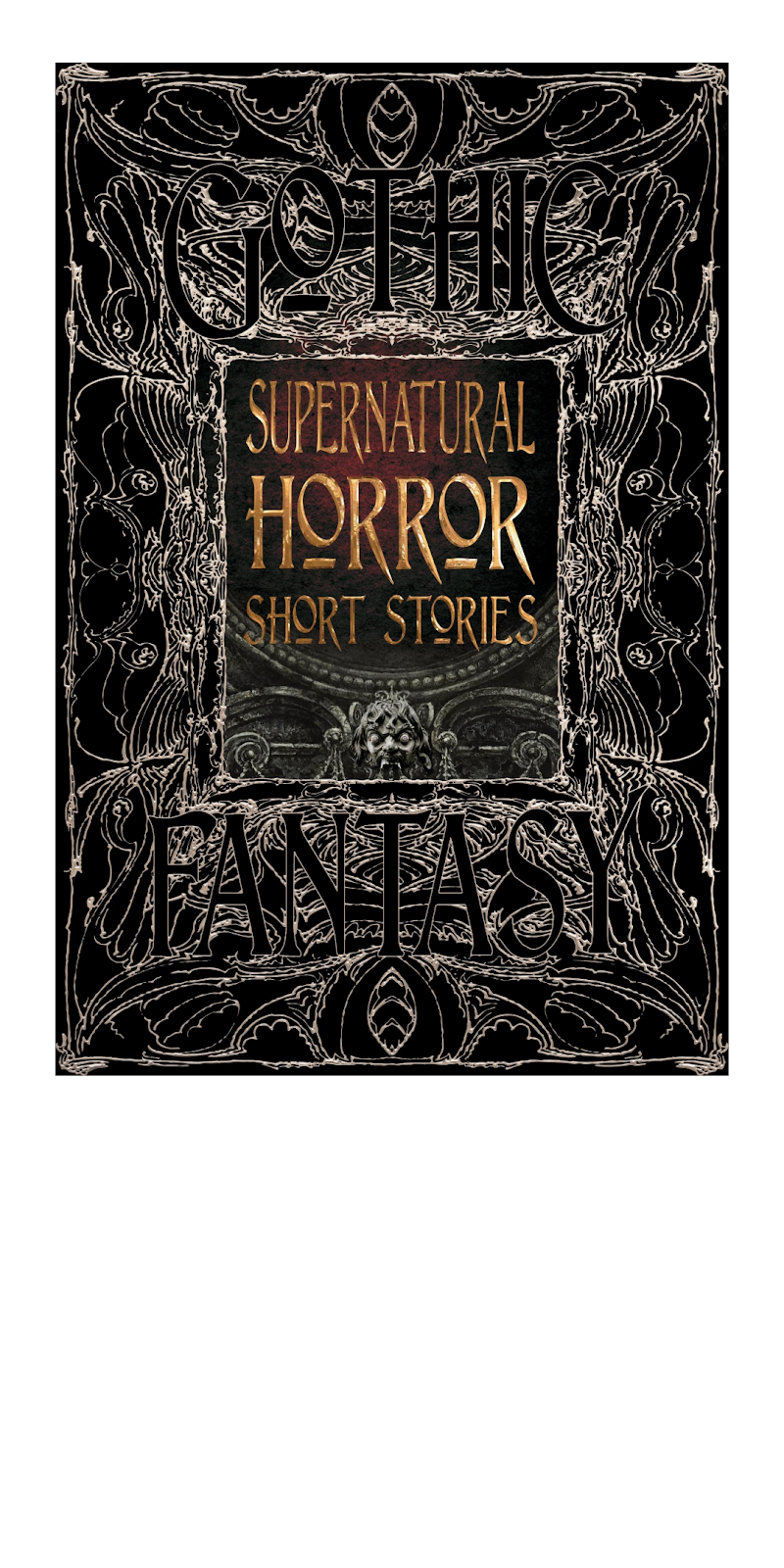
Three pieces from Supernatural Horror Short Stories [edited by Laura Bulbeck (Flame Tree Publishing, 2017)]

About a third of the stories in Supernatural Horror Short Stories [edited by Laura Bulbeck (Flame Tree Publishing, 2017)] were written in the last ten years. To find new names mixed with the usual canonical titles by Bierce, Chambers, Nesbit, and Edward Lucas White is, abstractly, a welcome experiment. According to the editorial notes at the end of the anthology, most of these recent works were either published for the first time in this book or reprinted from what used to be called "the small press."


*     *     *


"An Idle Dream, Quite Gone Now"

by G.L. McDorman is a well-crafted short story in which a scientist at a college pieces together the mystery of a colleague who disappeared fifteen years before and is assumed dead.


This is more sci-fi than horror, more Philadelphia Experiment than Machen's "The Open Door." The puzzle-solving is carefully prepared and executed, the setting economically described.


(McDorman is a host of Claytemple Media's Elder Sign: A Weird Fiction Podcast.)


*     *     *


"Tracks in the Snow" by Cody Schroeder is a too-dumb-people story about a man and woman following weird tracks in the snow on a wintry day. Tracks lead to a cave, which they explore despite the heap of animal skulls piled at its entrance. At the back of the cave they find what turns out to be a metal door. Did I mention they have one cell phone with 10% battery for their exploring? It's a perfunctory story. The protagonists, two dumb people, are too dumb for believability; sadly, the author seems fine with that.


*     *     *


Of the levy of contemporary stories dulling the meal of older, canonical titles in the Supernatural Horror Short Stories collection, "The Floating Girls: A Documentary" by Damien Angelica Walters is one of the most arresting. It is a hymn to unknowability shot through with dreadful suspicions. 


It begins with an event quickly erased from popular consciousness:


Twelve years ago, three hours after the sunset on the second of August, nearly 300,000 girls between the ages of eleven and seventeen vanished. Eyewitness reports state that the girls floated away, yet even now, many of those eyewitnesses have recanted their stories or simply refuse to talk about it at all....


The narrator, whose childhood best friend was one of the disappeared, attempts to record the stories of other witnesses, but makes little headway. 


If girls disappear, for whatever reason, or no reason at all, why doesn't the event make a mark? 


*     *     *


Jay

9 April 2021


Thursday, April 8, 2021

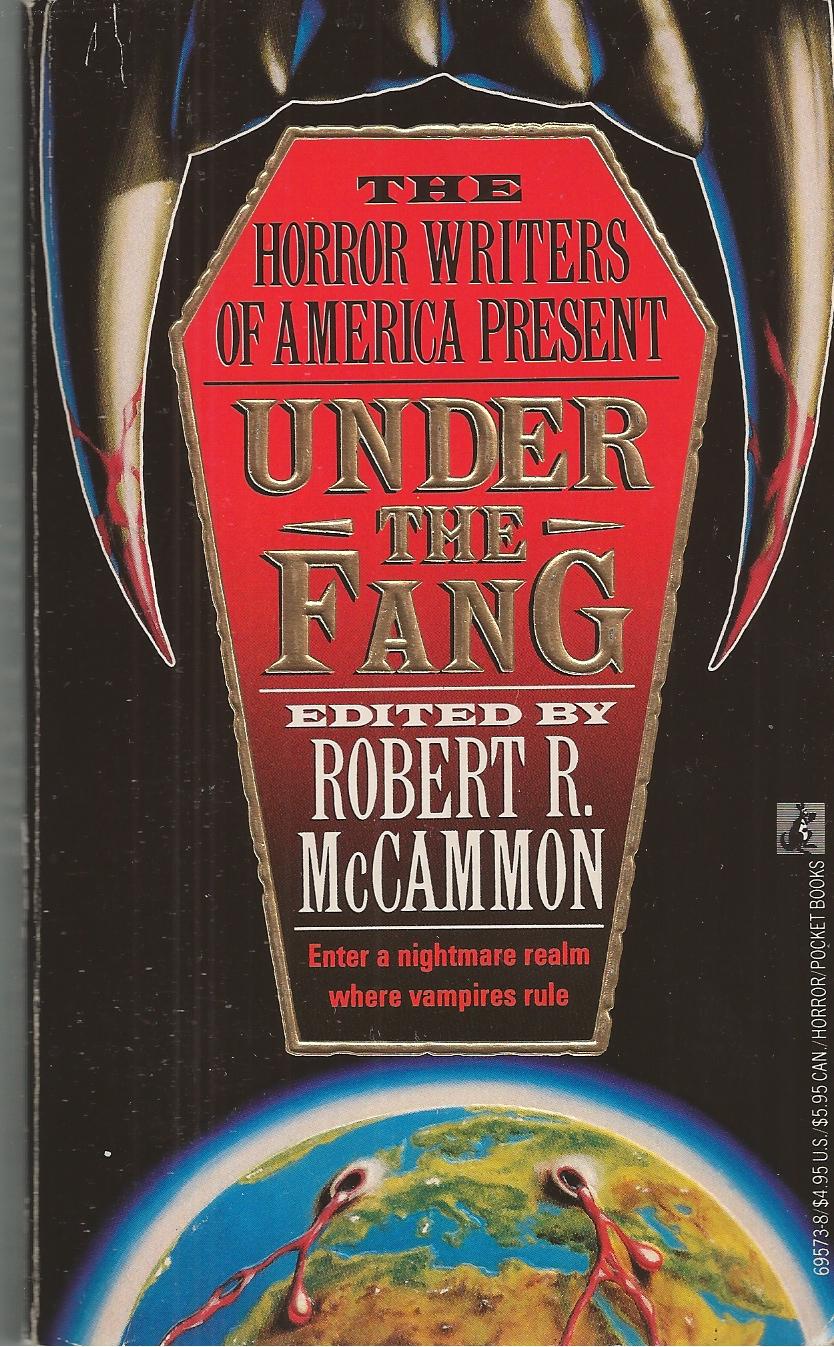
Remembering Under The Fang (1991)

Biological incident.

     That was the first of it. How the government tried to explain. A biological incident, at some kind of secret—up until then—testing center in North Dakota. That was six years ago. The biological incident was worse than they’d let on. They had created something from their stew of gene manipulation and bacteriological tampering that had sent their ten test subjects out into the world with a vengeance. The ten had multiplied into twenty, the twenty to forty, the forty to eighty, and on and on. They had the wrath of Hell in their blood, a contamination that made AIDS look like a common cold. The germ boys had learned how to create—by accident, yes—weapons that walked on two legs. What foreign power were we going to unleash that taint upon? No matter; it had come home to live.

     Biological incident.

     Kyle shifted the suitcase again. Call them what they are, he thought. They craved blood like addicts used to crave heroin and crack. They wrapped themselves up and hid in closets and basements and any hole they could winnow into. Their skin burst and oozed and they split apart at the seams like old suits in the sunlight. Call them what they are, damn it.

     They were everywhere now. They had everything. The television networks, the corporations, the advertising agencies, the publishing houses, the banks, the law. Everything. Once in a while a pirate station broke in on the cable, human beings pleading for others not to give up hope. Hope. There it was again, the cosmic joke. Those bastards were as bad as fundamentalist preachers; their role models were Jim Bakker and Jerry Falwell, seen through a dark glass. They wanted to convert everybody on earth, make them see the “truth,” and if you didn’t choose to join the fold they battered you in like a weak door and chewed the faith into you.

     It wasn’t just America. It was everywhere: Canada, the Soviet Union, Japan, Germany, Norway, Africa, England, South America, and Spain. Everywhere. The contamination—the “faith”—knew no racial nor national boundaries. It was another cosmic joke, with a hideous twist: The world was moving toward a true brotherhood.

     Kyle watched his shadow loom before him, its darkness merging with Allie’s. If a man couldn’t take a vacation in the sun with his family, he thought, then what the hell good was living?

--"The Miracle Mile"


Under the Fang edited by Robert R. McCammon

(Pocket Books, 1991)


What happens when a thirty year old anthology you loved is out of print? When it has no ebook edition? When second-hand hardcovers are prohibitively expensive and paperbacks spread spores?


If you're me, you go hunting the stories in other anthologies and collections, triangulated with some clicking in the ISFDB. 


Most of the stories in Under the Fang never went further than that anthology. Most of the author names on the title page strike no chord. But I did find six of the seventeen stories here at home. 


*     *     *


My memory of Under the Fang was that its authors were better focused on the theme and mise en scène than those invited to publish in Skipp and Spector's 1991 Book of the Dead. 


[N.B. That both Under the Fang and Book of the Dead were published in 1991 (end of the cold war, "end of history" and all that) is worth noting.]


The Miracle Mile by Robert R. McCammon 

(Best New Horror, 1992)

McCammon edited Under The Fang, and his story, which leads the anthology, does not disappoint. He lays out the geography of the disaster, the scope of its human toll, and the dead-end of survivalist fantasies as a solution. All that's left for the family it depicts is remembrance and a stoical embrace of family suicide (or murder-suicide) as finale. McCammon handles this poignant material without surrendering to bathos or cynicism. It is a fine piece of work. 


....He took the thermos and went into the bathroom, where there was a sink and a shower stall and a tub with a sliding door of smoked plastic. He pulled the blind up and opened the small window in there too, and then he turned on the sink’s tap and waited for the rusty water to clear before he refilled the thermos.

     Something moved, there in the bathroom. Something moved with a long, slow, and agonized stretching sound.

     Kyle looked at the smoked plastic door for a moment, a pulse beating in his skull, and then he reached out and slid it open.

     It was lying in the tub. Like a fat cocoon, it was swaddled in bed sheets and tacky beach towels covered with busty cartoon bathing beauties and studs swigging beer. It was impossible to determine where the head and feet were, the arms bound to its sides and the hands hidden. The thing in its shroud of sheets and towels trembled, a hideous involuntary reaction of nerves and muscles, and Kyle thought, It smells me.

     “Kill it.”

     He looked back at Allie, who stood in the doorway behind him with the baby in her arms. Her face was emotionless, her eyes vacant as a dreamer’s. “Kill it, Kyle,” she said. “Please kill it.”


Dancing Nitely by Nancy A. Collins

(Hopedale Press, 2012)

"Dancing Nitely" is a small-compass slice-of-life evening of hip, on-the-town vampires. Mavrides, whose own "conversion" took place in the 1960s, disdains the bumptious nouveau types who swarm Club Vlad. "Today’s new breed of vampire didn’t have to worry about waking up with a stake piercing their thorax," he thinks. It's a clever story, one deeply embedded in the mores of a non-human social order where citizens take their right to rule as beyond question. 


Red Eve by Al Sarrantonio

(Toybox, 1999)

Sarrantonio gives us a far future holiday banquet populated by jaded vampire nobility. In a glass house in a glass city floating above a radioactive earth, these sybarites give Poe's Prospero and his guests a run for their money. Like most stories with a cast of feasting decadents, it is about tables being turned and history being avenged.  


     “Now!” LaFortina said, lifting himself unsteadily to his feet with the unsteady help of his neighbors. He spoke in a blur. “Give us your finest lesson—now!”

    “Hurrah!” came a slurred chorus behind him. Others tried to rise from their cushions, hampered by drunkenness and gluttony.

    “As you wish.”

    Eidolan's fingers fluttered, and the hologram moon overhead brightened to almost painful intensity. It was brown and white, artistically cratered; not the gray, pale, distant, bomb-blasted circle they knew, outshone by some of the stars, night-silent, dead. This moon tugged at them, at their eyes, their hearts—made rhythms in their blood.

    “This,” said Eidolan, “is my lesson.” Her voice was the voice of this moon, pulling at them, making them hers. For a moment the moon blinked out, leaving them with a gasping view of the red balloons still playing out through the clear-glass walls from the other palaces surrounding them—a black-night sky waltzing with rising balloons.

    The moon blinked back on; the ceiling, the night, disappeared. “This,” Eidolan said in a gentle hush, “is my story—”

    LaFortina pushed himself up, pointed a finger at Eidolan, at the moon. “Your finest,” he insisted. “You promised!” Swaying slightly, he turned his finger downward, pointed through the crystal table, the glass floor, to the roiling, dark, sickly yellow clouds that hid the Earth. “This year you promised your best—better than this moon! We're tired of the same old Red Eve lessons! We're sick of the Vampire Wars, of dead Earth below, poison gas, proton bombs, stakes through hearts, screaming men! We're tired of bogeymen with fangs, reflectionless images, children hung like beef for living blood, the battles for the moon—it doesn't entertain us! We're bored with the thousand-year-old histories, the slaughter in Asia, the Night of a Thousand Impalements, the building of the Crystal Sphere, the Deadly Climb to Life, the story of the Last Stake! It's old! And tired! Children's stories, for a children's holiday! We're tired of this tedium and we want better! We want—your finest lesson!”


We Are Dead Together by Charles de Lint

(The Very Best of Charles de Lint, 2014)

     Let it be recounted in the swato—the stories of my people that chronicle our history and keep it alive—that while Kata Petalo was first and foremost a fool, she meant well. I truly believed there was a road I could walk between the world of the Rom and the shilmullo.

     We have always been an adaptable people. We’d already lived side-by-side with the Gaje for ten times a hundred years, a part of their society, and yet apart from it. The undead were just another kind of non-Gypsy; why shouldn’t we be able to to coexist with them as well?

     I knew now. I had always known. We didn’t call them the shilmullo—the cold dead—simply for the touch of their pale flesh, cold as marble. Their hearts were cold, too—cold and black as the hoarfrost that rimmed the hedges by which my ancestors had camped in gentler times.

     I had always known, but I had chosen to forget. I had let the chance for survival seduce me.


A minor-key revenge tale, very brief.


Special by Richard Laymon

(Fiends, 1997)

Another patented Laymon misogynist survivalist daydream, complete with militia, hierarchy, treachery, and a double-entry bordello.  It's a love story.


Prodigal Sun by Thomas F. Monteleone

(Fearful Symmetries, 2004)

This is a clever, smoothly executed story about a vampire scientist who has discovered a cure for sunlight, and has successfully experimented on himself and survived. But there is a side-effect.


*     *     *


Free online material


"The Miracle Mile" story by Robert R. McCammon 

https://www.robertmccammon.com/fiction/miracle.html


McCammon's original Under the Fang prospectus: 

https://www.robertmccammon.com/fiction/fang.html


Jay

8 April 2020


Monday, April 5, 2021

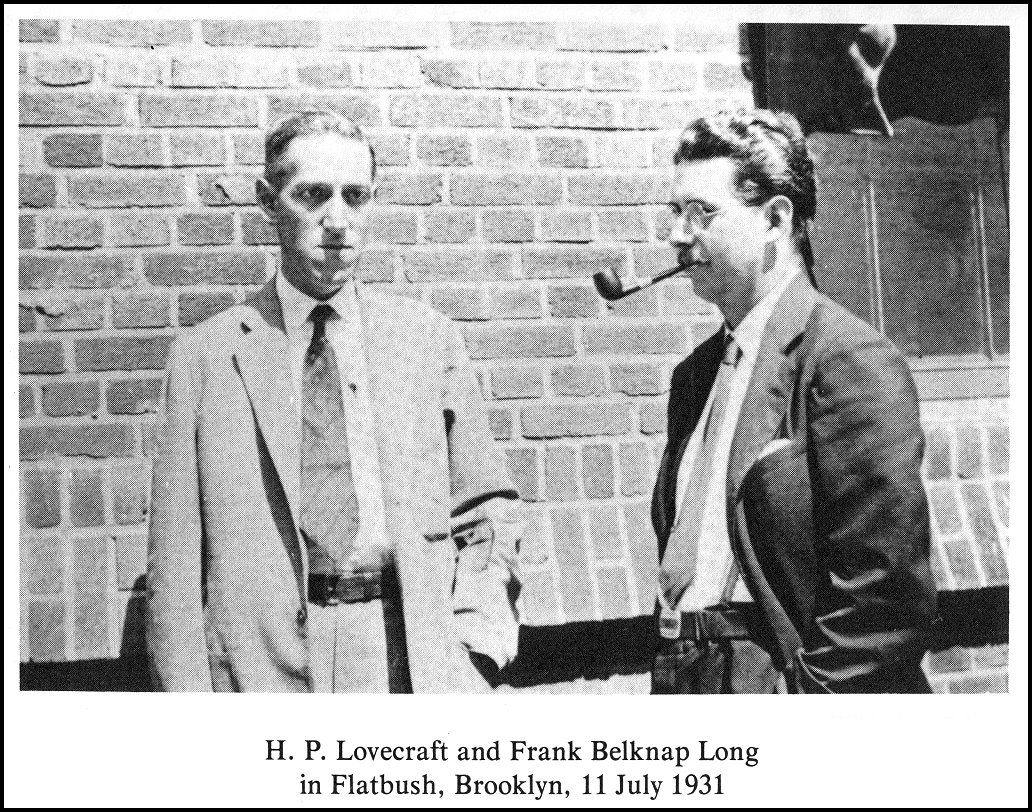
Master and epigone: a note on Lovecraft and Frank Belknap Long

"The Man with a Thousand Legs" by Frank Belknap Long (Weird Tales, August 1927) can be read here.


*     *     *


The article "Frank Belknap Long's The Man With a Thousand Legs" by G. W. Thomas was published today at the website Dark Worlds Quarterly.


I was not familiar with this story, and just finished reading it for the first time. It consists of nine chapters. Each is a statement by a different witness. None of the witnesses know they are contributing to a record of the fate of mad scientist Arthur St. Amand. Only we readers of the complete "dossier" know this. 


This method of telling a story will be familiar to readers of novels like Dracula (1897) and The Beetle (1897). But the real comparison (short story to short story) is best seen with Ambrose Bierce's sublime "The Damned Thing" (1893). Nothing Long offers in "The Man with a Thousand Legs'' can match Bierce's masterpiece of intensity and concision, of course. 


A year after "The Man with a Thousand Legs," Weird Tales published another - superior - tale using the same multiple-witness style: "The Call of Cthulhu" by H. P. Lovecraft. Lovecraft there surpassed Long in the seriousness and scope of subject matter and action.


*     *     *


In his article, author G. W. Thomas makes what strikes me as a very controversial statement: "Unlike Lovecraft, Frank was not satisfied to just write pseudo-Victorian style horror."


I have not ever seen Lovecraft described as a writer of "pseudo-Victorian style horror." Thomas does not define his term. Is he talking about style or subject matter? Certainly Lovecraft did not invent the braiding of sci-fi and horror: the materials and the genre trend were in the air in the 1920s-30s. Judging from the quality of stories like "The Man with a Thousand Legs" and "The Hounds of Tindalos" (1929), Long's handling of SF-Horror did not rise to the level of works by a Leiber or a Lovecraft.


Jay

5 April 2021


Master and epigone


❖