Agate Way" (2025) by Laird Barron reviewed:
https://substack.com/@jayrothermel/note/c-96111726?r=1vg2di
Agate Way" (2025) by Laird Barron reviewed:
https://substack.com/@jayrothermel/note/c-96111726?r=1vg2di
In his essay “Horror Fiction and the Mainstream,” Ramsey Campbell tosses this off parenthetically:
Kingsley Amis…. describes the process which led to his writing…. Ghost stories: essentially, becoming interested in a genre to the extent of of feeling able to contribute. In his case this produced several fine shorter pieces—I continue to regret not including “To See the Sun” in Uncanny Banquet, with nothing to blame but my own laziness…. [1]
To open my Complete Stories (2011) was the work of a moment.
Fourth paragraph:
The first shades of dusk are here and I must pause to light my candle. With the passing of the day, what I see from this window has changed a little and goes on changing as I write. Beyond the dark-red roofs of the peasant cottages, sharply sloped against the heavy winter snows, there’s a level grassy stretch something like a mile across (though it’s hard to be precise) and bounded by an irregular line of low hills that give place to higher hills, these being in turn topped by summits of what must be pretty considerable elevation, seeing that Nuvakastra itself can’t be much less than two thousand feet up. Until a few minutes back, the expanse of the plateau, broken here and there by a farmhouse with its outbuildings, a mill, a church, at one point a tiny village of tiny houses, had a warm and inviting look, and the distant mountains, though indeed wild, seemed to offer a noble mystery, a kind of primeval innocence. But now, how remote, how lonely everything seems! Imagine what it must feel like to be a wayfarer on that exposed plain with night closing in, even more to be lost among those desolate ravines and crags, beset by strange sounds and half-fancied movements in the dark! What makes us think that hidden forces are likely to be benevolent?
"To See the Sun" (1980) is a remarkable short story and a hidden gem of the horror genre. Set in 1925, it relates in epistolary style the encounter of an English folklore researcher with the chatelaine of a castle in Dacia. As with all Amis fiction, its structure, style, and point of view are handled flawlessly.
I first heard about the story four days ago in an essay in the collection Ramsey Campbell, Probably (2020), wherein Campbell regretted not getting the story into his anthology Uncanny Banquet.
"To See the Sun" is available in both the collected and complete Amis short story collections.
Don’t miss it.
Jay
29 April 2023

….Whatever universal masterpiece of tomorrow may be wrought from phantasm or terror will owe its acceptance rather to a supreme workmanship than to a sympathetic theme. Yet who shall declare the dark theme a positive handicap? Radiant with beauty, the Cup of the Ptolemies was carven of onyx.1

China Rose (1992)
It's hard for me not to fall in love with stories that begin like this:
It was the French detective Vidocq, I think, who used to say that every act of evil had its own distinctive odour; that in a crowd of a thousand persons he could tell transgressors of the moral law by the sense of smell alone. What would a man of such singular olfactory accomplishments have made of Nicholas Hallam and Rose Seaford, I wonder? Nothing redolent of brimstone or corruption: rather a subtle whiff of something clinical masked by a sweet incense. And about Rose, of course, always the troubling fragrance of hibiscus....
The erudition, mixed with an easeful and retrospective tone, intoxicates. It's just the right amount of in media res braided with subtle menace. It is also kin to the authorial voice of every writer I return to: Conan Doyle and P. G. Wodehouse would sense fraternity in the lines.
"China Rose" is a blackly magic story set in a precisely observed decadent milieu, swift and efficient in the telling. Weighell excels with the material and the characterizations.
Carven of Onyx (1991)
"Carven of Onyx" takes its sweet time, for which any reader of world-building historical fiction will be grateful. It is a richly imagined horror novella spread over several locations and with a large number of characters.
Somewhere in Medieval England, at the Benedictine nunnery of Longlenn Priory, troubles mount: architectural renovations have uncovered a secret chamber and its impedimenta of worship. At one time the site was home to a band of Templar Knights after their return from a crusade.
Alas, they "brought something back."
The Lycurgus Cup (1989)
What was it? A wild cat, or something stranger?
A contemporary archeological thriller, "The Lycurgus Cup" finds freelance journalist Vallance, a "slight, crop-headed girl in fashionably unkempt clothes" spending one bitter November afternoon on the trail of a large black cat in the "'wide, wild houseless downs' of Hampshire".
The trail leads to abandoned pillars opening onto Rodhope Manor's ruins. Sifting clues in newspaper archives, and shunned manuscripts left to rot by a local vicar, Vallance learns a cup (and its guardian) were once shipped home from Greece by a wealthy grand-touring resident of the manor.
Penetrating the ruins:
....She drew out into the light the most beautiful object she had ever seen. It was a bowl rather than a cup, with a shallow foot and a rim of silver, and it threw back the candlelight with a bloody sheen. The glass was covered with raised images almost oriental in their richness. A vine-crowned youth pointing, at his feet a running beast like a huge cat. A figure entangled in vines surrounded by satyrs.
Vallance is a winning and spirited protagonist. Her predicaments, which include fighting headwinds imposed by older, jaded male colleagues, mark her as a cunning and intrepid character.
The Greater Arcana (1992)
"The Greater Arcana'' is a pitch-perfect antiquarian horror novella. It unfolds from its snug framing into a finely orchestrated show-down with black magic. Hillyer, amateur photographer and post-graduate, is victim of a nicely delineated "it could have happened to anyone" Jamesian logic.
He even gets fair warning from a character I can only assume is Montague Summers:
During the night the first snow of the year fell on the city. Hillyer awoke to a morning of slush on the roads and intermittent sleet on the grey air; but so great was his enthusiasm that he wrapped up well, took up his photographic equipment and set off early to take some preliminary studies. At that hour the cloisters were deserted, the snow on the grass still unmelted. Quite unconsciously he began to photograph the most grotesque of the monsters, had completed studies of three and was setting up his tripod before a fourth, when he became aware of a plump priest in cloak and wide-brimmed hat, observing him from the cloister. Hillyer thought the figure not unlike the silhouette of Father Brown on the spine of a book he had once owned. The priest approached, and Hillyer's heart sank. He had pursued the hobby of photography long enough to anticipate some such inane comment as 'taking pictures, are you?' so he was surprised when the old priest—it priest he was—called to him in a high-pitched, cultivated voice.
'That is not wise, sir, not wise at all.'
'I am sorry,' Hillyer replied. 'I don't understand—'
'Photographing Ripley's Arcana. I would not advise it.'
'Oh really, and whyever not?'
'Because, sir, they are the glyphographs of a pernicious alchemy.' The ponderous solemnity with which these last words were spoken only served to amuse Hillyer the more, but he concealed his mirth with a show of sincere interest.
'You called them Ripley's Arcana. Who was Ripley?'
'Their creator, a disciple of Adam Grimswade.'
'Wasn't he an architect?'
'He was much more than that, young man. Have you never heard the tale of Ripley's disappearance? One night a clergyman was walking down a lane not far from here when he saw a dark figure dragging someone out of a window. Thinking they were engaged in a drunken revel he went to remonstrate with them, but as he drew near he made out the face of the cloaked figure and fled. He never revealed what he had seen, except to say that it was so loathsome as to he utterly unhuman. The house was one in which Ripley conducted his Black Masses, and after that night he was never seen again. Oh, and the window through which Ripley had been pulled was found to have a solid grille over it; a grille on which flapped a few rags of cloth. The lane was thereafter known as Devil's Den. Yes, Ripley was Grimswade's disciple in more than architecture. If you would know more, read his books, sir, read his books!'
With that the priest raised his head and shouted 'Faustus!' at the top of his voice. Hillyer thought he was dealing with a madman, but when the priest added 'Heel boy, heel!' a large black dog padded up and followed him out of the cloister.
This encounter was very suggestive, for it added a little to Hillyer's information about the link between Bellman and the Arcana....
As well as being an outstanding supernatural story, "The Greater Arcana" is also an adventure that takes place at Christmas. It climaxes near midnight on 24 December, as Hillyer battles to keep closed a recently uncovered, bricked-shut window.
Weighell's droll wit is well displayed in "The Greater Arcana". Hillyer's landlady is described thus:
....a woman named Fowler, but he secretly referred to her as Mrs Watt, for she had a way with her tenants' letters that gave an entirely new meaning to the phrase 'the age of steam'.
* * *
Ron Weighell (1950-2020) was clearly a writer of great skill and erudition. As his obituary in Locus Magazine [Issue #728, September 2021] notes:
[....] Weighell began publishing genre fiction in 1986, with stories appearing in magazines and anthologies, including year's best volumes. Most of his work was supernatural horror, and his major inspirations include M.R. James and Arthur Machen. Some of his short fiction is collected in The Greater Arcana (1994), The White Road (1997), The Irregular Casebook of Sherlock Holmes (2000), Tarshishim (2011), and Summonings (2014). Anthology Pagan Triptych (2016) includes one of his stories along with pieces by John Howard and Mark Valentine. Weighell also wrote occasional essays and reviews….
As well as a deep knowledge of genre literature, readers of The Lycurgus Cup and Other Stories will quickly realize Weighell was familiar with history and folklore. His curiosity, and a talent for the craft of puzzle-plot construction, shine through in all four of this collection's stories. Like once bricked-up windows, each tale is a portal opening and closing: admitting, sharing, releasing, confounding, damning, and delighting us.
Jay
24 April 2023
https://www.britishmuseum.org/collection/object/H_1958-1202-1
Fotor AI art based on "The Lycurgus Cup" landscape description
_____
1.https://www.hplovecraft.com/writings/texts/essays/shil.aspx
....I had been for a walk in the lane that led from my refuge in the direction of another fallen, forlorn old estate, whose manor was now in craggy ruins, and I thought I should like a closer look at it. But it was dusk, later than I had supposed, and I saw I would not make my destination before darkness unless I could find a short cut across the fields. After a while, I espied a gap in the hedgerow and a faded footpath leading from this into woodland and, as I thought I could see, out from this towards the ruin. Yet I never got so far. For, when I passed through the gap in the hedge, I suddenly felt a chill pass over me, and a dizzying blackness seize hold of my brow and momentarily blot my eyes. I wavered on my feet. I have had attacks like these when I have been poring over lower bookshelves and risen too quickly: yet never in open country on a gentle summer's evening. I clutched at the prickly hedge for support and stepped back onto the road; and it passed. But I thought it better not to go on. Even as I made my way back to the Oast House, I perceived that this wave of fever had not quite left me, for I kept on thinking I heard a pattering behind me, as of some large, loping animal; yet when I looked around me, there was nothing to see.
"The Inner Sentinel"
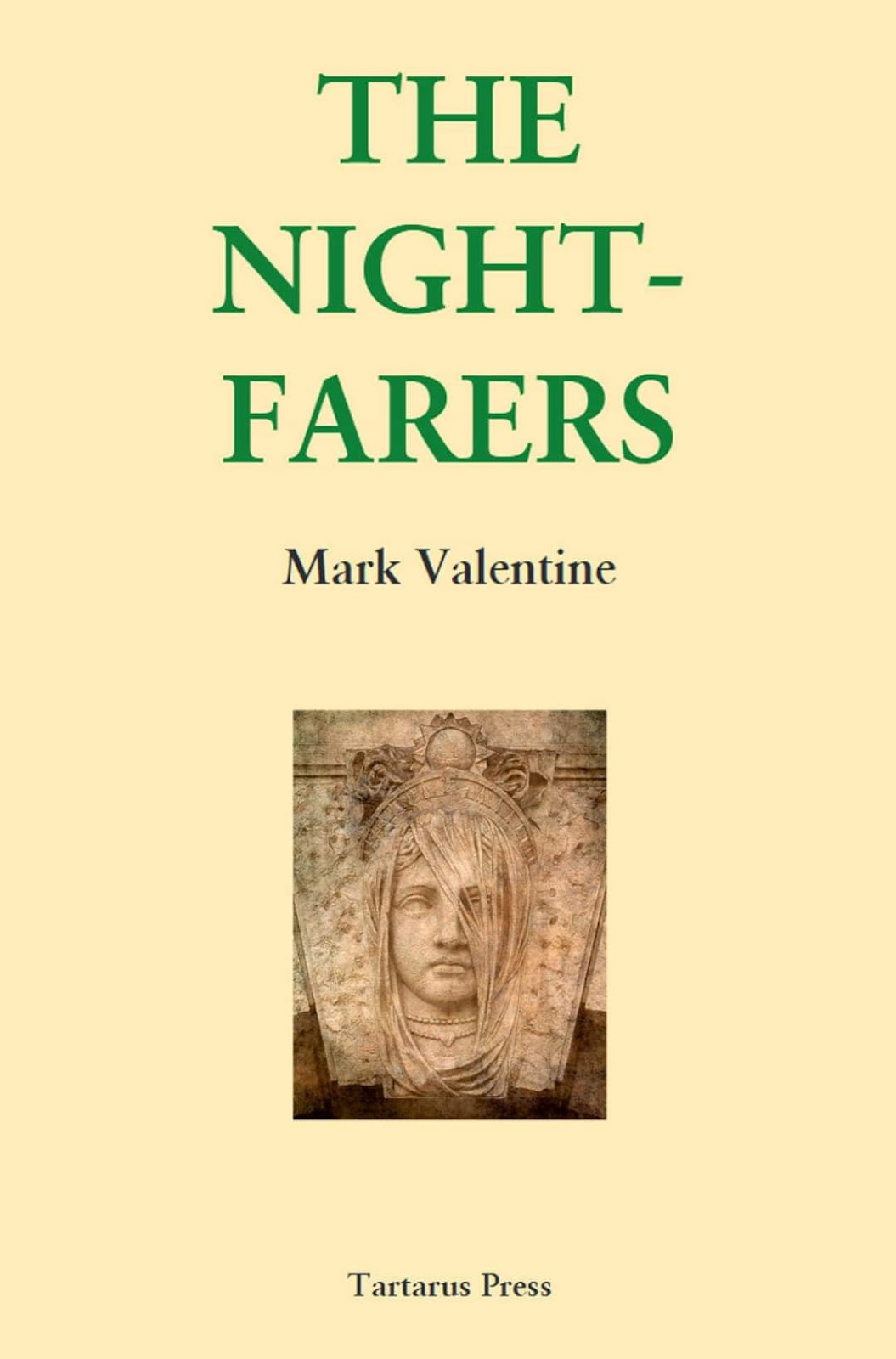
The Nightfarers by Mark Valentine
(2020, Tartarus Press)
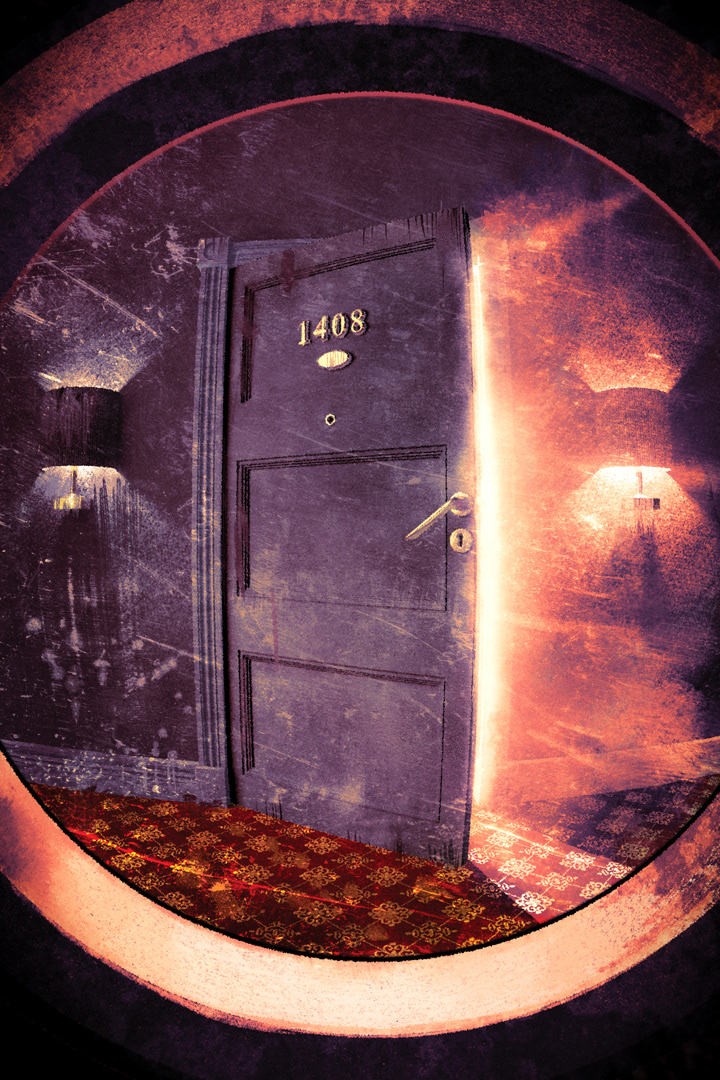
Readers unfamiliar with "1408" may prefer to read the below note only after reading the story.
The stories selected for The Folio Book of Horror Stories (2018) are noteworthy. The anthology features only two tales from the nineteenth century, and three from the twenty-first. At first I thought this gave the contents a lopsided shape, but we've all bought too many anthologies that start with Defoe and are still not up to 1900 by the halfway point.
Still, "1408" (2002) by Stephen King seemed like a curious canonical selection.
I first read "1408" in March, 2020, as part of a series of blog posts under the heading "50 Years of Stephen King." My note on "1408," when I wrote about the short story collection Everything's Eventual, consisted of this:
Best Selling investigator of haunted sites plans to spend the night in a hotel room of sinister repute. He lasts about seventy minutes. #learnsbetter
All true as far as it goes. But the arc and density of the forty page story presents for the reader a rare and notable example of aesthetic amplitude. It's the richness we appreciate when reading authors like B.M. Croker and Mary E. Wilkins Freeman. As a reader I am grateful.
* * *
The first half of "1408" is a modified fireside tale. Mike Enslin, arriving in the evening at NYC's Dolphin Hotel, is invited to manager Mr. Olin's office for one last warning.
King's omniscient third person narrator back-fills facts about Enslin's career as well as the longer career of room 1408.
"Ten Nights in Ten Haunted Houses," Olin read. "Ten Nights in Ten Haunted Graveyards. Ten Nights in Ten Haunted Castles." He looked up at Mike with a faint smile at the corners of his mouth. "Got to Scotland on that one. Not to mention the Vienna Woods. And all tax-deductible, correct? Hauntings are, after all, your business."
"Do you have a point?"
[....] "What concerned me—what frightened me—is that I found myself reading the work of an intelligent, talented man who doesn't believe one single thing he has written."
Olin has, before the tale's beginning, tried every legal method to stop Enslin from staying overnight in room 1408 of The Dolphin. His final appeal is to Enslin the rational, perhaps cynical, writer.
[....] "I'm not calling you a liar," he said, "but, Mr. Enslin, you don't believe. Ghosts rarely appear to those who don't believe in them, and when they do, they are rarely seen...."
[....] Mike stood up, then bent to grab his overnight case. "If that's so, I won't have anything to worry about in room 1408, will I?"
"But you will," Olin said. "You will. Because there are no ghosts in room 1408 and never have been. There's something in there—I've felt it myself—but it's not a spirit presence. In an abandoned house or an old castle keep, your unbelief may serve you as protection. In room 1408, it will only render you more vulnerable. Don't do it, Mr. Enslin. That's why I waited for you tonight, to ask you, beg you, not to do it. Of all the people on earth who don't belong in that room, the man who wrote those cheerful, exploitative true-ghost books leads the list."
How Olins's prediction will be confirmed is part of the structural irony King plays with in his 50/50 plot. The first half of "1408" is Olin's warning, fleshed out with some uncanny experiences he retells about the room.
"[....] you can make fun of the room 1408 bogies as much as you want, Mr. Enslin, but you'll feel them almost at once, of that I'm confident. Whatever there is in that room, it's not shy."
"On many occasions all that I could manage I went with the maids, to supervise them. He paused, then added, almost reluctantly, To pull them out, I suppose, if anything really awful started to happen. Nothing ever did. There were several who had weeping fits, one who had a laughing fit I don't know why someone laughing out of control should be more frightening than someone sobbing, but it is and a number who fainted. Nothing too terrible, however. I had time enough over the years to make a few primitive experiments beepers and cell-phones and such but nothing too terrible. Thank God. He paused again, then added in a queer, flat tone: One of them went blind."
"What?"
"She went blind. Rommie Van Gelder, that was. She was dusting the top of the television, and all at once she began to scream. I asked her what was wrong. She dropped her dustrag and put her hands over her eyes and screamed that she was blind but that she could see the most awful colors. They went away almost as soon as I got her out through the door, and by the time I got her down the hallway to the elevator, her sight had begun to come back."
"You're telling me all this just to scare me, Mr. Olin, aren't you? To scare me off."
"Indeed I am not. You know the history of the room, beginning with the suicide of its first occupant."
Mike did. "Kevin O'Malley, a sewing machine salesman, had taken his life on October 13, 1910, a leaper who had left a wife and seven children behind."
"Five men and one woman have jumped from that room's single window, Mr. Enslin. Three women and one man have overdosed with pills in that room, two found in bed, two found in the bathroom, one in the tub and one sitting slumped on the toilet. A man hanged himself in the closet in 1970."
"Henry Storkin," Mike said. "That one was probably accidental erotic asphyxia."
"Perhaps. There was also Randolph Hyde, who slit his wrists, and then cut off his genitals for good measure while he was bleeding to death. That one wasn't erotic asphyxiation. The point is, Mr. Enslin, that if you can't be swayed from your intention by a record of twelve suicides in sixty-eight years, I doubt if the gasps and fibrillations of a few chambermaids will stop you."
The second half of "1408" is where Enslin #learnsbetter. He isn't spending the night in an old dark house: The Dolphin is no Baldpate. It is a modern Manhattan hotel with a room on the 13th floor (press 14 in the elevator), a room whose number, for the numerologically inclined, adds up to 13.
* * *
There are some doublings worthy of note in "1408." The most obvious: Mr. Olsin and Mr. Enslin. One knows the truth; the other, who once wanted to be acknowledged as a Yale Younger Poet, thinks there is no truth, and thinks even if there was, it has no claim on him.
The other doubling:
"[....] you can make fun of the room 1408 you can make fun of the room 1408 bogies as much as you want, Mr. Enslin, but you'll feel them almost at once, of that I'm confident. Whatever there is in that room, it's not shy.
On many occasions all that I could manage I went with the maids, to supervise them. He paused, then added, almost reluctantly, To pull them out, I suppose, if anything really awful started to happen. Nothing ever did. There were several who had weeping fits, one who had a laughing fit I don't know why someone laughing out of control should be more frightening than someone sobbing, but it is and a number who fainted. Nothing too terrible, however. I had time enough over the years to make a few primitive experiments beepers and cell-phones and such but nothing too terrible. Thank God. He paused again, then added in a queer, flat tone: One of them went blind.
What?
She went blind. Rommie Van Gelder, that was. She was dusting the top of the television, and all at once she began to scream. I asked her what was wrong. She dropped her dustrag and put her hands over her eyes and screamed that she was blind but that she could see the most awful colors. They went away almost as soon as I got her out through the door, and by the time I got her down the hallway to the elevator, her sight had begun to come back.
You're telling me all this just to scare me, Mr. Olin, aren't you? To scare me off.
Indeed I am not. You know the history of the room, beginning with the suicide of its first occupant.
Mike did. Kevin O'Malley, a sewing machine salesman, had taken his life on October 13, 1910, a leaper who had left a wife and seven children behind.
Five men and one woman have jumped from that room's single window, Mr. Enslin. Three women and one man have overdosed with pills in that room, two found in bed, two found in the bathroom, one in the tub and one sitting slumped on the toilet. A man hanged himself in the closet in 1970
Henry Storkin, Mike said. That one was probably accidental erotic asphyxia.
Perhaps. There was also Randolph Hyde, who slit his wrists, and then cut off his genitals for good measure while he was bleeding to death. That one wasn't erotic asphyxiation. The point is, Mr. Enslin, that if you can't be swayed from your intention by a record of twelve suicides in sixty-eight years, I doubt if the gasps and fibrillations of a few chambermaids will stop you....
[....] 'Few of the pairs [of cleaners] who have turned 1408 over the years care to go back more than a few times,' Olin said, and finished his drink in a tidy little gulp.
'Except for the French twins.'
'Vee and Cee, that's true.' Olin nodded.
Mike didn't care much about the maids and their . . . what had Olin called them? Their gasps and fibrillations. He did feel mildly rankled by Olin's enumeration of the suicides . . . as if Mike was so thick he had missed, not the fact of them, but their import....
"[....] Listen very closely, please. Vee's sister, Celeste, died of a heart attack. At that point, she was suffering mid-stage Alzheimer's, a disease which struck her very early in life.'
'Yet her sister is fine and well, according to what you said earlier. An American success story, in fact. As you are yourself, Mr. Olin, from the look of you. Yet you've been in and out of room 1408 how many times? A hundred? Two hundred?'
'For very short periods of time,' Olin said. 'It's perhaps like entering a room filled with poison gas. If one holds one's breath, one may be all right. I see you don't like that comparison. You no doubt find it overwrought, perhaps ridiculous. Yet I believe it's a good one.'
He steepled his fingers beneath his chin....
* * *
Room 1408, as King portrays it through Olin's warning anecdotes and Enslin's 70 minutes of first-hand exposure, is a trickster site inimical to living things. It houses no spirits of former guests or staff; it simply makes small adjustments to an experiencer's perceptions. It wrong-foots alike the oblivious and the suspicious guest. The weird effects Enslin initially experiences while in the room are sophomoric in their banality, which testifies to the subtle wrongness of the room as a bad place from inception, and to King's talents as a writer of strange stories.
"1408" (2002) seems too recent for a canonical anthology like The Folio Book of Horror Stories (2018). But it fits with the other contents: it is an ambitious story of small compass, well-organized and finely balanced. It is unsettling. "1408" explores what John Clute in The Darkening Garden called vastation: "the naked, impersonal malice of the world...."
Jay
9 September 2022
Readers unfamiliar with "Something Passed By" may prefer to read the below note only after reading the story.
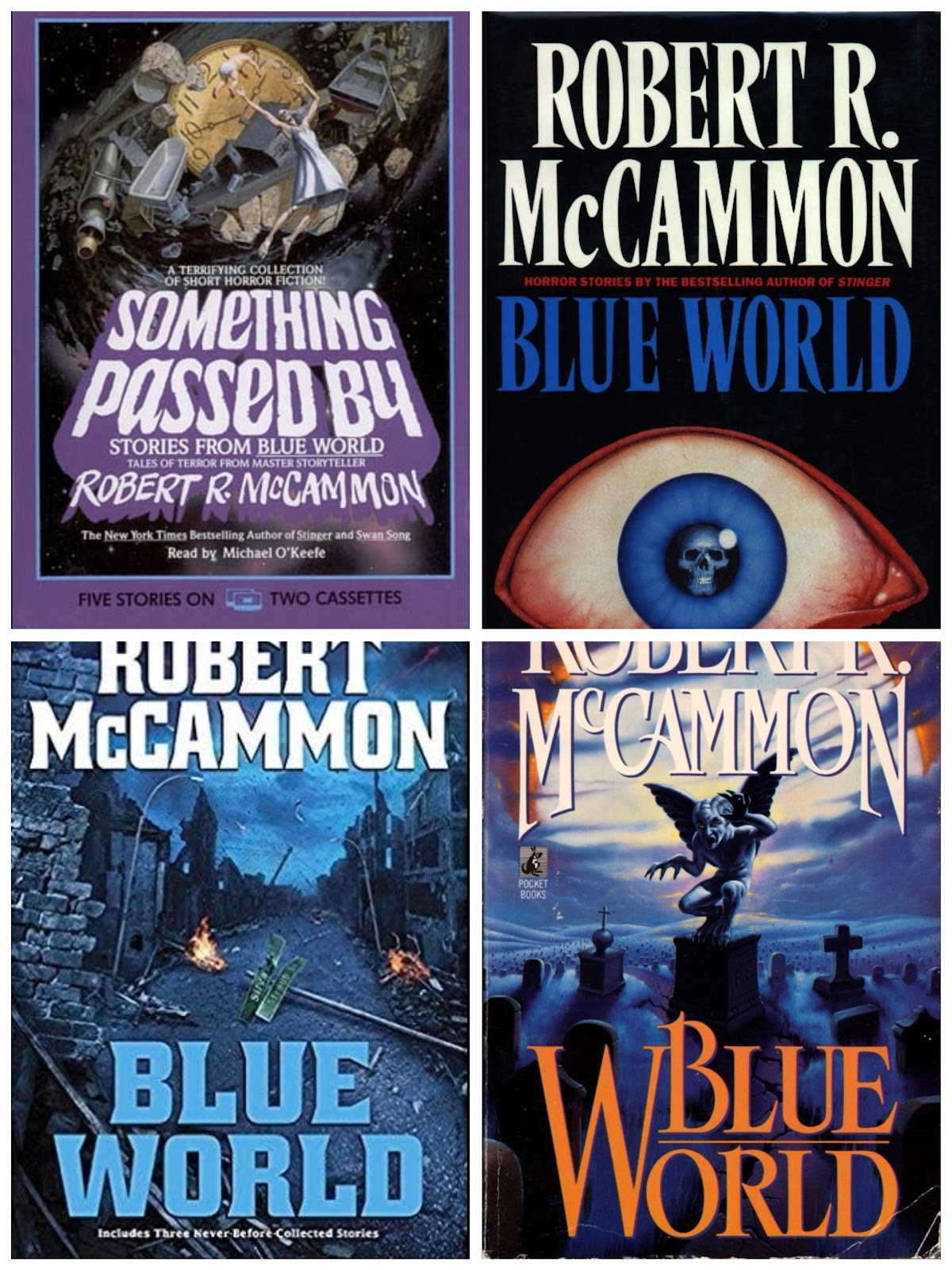
"Something Passed By" (1989) by Robert R. McCammon can be read online here.
From: https://www.robertmccammon.com/page/18/?cat=-1
* * *
Brenda sat down on the den's sofa, and Johnny turned on the Sony. Most of the channels showed static, but a few of them still worked: on them you could see the negative images of old shows like "Hawaiian Eye," "My Mother the Car," "Checkmate," and "Amos Burke, Secret Agent." The networks had gone off the air a month or so ago, and Johnny figured these shows were just bouncing around in space, maybe hurled to Earth out of the unknown dimension. Their eyes were used to the negative images by now. It beat listening to the radio, because on the only station they could get, Beatles songs were played backward at half-speed, over and over again.
Between "Checkmate" and a commercial for Brylcreem Hair Dressing--"A Little Dab'll Do Ya!"--Brenda began to cry. Johnny put his arm around her, and she leaned her head against his shoulder. He smelled J.J. on her: the odor of dry corn husks, burning in the midsummer heat. Except it was almost Christmastime, ho ho ho.
Something passed by, Johnny thought. That's what the scientists had said, almost six months ago.
Something passed by.
That was the headline in the newspapers, and on the cover of every magazine that used to be sold over at Sarrantonio's newsstand on Gresham Street. And what it was that passed by, the scientists didn't know. They took some guesses, though: magnetic storm, black hole, time warp, gas cloud, a comet of some material that kinked the very fabric of physics. A scientist up in Oregon said he thought the universe had just stopped expanding and was now crushing inward on itself. Somebody else said he believed the cosmos was dying of old age. Galactic cancer. A tumor in the brain of Creation. Cosmic AIDS. Whatever. The fact was that things were not what they'd been six months ago, and nobody was saying it was going to get better. Or that six months from now there'd be an Earth, or a universe where it used to hang.
Something passed by.
Three words. A death sentence.
On this asylum planet called Earth, the molecules of matter had warped. Water had a disturbing tendency to explode like nitroglycerine, which had rearranged the intestines of a few hundred thousand people before the scientists figured it out. Gasoline, on the contrary, was now safe to drink, as well as engine oil, furniture polish, hydrochloric acid, and rat poison. Concrete melted into pools of quicksand, the clouds rained stones, and… well, there were other things too terrible to contemplate, like the day Johnny had been with Marty Chesley and Bo Duggan, finishing off a few bottles at one of the bars on Monteleone Street. Bo had complained of a headache, and the next minute his brains had spewed out of his ears like gray soup.
Something passed by.
And because of that, anything could happen.
We made somebody mad, Johnny thought; he watched the negative images of Doug McClure and Sebastian Cabot. We screwed it up, somehow. Walked where we shouldn't have. Done what we didn't need to do. We picked a fruit off a tree we had no business picking, and…
* * *
I found McCammon's Usher's Passing is an evocative autumnal Appalachian horror novel. His other novels and short stories have thus far defeated me. Will Errickson's summation of McCammon is similar to mine:
....I need more from my horror fiction! This stuff's not trashy, it's not particularly well-written, it's not graphic, it's not haunting, it's not dangerous enough.
"Something Passed By" almost changed my mind. It starts out like a snarky exercise in absurdism, but the further the reader goes, the more horrifying and understandable the story's strange earth becomes.
McCammon, sadly, ruined his story by getting cute: every street and store in his little Nebraska town is named after a then-living horror writer.
....Silva Street ....Straub Street ....Spector Theatre ....Skipp Religious Bookstore ....McDowell Hill ....Barker Promenade ....Streiber Circle, right at the edge of town, where you had a full view of the fields and the stars, and kids used to watch, wishfully, for UFOs.
Yes, it's that puerile.
And a real disservice to McCammon's protagonists, Johnny and Brenda James. They didn't ask to end their fictive lives in the background while McCammon's daemon is yucking it up.
Jay
3 September 2022