Subscribe to my Substack

Showing posts with label Kingsley Amis. Show all posts

Friday, April 28, 2023

"To See the Sun" (1980) by Kingsley Amis

 In his essay “Horror Fiction and the Mainstream,” Ramsey Campbell tosses this off parenthetically: 


Kingsley Amis…. describes the process which led to his writing…. Ghost stories: essentially, becoming interested in a genre to the extent of of feeling able to contribute. In his case this produced several fine shorter pieces—I continue to regret not including “To See the Sun” in Uncanny Banquet, with nothing to blame but my own laziness…. [1]


To open my Complete Stories (2011) was the work of a moment.

Fourth paragraph:


     The first shades of dusk are here and I must pause to light my candle. With the passing of the day, what I see from this window has changed a little and goes on changing as I write. Beyond the dark-red roofs of the peasant cottages, sharply sloped against the heavy winter snows, there’s a level grassy stretch something like a mile across (though it’s hard to be precise) and bounded by an irregular line of low hills that give place to higher hills, these being in turn topped by summits of what must be pretty considerable elevation, seeing that Nuvakastra itself can’t be much less than two thousand feet up. Until a few minutes back, the expanse of the plateau, broken here and there by a farmhouse with its outbuildings, a mill, a church, at one point a tiny village of tiny houses, had a warm and inviting look, and the distant mountains, though indeed wild, seemed to offer a noble mystery, a kind of primeval innocence. But now, how remote, how lonely everything seems! Imagine what it must feel like to be a wayfarer on that exposed plain with night closing in, even more to be lost among those desolate ravines and crags, beset by strange sounds and half-fancied movements in the dark! What makes us think that hidden forces are likely to be benevolent?


"To See the Sun" (1980) is a remarkable short story and a hidden gem of the horror genre. Set in 1925, it relates in epistolary style the encounter of an English folklore researcher with the chatelaine of a castle in Dacia. As with all Amis fiction, its structure, style, and point of view are handled flawlessly.

I first heard about the story four days ago in an essay in the collection Ramsey Campbell, Probably (2020), wherein Campbell regretted not getting the story into his anthology Uncanny Banquet.

"To See the Sun" is available in both the collected and complete Amis short story collections.

Don’t miss it.


Jay

29 April 2023


__________
1.  Ramsey Campbell, Probably: Revised and Expanded (2020) p.31.

Monday, January 25, 2021

The decay of grammar is a feature of our time

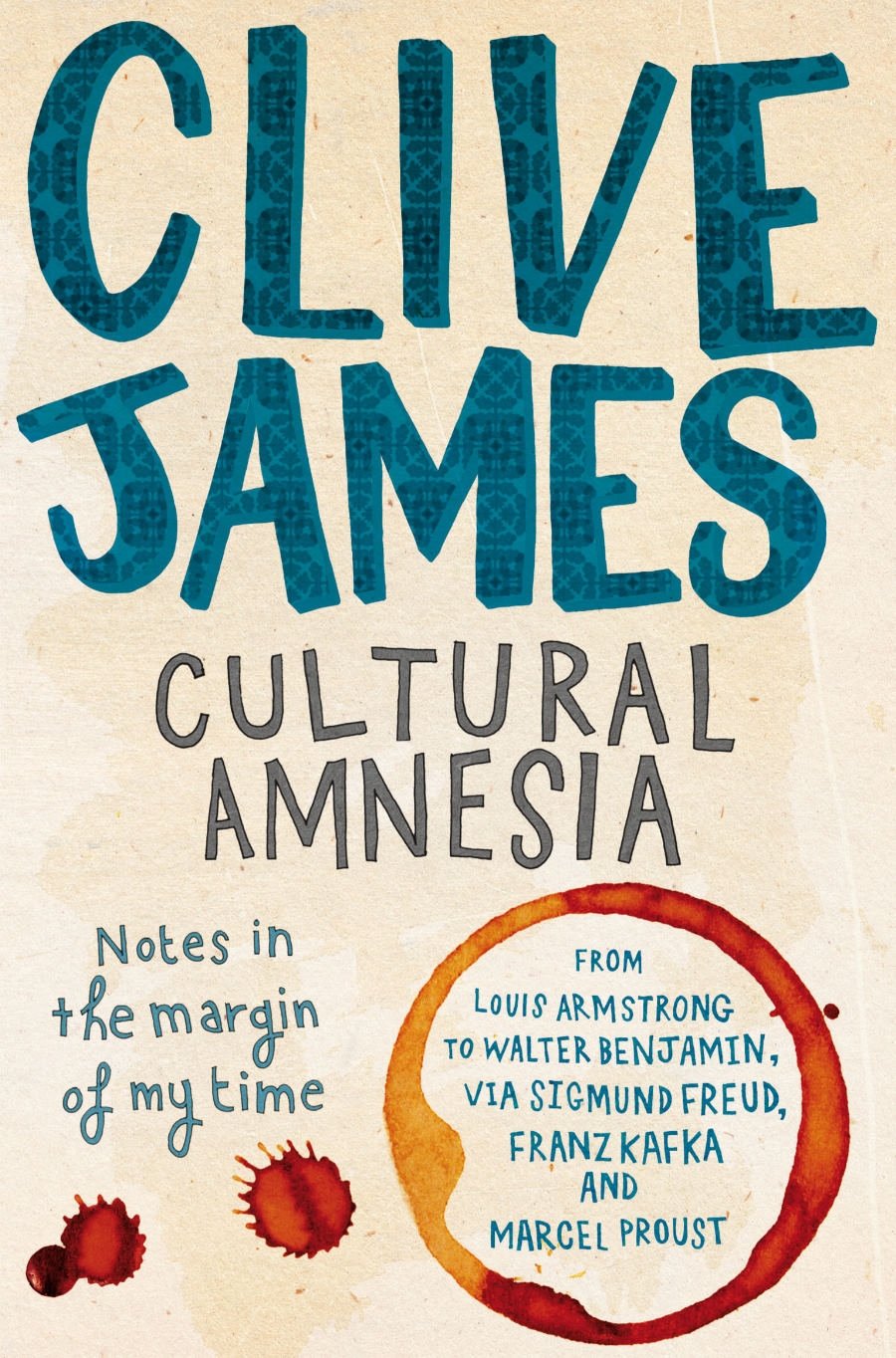
In his piece on Waugh in the collection Cultural Amnesia: Notes in the Margin of My Time (2007) Clive James touches on Kingsley Amis and the challenges more broadly of writing:


....The decay of grammar is a feature of our time, so I have tried, at several points in this book, to make a consideration of the decline part of the discussion. Except in a perfectly managed autocracy, language declines, and too much should not be made of the relationship between scrambled thought and imprecise expression. Hitler did indeed abuse the German language, and there was many a connoisseur of grammar and usage who was able to predict, from what he did to the spoken word, what he would do to people when he got the chance. But Orwell set his standard too high when he called for clean expression from politicians: it would have been sufficient to call for clean behaviour. At the moment, the use of English in Britain is deteriorating so quickly that 'phenomena,' after several years of being used confidently in the singular, is now being abetted by 'phenomenon' used in the plural. People sense that there ought to be a distinction. Everybody wants to write correctly. But they resist being taught how, and finally there is nobody to teach them, because the teachers don't know either. In a democracy, the language is bound to deteriorate with daunting speed. The professional user of it would do best to count his blessings: after all, his competition is disqualifying itself, presenting him with opportunities for satire while it does so, and boosting his

self-esteem. (When I catch someone on television using 'deem' for 'deign,' it consoles me for having found out that I have spent fifty years stressing 'empyrean' on the wrong syllable.) The most interesting aspect of the collapse is that the purist can do so little to stem it, and might even succumb to it himself, sometimes through a misinterpretation of his own credentials. Evelyn Waugh was a case in point. Nobody ever wrote a more unaffectedly elegant English; he stands at the height of English prose; its hundreds of years of steady development culminate in him. But he was wrong about how he did it. In A Little Learning he pronounced that nobody without a classical education could ever write English correctly. 


Only a few pages away from that claim, he wrote the cited sentence, which is about as incorrect as it could be, because he ends up talking about the wrong person. He meant to say that it was he, Evelyn Waugh, who was very hard up, and not Anthony Powell. To make the lapse more delicious, Powell himself was the arch-perpetrator of the dangling modifier. At least Waugh had got over the influence of Latin constructions. Powell, to the end of his career, wrote as if English were an inflected language, and at least once per page, in Powell's prose, the reader is obliged to rearrange the order of a sentence so that a descriptive phrase, sometimes a whole descriptive clause, can be re-attached to its proper object. In a book review I once mentioned Powell's erratic neo-classical prosody. He sent me a postcard quoting precedent as far back as John Aubrey. He was right, of course: our prose masters have always been at it. But our prose masters, now as then, ought not to prate about correctness while leaving so much of the writing to the reader. Correct prose is unambiguous. There is no danger of the clear becoming monotonous, because opacities will invade it anyway. Even the most attentive writer will have his blind spots, although deaf spots might be a better name. Kingsley Amis, who was an admiring friend of Anthony Powell, was nevertheless well aware that Powell's grammar was all over the place. (In a letter to Philip Larkin, Amis made a devastating short list of Powell's habitual errors.) Amis himself was a stickler for linguistic efficiency. The only mistake I ever caught him making was when he overdid it. In Lucky Jim, which is a treatise on language among its other virtues, Gore-Urquhart, Jim's mentor in the art of boredom detection, unaccountably seems to approve of the paintings of the fake artist Bertrand Welch. 'Like his pictures,' says Gore-Urquhart. Since he says everything tersely, the reader – this reader, at any rate – tends to assume that he means 'I like his pictures.' But what he means is that he considers Bertrand a fake, like his pictures. The reader is sent on a false trail by a too-confident use of the character's habitual tone. The author should have spotted the possibility of a misinterpretation. But we, the readers, should remember that it is one of the very few possibilities of misinterpretation that Kingsley Amis didn't spot. He spotted hundreds of thousands of them, and eliminated nearly every one. If he had written without effort, many of them would have stayed in. (Exercise: find a complex interchange of dialogue in Lucky Jim and count the number of times you are left in doubt as to who is speaking. You are never in doubt. Now try the same test with a novel by Margaret Drabble.)


The main reason a good writer needs a drink at the end of the day is the endless, finicky work of disarming the little booby traps that the language confronts him with as he advances. They aren't really very dangerous – they only go off with a phut and a puff of clay dust in the reader's face if they aren't dealt with – but those aren't the sounds that a writer wants his sentences to make. Evelyn Waugh didn't really want this sentence to make this sound, but he relaxed his vigilance. He knew what he meant, and forgot that the descriptive phrase was closer to the wrong person than to the right one. If we correct the sentence, we can guess immediately why things went wrong. 'A little later, very hard up and seeking a commission to write a book, I was introduced by Tony to my first publisher.' But the correct order would have struck the writer as awkward, because the loss of 'it was Tony' would have removed the connection to a previous sentence in which Powell had been talked about. In other words, it was Waugh's sense of coherence that led him into the error. With bad writers it is often the way. In their heads, it all ties up, and they don't fully grasp the necessity of laying it out for the reader. Even good writers occasionally succumb. Waugh, who was as good as they get, hardly ever did: but he did this time.