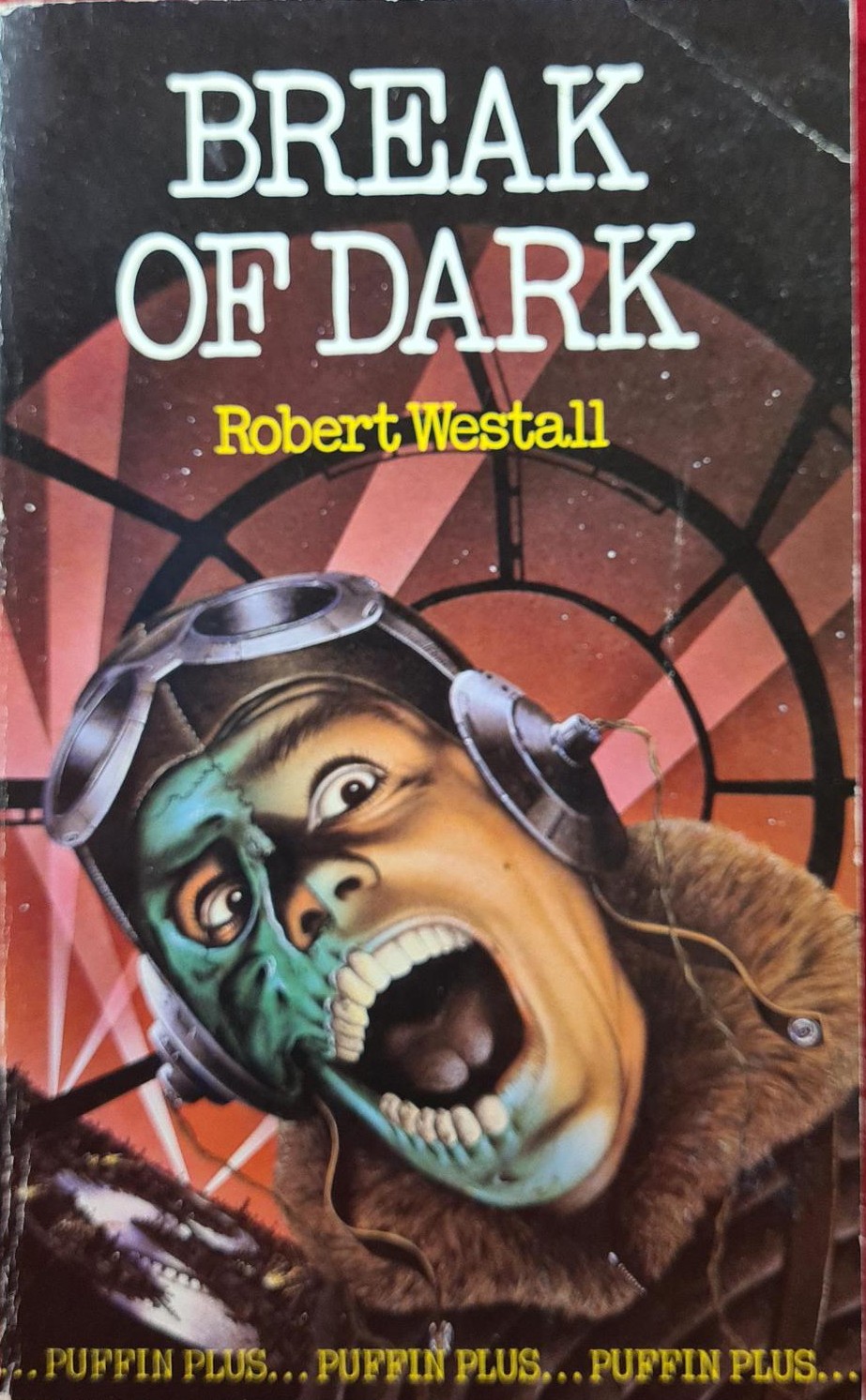
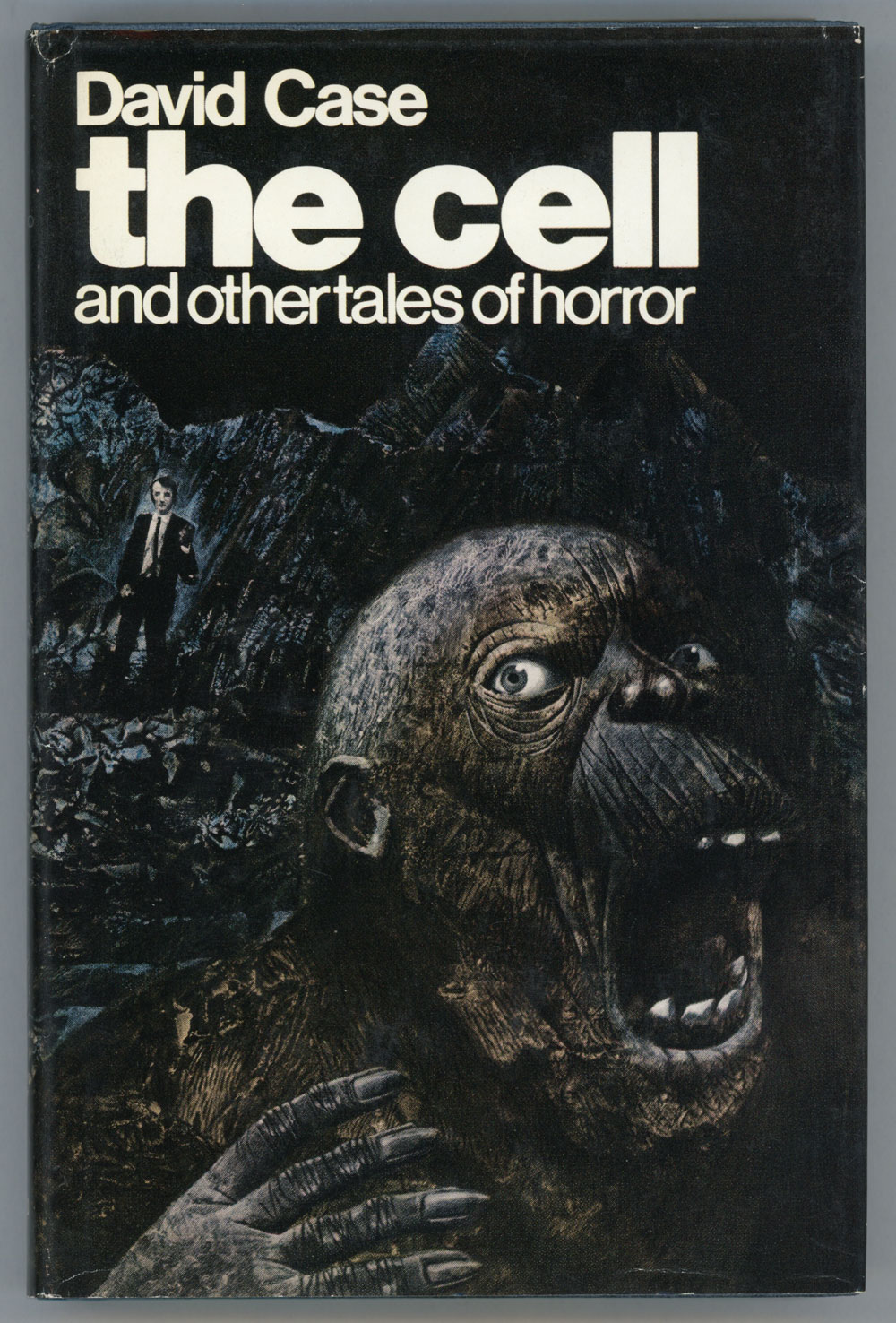
I have not read any of Robert Westall's non-supernatural fiction, so my judgments are based solely on enjoying the collections Antique Dust (1989), Spectral Shadows (2016), The Stones of Muncaster Cathedral (1991), and now Break of Dark (1982).
At his best, Westall is a superb writer. A novel like The Wheatstone Pond (1993) is unmatched in richness in an era known for excellent and unique UK voices: Bernard Taylor and John Blackburn, among others. Westall has a real strength in conveying uncanny locations, whether urban or rural. "Yaxley's Cat" (1991), for instance, is a strong evocation of rural wrongness and hidden crime; Westall's sure hand at pace and structure makes it a pleasure for the reader to assemble his puzzle. That he does it in under a hundred pages is stunning.
First person narrators are another strength of Westall's craft. Jeff Morgan, the worldly, successful antique dealer of The Wheatstone Pond (1993), completely sane and cosmopolitan at the start, slowly finds himself degenerating into a half-maddened vigilante as the pond reveals its horrors.
I would hesitate to term all the tales in Break of Dark (1982) supernatural stories. Weird, yes. Uncanny, definitely.
"Hitch-hiker" is one of the strangest and most entertaining. It suggests fey or faerie glamour: the seductive authority of (seemingly) easy money. Certainly it is a droll story of euphoria, then tears, flowing from answered prayers. In the last few pages Westall escalates from the frustration of granted wishes to true nightmare.
"Blackham's Wimpey" is a refreshingly hardboiled story about a haunted Wellington bomber. It's initial crew cheered and revelled at the fiery death of a German night-fighter pilot they shot down; the new crew must live through the aftermath of that earlier mission, and of the ever-increasing consequences of wartime bloodlust. Westall's treatment of this material is free of pacifist deck-stacking of petty-bourgeois moralizers when they handle similar material.
Domestic melodrama enriches the supernatural elements in "Fred, Alice and Aunty Lou." It is a story of mind-over-matter and the power of suggestion. It is also a story of insidious menace. That it starts as a practical joke just makes it worse.
They dined at Mission Control the day after Boxing Day. Angela spent a frantic first half-hour, Martini in hand, admiring and surreptitiously looking inside all Roger's three hundred Christmas cards. Certainly, she thought, the atmosphere seemed cordial enough. Peter couldn't have done anything too dreadful.
'Your card was most unusual,' called Biddy, head round the kitchen door.
Angela broke out in a cold sweat and slopped Martini down a swollen green-and-purple version of the Three Wise Men that made them look like week-old corpses. Biddy hurried across, wiping floury hands on her apron, and held up a positively huge Rembrandt card.
'It was sweet of Peter; it must have cost the earth – we're thinking of having it framed after Christmas.'
Even Roger beamed. Peter said:
'Trying to educate the New Illiterate. It'll be some years before the mini-chip gets round to Rembrandt.'
'Oh, yes, some years,' said Roger, almost jovially. Full of Christmas spirit. A happy moment, everybody smiling, like the cover of a glossy gift catalogue.
Then Roger's smooth white brow creased in a frown. 'Not like the other thing,' he said. He took a deep gulp of Martini. 'Show them, Biddy.'
Biddy searched carefully among the back ranks of cards for something small and hidden. 'I didn't like not to put it up at all. I mean, whoever they are, they meant well. And it is Christmas . . .' She fished it up and held it out to Angela.
It was a horrid little card, a mean little card. The cheapest and nastiest little card Angela had ever seen. Holly, robins and bells, and even carol-singers, all crammed into a three-inch square, smudgily printed in viciously dull shades of black and green.
'Look inside,' said Roger, with thin disgust in his voice. Angela looked. It said:
From Fred, Alice and Aunty Lou
'Well?' asked Angela.
'We don't know any Fred, Alice or Aunty Lou,' said Biddy. 'And look what else they've written.'
Angela looked.
Ever so nice to see you at Blackpool this summer. Will call between Christmas and New Year.
'We've never been to Blackpool in our lives,' screeched Roger. Well, it was nearly a screech anyway.
'Perhaps it came to the wrong house,' said Angela. 'Perhaps it wasn't meant for you, and you opened it by mistake.'
'I thought of that,' said Roger. 'No way. I looked through the dustbin till I found the envelope. It was addressed to us all right.'
'It was right at the bottom of the bin. He was out there till after midnight, looking. By torchlight. I went to bed in the end and left him to it. Then he brings this stinking little envelope up to the bedroom and drops tea leaves all over the white bedspread. Acting like he'd found the crown jewels . . .'
'Must have been good exercise for you, old man,' said Peter. 'Keep you in shape.'
Angela silenced him with a look. But Roger did not even seem to have noticed the jibe. He blundered on.
'But who are they? Who are they?'
Peter took the card from Angela, and assumed a heavily judicious air.
'Well, speaking as a non-computer, a mere scribbler, I would say they are definitely not our sort of people.'
Roger flinched. Peter continued.
'Definitely your workers, these. About fifty years old, I'd say; Fred and Alice, that is. I can almost see them. Fred in a cardigan, unbuttoned to let his paunch hang out. Shirt done up, but no tie. Balding, and so many wrinkles on his forehead, he could screw his hat on. Fond of his pint. Laughs at his own jokes. Alice . . . Alice is a bit more difficult. Tight-permed, blue-rinsed hair. Blue fly-away spectacles. Big handbag full of snaps of Darren and Tracy and the other grandchildren. As for Aunty Lou . . . thick, grey, lisle stockings and a smell . . .'
Angela could have screamed. That was exactly as she had seen them too. Was Peter a magician? Or was she just used to living with him, knowing the way his mind worked? He was certainly having a terrible effect on Roger; Roger had turned quite green around the gills. But why; why was he reacting so strongly? Then she had a vision. Roger and Biddy with their parties between Christmas and New Year, almost perpetual parties . . . bosses, colleagues – smart parties. And then a ring on the bell and . . . in walk Fred, Alice and Aunty Lou. Instant disaster.
Only it wasn't going to happen. Because Fred, Alice and Aunty Lou were inside her own husband's head. This was the second card he'd sent. She opened her mouth to spill the beans. Then she looked at Peter. And he firmly shook his head at her, with a look that froze up her mouth.
'If they come near here,' said Roger desperately, 'I'll call the police.'
'Oh, darling, you can't,' wailed Biddy. 'It's Christmas . . .'
She didn't tackle him about it until they were drinking their Horlicks. He was sitting in the bedroom chair, wearing a large-checked dressing gown that he must have had since he was fourteen; both the tassels of the cord had unravelled, and one elbow was paling into a hole. She had twice bought him nice new dressing gowns; he had never worn either. But he looked reassuringly harmless in this one; still a fourteen-year-old, wearing a false beard for a joke. Or like an amiable dancing bear.
She decided on the casual approach. 'That Christmas card. What a scream. Roger's face! I could have died. How did you fake the writing?'
It had been a mean, crabbed script, totally unlike Peter's wild, generous hand.
He looked at her; she couldn't read the expression in his eyes.
'I didn't fake any writing.'
'You got someone to write it for you. Go on, admit it. That was the second card you sent them.'
He took a deep swig of Horlicks, and stroked the brindled cat on his knee. The brindle pushed her cheek against his face enthusiastically; all the cats adored him; queued up, had fights to sit on his knee.
He looked at her. 'Drop it, Angel. It's got nothing to do with you.'
She still felt absolutely safe with him, because she knew he loved her. But it suddenly struck her that he did not love everybody. That perhaps not everybody was as safe as she was . . .
The second card came in the middle of January. From Blackpool. It said:
Just having a few days winter break. Weather is quite bracing. Wish you were here. Will call soon.
Love,
Fred, Alice and Aunty Lou
The front was a picture of Blackpool Prom., with a row of hotels. One window of one of the hotels was marked with an X in blue biro.
'You could check on that,' suggested Peter.
'I did,' said Roger. 'I phoned. They were registered. Mr and Mrs F. Brown. And a Mrs Louise Brown, booked into an adjoining room. I drove up there – and I wish I hadn't. I saw the register; the hotel staff thought I was barmy. It was the same handwriting – I took a photocopy for the police. The address they gave was 26 Brannen Street, Flamborough.'
'And?' asked Peter.
'The whole of Brannen Street is derelict – empty. They're demolishing it next week to build a factory for the Japs.'
'Didn't you make enquiries?'
'No one to ask.'
'Get any description from the hotel staff?'
'It was one of those cheap, pensioner block-bookings. They couldn't remember a thing.'
'So you wished you hadn't gone,' Peter said gently.
'Oh, that's not why I wished I hadn't gone,' replied Roger grimly. 'On the way home down the motorway, a bloody juggernaut crossed the central reservation and came straight at me. I shouldn't be alive. The Jag's a write-off.'
There was a long pause, then, before Biddy asked Peter how the latest book was going.
Angela and Biddy were sitting in the kitchen of Mission Control having coffee. It dawned on Angela after half an hour that, every so often, Biddy was giving a surreptitious sniff.
'Got a cold coming?' asked Angela sympathetically. Biddy did look rather under the weather.
'No, why?' asked Biddy with a manufactured burst of brightness.
'You keep sniffing.'
'There seems to be a smell,' said Biddy. 'Can you smell anything?'
Angela sniffed in turn. The idea of any smell in Mission Control was almost sacrilege. There were things for dealing with smoke and fumes (in their little white containers like knights' helmets), not just in the kitchen and loo, but in every room. Angela had noticed that since her marriage, Biddy too had gone completely odourless, like water with the faintest hint of pine. Now, in the deodorized bleakness of Mission Control, there was a faint odour, obvious as a distant lighthouse at sea on a dark night.
'Yes, I can smell something,' said Angela.
'I've changed all the air-fresheners twice this week,' said Biddy fretfully. 'But they don't seem to be working. I couldn't get Roger to bed until two o'clock this morning. He kept wandering round and round, snatching open doors and looking under cushions over and over again, like a mad thing. Threatening to call the police.'
'Why, for heaven's sake?'
Biddy shrugged despairingly. 'That smell you can smell – what's it a smell of?'
Angela drew in deeply through her finely-flaring nostrils. Finally she said, 'An old lady. Mints and . . . and . . .'
Biddy nodded grimly.
'But surely you've had old people here?' The Jungle saw a fair number of elderly relatives from time to time, including Peter's father, who smoked a pipe that smelled like the corporation incinerator.
'Never a one,' said Biddy. 'We go to them – when we have to – twice a year. I miss my gran a lot. Roger can't stand old people.'
'Oh.' Angela sniffed again. She was rather proud of her sense of smell. She got up and moved around the room.
'Not you as well,' protested Biddy, weakly. But Angela was hot on the scent, keen as a schoolgirl with a new game.
'It seems to be coming more from the lounge.'
Pity the privileged life of a vicar. Until he crosses paths with an uncanny mystery. "St Austin Friars'' is parish horror, the young vicar slowly uncovering something unimaginable.
The meal was good, though a little strange and spicy. So was the wine. The daughter – no, the granddaughter – whose name was Celicia, moved about serving it as silently as a cat on the thick, red carpet. The rest of the time, from the side, she watched Martin as he talked. Or rather, listened.
Mr Drogo talked. In between eating with the most exquisite manners, he talked about Muncaster; he talked about St Austin's, right back to the time of the Augustinian canons. He talked with the authority of a historian. Martin was fascinated, the way he showed one thing growing out of another. He made it sound as if he'd lived right through it. Martin stopped trembling eventually. But if he listened to the grandfather, he secretly watched the girl. The girl watched him, too, a slight smile playing about the corners of her mouth.
'About that phone call.' Martin's voice, almost a shout, broke through the smooth flow of Mr Drogo's talk. 'Was I meant to come and tell you?'
'Yes, you were meant to come and tell me.' Mr Drogo pulled a grape from a bunch that lay on a dish near him and popped it into his mouth with evident enjoyment.
'But . . . why?'
'I am going to die – on March 26th.' He helped himself, unhurriedly, to another grape.
'Oh, I see. The doctor's told you. I'm so sorry.' Then reality broke in like a blizzard. 'But . . . but he can't have told you the exact date!'
'I chose the date.' Mr Drogo extracted a grape pip from the back of his excellent teeth, with the delicacy of a cat. He looked as healthy as any man Martin had ever seen.
'But what—'
'Do you know how old I am?' asked Mr Drogo. He might have been asking the right time. 'I am one hundred and ninety-two years old, on March 26th. I thought that made it rather neat.'
Martin stared wildly at the girl, as if assessing how much help she would be against this madman.
'And I am eighty-four next birthday,' said the girl. She smiled, showing all her perfect white teeth. Martin noticed that the canines were slightly, very slightly, longer than usual. But not more than many people's were . . .
Martin leapt to his feet, knocking over his chair behind him with a thud. 'I came here in good faith,' he cried. 'I didn't come here to be made a fool of!'
'We are not making a fool of you. Have you got your birth certificate, my dear?'
The girl disappeared into the hall, returning moments later with the certificate in her hand. She passed it across to Martin. Even now, in his rage and fear, her perfume was soothing . . . Hands trembling again, he unfolded the paper roughly, tearing it along one fold. It was old and frail and yellow.
Celicia Margaret Drogo. Born July 8th, 1887, To William Canzo Drogo and Margaret Drogo, formerly Betyl.
'Do you want to see her parents' marriage certificate?' asked Mr Drogo gently. 'I want your mind to be absolutely satisfied.'
'I'd like my coat,' shouted Martin, only half hoping he would be given it.
'As you wish,' said Mr Drogo. 'But,' he added, 'it would be easier for you if you went with my granddaughter now. She could make everything perfectly clear to you. She helped Canon Maitland to see things clearly. We gave Canon Maitland a very contented life for many years. He was almost one of us.'
'Get lost!' shouted Martin, most regrettably. 'All I want from you is my coat!'
They did not try to stop him. Celicia came with him, but only to help him on with his coat. Her fingers were still gentle, pleading, on the nape of his neck. Then he was outside and running for the car. He drove out of the drive like a lunatic, narrowly avoiding a collision with a Rover that hooted at him angrily until it turned a corner. He made himself pull up, then, and sit still till he had calmed down. Then he drove home shakily and painfully slowly. Sheila was just standing on the doorstep, pulling on her gloves before going to the pictures; she had a distaste for being in the rectory on her own at night and went to watch whatever film was on, however stupid.
"Sergeant Nice '' recounts events whose cause and source can only be unknowable, redolent of the Fortean. The sergeant of the title is pushed to extremes of action when he confirms the weird experiences effecting holiday-makers at the local beach.
At five o'clock the next afternoon, young Thomas shouted and waved from his shop when Sergeant Nice was still the other side of Front Street. He was positively jumping up and down, like a chimpanzee before a tea party, causing passing holiday-makers to give him odd looks and his shop a wide berth.
He seized Sergeant Nice by his neatly starched shirt. The sergeant removed the sweaty hands with some distaste.
'C'mon, c'mon – I've got my projector set up in the back room – it's incredible – incredible. You won't believe it!'
From the look on Mrs Thomas's face, the chimp act had been going on for some time, and she obviously laid all the blame at the sergeant's door. Ignoring her ominous silence, Thomas bustled the sergeant into the back room, which was so dark that the sergeant walked straight into the projector, almost sending it crashing to the floor, and practically had to grope and crawl to a seat.
'All set!' yodelled Thomas. 'All set? Columbia Pictures present . . . the greatest mystery of all time . . . fit to stand with the sea drama of the Mary Celeste . . .'
The projector began to whirr. A perfectly focused picture of the clocktower bloomed on the screen, after the flashed sequence of numbers. It really couldn't have been clearer. There were the motorbikes; there were the bikers. The scene brightened momentarily, before the electronic exposure meter adjusted. A bright white glow coming from the right, lighting up the right-hand side of the bikers' faces.
'That's the street light exploding,' said young Thomas, needlessly.
The bikers' faces turned towards the light; looks of glee appeared on them. The bikers as a man ran off to the right and out of the picture. Other passers-by remained, motionless, looking at the invisible shower of sparks that lit up their faces. Nobody looking anywhere near the horse trough. Except the camera . . . Now for it! Now for a picture of the thief, good enough to give to every policeman in Oldcastle.
Nobody. Nobody. Nobody went near the horse trough.
The light from the right faded. The bikers began to drift back towards their bikes. One looked into the trough, saw his helmet was missing, began to gesticulate . . .
The reel of film ran out and the screen went blank, then dark.
'Run it through again,' said Sergeant Nice, letting out a long-held breath.
'I didn't spot it the first time either,' said young Thomas, smugly.
This time the sergeant watched the piled helmets in the horse trough. Their bulbous, shiny tops were quite visible over the rim. He ignored the departing figures of the bikers, kept his eyes so fixed on the helmets that he did not even blink.
'Stop!' said the sergeant. 'Run it back a bit. Now on again. Good God, I don't believe it! Run it through again.'
They ran it through ten times in all, while the sergeant chain-smoked four of the five cigarettes he allowed himself a day. Finally he said, and he was glad the room was in darkness,
'The helmets don't just vanish . . . they sink. Through the bottom of the trough . . .'
'Yeah,' said Thomas, breathily. 'They just sink. Did you see one of them suddenly roll clear of the rest?'
'Yes.'
'I've got it all worked out,' said Thomas, triumphantly. 'I've had time to think about it. That horse trough's a fake; it's got a false bottom. Did you know, there's an old manhole cover under there? I worked it out from the pattern of cobbles in the road. What a way to nick things! Everybody puts their bags in that trough. Distract people's attention, work the trap door and, bingo, you've got a new Japanese camera. Crafty sods, lurking down a manhole cover.'
'Let's go and have a look,' said Sergeant Nice, heavily. He knew there was something wrong with the whole theory.
They walked across and stared down into the sunlit depths of the horse trough. A woman was sitting on the far edge of the trough, with her bag inside, among the crisp bags and lolly-sticks. Sergeant Nice asked her to move it and herself; and for once he wasn't nice about it. He cleaned out the litter thoughtfully, as if he were recovering the Crown Jewels.
There was no crack or slit anywhere in the horse trough. Like most of its kind, it had been carved from one massive block of limestone. Sergeant Nice went over every inch of its surface, scraping away with his massive, many-bladed Swiss pocket-knife.
Nothing.
'That's mad!' exploded Thomas. 'There's got to be a trap door. We'll have to look from underneath – down the sewer.' People began to stare at him curiously. Sergeant Nice hauled him away by brute force, just in time.
Jay
17 May 2021