Subscribe to my Substack

Friday, May 13, 2022

"The Trumpet Shall Sound" by Sylvia Townsend Warner

In the uncertain hour before the morning

    Near the ending of interminable night

    At the recurrent end of the unending

After the dark dove with the flickering tongue

    Had passed below the horizon of his homing

    While the dead leaves still rattled on like tin….

– "Little Gidding


*   *   *


"The Trumpet Shall Sound" by Sylvia Townsend Warner makes a dizzying circle around the pinched lives of its mainly women protagonists during the second world war. Three sisters react to and comment upon changing mores: some more tolerant than others while clinging to the wreckage.


While the story is told in third-person, the main point of view character is the unbending Mrs. Mullen. The story takes place the day of brother Dick's funeral and burial.


....The spring sunshine shone full into the front room. There was a fire burning too, the room was very warm. But Cathie kept on shivering and pulling up the collar of her coat. Not tired enough, thought Mrs Mullen. If Dick had been brought home to die the nursing and the running about and the sitting up and one thing and another would have knocked the nerves and the shivers out of her, left her in the right frame of mind to appreciate the repose of a funeral. These young women who thought they were making things so much easier for themselves, small families, bakers' bread, nowadays not even the whites boiled, were making a great mistake. If you'd got to be a woman it was better to be an old-fashioned woman, with plenty of work to keep your mind off it.


At the cemetery, a family named Blackbones arrives to pay respects. 


     'I've never heard of such a thing. After the way Mrs Dodger walked off with our Aunt Mabel's furniture, and Dick never getting as much as a teaspoon, and all of us knowing he was her favourite nephew. Cathie! What are those Blackbones doing at your father's funeral?'

     'Well, I suppose they are coming too, Aunt Lot.' 

     'My word! And is that all you can do about it?' 

     'Well, what can I do?' 

     'Did you know they were coming?'      Ramona came stare-eyed and assertive out of her doze. 

      'Why shouldn't they come, Mrs Mullen? It's Uncle Dick's funeral, I suppose.'


The ceaseless, roiling use of humor to undercut pomposity and small-mindedness is the chief pleasure of "The Trumpet Shall Sound." 


In the end, before Mrs. Mullen can forgive the Blackbones for their past offenses, the Luftwaffe intervenes to stay her hand. 


____

"The Trumpet Shall Sound" 

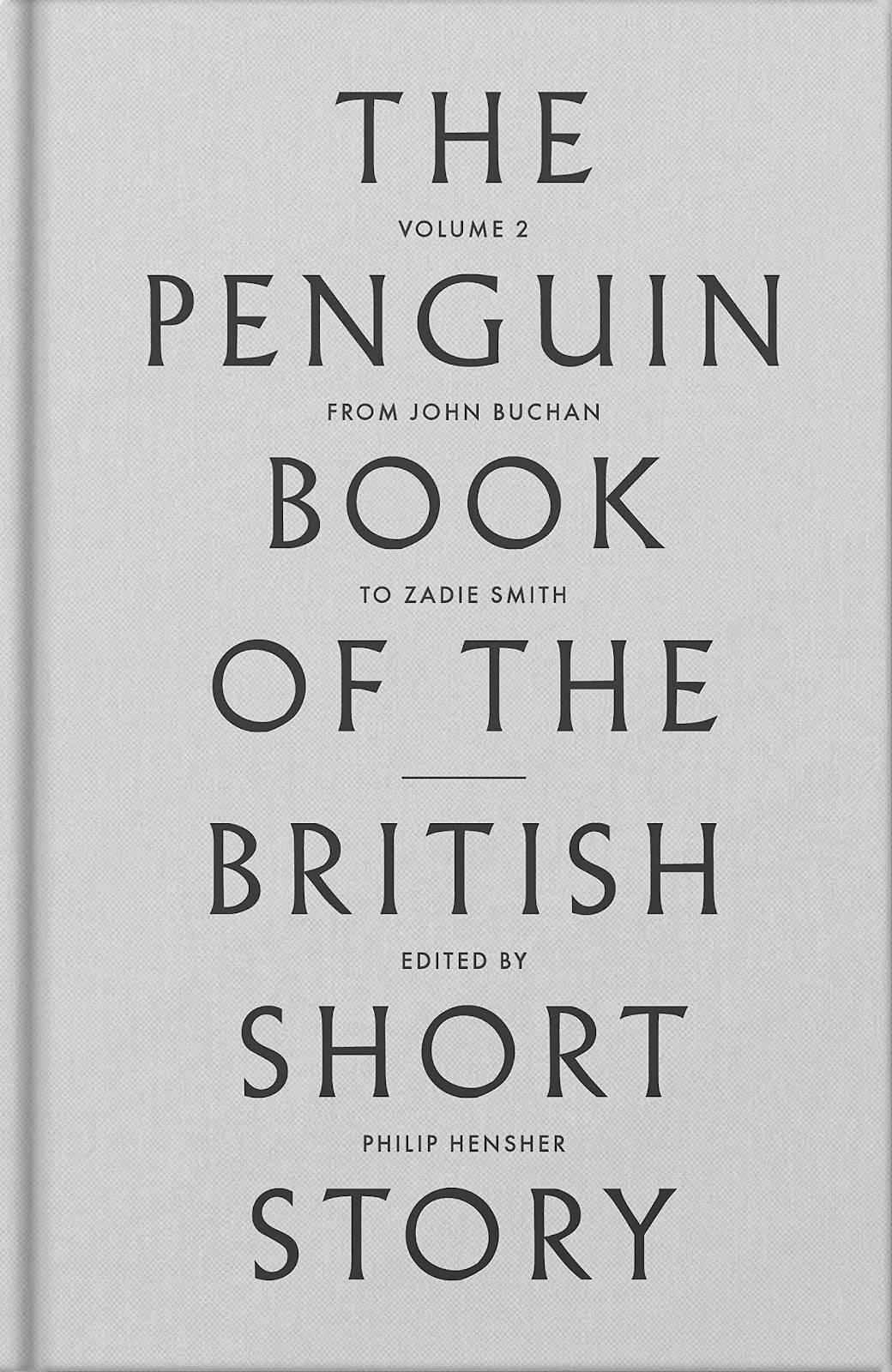
From: The Penguin Book of the British Short Story Volume 2 (2016)


Thursday, May 12, 2022

"The Point of Thirty Miles" by T. H. White

'....He was still a good way in front of us, gentlemen, but he was beginning to be a tangible identity. I even winded him myself: a whiff of sour bread and stale bananas. I suppose I ought to have stopped the pack; but he seemed just possible, and I was young. The glory of achievement went to my head.'


"The Point of Thirty Miles" by T. H. White is a first-person short story presented as an after-dinner anecdote. Like "The Troll," it is from a larger portmanteau title: Gone to Ground: The Sporting Decameron (1935).  


The sport in "The Point of Thirty Miles" is fox-hunting. Frosty, the teller, is an old man recalling an extraordinary adventure from youth.


....The hounds came out of the spinney slowly and well together. They were half into the field, almost under the metaphorical shadow of the wire, when a grey creature that looked like a cross between the Benicia Boy and a bear jumped up amongst them. Personally, the first thing I thought of was a sheep-dog. There was nothing to be done at all. The Master, who was hunting them because the huntsman had asthma, was on the hither side of the wire with the field, and we whips had cleared off round the spinney. The grey creature just went straight away for a windmill on the skyline, and the hounds went after him, within a few yards, as soon as they had recovered from their surprise. The cry was amazing. The field all turned up the fence and went bucketing along for the nearest gate, which proved to be at the farthest corner of a big enclosure. After that there was no hope of stopping hounds. 'Gentlemen, I must not bore you with the details of the run; and in any case I couldn't, because I have forgotten the country. The important things about it were that our quarry ran practically straight and that I was the only person on a fresh horse. I don't suppose that you have ever hunted a wolf. He went away at a tremendous loping pace, a kind of wolf-burst which brought the hounds back to scent within a couple of fields. Then he must have settled to a steadier gait, and he ran like a human being pursued – straight away from his pursuers. 

     'Like a human being,' repeated Frosty meditatively, and the Professor handed him a cigar.


Tales of pursuit over open country are among my favorites. UK writers skilled at the laconic and dead-pan tone  are some of its finest craftsmen.


T. H. White clearly conveys the experience of being outdoors and on the move. He depicts the use of every sense with relish and knowing economy.


....Every now and then, but very rarely, we had a bit of country and soft going to make up for the eternal trot and canter along the roads. At four o'clock there was only the Master and myself. He was in a temper and couldn't bring his mount to canter. I offered him mine, but he had worked himself into such a fury about the hounds running riot that he wouldn't listen to anything likely to bring him into salutary touch with them. At the same time I had a faint suspicion that he had by now reached the stage when he preferred his home to his hounds. He simply told me to get along as well as I could, and send him a wire from Dover if I caught them. Well, by now I was excited. Anything like a record is apt to excite a young man. So, although it was not enjoyable, and although my horse was beginning to fade, I set out on my travels with a rising heart. To be the only one up with the hounds on a historic run, perhaps on the most historic run of all! And then there was the nature of the quarry: the last wolf in England....


Jay

12 May 2022


_____

"The Point of Thirty Miles" 

From: The Penguin Book of the British Short Story Volume 2 (2016) 


Wednesday, May 11, 2022

The experience of class defeat: Notes on H. P. Lovecraft and At The Mountains of Madness


[....]Lovecraft's fiction is haunted by the spectre of cosmic fatalism: the idea that human beings can never possibly fathom the mysteries of the universe and that the universe, in turn, remains indifferent to humanity. To Lovecraft, human beings had as little chance of understanding the inner mechanisations of hyperspace as an ant does planet Earth. It's a viewpoint that chimes perfectly with the lumbering, misanthropic gait of Electric Wizard: the world cast as a pitiless void, life a cosmic accident.


--   Sword, H. (2022). Monolithic undertow: In search of sonic oblivion. White Rabbit.


[....] There they were—the three sledges missing from Lake's camp—shaken by a hard usage which must have included forcible dragging along great reaches of snowless masonry and debris, as well as much hand portage over utterly unnavigable places. They were carefully and intelligently packed and strapped, and contained things memorably familiar enough—the gasoline stove, fuel cans, instrument cases, provision tins, tarpaulins obviously bulging with books, and some bulging with less obvious contents—everything derived from Lake's equipment. After what we had found in that other room, we were in a measure prepared for this encounter. The really great shock came when we stepped over and undid one tarpaulin whose outlines had peculiarly disquieted us. It seems that others as well as Lake had been interested in collecting typical specimens....


-- end of chapter nine, Lovecraft, H. P. (2005). At the Mountains of Madness: The Definitive Edition. Modern Library.


*   *   *


[....]Lovecraft was notoriously not only an elitist and a reactionary, but a bilious lifelong racist. His idiot and disgraceful pronouncements on racial themes range from pompous pseudoscience—"The Negro is fundamentally the biologically inferior of all White and even Mongolian races"—to monstrous endorsements—"[Hitler's] vision is . . . romantic and immature . . . yet that cannot blind us to the honest rightness of the man's basic urge . . . I know he's a clown, but by God, I like the boy!"


-- excerpt from China MiĆ©ville's 2005 introduction to:   Lovecraft, H. P. (2005). At the Mountains of Madness: The Definitive Edition. Modern Library.


Several days ago I woke at 2 a.m. to find myself listening to the end of chapter nine of  HorrorBabble's audiobook of At the Mountains of Madness. An enchanting experience: akin to reading a page without being given the title, date, plot or author's name.


As a Marxist I'm passionate about context: dates of both production and reception are crucial. Production of what? Production of anything whose use-value is the product of human labor. 


Free of accreted layers of literary and historical context, listening to At the Mountains of Madness in this way was an uncanny and sublime experience.


*   *   *


At the Mountains of Madness (1936)


My first reading of ATMM was in one of the early-1980s Del Rey / Ballantine paperback reprints: At the Mountains of Madness and Other Tales of Terror. This was Christmas money well-spent by my sixteen year old self, and undoubtedly a peak instance of reception, as I read ATMM during the cold and snowy final week of December 1982.


To the first-time reader ATMM is a staunchly distanced story. Dramatized action does not begin until the halfway point; prior to that, we might be reading a report by one of J. G. Ballard's corporate or civil service psychiatrists. Only after reading another late Lovecraft novella are we able to deduce the first-person narrator's name: geologist William Dyer of Miskatonic U.


Such distancing, such absolute absence of conventional melodrama, makes for a beautifully concise piece of fiction. The later toing and froing of stories like "Who Goes There?" is absent: there is no genre veil between readers and protagonists as Dwyer and Danforth climb up through millenia of levels from an underground labyrinth toward daylight and salvation in the city of the Old Ones:


      So we glanced back—simultaneously, it would appear; though no doubt the incipient motion of one prompted the imitation of the other. As we did so we flashed both torches full strength at the momentarily thinned mist; either from sheer primitive anxiety to see all we could, or in a less primitive but equally unconscious effort to dazzle the entity before we dimmed our light and dodged among the penguins of the labyrinth-centre ahead. Unhappy act! Not Orpheus himself, or Lot's wife, paid much more dearly for a backward glance. And again came that shocking, wide-ranged piping— "Tekeli-li! Tekeli-li !"

     I might as well be frank—even if I cannot bear to be quite direct—in stating what we saw; though at the time we felt that it was not to be admitted even to each other. The words reaching the reader can never even suggest the awfulness of the sight itself. It crippled our consciousness so completely that I wonder we had the residual sense to dim our torches as planned, and to strike the right tunnel toward the dead city. Instinct alone must have carried us through—perhaps better than reason could have done; though if that was what saved us, we paid a high price. Of reason we certainly had little enough left. Danforth was totally unstrung, and the first thing I remember of the rest of the journey was hearing him light-headedly chant an hysterical formula in which I alone of mankind could have found anything but insane irrelevance. It reverberated in falsetto echoes among the squawks of the penguins; reverberated through the vaultings ahead, and—thank God—through the now empty vaultings behind. He could not have begun it at once—else we would not have been alive and blindly racing. I shudder to think of what a shade of difference in his nervous reactions might have brought.

     "South Station Under—Washington Under—Park Street Under—Kendall—Central—Harard. . . ." The poor fellow was chanting the familiar stations of the Boston-Cambridge tunnel that burrowed through our peaceful native soil thousands of miles away in New England, yet to me the ritual had neither irrelevance nor home-feeling. It had only horror, because I knew unerringly the monstrous, nefandous analogy that had suggested it....


All respect to Dwyer's conclusion, but I would also propose that Danforth's action in counting-off the subway stops presents a mind desperate for "home-feeling," fumbling at a last means to preserve sanity and keep running.


*   *   *


What Dwyer and Danforth found under the mountains of madness in the seemingly uninhabited city of the Old Ones was exotic, but not unknown in earth's history. Hydraulic and agricultural societies  built on slave labor have not been rare. Lovecraft's exoticism is in creating a civilization so ancient its artworks and preserved knowledge have withstood and depicted ice ages, warming ages, and physical ravages today understood as the action of plate tectonics.


The Old Ones, keepers of the flame, preservers of splendor and learning, lost the class war against slaves they themselves created. A few slaves apparently remain, inquisitive in their own way (or simply aping their rulers?), but the first contact between them and human explorers follows a familiar pattern to other encounters in history.


The "flight by night" out of the labyrinth as Dwyer and Danforth race to their aircraft recapitulates many similar night journeys in world literature. The two men are committed to warning the world. Many individuals over millenia were probably similarly motivated to halt the development of evident catastrophes. Certainly, we know they all failed in their efforts.


*   *   *


In his introduction to the Modern Library edition of At the Mountains of Madness: The Definitive Edition, UK petty bourgeois socialist China MiƩville claims that for all H. P. Lovecraft's reactionary opinions, "he became a socialist, advocating some social programs and government control of the economy." (This smacks of MiƩville trying to have his cake and eat it, too. JR)


No political opinions expressed by Lovecraft during his adulthood were unusual for a man or woman of his class. Many men and women left similar circumstances behind when they joined the labor movement and its revolutionary socialist vanguard. Alas, Lovecraft was not won to Bolshevism, or even by an electoral brand of social democracy. Instead, his tendency was toward a US version of National Socialism, a mystifying sop designed to preserve the dictatorship of capital.


Fear of social degeneration/decline was the pauperized Lovecraft's motivation. He apparently did not show any interest in joining Pelley's Silver Shirts or the Coughlin organization, but many with similar backgrounds and skills did.


Miéville correctly points out Lovecraft's adaptation to Spengler's geopolitical rationalizations. It strikes me that Lovecraft might have also been a passionate reader of pseudoscience books like Degeneration by Max Nordau, a best seller in the fin de siècle middle class milieu of Europe.


In his superb 2018 study Weird Fiction in Britain 1880–1939, James Machin writes:


[....]in Degeneration (1892), the German sociologist Max Nordau made explicit links between Decadent literature and actual social and biological decline, evoking pseudoscientific and garbled Darwinism in his use of the term 'degeneration' and propagating the specious sub-Lamarckian notion that moral recidivism and physical dissolution could be inherited and could fatally weaken a bloodline within generations.

     For Nordau , the fin de siĆØcle and Decadence became pejorative synonyms for an amorality, morbidity, and incontinence that threatened not only the social fabric but the future of civilization itself. Atavism was evidenced by physical, cultural, and psychological symptoms, and manifestations of degeneracy were to be found in the 'stigmata' of misshapen physiognomy ('disproportionate growth of particular parts'), the 'inchoate liminal presentations' of degenerate contemporary art, and the 'mental imbalance' of the artist (Nordau 1895, 23, 1895, 61). According to Nordau , some figures, such as Paul Verlaine, had the dubious honour of exhibiting all these symptoms simultaneously (Nordau1895, 119–120). Over the course of nearly 600 pages, Nordau details a bewildering quantity and variety of symptoms of degeneration, including 'emotionalism', being 'tormented by doubts', the seeking after 'the basis of all phenomena', revolutionary and anarchist activity, political inclination, Buddhism, and pessimism. Even the tendency to 'associate in groups' is included on a charge sheet that seems to encompass the sum of all human activity, and Nordau identifies figures as disparate as Wagner, the children's illustrator Kate Greenaway, furniture-designer Rupert Carabin, and Oscar Wilde as all exhibiting the atavistic neurological disorders of the degenerate mind.

     The absurd reach of Nordau's thesis was certainly identified and criticized at the time, although typically with a concession to the ambition of Nordau's vision: Israel Zangwill described it as being 'as brilliant as it is wrong-headed' and the Review of Reviews called it a 'bad but interesting book' in which Nordau's 'idea' is 'pressed home unsparingly with manifold examples, and with a continuous vigour of writing' (Zangwill 1895, 160). George Bernard Shaw was moved to write a lengthy riposte for the American journal Liberty , and although he would later claim that with his rebuttal of Nordau the ' Degeneration boom was exhausted', Nordau's treatise still ran into seven editions in the year of its publication alone in Britain. Moreover, his perception that some contemporary cultural trends were predicated upon a 'contempt for traditional views of custom and morality' certainly resonated with more reactionary commentators (Shaw 1919, 12; Nordau1895, 5). The influence of Degeneration was also intensified by the concurrency of its popularity with the Wilde trial, the first British edition being published four days after 'the Marquess of Queensbury left his libellous card at the Albemarle' (Sƶder 2009, 63).


*   *   *


H. P. Lovecraft was never a socialist.


Many revolutionary socialists like myself don't demand Lovecraft and other 20th century writers pass a political purity test before we purchase and enjoy their work.


A mainstream writer who shared many of Lovecraft's political rationalizations and habits of petty bourgeois moralizing until his death in 2012, Gore Vidal is another example from my reading list. (John Buchan, Evelyn Waugh, Simone Weil, Flannery O'Connor, and Simon Raven: the list quickly grows.)


Lovecraft's class, the petty bourgeoisie, lost all remaining social and political independence in the 20th century. In the 1930s, the best and brightest were won to the working class movement. Sadly, at that time a growing bureaucratic caste internationally made a treacherous counterfeit of that movement; counterrevolutionary Stalinism led the working class world-wide into one defeat and bloodbath after another.


In response, many 1930s radicals turned to the right by 1949. Authors like Robert Heinlein were part of a sociological cohort that became the initial cadre of cold war publicists. James Burnham, a 1930s Trotskyist leader, would have found nothing objectionable in a novel like 1964's Farnham's Freehold.


*   *   *


The "mountains" in question in ATMM are a conscious symbol for disaster. They strike a chord similar to the blasted landscape of Nahum Gardner's farm in "The Colour Out of Space" (1927) and the subterranean Chesuncook, Maine section of "The Thing on the Doorstep" (1933).


Lovecraft's skill, his aesthetic of pleasing remoteness and formal distancing, becomes the objective correlative for what Joshi and others have called his "cosmic indifferentism."


[....]Throughout his life Lovecraft wavered between (validly) recommending tradition for himself and (invalidly) recommending it for everyone. In 1928 he had properly asserted the relativity of values (the only thing possible in a universe that has no governing deity): "Value is wholly relative, and the very idea of such a thing as meaning postulates a symmetrical relation to something else. No one thing, cosmically speaking, can be either good or evil, beautiful or unbeautiful; for entity is simply entity."[15] To Derleth in 1930 he wrote: "Each person lives in his own world of values, and can obviously (except for a few generalities based on essential similarities in human nature) speak only for himself when he calls this thing 'silly and irrelevant' and that thing 'vital and significant', as the case may be. We are all meaningless atoms adrift in the void."


Harold Bloom's summation of Ernest Hemingway's impact is useful to remember: "....he alone

in this American century has achieved the enduring status of myth."


Jay

10 May 2022


Friday, May 6, 2022

[Reading Notes] Critical Revolutionaries: Five Critics Who Changed the Way We Read by Terry Eagleton

Equipoise


In Critical Revolutionaries, Eagleton covers literary criticism in the period between World War One and the Great Depression. It's an entertaining look at intellectual upheaval in the epoch of world revolution. I have posted several reading excerpts: here, here, here, and here.


The below excerpts related to the concept of equipoise struck me as worth docketing.


*   *   *


Chapter 1: T. S. Eliot


[....] A classical age is one of stability, shared belief, common standards and subtle shades of feeling. The world in Virgil's view is characterised by order, equipoise and civility, and so must be the poetry which portrays it. The closest English literature comes to a classical period is the eighteenth century, not least in the poetry of Alexander Pope; but the range of feeling of the age is too constricted for Eliot's taste, lacking the amplitude and versatility of the genuine classic. The period suggests a certain feebleness of spirit, and Eliot is notably lukewarm about even its most exemplary literary art.

     There is, however, a problem here. A classical civilisation represents Eliot's social and cultural ideal, and the classical author who moulds his mind most deeply is Dante. Yet though he produces a stunning pastiche of Dante's verse in a passage in Four Quartets, the influence is strictly limited when it comes to the composition of his own work. There are two reasons why this is so. If the classical work thrives on shared values and standards, the liberal pluralism which Eliot finds so displeasing in modern society means that there can be precious little of this. Poets can no longer assume that they and their readers share the same sensibility. There is no longer a community of meaning and belief. At the same time, if a classic is to capture the spirit of an entire civilisation, it must be in touch with its common life and language. Poetic discourse should not be identical with daily speech, but it should display the finest virtues of prose, which brings it close to the everyday. But to stay faithful to the common life and language of early twentieth-century Europe involves registering a sterility and spiritual devastation which is nearer to Baudelaire than to Dante. It is thus that Eliot announces that the modern poet must see not only the beauty and the glory but also the boredom and the horror of human existence.


*   *   *


Chapter 2: I. A. Richards


[....] Art, then, does not instruct us in how to live by what it says, but by what it shows – by its unity, harmony and equipoise. One might say that its very disinterestedness is didactic. The supreme value is to find oneself in a state of perfect self-possession and self-sufficiency, which Richards also regards as the highest form of freedom; and it is this that a successful poem or painting accomplishes. It is from its form rather than its content that we learn how to live. Richards is disdainful of what he calls 'message hunters', meaning those who raid literary works for their moral content. The moral lesson they fail to recognise is the poem itself. A poem is not a sermon or bulletin but an experience put into words; and in Richards's view its words are not just expressive of the experience but constitutive of it. It is as though the experience forms in the act of communication, and cannot be abstracted from it.

     There are problems with Richards's Benthamite case, as there are with any ethical theory. It seems to assume, for example, that all our so-called impulses are inherently positive, and that only the frustration of them is wrong. William Empson, who accepted this view of value in general, inquires in his book Milton's God whether it applies to the desire to inflict pain. It is, in short, too innocent a view of the mind, compared, say, with the Gothic horrors that Freud excavates; but Richards, despite his Eliot-like belief that poetry springs from the deepest roots of the psyche, harbours a typically English scepticism of psychoanalysis, one common among academic psychologists both then and now. Yet if all our appetencies are intrinsically worthy, what of my overpowering urge to strangle my bank manager? Richards would retort that such an appetency is illicit because it thwarts a number of my other desires. But there is also the question of the bank manager's right to fulfil his needs, which would not be easy if he were dead.

     Besides, it is strongly counter-intuitive to claim that, say, genocide is wicked simply because it throws us into psychic disarray. The theory is curiously self-centred. The fact is that genocide is immoral because of what it does to others, not primarily because of what it does to the perpetrators. Richards argues that unjust or aggressive behaviour deprives us of a whole range of important values, so that in behaving injuriously to others we inflict damage on ourselves. But not all those who harm their fellow humans are morally bankrupt themselves. There is always the case of the sensitive, compassionate con man. To commit a monstrous act does not necessarily mean that one is a moral monster. It is also far too convenient for the virtuous to claim that deep down the villainous are miserable because of their wickedness. Anyway, one could tolerate a spot of moral misery if it meant living for the rest of one's days off the proceeds of a lucrative bank robbery.


*   *   *


Chapter 3: William Empson


[....] Even when a poem focuses on something definite, it implicitly appeals to a broader, vaguer backdrop of human experience which is all the more intrusive because it cannot be named. Any language gives us a rich, obscure practical knowledge which can be felt hovering in the background of whatever is actually articulated. Poets do not need to be in full control of their experience to write effectively: Empson's fifth ambiguity is a matter of 'fortunate confusion' or 'fruitful disorder', when authors are in the process of discovering their meaning in the act of writing, or not holding all of it in their mind at once, or are in transition from one idea to another. Truth is dishevelled, and so is inimical to rigid conventions or images of an ideal order. Artists, Empson believes, generally live in a muddle (he certainly did himself, as we shall see below), whereas Richards's goal is a life of equipoise.

     Empson shares Richards's view that metaphor is the normal condition of language, and agrees that words resonate with past contexts and usages. Yet whereas Richards's interest in language is primarily philosophical, Empson's aim is to put social history back into speech, as he does most memorably in The Structure of Complex Words. He also endorses his teacher's Benthamite ethics. He, too, holds that the greatest variety of satisfactions is central to the good life. Given its pursuit of self-gratification, Benthamite morality has sometimes been accused of egoism; but Empson, commended by his friends and colleagues as a man remarkably free of ego, seeks to turn this apparent defect to advantage. He believes that others are satisfied when one satisfies oneself, not least because the latter involves acting out a number of generous impulses, with which he considers human beings to be plentifully equipped. You fulfil more impulses of your own, he claims, if you have a tendency to fulfil those of others. The great adversary of the Benthamite view, he argues, is Buddhism – not because it lacks a belief in value, but because it lacks a belief in the individual. Since he was deeply attracted to Buddhism, this may be an example of holding two contradictory views in creative tension.


*   *   *


[....] Some such ambiguous relationship lies for Empson at the heart of pastoral literature, in his own idiosyncratic use of the term. Pastoral presents us with both aristocrats and peasants, courtiers and rustics; and the aristocrats must acknowledge their difference from ordinary people while being mindful of the humanity they share in common. It is sometimes a good thing, Empson argues, to stand apart from your society so far as you can. This is his nonconformist persona speaking, disdainful of conventions and herd-like consensus. Like the face of the Buddha, the ideal is to be both blind and all-seeing – blind to tribal prejudices, but therefore able to expand and enrich the self in an openness to the reality of others. 'Some people are more delicate and complex than others', he writes, and 'if such people can keep this distinction from doing harm it is a good thing, though a small thing by comparison with our common humanity' (SVP, p. 23). The last phrase evokes the more sociable, socialistic Empson; so that it is a question of affirming individual difference and independence while continuing to prize what we share in common. Pastoral is among other things about this equipoise, which we shall find in a different form in the work of F.R. Leavis. The nobleman not only finds himself reflected in the rustic, but can also learn from him in a spirit of humility. Empson imagines him thinking:

     I now abandon my specialised feelings because I am trying to find better ones, so I must balance myself for the moment by imagining the feelings of the simple person. He may be in a better state than I am by luck, freshness, or divine grace . . . I must imagine his way of feeling because the refined thing must be judged by the fundamental thing, because strength must be learnt in weakness and sociability in isolation, because the best manners are learnt in the simple life. (SVP, pp. 22–3)

     Empson learned from Buddhism the value of an organic relationship to Nature, an affinity with the world which prefigures today's ecological thought; and this he considered the only tolerable philosophy, one sharply at odds with what he regarded as the vile Christian cult of sacrificing Nature, or various parts of it, to a vindictive God. In the latter case, the One (Christ) is sacrificed to the Many, destroyed for its sake, while in pastoral the One contains the Many, rather as the all-seeing artist does. The scapegoat, who is sacrificed on behalf of the people as a whole, thereby unites the One and the Many, and like Christ is both high and low, unique and representative, victim and redeemer, hero and swain. Empson also learnt from Buddhism a way of balancing the claims of individual freedom with social responsibility. The Buddha is sufficient to himself yet full of universal charity. Individual distinction and common humanity, which in the process of living are a matter of constant trade-offs, compromises and contradictions, are reconciled in this utopian vision.


_____

Critical Revolutionaries: Five Critics Who Changed the Way We Read (1922) by Terry Eagleton


Jay

6 May 2022


Wednesday, April 20, 2022

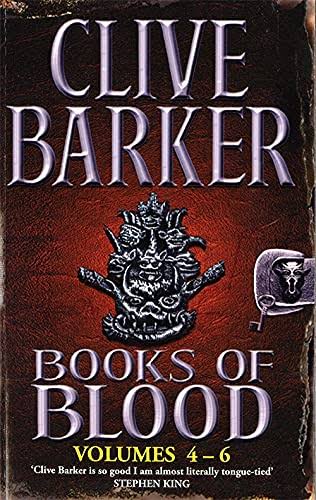
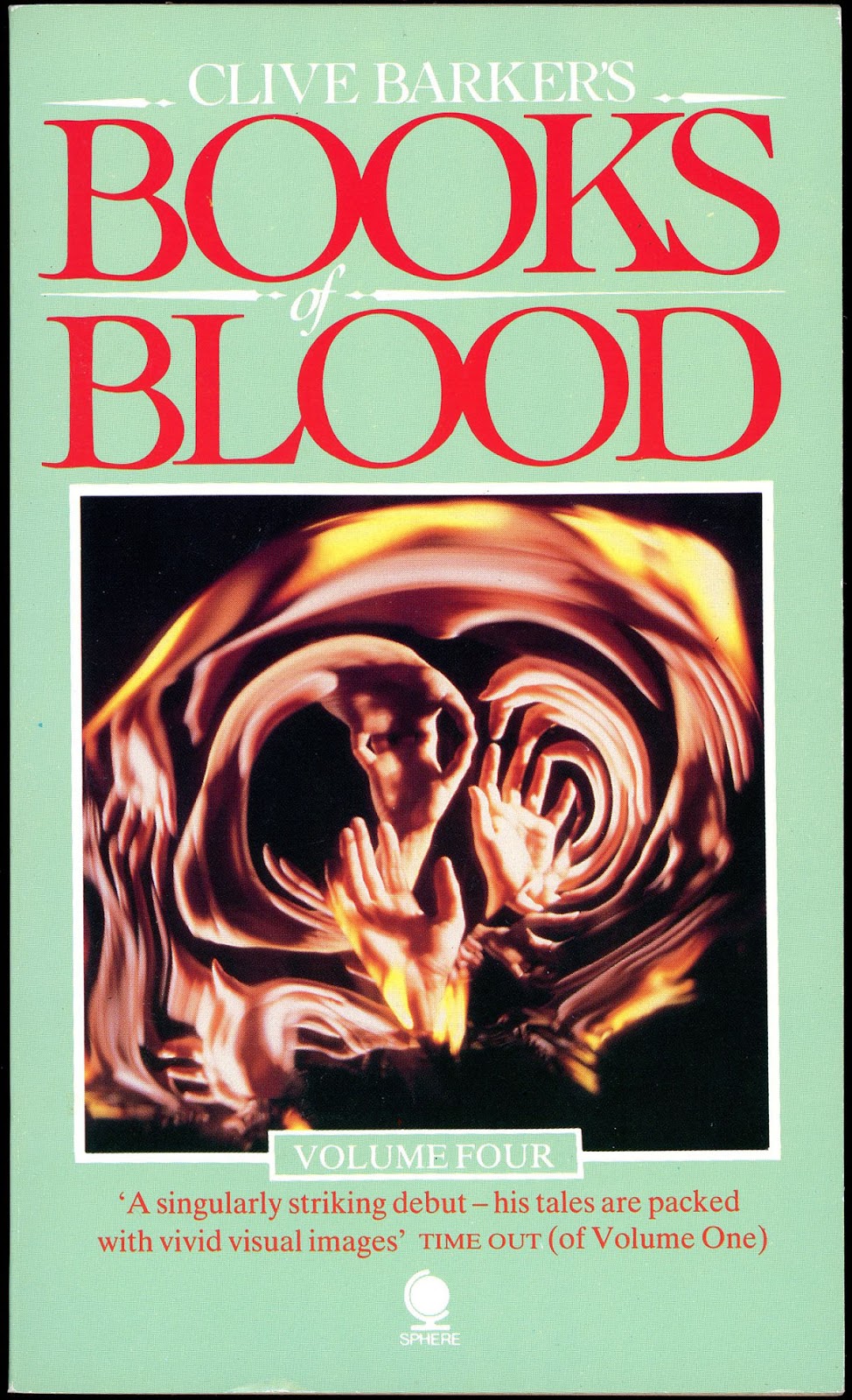
"The Age of Desire" (1985) by Clive Barker

"The Age of Desire" from Books of Blood: Volume Four (1985) by Clive Barker is a disappointment. In most stories, Barker's ebullient pretentiousness facilitates; here it aborts.


"The Age of Desire" is a man-hunt story. It follows the escapes and evasions of a human lab rat maddened after having his brain's desire centers permanently turned up to eleven. Jerome is pursued by cops, coveted by doctors.


        For Jerome, there was no forgetfulness, not this time. The encounter with Mrs. Morrisey, which had been interrupted by Dooley, and the episode with Boyle that had followed, had all merely served to fan the fire in him. Now, by the light of those flames, he saw clearly what crimes he had committed. He remembered with horrible clarity the laboratory, the injection, the monkeys, the blood. The acts he recalled, however (and there were many), woke no sense of sinfulness in him. All moral consequence, all shame or remorse, was burned out by the fire that was even now licking his flesh to new enthusiasms.

     He took refuge in a quiet cul-de-sac to make himself presentable. The clothes he had managed to snatch before making his escape were motley but would serve to keep him from attracting unwelcome attention. As he buttoned himself up-his body seeming to strain from its covering as if resentful of being concealed-he tried to control the holocaust that raged between his ears. But the flames wouldn't be dampened. His every fiber seemed alive to the flux and flow of the world around him. The marshaled trees along the road, the wall at his back, the very paving stones beneath his bare feet were catching a spark from him and burning now with their own fire. He grinned to see the conflagration spread. The world, in its every eager particular, grinned back.

     Aroused beyond control, he turned to the wall he had been leaning against. The sun had fallen full upon it, and it was warm; the bricks smelled ambrosial. He laid kisses on their gritty faces, his hands exploring every nook and cranny. Murmuring sweet nothings, he unzipped himself, found an accommodating niche, and filled it. His mind was running with liquid pictures: mingled anatomies, female and male in one undistinguishable congress. Above him, even the clouds had caught fire. Enthralled by their burning heads he felt the moment rise in his gristle. Breath was short now. But the ecstasy? Surely that would go on forever.

     Without warning a spasm of pain traveled down his spine from cortex to testicles and back again, convulsing him. His hands lost grip of the brick and he finished his agonizing climax on the air as he fell across the pavement. For several seconds he lay where he had collapsed, while the echoes of the initial spasm bounced back and forth along his spine, diminishing with each return. He could taste blood at the back of his throat. He wasn't certain if he'd bitten his lip or tongue, but he thought not. Above his head the birds circled on, rising lazily on a spiral of warm air. He watched the fire in the clouds gutter out.

     He got to his feet and looked down at the coinage of semen he'd spent on the pavement. For a fragile instant he caught again a whiff of the vision he'd just had; imagined a marriage of his seed with the paving stone. What sublime children the world might boast, he thought, if he could only mate with brick or tree. He would gladly suffer the agonies of conception if such miracles were possible. But the paving stone was unmoved by his seed's entreaties. The vision, like the fire above him, cooled and hid its glories.

     He put his bloodied member away and leaned against the wall, turning the strange events of his recent life over and over. Something fundamental was changing in him, of that he had no doubt. The rapture that had possessed him (and would, no doubt, possess him again) was like nothing he had hitherto experienced. And whatever they had injected into his system, it showed no signs of being discharged naturally; far from it. He could feel the heat in him still, as he had leaving the laboratories, but this time the roar of its presence was louder than ever.

     It was a new kind of life he was living, and the thought, though frightening, exulted him. Not once did it occur to his spinning, eroticized brain that this new kind of life would, in time, demand a new kind of death.


Barker's handling of alternating third person point of view is never satisfactory. Several confrontations begin in a promising chaos, but Barker clearly befuddles himself as he tries for omniscience. Not for nothing are tyro thriller writers advised to take apart the novels of Deighton or Lee Child before attempting their own.


Crichton's Terminal Man, another critique of enthroned bourgeois narcissism, is useful here as comparison. With assurance and economy Critchton dramatized how a hunted man might hide in the social interstices before his everyday rationality was completely dissolved by effects of medical experimentation. Barker, at the time he wrote "The Age of Desire," could not.

*   *   *


"The Age of Desire" was clearly designed to give the reader a widescreen techno-thriller experience. Barker, alas, could not figure out how to organise and deliver such a plot.


We should be thankful he concluded the story as quickly as he did. 


Jay

15 April 2020