Subscribe to my Substack
Sunday, July 19, 2020
50 Years of Dean Koontz: Shadowfires (1987)
Wednesday, July 15, 2020
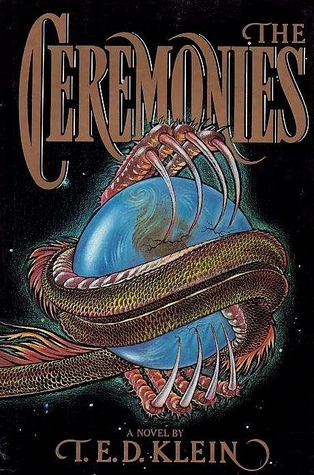
Sometimes we forget to blink: The Ceremonies by T.E.D. Klein (1984)
Tuesday, July 14, 2020
Reading: The Ceremonies by T.E.D. Klein - Book Nine: McKinney's Neck
The What-If? game
Klein's most poignant scenes also delight in subtextual revelation and misdirection.
By the last hundred pages, in Book Nine: McKinney's Neck, friendships, relationships, and marriages are corrupting quickly under the weight of plans the Old One is speeding to their climax.
These pages, in my estimation, work beautifully, as they originally did in "The Events at Poroth Farm."
....Deborah looked much better at dinner. Though she still did little talking, her features were more animated, she had good color - she's been spending time berry-picking in the woods, she says - & she seemed energetic & cheerful. Sarr, by contrast, was moody again. He picked at his food (beef stew, & like the pork at lunch, actually quite poor, though I was too polite to say anything) & kept asking her why she didn't eat more. When she brought out the blueberry pie he flatly declined to have any. 'How do I know the berries aren't poison?' he demanded. Both Deborah & I were scandalized that he'd even think such a thing, & I could see that, after all her work, the poor girl was very upset, so I had a huge extra slice. Deborah ate a lot too, no doubt just to show Sarr up.
Sometimes I stay with them & talk, but didn't want to hang around tonight; can't get used to the changes in Sarr. He barely said a civil thing all evening. One exception, though: he told me he'd found out, in answer to my question, that there never were any McKinneys. Seems McKinney's Neck is actually taken from some old Indian word.
Felt like rain when I came back out here; clouds massing in the night sky & the woods echoing with thunder. Little Absolom Troet seemed to smile at me from his photo when I turned on the light, as if glad to have me back.
Still no rain. Read most of John Christopher's The Possessors. Pretty effective, drawing horror from the most fundamental question of human relations: How can we know that the person next to us is as human as we are? Then played a little game with myself for most of the evening, until I—
Jesus! I just had one hell of a shock. While writing the above I heard a soft tapping, like nervous fingers drumming on a table, & discovered an enormous spider, biggest of the summer, crawling only a few inches from my ankle. It must have been living behind the bureau next to this table.
When you can hear a spider walk across the floor, you know it's time to keep your socks on! If only I could find the damned bug spray. Had to kill the thing by swatting it with my shoe, & think I'll just leave the shoe there on the floor until tomorrow morning, covering the grisly crushed remains. Don't feel like seeing what's underneath tonight, or checking to see if the shoe's still moving . . . Must get more insecticide.
Oh, yeah, that game - the What if Game. The one Carol says Rosie taught her. For some reason I've been playing it ever since I got her letter. It's catching. (Vain attempt to enlarge the realm of the possible? Heighten my own sensitivity? Or merely work myself into an icy sweat?) I invent the most unlikely situations, then try to think of them as real. Really real. E.g., what if this glorified chicken coop I live in is sinking into quicksand? (Maybe not so unlikely.) What if the Poroths are getting tired of me? What if, as Poe was said to fear, I woke up inside my own coffin?
What if Carol, right this minute, is falling in love with another man? What if her visit here this weekend proves an unmitigated disaster?
What if I never see New York again?
What if some stories in the horror books aren't fiction? If Machen told the truth? If there are White People out there, malevolent little faces grinning in the moonlight? Whispers in the grass? Poisonous things in the woods? Unsuspected evil in the world?
Enough of this foolishness. Time for bed.
Jay
14 July 2020
Reading: The Ceremonies by T.E.D. Klein - Book Eight: The Test
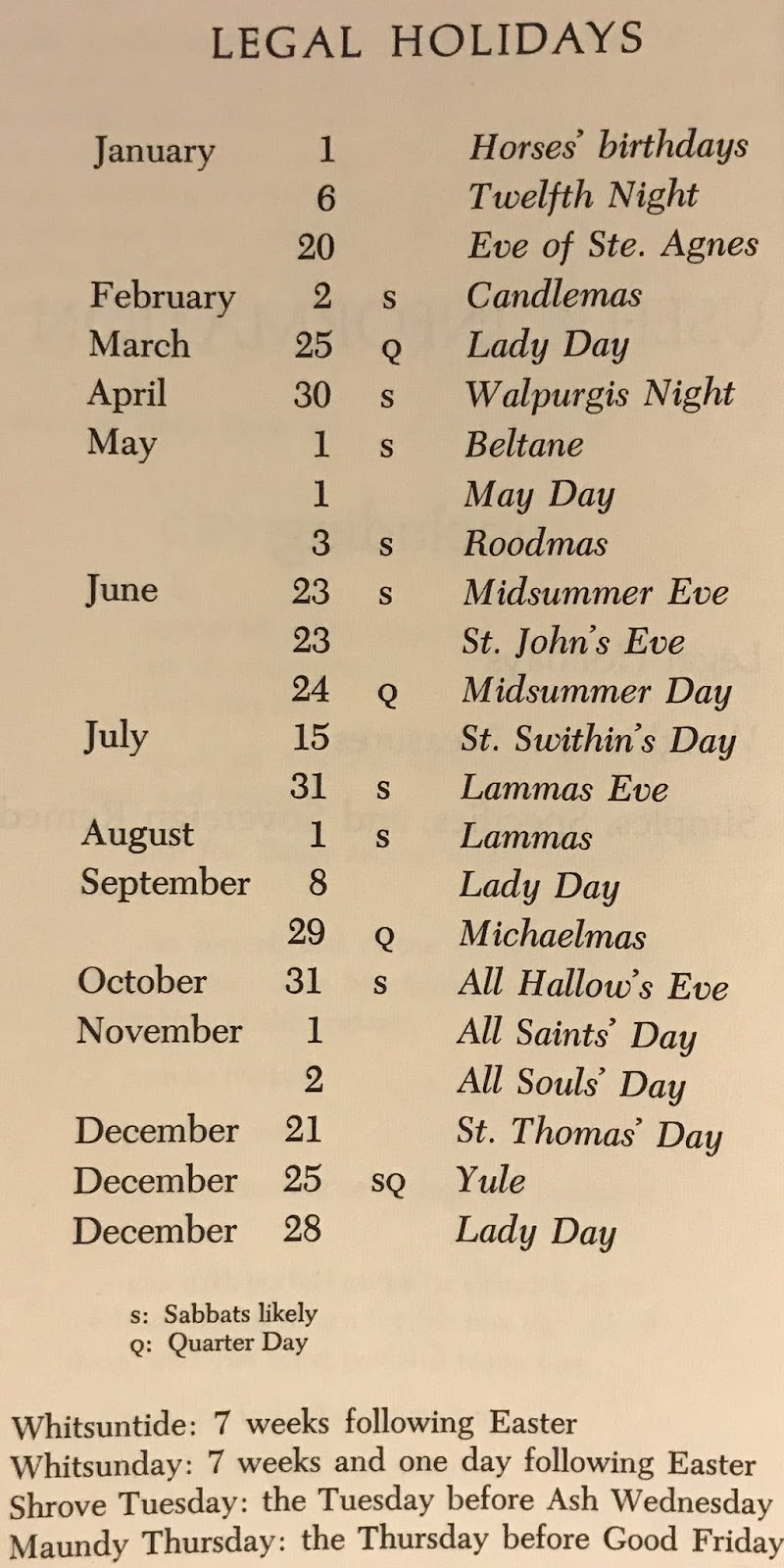
Sabbats likely
Book VIII of The Ceremonies begins on July Twenty-first. Klein gives the reader a bravura depiction of Gilead and environs, home of the Brethren of the Redeemer Christian sect, overrun by serpents.
That evening horror literature scholar and summer renter Jeremy Friers asks his hosts, Sarr and Deborah Poroth (members of the Redeemer sect), about an upcoming community feast.
.....'If you're interested in the Feast of the Lamb,' said Deborah, 'you could join us at the Geisels'. That's where we'll be having it this year. Sister Corah's a wonderful cook, but I warn you, there'll be a lot of praying.'
'I take it I'm invited.'
'I don't see why not. Honey, can't Jeremy have the lamb with us at Matt and Corah's?'
'He'll be welcome,' said Poroth. 'If he's still here.'
Freirs flushed. 'I certainly hope I am.'
'And why wouldn't he be?' said Deborah, busy taking out plates and saucers. 'Put away the paper, honey, it's time to eat.' She glanced at Freirs. 'Nobody's going to leave meals like this behind.'
'How could I?' Freirs said, with a heartiness he didn't feel. Eyeing the food she was already laying on the table, the bright reds and greens of the salad, the cold pitcher of milk, the beans fresh from the garden, he wondered what the Poroths had been saying about him today.
The subject of his leaving didn't come up again. But after dinner, as the two men stood on the back porch watching darkness settle over the land and listening to Deborah singing hymns as she worked in the kitchen, Sarr returned, if only indirectly, to an earlier subject.
'You know,' he said with obvious deliberation, 'God answers to many different names, and He's worshiped in strange ways. But He's always the same God.'
There was a pause; Freirs felt the other's eyes on him. 'That's true,' he said at last, wondering what the man was driving at. 'I'm sure it doesn't matter what you call Him.'
'It doesn't,' said Poroth heatedly. 'The words may be different, but the spirit's always been the same. At Trenton the professors talked about "other systems of belief," and so did all those books in there' — he nodded toward the house, where his few remaining college texts stood gathering dust in the living room - 'and at first I was troubled, I don't mind telling you, at how many different forms God seemed to take. But in the end I found I was able to return to the fold with even more faith than I'd started with, because I came to see how, even when He had different names, He was the same God I knew.'
'I once read a story,' Freirs began, 'about how the people in Tibet have nine billion names for Him . . . '
'You don't even have to go that far away,' said Poroth. 'There was a little village down in Mexico that the Catholics were wonderfully proud of. The Indians in the area had all been converted, you see -they'd been Christians for at least a hundred years - and week after week every last one of 'em would show up in church to worship the Virgin Mary. And then one day the priest had the altar taken up, so as to make some repairs, and underneath it he discovered another altar, with an idol much older than his, a cruel-looking thing with a snake head and teeth.'
'And that's what they'd really been worshiping all along?'
Poroth nodded. 'But the point is, they were all just fooling themselves. The Catholics thought they were praying to one god and the Indians thought they were praying to another, but they were really praying to the same. It's as if below both the Virgin and the snake was still another god - the true one.'
'The one with the capital G,' said Freirs. Privately he had drawn a different conclusion from the story: something about older, darker gods, and rites in which the blood wasn't just a symbol.
'It's the same with the Feast of the Lamb,' Poroth was saying. 'Actually, it's got another celebration buried underneath, though folks around here wouldn't have heard of it.'
'What kind of celebration?'
Poroth shrugged. 'Pagan. Your standard harvest festival.' He held open the screen door. 'Come on, I'll show you.'
Deborah was standing at the sink as they passed through the kitchen but didn't look up from her washing. A glowing lantern made the night beyond the windows look darker than it had from the porch. Sarr lit another and they went into the living room, where he stooped before his little cache of books in the corner, peering at the names on the spines.
'Sometimes,' he said, 'the Christians took a pagan day and made it their own - like Easter, which, as I expect you've heard, was a planting festival long before Christ.' He pulled out a battered grey volume from the bottom shelf and began thumbing through it. 'Sometimes they changed the name a little, to disguise the origin. That's what we Brethren did with the Feast of the Lamb, which sounds so proper and Christian.'
'It wasn't originally?'
Poroth looked up from the book. 'No,' he said in a low voice. 'And I'm probably the only one who knows.'
'What's that you're looking at? Some rival to the Bible?'
The other laughed uneasily. 'No, just an almanac, something I haven't opened for years.' He squinted at the cover, but the name had long since worn away, and he turned instead to the tide page. 'Byfield's Newly Revised Agricultural Almanack and Celestial Guide for 1947,' he read. 'I found it at a church bazaar in Trenton for fifteen cents.' Looking down, he flipped through several more pages, then paused. 'Ah, here's what I've been searching for.' He handed the open book to Freirs, pointing to a line in the middle of what appeared to be a chart. 'See? Right there.'
The book itself smelled faintly of mildew, its covers warped and faded. Freirs scanned the opened page. Festivals of the Ancients, it said at the top; below it lay a complicated-looking calendar. He found the indicated line. August 1, it said. Lammas.
'It's got nought to do with lambs,' said Poroth. 'Nor does the night before.'
Freirs checked the previous column. July 31, he read. Lammas Eve. 'Hmmm, sounds sinister!'
'It can be. Black magic's always powerful on Lammas Eve. There'll probably be some odd doings somewhere in the world that night.'
'Why's that?'
Instead of answering, Poroth merely pointed back to the calendar in the book. There was something called Roodmas on May third, and Midsummer on the twenty-fourth of June, and the day Deborah had spoken of, St Swithin's, on the fifteenth of July. Several dates, he noticed now, were marked with tiny asterisks - dates like the first of May and the last day of October. So was Lammas Eve, the last day of July.
He looked down at the bottom of the page. There beside an asterisk was the footnote, a simple one, just two words long:
Sabbats likely.
Monday, July 13, 2020
Reading: The Ceremonies by T.E.D. Klein: Book Six: The Green Ceremony
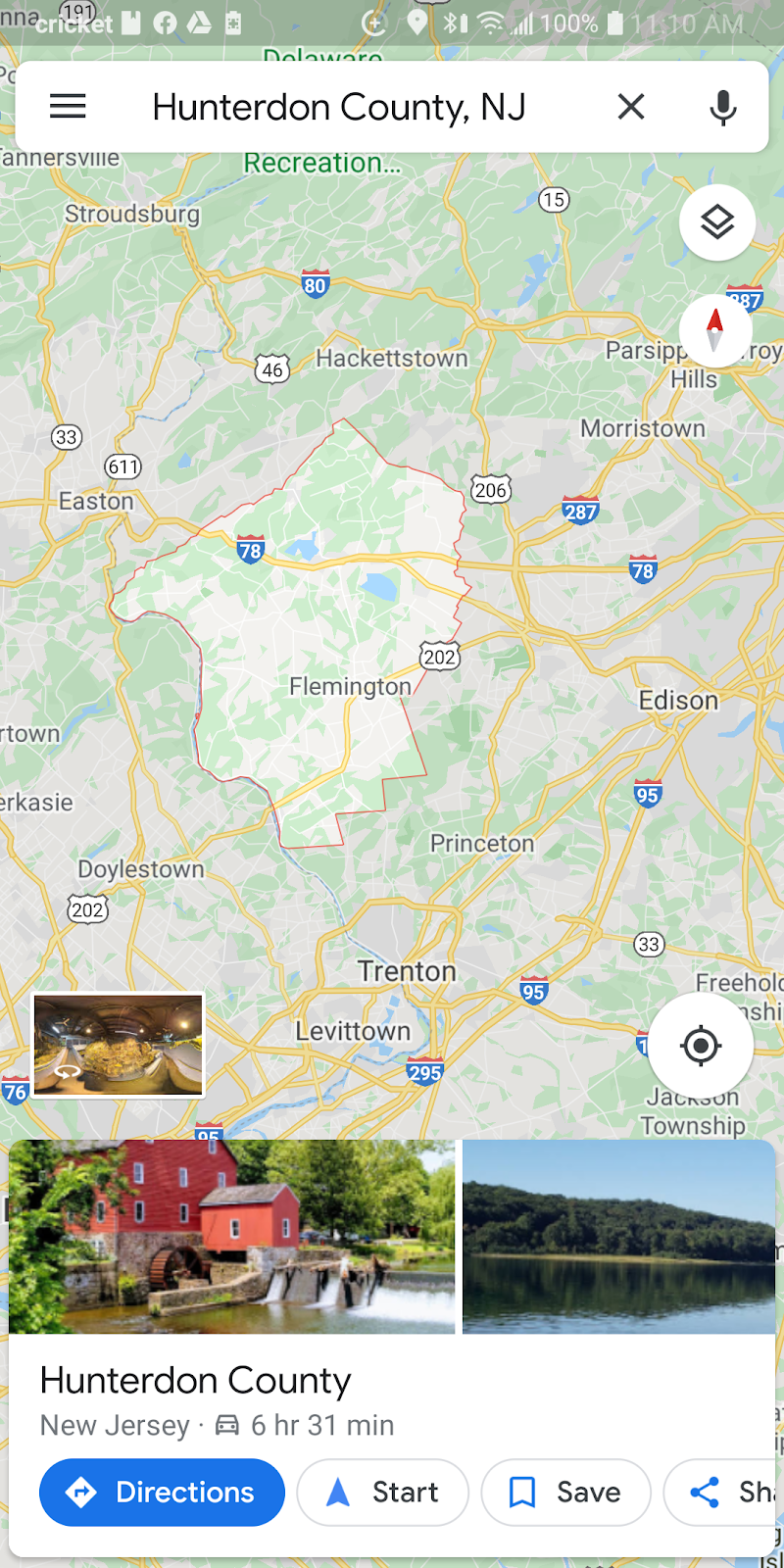
The scope of Klein's 1984 novel The Ceremonies, its stately pace and sensual physicality, rewards the diligent reader. The buzzing summer heat of rural Hunterdon County, NJ and the broiling sweat of a stifling New York City are perfectly conveyed.
There are plenty of nuggets along the way for weird fiction readers. For a change, though, Machen is placed higher than Lovecraft in weighting narrative allusions. (No shoggoths or gill-men here to break the reader's teeth or sap the willing suspension of disbelief).
From Book Six: The Green Ceremony
....he walks to the bookcase in the living room and stoops before a set of drab brown Victorian volumes gathering dust on the second shelf from the bottom.
How amusing, he thinks, as he withdraws one of them - amusing that a key to dark and ancient rites should survive in such innocuous-looking form.
A young fool like Freirs would probably refuse to believe it. Like the rest of his doomed kind, he'd probably expect such lore to be found only in ancient leather-bound tomes with gothic lettering and portentously sinister tides. He'd search for it in mysterious old trunks and private vaults, in the 'restricted' sections of libraries, in intricately carved wood chests with secret compartments.
But there are no real secrets, the Old One knows. Secrets are ultimately too hard to conceal. The keys to the rites that will transform the world are neither hidden nor rare nor expensive. They are available to anyone. You can find them on the paperback racks or in any second-hand bookshop.
You just have to know where to look - and how to put the pieces together.
There are pieces in an out-of-print religious tract by one Nicholas Keize. And in a certain language textbook which, in its appendix, transcribes nursery rhymes in an obsolete Malaysian dialect surprisingly like Celtic. And in a story, supposedly fiction - but not when read at the right time - by an obscure Welsh visionary who barely suspected why he'd written it, and who regretted it in later years and died a fervent churchman. And in the pictures on a cheap pack of novelty cards based on images from unguessed-of antiquity. And in a Tuscan folk dance included in a certain staid old dance book which, along with plies and pirouettes, has the dancer make a pattern called 'the changes.'
The pieces are there, simply waiting to be fitted together into what, from the start, they were meant to be: a set of instructions for the Ceremonies....
Book Six: The Green Ceremony actually begins with this excerpt from Machen's "The White People."
....And my heart was full of wicked songs that they put into it; and I wanted to make faces and twist myself about in the way they did ... So I did the charm over again, and touched my eyes and my lips and my hair in a peculiar manner, and said the old words . . . and I was so glad I could do it quite well, and I danced and danced along, and sang extraordinary songs that came into my head . . . songs full of words that must not be spoken or written down. Then I made faces like the faces on the rocks, and I twisted myself about like the twisted ones, and I lay down flat on the ground like the dead ones.
Jay
13 July 2020
Reading: Weird Fiction in Britain 1880-1940
I see that according to Facebook it was a year ago today I was digging into Machin's magnificent study Weird Fiction in Britain 1880-1940. I posted the below excerpts that day:
....the short story form was, to the point of inevitability, a crucible for the creation of weird fiction: in both its provenance (with Poe and Stevenson), the commercial potential, and platform provided by the fin-de-siècle publishing field (which led to writers having a pecuniary motive for imitating not only the form but the content of Poe and Stevenson) and also—inextricable from these aforementioned—the short form and the weird tale's predication on mystery, dread, and lack of closure, the associated potency of which was also resonant with the uncertain mood of the later nineteenth century. The oft-repeated (and previously quoted) paragraph by Lovecraft, in which he adumbrates his notion of the 'weird tale', concludes with an important but regularly neglected sentence: 'And of course, the more completely and unifiedly a story conveys this atmosphere, the better it is as a work of art in the given medium' (Lovecraft 1985, 427). Implicit in this is an endorsement of Poe's advocacy of the short form's potency in this respect. Taking all these things into account provides an explanation for the rise of a 'high phase' of weird fiction still impacting, directly or otherwise, on popular and literary culture to this day....
James Machin
WEIRD FICTION IN
BRITAIN 1880–1939
* * *
....The ensuing claim for cultural value above that normally afforded 'genre' fiction has been discussed in the Introduction and will be discussed in further detail elsewhere in this book. It is, at root, predicated on the same high/low cultural divide precipitated by the fin-de-siècle publishing boom and intensified by Modernism. Also implicit is a distinction between two conceived groups: the consumers of populist lowbrow texts and a more educated cultural elite who can identify and appreciate literature of value.
Ironically, in terms of contemporary cultural impact, only the materialist, extraterrestrial horrors of H. P. Lovecraft can compete with the 'zombies, werewolves, mummies, [and] ghouls' which still overwhelmingly dominate contemporary horror fiction and cinema, and the previously unassailable centrality of Lovecraft to weird fiction is now being lobbied against accordingly from some quarters, Lovecraft increasingly becoming a critical victim of his own posthumous success (VanderMeer 2012). The nebulosity of preLovecraftian weird fiction means that it is far harder to commodify, which has also perhaps resulted in a lack of direct visibility in popular culture. However, the influence of writers like Machen and Shiel is certainly still present albeit filtered through the work of more culturally impactful writers like Lovecraft and Stephen King. Their lack of direct visibility has also resulted in a culture of self-identifying 'connoisseurship', in which networks of collectors, enthusiasts, and writers can wear the obscurity of their enthusiasms as a badge of honour, a mark of authentic understanding and appreciation of weird fiction, particularly of this pre-Lovecraftian period, and, importantly, of what demarcates it from the arguably cruder albeit more popular 'horror' genre, especially from the latter's schlockier manifestations ('the literature of mere physical fear and the mundanely gruesome') (Lovecraft 1985, 426).
It is this tendency that has resulted in small but dedicated and passionate coteries of 'collector-fans' (so described by Kirsten MacLeod) or 'connoisseurs', who Baudrillard distinguishes as those who respond to 'singularity and differentness', keeping alive the names of otherwise almost entirely forgotten writers such as Count Eric Stenbock, discussed below (MacLeod 2004, 121; Baudrillard 1994, 10). Although most often associated with small presses and amateur societies, this culture of 'connoisseurship' is also participated in by, for example, Stephen King and director Guillermo del Toro, who—hugely successful and popular—perhaps also harbour a desire to demonstrate and reinforce to the cognoscenti (i.e., their fellow connoisseurs rather than their wider audience) their cultural capital, where their economic capital is self-evident to the population at large. Both King and del Toro, for example, are effusive and unequivocal in their enthusiasm for Machen, an otherwise little-read 'minor' writer whose brief periods of commercial success were limited to the 1890s in Britain and a brief revival in America in the 1920s, but who King, particularly, imbues with an artistic value even to the detriment of his own work ("StephenKing.Com – Messages from Stephen" 2008; del Toro 2011).
One anomalously dependable demarcation of weird fiction is its tendency towards the short form. There are of course always exceptions to prove the rule, but the multicharacter narrative usually necessitated by the long form normally results in a novel that might incorporate weird elements but not be purely identifiable as weird in and of itself. Or, as Lovecraft puts it, the weird can appear 'in memorable fragments scattered through material whose massed effect may be of a very different cast' (Lovecraft 1985, 427). Machen's novel The Three Impostors could perhaps be cited here but only if one were to ignore the fact that it is a portmanteau assembly of short stories, some of which had seen print before....
WEIRD FICTION IN
BRITAIN 1880–1939
James Machin
2018: Palgrave
* * *
....Several convergent factors precipitated a publishing boom in the closing decades of the nineteenth century. One of the most prominent was the 1870 Education Act, which considerably (and not without controversy) increased literacy rates and led to the creation of a far larger potential reading audience, from a far wider social demographic, than ever before. Peter Keating argues that of at least as much significance was the accompanying 'growth in numbers of teachers as training colleges and universities expanded to meet the new educational demands':
Nothing is more characteristic of the fundamental social changes taking place at the end of the nineteenth century than this new class of meritocrats and the neat, brick buildings in which they worked. As far as the future of literature was concerned, their taste and judgment were to be vital. (Keating 1989, 143)
Another impetus was the gradual repeal of various publishing taxes from the mid-century onwards. The abolition of the advertising tax in 1853, stamp tax in 1855, and of paper duty in 1861, saw production costs fall, cover prices drop, and circulations and profits increase exponentially (Gillies n.d.; Brake 2001, 8). This combination of increased potential revenues from an expanded reading public and the lifting of the tax burden on publishing created an unprecedented demand for new fiction. Traditionally, fiction had been produced and consumed in the form of the serial (with each part issued monthly) and the Victorian 'three-decker', the latter a form promoted by the prominent lending library Mudie's. The three-volume novel was too expensive for the average reader to purchase outright, and therefore accessed through the circulating libraries through which, for a more widely affordable fee, one could keep up with the latest titles.
By the 1880s, however, the circulating libraries were essentially monopolized by Mudie's, and to a lesser extent, W. H. Smith & Son's ('Mudie's only serious national rival'), which, finding themselves in the position of effectively controlling the fiction put before the general reading public, were also therefore in the assumed position of unofficial censors (Smith the younger's austere Protestantism had earned him the soubriquet 'Old Morality') (Keating 1989, 23; Davenport-Hines 2004). It wasn't financially viable for writers and publishers to produce work deemed too morally dubious or adventurous by Mudie's, as they would simply refuse to stock the book, resulting in the publisher being denied the bulk order through which the overwhelming majority of the profit was to be made and a career as an author maintained.
That this situation was not to everyone's satisfaction was made clear in December 1884 when George Moore (1852–1933)—a 'young and then relatively unknown novelist'—questioned the 'power and moral authority of the circulating libraries' in the pages of the Pall Mall Gazette (Llewellyn and Heilmann 2007, 372):
At the head, therefore, of English literature, sits a tradesman, who considers himself qualified to decide the most delicate artistic question that may be raised, and who crushes out of sight any artistic aspiration he may deem pernicious. And yet with this vulture gnawing at their hearts writers gravely discuss the means of producing good work; let them break their bonds first, and it will be time when they are free men to consider the possibilities of formulating a new aestheticism. (Moore 1884, 1)
Mark Llewellyn and Ann Heilmann have observed that while 'from the mid-century onwards writers had waged war on the circulating libraries for placing a stranglehold on the literary marketplace', Moore's attack precipitated 'fierce debate in the Pall Mall Gazette that raged over several weeks, drawing not only long-suffering authors but also readers and publishers into the public arena' (Llewellyn and Heilmann 2007, 372–373). Subsequent correspondents argued against Moore, claiming that writing, being a 'trade', was quite rightly dependent on the simple laws of supply and demand that the circulating libraries fulfilled, a view which provoked the novelist George Gissing (1857–1903) to reclaim fiction as an art rather than a trade, lamenting the failure of novelists to take more commercial risks 1 : 'English novels are miserable stuff for a very miserable reason, simply because English novelists fear to do their best lest they should damage their popularity, and consequently their income' (J. W. 1884; Gissing 1884). That the risk of flouting the circulating library standard of propriety in letters was a genuine one was demonstrated in 1888 when W. T. Stead, in association with the National Vigilance Committee, launched an investigation into Vizetelly & Co.'s distribution of several of Zola's works in 'unmutilated' (and therefore unexpurgated) editions (Llewellyn and Heilmann 2007, 378). An ensuing House of Commons debate on 'the rapid spread of demoralizing literature in this country' called for 'the law against obscene publications and indecent pictures and prints [… to be …] vigorously enforced, and, if necessary, strengthened' and led to a court action, with disastrous consequences for the defendant (378). Vizetelly & Co. continued to distribute expurgated versions of the texts after misinterpreting the verdict of the first trial, leading to a second trial resulting in 'the bankruptcy of Vizetelly & Co., and the six-month imprisonment of the seventy-year-old Henry Vizetelly on 30 May 1889' (379). That the writer in question in the Vizetelly trial was Zola was indicative of the wider francophobic mood of the times and the 'vulgar [British] superstition that French things were naughty', that 'French art, novels, dress, habits, were all alike immoral' (Croft-Cooke 1967, 165).
However, despite such controversies, by the 1890s, the market had been liberated from the pressure of onerous tax burdens and the stultifying effect of the monopoly of the circulating libraries on literature was significantly eased by the appearance of the new magazines, and the newly profitable, affordable one-volume novel, the latter reducing 'the price of much new high and middle zone fiction […] by at least two-thirds' (Brake 2001, 23). Publishers could subsequently afford to take more, albeit significant, risks and one such was taken by John Lane, who, despite the antipathetic mood outlined above, launched the Yellow Book in April 1894, a journal through which, according to its detractors at least, Lane had given its contributors 'license to talk about ugly things inartistically' and exhorted them to 'be mystic, be weird, be precious, be without value' (Wedmore 1894, 349; "A Yellow Melancholy" 1894, 468). In its prospectus for the title, the Bodley Head announced that the Yellow Book would be a departure from the 'bad old traditions of periodical literature' and would 'not tremble at the frown of Mrs Grundy', the apocryphal personification of pompous middle-class censoriousness ("The Yellow Book: Prospectus to Volume 1" 1894).
James Machin
WEIRD FICTION IN
BRITAIN 1880–1939
Sunday, July 12, 2020
Reading: The Ceremonies Book Three: The Call
[Today I had one of those odd coincidences that sometimes crop up to delight the reader. I am currently reading (3rd attempt) T.E.D. Klein's 1984 novel The Ceremonies. It takes place in the wilds of Hunterdon County, NJ. When I came into the living room this morning, MSNBC had a Covid-19 report from Flemington, a town in Hunterdon County mentioned in the novel.]
I am now nearing the end of Book Three: The Call. Carol has arrived for an overnight visit at Poroth Farm, but circumstances thwart the intimacy she and Jeremy anticipated. Over dinner, Sarr recounts his hair-raising visit to New York at age seventeen.
After dinner, Sarr and Deborah pray, then retire to bed. Carol repairs to their spare room, intended someday as a nursery.
And Jeremy retires to his outbuilding with a Machen volume forwarded to him via Carol by Mr. Rosebottom.
....All was silent now, except for the crickets.
Unfortunately, he wasn't very tired. In fact, he was still restless and on edge. The sick feeling left by the wine had finally worn off.
Maybe a dip into someone else's mind would do the trick. He undressed and got into his bathrobe. Glancing around for a book to read, his eye fell on the faded yellow covers of the one Carol had brought him. Seating himself at his desk, he ran through what he knew of its author. Machen had been a Welsh minister's son who went to London and lived alone for many years, nearly starving, haunted by fantasies of weird pagan rites and longing for the green hills he'd left behind. Lovecraft, in a survey of the field, had praised him highly.
Freirs flipped through the yellowed pages, searching for the story the old man had recommended, 'The White People.' It was near the center; the book fell open easily to it. Someone - perhaps old Rosie himself, hadn't he been scribbling something that day? - had written in pencil just above the tide, Only effective if read by moonlight.
Too bad the moon was blocked by clouds tonight; it might almost have been worth a try. Just for fun, of course. By way of experiment he snapped off the desk lamp. Surprisingly, moonlight was now streaming into the room, falling onto the bed and a strip of the floor with a radiance far brighter than he'd imagined, though the table he was using as his desk was still in shadow. Peering out the window, he saw that the clouds had begun to part; the moon was shining down now unimpeded.
Leaving his chair, he seated himself on the edge of the bed and laid the book on the windowsill. He discovered that, by squinting, he could just make out the words. It might be amusing, he decided, to try and absorb the story this way. Maybe it would ease him into a dream.
Holding the book open by the moonlight, he began to read.
His eyes were moving faster. They felt as if they were darting back and forth as rapidly as insects, yet his vision seemed glazed, as if he were no longer reading the words but was instead being read by them, carried along like the beetle he'd seen kicking in the swiftly flowing stream, borne by the current . . . toward what rapids?
The story's prologue, a framing device, had confused him, with all its high-flown talk about the human soul and the Meaning of Sin, and he wasn't even sure exactly where the tale was set - somewhere in the countryside, that's all he could be certain of, with a big house near a forest, and secret places, hills and pools and glades.
But the main portion of the story, the extract from a young girl's notebook, was staggering, overwhelming. It was as if it spoke to him aloud.
'I looked before me into the secret darkness of the valley, and behind me was the great high wall of grass, and all around me were the hanging woods that made the valley such a secret place . . .'
He couldn't read it rapidly enough: the air of pagan ecstasy, the rites one doesn't dare describe, the malevolent little faces peering from the shadows and the leaves. It was, he felt certain, the most persuasive story ever written. He found himself whispering the lines as he read them, the words coming faster and faster -
'I knew there was nobody here at all besides myself, and thai no one could see me . . .Sol said the other words, and made the signs'
- and by the time he'd finished he was half convinced he heard another voice, one softer and more ancient than his own, whispering an even stranger story in his head, a story in a language he seemed dimly to remember.
He had no idea how much time had elapsed. It might have been days. His head was still spinning from the rush of words, or maybe it was only from the effort of reading in so faint a light. A pair of flies, trapped in the darkened room, were crashing into the window screens around him; the crickets droned their song; frogs piped madly by the brook, but he no longer heard them. Still in the story's spell, he felt himself slip off the robe and walk slowly across the room, opening the door to the lawn outside and stepping into the darkness.
But it wasn't dark. It was a different night he stepped into, one almost as bright as a stage. Every rock was visible, every blade of grass; every object cast a shadow. The clouds had rolled back, the sky had opened up, and the full moon now shone forth onto the yard with all its power. Pale light seemed to pour from the sky, revealing things not meant to be seen, the secret night side of the planet. He felt the wet grass beneath his feet, and small wet things that moved, and things both hard and sharp, but he didn't pull away. He felt himself drawn like a dancer across the lawn, past the back of the farmhouse and the line of dark rosebushes standing like sentries along one side, the house itself sleeping in the moonlight, its windows dark. And still he was drawn back, toward where the bubbling stream made sucking noises at him, back toward the massive shape of the barn, the moonlight so strong now he could see his own shadow floating over the grass, floating toward the gnarled old willow that grew against the barn. And his own shadow yearned toward the shadow of the tree, and he watched it and felt himself follow, past the corner of the barn, moving inexorably toward the dark branches. And at last his shadow touched the other, merged with it, was absorbed in it; and still, not knowing what he did, he followed.
Deborah caught her breath in wonder. Beside her, two of the cats looked up and regarded her curiously, then settled back to sleep.
She too had been asleep, but she'd been awakened by the shift in the clouds and the bright moonlight which had suddenly flooded the room. There were no curtains on the windows; their people didn't hold with them, feeling it correct to get up with the sun. Unable to go back to sleep, she had been sitting up in bed and gazing absently out the window, head still spinning from the wine and the pictures of the Dynnod, when suddenly Freirs' door had swung open, down there in the yard, and now Freirs himself emerged into the light, his body pale against the lawn.
Her eyes widened. He was naked.
His expression was strangely preoccupied as he stepped onto the grass. She felt excited, watching him pad farther from the building, like a child watching something she shouldn't. She hadn't seen a naked man, aside from her husband, in - she couldn't remember how long it had been. But here were Jeremy's smooth white buttocks, his thighs, his sex . . . She caught her breath.
Where was he going at this hour? He must be off to have himself a pee, she thought. But why's he heading clear across the lawn?
At no time did he glance up toward her window (not that he could have seen her in the darkness anyway, she told herself, and he without his glasses); and he couldn't have known, as late as this, that anyone was watching. She wasn't sure of the time - the only clock was downstairs, the big grandfather clock Sarr had inherited; she could hear its regular ticking - but she thought it must be close to midnight.
He was walking slowly, like a sleepwalker. Maybe he was sleepwalking, she thought; Jeremy wouldn't walk barefoot like that, he was far too squeamish about bugs! worms! night crawlers! Yet there he was, across the lawn and disappearing in the shadow of the barn.
Perhaps she should stop him. If he was sleepwalking, could there be any danger? She dismissed the thought as soon as it occurred. Why embarrass him? If he wandered off into the long grass or the forest - well, he wouldn't be hurt, the Lord watched over sleepers; and if he found himself on rough ground, why, he'd simply wake up. She thought of calling to him through the open window, but she was already too excited. She could feel herself breathe faster now and was suddenly aware of her hand beneath her unbuttoned nightgown, cradling and squeezing her breast.
With a little sigh she lay back, deliberately jarring the bed, hoping to awaken Sarr, his face pressed to the crumpled pillow. He stirred, clutched the pillow tighter, and slept on.
She shifted closer to him, so close that she could feel the warmth of his body. He, too, wore the traditional nightgown, but as her hand explored beneath the sheet, she could feel that it had worked its way above his waist. Her fingers caressed the familiar contours of his hips and slid into the soft, girlish hair. Gently yet urgently they closed over his penis.
He groaned softly, still asleep, and turned toward her, eyes closed. She tugged more insistently, and in reflex he twisted his hips to be nearer her, snaking his arms along her body, at last finding her breast. Carefully keeping her breath slow and silent, she rolled herself on top of him.
In the smaller room, Carol slept on, outlined in the moonlight, her arm thrown over her eyes. Her regular breathing grew faster; suddenly her hand clutched the edge of the sheet, her other hand formed a fist, and a tremble shook her body like a fever. Her leg straightened, then pulled back; her form seemed to grow heavier, pushing into the mattress, as if she were retreating, in her dream, from some unwanted approach. Soundlessly her mouth formed words. Above her, in the pale light, the cardboard nursery shapes stared indifferently down.
He felt the rough bark against the soles of his bare feet and sensed dimly that he was climbing the gnarled old black willow that grew beside the barn. The branches bent beneath his weight but did not snap. He felt himself climb upward, unerringly as a squirrel, as if he had done it many times before and knew exactly where to place his hands and feet.
Attaining the upper branches, he made his way out onto one of the thicker limbs, let go with both hands, and, precariously balanced, stepped lightly onto the barn roof just before the limb began to give way, the old wooden shingles curling wet beneath his toes. He continued climbing, bathed in moonlight now, the moon's face just above him, whispering him on.
At the apex of the roof he unbent and slowly stood upright, one leg on each sloping side, one foot planted east and one foot west, straddling the center line. The moon, gazing down at him, was close enough to touch. He raised his hands to it.
Deborah eased the sleeping Sarr onto his back, rose on her knees, and straddled him. Reaching down, she grasped him and put him inside her. He slid in easily.
Hands raised as if in supplication, Freirs felt himself make overtures to the moon, gestures and faces that no one could see, no one would ever see, no one had ever seen before. Perhaps some ancient force was in control, but there was no thought of explaining what he did, or why. Past and future did not exist. There was nothing real but his own movements. The shingles, he sensed idly, were rough against his feet. The ground seemed far away, but he had no fear of falling. From this height the land below him, the distant farmhouse with its little black windows like eyes, its outbuildings and its garden, seemed almost luminescent in the moonlight, with the trees a dark ocean around it....
Jay
12 July 2020