Subscribe to my Substack

Showing posts with label The Ceremonies. Show all posts

Wednesday, July 15, 2020

Sometimes we forget to blink: The Ceremonies by T.E.D. Klein (1984)

Or, a note on contradictions of the horror novel

Those seeking an aesthetic appreciation of 1980s U.S. horror fiction need to read, among many other works, Klein's The Ceremonies.

Based on the author's 1972 novella "The Events at Poroth Farm," it is a praiseworthy work. Klein is a writer's writer: though his fiction output is small, it is of high quality; it is U.S. publishing's house style: slick, curious, and character-driven. In this, Klein is similar to Cheever and Updike.

The Ceremonies does not add any new fundamental elements to the plot of "Poroth Farm." Two new characters, Carol and Mr. Rosebottom, are presented to concretize each step in the plot, spelling out at length what was only suggested in the novella. 

Of course this is the central pitfall of novel-length horror fiction: the genre thrives on suggestion and the power of what is only hinted at. The novel makes most things clear, at the risk of making most elements appear absurd. (The Coney Island scene is a salient example). 

At the end of nearly 600 pages we are left with the same ambiguities about the Old One's plan as we were at the start. (And for me, some crucial questions of the everyday are also left in midair: did Jeremy Friers complete his summer reading? Is he progressing with his thesis on gothic?).

In "The Events at Poroth Farm" Jeremy, as first-person narrator, consciously states the connection of landscape-as-psychology presented in his readings. In The Ceremonies that insight is left unstated. That choice surprised me, since Klein seems intent on spelling-out most plot elements, including points drawn from Machen's "The White People."


The climax ending The Ceremonies strikes the reader of "Poroth Farm" as perfunctory at best after hundreds of pages of expository build-up. 

While the death of the Old One is presented with some slapstick and brio as an absurd accident, the most chilling line of the novella is unaccountably dropped:

....my escape was largely a matter of luck, a physical wreck fleeing something oblivious to pain or fatigue; but that, beyond mere luck, I had been impelled by an almost ecstatic sense of dread produced by his last words to me, that last communication from an alien face smiling inches from my own, and which I chose to take as his final warning:
     "Sometimes we forget to blink."


Jay
15 July 2020


P.S.

I previously wrote about Klein's Dark Gods here and here.

My notes on The Ceremonies are here.


Tuesday, July 14, 2020

Reading: The Ceremonies by T.E.D. Klein - Book Nine: McKinney's Neck

The What-If? game


Klein's most poignant scenes also delight in subtextual revelation and misdirection.


By the last hundred pages, in Book Nine: McKinney's Neck, friendships, relationships, and marriages are corrupting quickly under the weight of plans the Old One is speeding to their climax.


These pages, in my estimation, work beautifully, as they originally did in "The Events at Poroth Farm."


....Deborah looked much better at dinner. Though she still did little talking, her features were more animated, she had good color - she's been spending time berry-picking in the woods, she says - & she seemed energetic & cheerful. Sarr, by contrast, was moody again. He picked at his food (beef stew, & like the pork at lunch, actually quite poor, though I was too polite to say anything) & kept asking her why she didn't eat more. When she brought out the blueberry pie he flatly declined to have any. 'How do I know the berries aren't poison?' he demanded. Both Deborah & I were scandalized that he'd even think such a thing, & I could see that, after all her work, the poor girl was very upset, so I had a huge extra slice. Deborah ate a lot too, no doubt just to show Sarr up.

     Sometimes I stay with them & talk, but didn't want to hang around tonight; can't get used to the changes in Sarr. He barely said a civil thing all evening. One exception, though: he told me he'd found out, in answer to my question, that there never were any McKinneys. Seems McKinney's Neck is actually taken from some old Indian word.

     Felt like rain when I came back out here; clouds massing in the night sky & the woods echoing with thunder. Little Absolom Troet seemed to smile at me from his photo when I turned on the light, as if glad to have me back.

     Still no rain. Read most of John Christopher's The Possessors. Pretty effective, drawing horror from the most fundamental question of human relations: How can we know that the person next to us is as human as we are? Then played a little game with myself for most of the evening, until I—

     Jesus! I just had one hell of a shock. While writing the above I heard a soft tapping, like nervous fingers drumming on a table, & discovered an enormous spider, biggest of the summer, crawling only a few inches from my ankle. It must have been living behind the bureau next to this table.

     When you can hear a spider walk across the floor, you know it's time to keep your socks on! If only I could find the damned bug spray. Had to kill the thing by swatting it with my shoe, & think I'll just leave the shoe there on the floor until tomorrow morning, covering the grisly crushed remains. Don't feel like seeing what's underneath tonight, or checking to see if the shoe's still moving . . . Must get more insecticide.

     Oh, yeah, that game - the What if Game. The one Carol says Rosie taught her. For some reason I've been playing it ever since I got her letter. It's catching. (Vain attempt to enlarge the realm of the possible? Heighten my own sensitivity? Or merely work myself into an icy sweat?) I invent the most unlikely situations, then try to think of them as real. Really real. E.g., what if this glorified chicken coop I live in is sinking into quicksand? (Maybe not so unlikely.) What if the Poroths are getting tired of me? What if, as Poe was said to fear, I woke up inside my own coffin?

     What if Carol, right this minute, is falling in love with another man? What if her visit here this weekend proves an unmitigated disaster?

     What if I never see New York again?

     What if some stories in the horror books aren't fiction? If Machen told the truth? If there are White People out there, malevolent little faces grinning in the moonlight? Whispers in the grass? Poisonous things in the woods? Unsuspected evil in the world?

     Enough of this foolishness. Time for bed.


Jay

14 July 2020


Reading: The Ceremonies by T.E.D. Klein - Book Eight: The Test

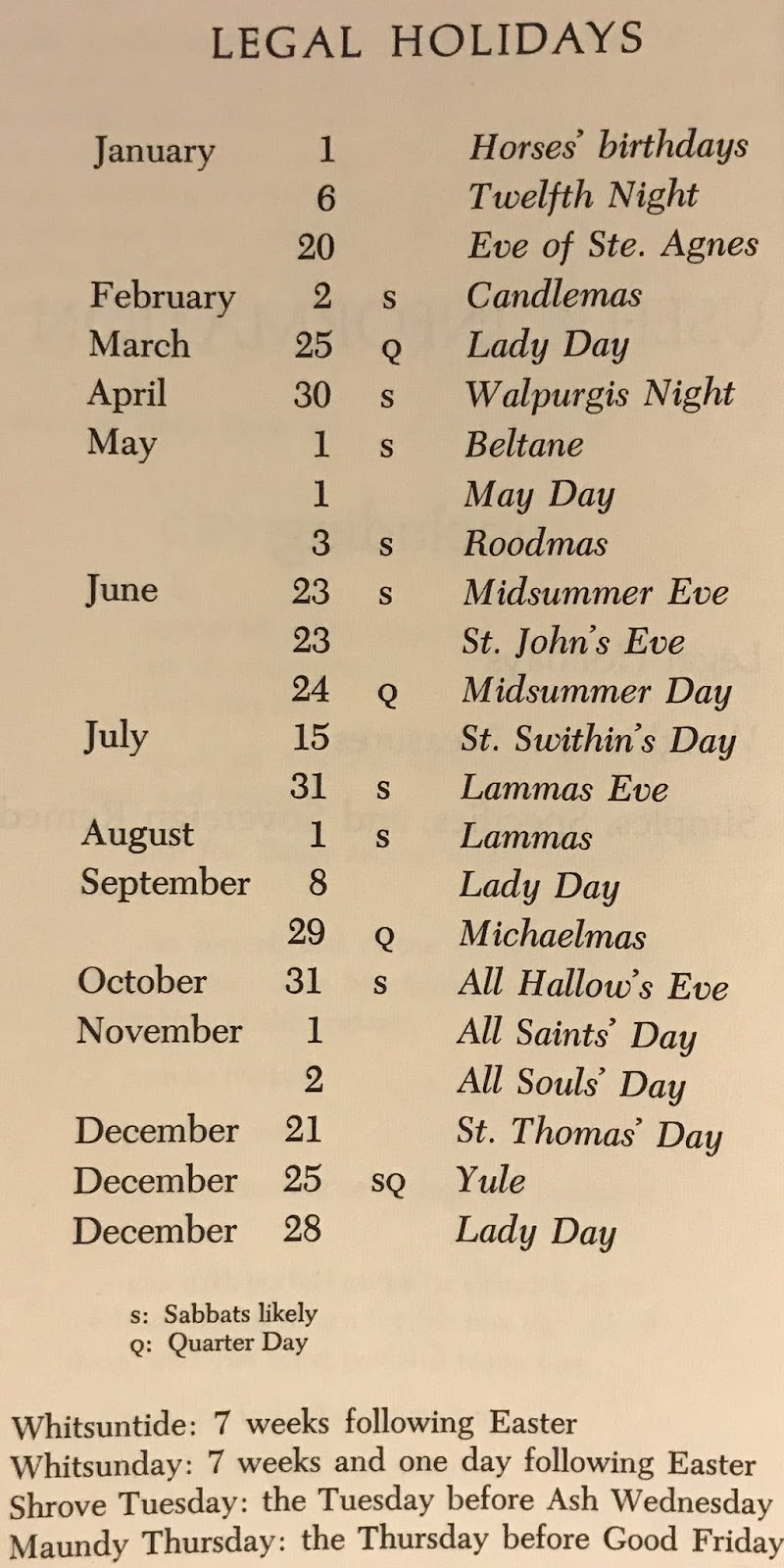
Sabbats likely


Book VIII of The Ceremonies begins on July Twenty-first. Klein gives the reader a bravura depiction of Gilead and environs, home of the Brethren of the Redeemer Christian sect, overrun by serpents. 


That evening horror literature scholar and summer renter Jeremy Friers asks his hosts, Sarr and Deborah Poroth (members of the Redeemer sect), about an upcoming community feast.


.....'If you're interested in the Feast of the Lamb,' said Deborah, 'you could join us at the Geisels'. That's where we'll be having it this year. Sister Corah's a wonderful cook, but I warn you, there'll be a lot of praying.'

     'I take it I'm invited.'

     'I don't see why not. Honey, can't Jeremy have the lamb with us at Matt and Corah's?'

     'He'll be welcome,' said Poroth. 'If he's still here.'

     Freirs flushed. 'I certainly hope I am.'

     'And why wouldn't he be?' said Deborah, busy taking out plates and saucers. 'Put away the paper, honey, it's time to eat.' She glanced at Freirs. 'Nobody's going to leave meals like this behind.'

     'How could I?' Freirs said, with a heartiness he didn't feel. Eyeing the food she was already laying on the table, the bright reds and greens of the salad, the cold pitcher of milk, the beans fresh from the garden, he wondered what the Poroths had been saying about him today.


     The subject of his leaving didn't come up again. But after dinner, as the two men stood on the back porch watching darkness settle over the land and listening to Deborah singing hymns as she worked in the kitchen, Sarr returned, if only indirectly, to an earlier subject.

     'You know,' he said with obvious deliberation, 'God answers to many different names, and He's worshiped in strange ways. But He's always the same God.'

     There was a pause; Freirs felt the other's eyes on him. 'That's true,' he said at last, wondering what the man was driving at. 'I'm sure it doesn't matter what you call Him.'

     'It doesn't,' said Poroth heatedly. 'The words may be different, but the spirit's always been the same. At Trenton the professors talked about "other systems of belief," and so did all those books in there' — he nodded toward the house, where his few remaining college texts stood gathering dust in the living room - 'and at first I was troubled, I don't mind telling you, at how many different forms God seemed to take. But in the end I found I was able to return to the fold with even more faith than I'd started with, because I came to see how, even when He had different names, He was the same God I knew.'

     'I once read a story,' Freirs began, 'about how the people in Tibet have nine billion names for Him . . . '

     'You don't even have to go that far away,' said Poroth. 'There was a little village down in Mexico that the Catholics were wonderfully proud of. The Indians in the area had all been converted, you see -they'd been Christians for at least a hundred years - and week after week every last one of 'em would show up in church to worship the Virgin Mary. And then one day the priest had the altar taken up, so as to make some repairs, and underneath it he discovered another altar, with an idol much older than his, a cruel-looking thing with a snake head and teeth.'

     'And that's what they'd really been worshiping all along?'

     Poroth nodded. 'But the point is, they were all just fooling themselves. The Catholics thought they were praying to one god and the Indians thought they were praying to another, but they were really praying to the same. It's as if below both the Virgin and the snake was still another god - the true one.'

     'The one with the capital G,' said Freirs. Privately he had drawn a different conclusion from the story: something about older, darker gods, and rites in which the blood wasn't just a symbol.

     'It's the same with the Feast of the Lamb,' Poroth was saying. 'Actually, it's got another celebration buried underneath, though folks around here wouldn't have heard of it.'

     'What kind of celebration?'

     Poroth shrugged. 'Pagan. Your standard harvest festival.' He held open the screen door. 'Come on, I'll show you.'

     Deborah was standing at the sink as they passed through the kitchen but didn't look up from her washing. A glowing lantern made the night beyond the windows look darker than it had from the porch. Sarr lit another and they went into the living room, where he stooped before his little cache of books in the corner, peering at the names on the spines.

     'Sometimes,' he said, 'the Christians took a pagan day and made it their own - like Easter, which, as I expect you've heard, was a planting festival long before Christ.' He pulled out a battered grey volume from the bottom shelf and began thumbing through it. 'Sometimes they changed the name a little, to disguise the origin. That's what we Brethren did with the Feast of the Lamb, which sounds so proper and Christian.'

     'It wasn't originally?'

     Poroth looked up from the book. 'No,' he said in a low voice. 'And I'm probably the only one who knows.'

     'What's that you're looking at? Some rival to the Bible?'

     The other laughed uneasily. 'No, just an almanac, something I haven't opened for years.' He squinted at the cover, but the name had long since worn away, and he turned instead to the tide page. 'Byfield's Newly Revised Agricultural Almanack and Celestial Guide for 1947,' he read. 'I found it at a church bazaar in Trenton for fifteen cents.' Looking down, he flipped through several more pages, then paused. 'Ah, here's what I've been searching for.' He handed the open book to Freirs, pointing to a line in the middle of what appeared to be a chart. 'See? Right there.'

     The book itself smelled faintly of mildew, its covers warped and faded. Freirs scanned the opened page. Festivals of the Ancients, it said at the top; below it lay a complicated-looking calendar. He found the indicated line. August 1, it said. Lammas.

     'It's got nought to do with lambs,' said Poroth. 'Nor does the night before.'

     Freirs checked the previous column. July 31, he read. Lammas Eve. 'Hmmm, sounds sinister!'

     'It can be. Black magic's always powerful on Lammas Eve. There'll probably be some odd doings somewhere in the world that night.'

     'Why's that?'

     Instead of answering, Poroth merely pointed back to the calendar in the book. There was something called Roodmas on May third, and Midsummer on the twenty-fourth of June, and the day Deborah had spoken of, St Swithin's, on the fifteenth of July. Several dates, he noticed now, were marked with tiny asterisks - dates like the first of May and the last day of October. So was Lammas Eve, the last day of July.

     He looked down at the bottom of the page. There beside an asterisk was the footnote, a simple one, just two words long:

     Sabbats likely.


Monday, July 13, 2020

Reading: The Ceremonies by T.E.D. Klein: Book Six: The Green Ceremony

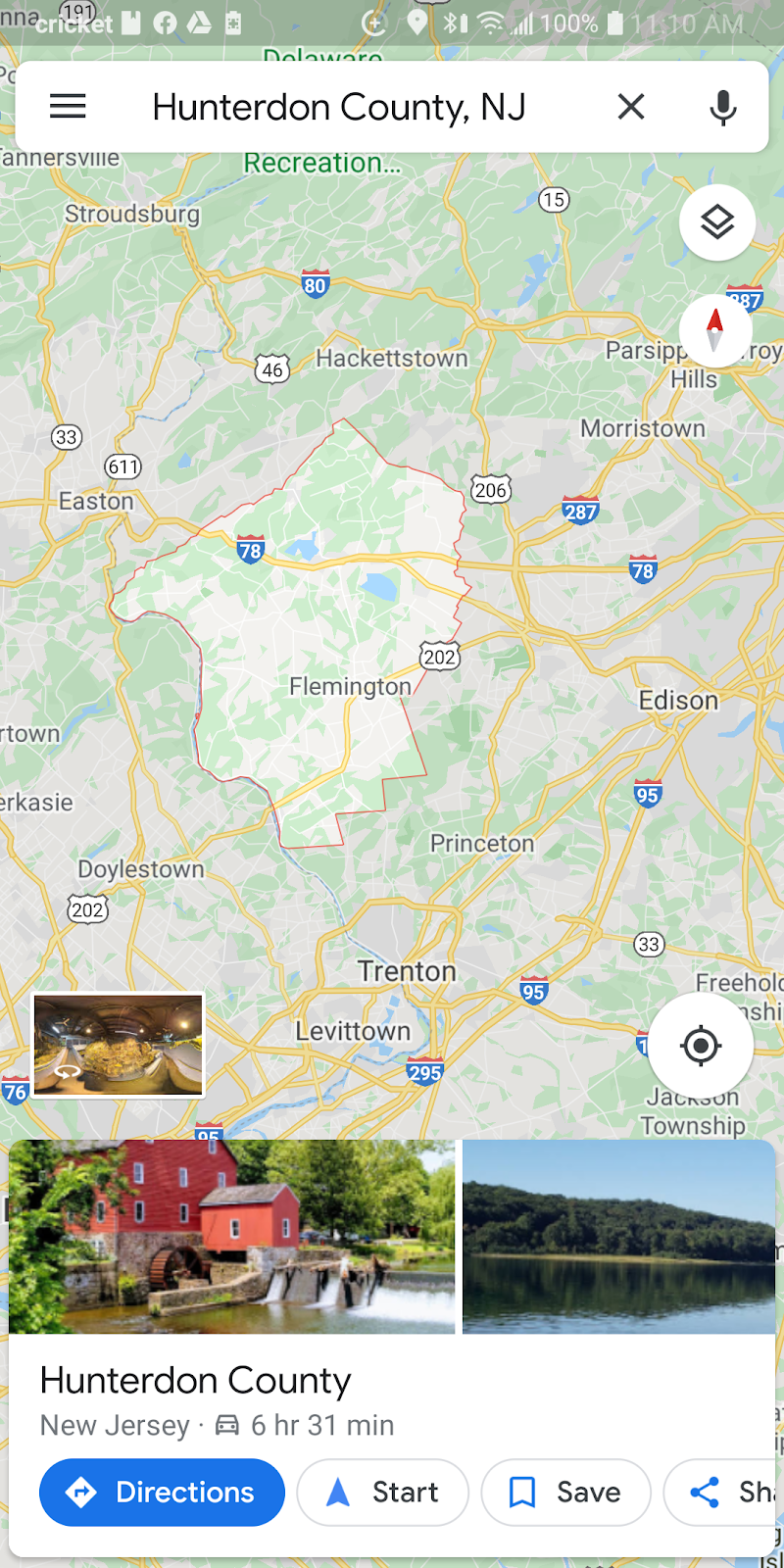
The scope of Klein's 1984 novel The Ceremonies, its stately pace and sensual physicality, rewards the diligent reader. The buzzing summer heat of rural Hunterdon County, NJ and the broiling sweat of a stifling New York City are perfectly conveyed.


There are plenty of nuggets along the way for weird fiction readers. For a change, though, Machen is placed higher than Lovecraft in weighting narrative allusions. (No shoggoths or gill-men here to break the reader's teeth or sap the willing suspension of disbelief).


From Book Six: The Green Ceremony


....he walks to the bookcase in the living room and stoops before a set of drab brown Victorian volumes gathering dust on the second shelf from the bottom.

     How amusing, he thinks, as he withdraws one of them - amusing that a key to dark and ancient rites should survive in such innocuous-looking form.

     A young fool like Freirs would probably refuse to believe it. Like the rest of his doomed kind, he'd probably expect such lore to be found only in ancient leather-bound tomes with gothic lettering and portentously sinister tides. He'd search for it in mysterious old trunks and private vaults, in the 'restricted' sections of libraries, in intricately carved wood chests with secret compartments.

     But there are no real secrets, the Old One knows. Secrets are ultimately too hard to conceal. The keys to the rites that will transform the world are neither hidden nor rare nor expensive. They are available to anyone. You can find them on the paperback racks or in any second-hand bookshop.

     You just have to know where to look - and how to put the pieces together.

     There are pieces in an out-of-print religious tract by one Nicholas Keize. And in a certain language textbook which, in its appendix, transcribes nursery rhymes in an obsolete Malaysian dialect surprisingly like Celtic. And in a story, supposedly fiction - but not when read at the right time - by an obscure Welsh visionary who barely suspected why he'd written it, and who regretted it in later years and died a fervent churchman. And in the pictures on a cheap pack of novelty cards based on images from unguessed-of antiquity. And in a Tuscan folk dance included in a certain staid old dance book which, along with plies and pirouettes, has the dancer make a pattern called 'the changes.'

     The pieces are there, simply waiting to be fitted together into what, from the start, they were meant to be: a set of instructions for the Ceremonies....


Book Six: The Green Ceremony actually begins with this excerpt from Machen's "The White People."


....And my heart was full of wicked songs that they put into it; and I wanted to make faces and twist myself about in the way they did ... So I did the charm over again, and touched my eyes and my lips and my hair in a peculiar manner, and said the old words . . . and I was so glad I could do it quite well, and I danced and danced along, and sang extraordinary songs that came into my head . . . songs full of words that must not be spoken or written down. Then I made faces like the faces on the rocks, and I twisted myself about like the twisted ones, and I lay down flat on the ground like the dead ones.


Jay

13 July 2020


Sunday, July 12, 2020

Reading: The Ceremonies Book Three: The Call

[Today I had one of those odd coincidences that sometimes crop up to delight the reader. I am currently reading (3rd attempt) T.E.D. Klein's 1984 novel The Ceremonies. It takes place in the wilds of Hunterdon County, NJ. When I came into the living room this morning, MSNBC had a Covid-19 report from Flemington, a town in Hunterdon County mentioned in the novel.]


I am now nearing the end of Book Three: The Call. Carol has arrived for an overnight visit at Poroth Farm, but circumstances thwart the intimacy she and Jeremy anticipated.  Over dinner, Sarr recounts his hair-raising visit to New York at age seventeen. 


After dinner, Sarr and Deborah pray, then retire to bed. Carol repairs to their spare room, intended someday as a nursery. 


And Jeremy retires to his outbuilding with a Machen volume forwarded to him via Carol by Mr. Rosebottom.


....All was silent now, except for the crickets.

     Unfortunately, he wasn't very tired. In fact, he was still restless and on edge. The sick feeling left by the wine had finally worn off.

     Maybe a dip into someone else's mind would do the trick. He undressed and got into his bathrobe. Glancing around for a book to read, his eye fell on the faded yellow covers of the one Carol had brought him. Seating himself at his desk, he ran through what he knew of its author. Machen had been a Welsh minister's son who went to London and lived alone for many years, nearly starving, haunted by fantasies of weird pagan rites and longing for the green hills he'd left behind. Lovecraft, in a survey of the field, had praised him highly.

     Freirs flipped through the yellowed pages, searching for the story the old man had recommended, 'The White People.' It was near the center; the book fell open easily to it. Someone - perhaps old Rosie himself, hadn't he been scribbling something that day? - had written in pencil just above the tide, Only effective if read by moonlight.

     Too bad the moon was blocked by clouds tonight; it might almost have been worth a try. Just for fun, of course. By way of experiment he snapped off the desk lamp. Surprisingly, moonlight was now streaming into the room, falling onto the bed and a strip of the floor with a radiance far brighter than he'd imagined, though the table he was using as his desk was still in shadow. Peering out the window, he saw that the clouds had begun to part; the moon was shining down now unimpeded.

     Leaving his chair, he seated himself on the edge of the bed and laid the book on the windowsill. He discovered that, by squinting, he could just make out the words. It might be amusing, he decided, to try and absorb the story this way. Maybe it would ease him into a dream.

     Holding the book open by the moonlight, he began to read.


     His eyes were moving faster. They felt as if they were darting back and forth as rapidly as insects, yet his vision seemed glazed, as if he were no longer reading the words but was instead being read by them, carried along like the beetle he'd seen kicking in the swiftly flowing stream, borne by the current . . . toward what rapids?

     The story's prologue, a framing device, had confused him, with all its high-flown talk about the human soul and the Meaning of Sin, and he wasn't even sure exactly where the tale was set - somewhere in the countryside, that's all he could be certain of, with a big house near a forest, and secret places, hills and pools and glades.

     But the main portion of the story, the extract from a young girl's notebook, was staggering, overwhelming. It was as if it spoke to him aloud.

     'I looked before me into the secret darkness of the valley, and behind me was the great high wall of grass, and all around me were the hanging woods that made the valley such a secret place . . .'

     He couldn't read it rapidly enough: the air of pagan ecstasy, the rites one doesn't dare describe, the malevolent little faces peering from the shadows and the leaves. It was, he felt certain, the most persuasive story ever written. He found himself whispering the lines as he read them, the words coming faster and faster -

     'I knew there was nobody here at all besides myself, and thai no one could see me . . .Sol said the other words, and made the signs'

     - and by the time he'd finished he was half convinced he heard another voice, one softer and more ancient than his own, whispering an even stranger story in his head, a story in a language he seemed dimly to remember.

     He had no idea how much time had elapsed. It might have been days. His head was still spinning from the rush of words, or maybe it was only from the effort of reading in so faint a light. A pair of flies, trapped in the darkened room, were crashing into the window screens around him; the crickets droned their song; frogs piped madly by the brook, but he no longer heard them. Still in the story's spell, he felt himself slip off the robe and walk slowly across the room, opening the door to the lawn outside and stepping into the darkness.

     But it wasn't dark. It was a different night he stepped into, one almost as bright as a stage. Every rock was visible, every blade of grass; every object cast a shadow. The clouds had rolled back, the sky had opened up, and the full moon now shone forth onto the yard with all its power. Pale light seemed to pour from the sky, revealing things not meant to be seen, the secret night side of the planet. He felt the wet grass beneath his feet, and small wet things that moved, and things both hard and sharp, but he didn't pull away. He felt himself drawn like a dancer across the lawn, past the back of the farmhouse and the line of dark rosebushes standing like sentries along one side, the house itself sleeping in the moonlight, its windows dark. And still he was drawn back, toward where the bubbling stream made sucking noises at him, back toward the massive shape of the barn, the moonlight so strong now he could see his own shadow floating over the grass, floating toward the gnarled old willow that grew against the barn. And his own shadow yearned toward the shadow of the tree, and he watched it and felt himself follow, past the corner of the barn, moving inexorably toward the dark branches. And at last his shadow touched the other, merged with it, was absorbed in it; and still, not knowing what he did, he followed.


     Deborah caught her breath in wonder. Beside her, two of the cats looked up and regarded her curiously, then settled back to sleep.

     She too had been asleep, but she'd been awakened by the shift in the clouds and the bright moonlight which had suddenly flooded the room. There were no curtains on the windows; their people didn't hold with them, feeling it correct to get up with the sun. Unable to go back to sleep, she had been sitting up in bed and gazing absently out the window, head still spinning from the wine and the pictures of the Dynnod, when suddenly Freirs' door had swung open, down there in the yard, and now Freirs himself emerged into the light, his body pale against the lawn.

     Her eyes widened. He was naked.

     His expression was strangely preoccupied as he stepped onto the grass. She felt excited, watching him pad farther from the building, like a child watching something she shouldn't. She hadn't seen a naked man, aside from her husband, in - she couldn't remember how long it had been. But here were Jeremy's smooth white buttocks, his thighs, his sex . . . She caught her breath.

     Where was he going at this hour? He must be off to have himself a pee, she thought. But why's he heading clear across the lawn?

     At no time did he glance up toward her window (not that he could have seen her in the darkness anyway, she told herself, and he without his glasses); and he couldn't have known, as late as this, that anyone was watching. She wasn't sure of the time - the only clock was downstairs, the big grandfather clock Sarr had inherited; she could hear its regular ticking - but she thought it must be close to midnight.

     He was walking slowly, like a sleepwalker. Maybe he was sleepwalking, she thought; Jeremy wouldn't walk barefoot like that, he was far too squeamish about bugs! worms! night crawlers! Yet there he was, across the lawn and disappearing in the shadow of the barn.

     Perhaps she should stop him. If he was sleepwalking, could there be any danger? She dismissed the thought as soon as it occurred. Why embarrass him? If he wandered off into the long grass or the forest - well, he wouldn't be hurt, the Lord watched over sleepers; and if he found himself on rough ground, why, he'd simply wake up. She thought of calling to him through the open window, but she was already too excited. She could feel herself breathe faster now and was suddenly aware of her hand beneath her unbuttoned nightgown, cradling and squeezing her breast.

     With a little sigh she lay back, deliberately jarring the bed, hoping to awaken Sarr, his face pressed to the crumpled pillow. He stirred, clutched the pillow tighter, and slept on.

     She shifted closer to him, so close that she could feel the warmth of his body. He, too, wore the traditional nightgown, but as her hand explored beneath the sheet, she could feel that it had worked its way above his waist. Her fingers caressed the familiar contours of his hips and slid into the soft, girlish hair. Gently yet urgently they closed over his penis.

     He groaned softly, still asleep, and turned toward her, eyes closed. She tugged more insistently, and in reflex he twisted his hips to be nearer her, snaking his arms along her body, at last finding her breast. Carefully keeping her breath slow and silent, she rolled herself on top of him.


     In the smaller room, Carol slept on, outlined in the moonlight, her arm thrown over her eyes. Her regular breathing grew faster; suddenly her hand clutched the edge of the sheet, her other hand formed a fist, and a tremble shook her body like a fever. Her leg straightened, then pulled back; her form seemed to grow heavier, pushing into the mattress, as if she were retreating, in her dream, from some unwanted approach. Soundlessly her mouth formed words. Above her, in the pale light, the cardboard nursery shapes stared indifferently down.


     He felt the rough bark against the soles of his bare feet and sensed dimly that he was climbing the gnarled old black willow that grew beside the barn. The branches bent beneath his weight but did not snap. He felt himself climb upward, unerringly as a squirrel, as if he had done it many times before and knew exactly where to place his hands and feet.

     Attaining the upper branches, he made his way out onto one of the thicker limbs, let go with both hands, and, precariously balanced, stepped lightly onto the barn roof just before the limb began to give way, the old wooden shingles curling wet beneath his toes. He continued climbing, bathed in moonlight now, the moon's face just above him, whispering him on.

     At the apex of the roof he unbent and slowly stood upright, one leg on each sloping side, one foot planted east and one foot west, straddling the center line. The moon, gazing down at him, was close enough to touch. He raised his hands to it.

     Deborah eased the sleeping Sarr onto his back, rose on her knees, and straddled him. Reaching down, she grasped him and put him inside her. He slid in easily.

     Hands raised as if in supplication, Freirs felt himself make overtures to the moon, gestures and faces that no one could see, no one would ever see, no one had ever seen before. Perhaps some ancient force was in control, but there was no thought of explaining what he did, or why. Past and future did not exist. There was nothing real but his own movements. The shingles, he sensed idly, were rough against his feet. The ground seemed far away, but he had no fear of falling. From this height the land below him, the distant farmhouse with its little black windows like eyes, its outbuildings and its garden, seemed almost luminescent in the moonlight, with the trees a dark ocean around it....


Jay

12 July 2020


Saturday, July 11, 2020

Reading: The Ceremonies: Midsummer

From: THE CEREMONIES by T. E. D. Klein

(1984, Viking Press)


Book One: Portents


....'I'm not a young man anymore,' he was saying. 'The doctors tell me not to make any long-range plans.' He smiled wistfully and blinked his mild eyes. 'But before I die I'd like to finish a little book I've been working on. A book about children.'

     They stood talking softly by the window, barely disturbing the stillness of the room. The little man's words didn't carry far, and they had a gentle, lisping quality which she found strangely soothing. His voice was high and quavery as a flute.

     Though at first she'd half resented him for interrupting her reverie - why didn't he bother Mrs Schumann if he had a problem, why had he come straight to her? - Carol had to admit that there was something rather touching about the man. For all his paunch and double chin he looked surprisingly frail up close, and a good deal older than she'd at first supposed, perhaps well along in his seventies. He was no taller than she was, with plump little hands, plump little lips, and soft pink skin with little trace of hair. He reminded her of a freshly powdered baby.

     'This will be a book about your own children?' she asked, preparing herself for an onslaught of reminiscence.

     He shook his head. 'No, nothing like that. I've never been blessed with children.' Again the wistful smile, all the more affecting in so droll a figure. 'I do enjoy watching them, though. Like those two over there.' He gestured toward the bookshelves in the rear. 'Can you see what they're doing? My eyes aren't what they used to be.'

     Carol glanced over her shoulder. Behind the central desk, two small girls darted silently through the aisles of books. 'Oh, them!' she said. She wondered if she should tell Mrs Schumann, but the librarian was leafing through a pile of catalogues. 'I'm afraid they're being rather naughty. They seem to be playing tag.'

     The little man nodded. 'A game that predates history. Once upon a time the loser would have paid with her life.'

     From behind the shelves came a screech of laughter.

     'That's the subject of my book,' he went on. 'The origin of games. And nursery rhymes, fairy tales, and the like. Some of them go back - oh, even farther than I do!' He cocked his head and smiled. 'What I mean is, there's a bit of the savage behind even the most innocent-looking creations. Do you follow me?'

     'I'm not sure I do.' She felt a flicker of impatience; he still hadn't said exactly what he wanted.

     He pursed his lips. 'Well, take today, for instance, the twenty-fourth of June - traditionally a very special day. Magic spells are twice as strong right now. People fall in love. Dreams come true. Did you have any dreams last night?'

     'I can't remember.'

     'Most likely you did. Young girls always dream on Midsummer Eve. The night just seems to call for it.'

     'But surely we're a long way from midsummer,' said Carol. 'The season's just begun.'

     He shook his head. 'The ancients saw things a bit differently. To them the year was like a turning wheel, one half winter, one half summer, each with a festival in the middle. Winter had the Yule feast, summer what we're celebrating now - Midsummer Day. For us, of course, the year's been flattened to death on a calendar, and Yule is just another word for Christmas, but originally it had nothing to do with Christ. The only birth it marked was the birth of the sun.'

     'Wait, you mean . . . another Son?'

     He laughed, a little louder than necessary. 'No, no. Oh, my, no! I was referring to that big fellow out there.' He nodded toward the window. 'You see, Yuletide celebrates the winter solstice. Afterward, the days start getting longer. As of last night, though, we've come to the other end of the wheel. The days are growing shorter now. The sun's begun to die.'

     Carol found herself watching the sunlight as it streamed obliviously through the window, its radiance undiminished. How odd, with all the hot days still ahead - how odd to think of it cooling, dying, growing dark . . .

     'Long ago,' he was saying, 'Midsummer was a time of portents. Rivers overflowed their banks or suddenly dried up. Certain plants were said to turn to poison. Madmen had to be confined, witches held their sabbats. In China dragons left their caves and flew about the sky like flaming meteors. In Britain they were known as drakes, serpents, "worms," and Midsummer was the time for them to breed. They say the whole countryside shook with the sound, and that farmers lit bonfires - in those days that meant fires of bones - in an effort to drive them away. There were other fires, too: fires, dancing, midnight chants to commemorate the passing of the sun. Even today there are places in Europe where children celebrate Midsummer Eve by dancing round a bonfire. At the end of the dance,' one by one, they leap across the flames. It seems harmless enough, of course - at worst a burnt bottom or two! - but trace it back to the beginning and . . . well, I think you can guess what you'll find.'

     'More than just a burnt bottom, I suppose.'

     He laughed. 'A lot more! A ritual sacrifice! Or take a more familiar example: an innocent little counting rhyme like "Eeny meeny miny mo.

     'Catch a beggar by the toe?'

     'That's it. Except that twenty years ago, before they cleaned up the language, you would have said "Catch a nigger by the toe." And two centuries ago you'd have repeated a string of nonsense words: "Bascalora hora do," something like that. There are hundreds of variations. The one you grew up with, incidentally, puts you - hmm, let me see . . . ' He scratched his head. 'Oh, I'd say somewhere around Ohio. Am I right?'

     'Hey, that's really incredible! I'm from Pennsylvania, right across the border.'

     He nodded, not at all surprised. 'A very pretty area. I know it well.' Turning, he gazed dreamily out the window, sunshine playing on the little pink baby skull, the wisps of hair that glowed white with a touch of yellow.

     Carol watched him in silence as he stood before her, blinking in the light. There'd been something in his tremulous old-man's voice which hinted at considerable experience, but till now she hadn't been inclined to take him seriously. Maybe it was his size, or his funny little lisp; he was far too small to be threatening. No doubt his reference to Ohio had been a lucky guess; still, she found herself oddly impressed.

     Presently he turned. 'I'll tell you what's even more remarkable,' he said. 'You can trace that little rhyme of yours all the way back to the Druids.' He smiled at her look of disbelief. 'Oh, I assure you, it's quite true. Once upon a time, when Britain was occupied by the Romans, it was a sacrificial chant. The Druids had a rather nasty habit, you know - they liked to burn people in wicker cages! - and they used the "Bascalora" method to choose a victim. "Basca" means basket, and "lora"—'

     'Isn't that Latin for "straps"?'

     His smile widened. 'Well, bless me, you are smart! Binding straps, yes. To tie the hands.'

     She was pleased to see the admiration in his eyes. 'My one good subject,' she said, and allowed herself a modest smile. Briefly another thought intruded: the night sky, a mound aglow with flames, and a girl very much like herself bound naked to a kind of altar. Something long and white was emerging from the shadows. She pushed it from her mind. 'I've had a lot of practice,' she said. 'In Latin, I mean. And your subject is - this type of thing? Childhood and primitive rituals?'

     He nodded. 'More or less.'

     Behind him three more children had arrived, and soon they'd be asking for her help. She would have to cut this short. 'It sounds absolutely fascinating,' she said, 'but you know, you're really in the wrong place. The books we have up here - well, they're very basic, strictly for pre-teens. You want downstairs, under Anthropology. Or you might try looking through Child Development . . . '

     He nodded genially. 'Yes, I know, I've already been down there. Voorhis has a very good collection.' He patted the briefcase beneath his arm. 'Until this afternoon, in fact, I'd been looking for a certain little book, a study of Agon di-Gatuan, the so-called "Old Language." I'd searched the whole city, top to bottom, and this was the only place that had it.'

     Carol was amused at how pleased he sounded with himself. 'Oh, really?' she said. 'Top to bottom? You must be pretty thorough! The city's an awfully big place.'

     'Not at all. Not when you know what you're looking for.'

     He smiled and took a step closer.

     'And of course, the nice thing is, you get to meet such interesting people. If I hadn't come up here, I'd never have made the acquaintance of a charming young lady like yourself.'

     'Oh, now you're just teasing,' said Carol, flattered and uneasy. She had heard this sort of thing before; there were always one or two old men who tried to flirt with her in a joking, grandfatherly way. 'Maybe I'd better say goodbye now. My mother always said that when a man pays a compliment, watch out!'

     'What? Watch out for a poor old thing like me?' He laughed and shook his head. 'I assure you, young lady, I'm perfectly harmless!' His smile was so dazzling that she didn't stop to wonder if he wore false teeth. 'I'm nothing more than a—'

     Suddenly he looked past her. Carol saw his smile fade into a frown and, at the same moment, felt an insistent tug on her sleeve. She pulled back, startled; a belligerent little white face was peering up at her.

     'I have to have something on entomology,' the boy demanded, still gripping her sleeve. 'With pictures.' He seemed greatly put out by Carol's hesitation. 'Insects!' he hissed, and was duly directed one row past Outdoors and Adventure.

     When she turned back to the little man, he was staring out the window. She realized that he still hadn't explained precisely why he'd come upstairs. No doubt he was just another lonely old pensioner who'd lived too long and read too much and now wanted a chance to tell somebody what he'd learned.

     As if sensing her eyes on him, he turned. 'Lovely garden,' he said softly. Behind him the topmost vines arched toward the sunlight. 'I wish I had more time for nature, but that's the one thing I don't have. I'm busy every minute of the day.'

     In that case, Carol wondered, why is he wasting time up here?

     'The truth is,' he said, 'there's a job enough for two. I've been trying to find someone at Columbia to work with me, some bright young student, but I didn't care much for the people they sent.' He shook his head. 'No, I didn't care much for them at all.'

     He gazed absently toward the garden once more, then turned back to her. 'You know, when I was downstairs today I couldn't help noticing all the scholars down there, looking oh so self-important as they pored over their books, but not really knowing half as much as they liked to think. And I suddenly asked myself, "Why bother with people like that? Why not turn to a professional? I'll bet there's a children's librarian right here at Voorhis who'd be a lot more useful to me, and who'd probably be grateful for the extra work." That's why I came up here. It was just a whim.'

     Carol's interest was stirred, but so were her suspicions. Was this funny little man about to offer her a job? Or was he merely looking for an unpaid volunteer? His project sounded interesting enough, but she was in no position to work for free. She hoped he wouldn't ask her.

     'I've collected a huge amount of data over the past few months,' he was saying, 'and I expect to be acquiring more over the summer. You know the sort of thing: journal articles, newspaper clippings, dissertations, and so forth. More than I'll have time to read myself.' He patted the briefcase again. 'I'm an old man - at least that's what they tell me! - and frankly, I'm going to need some help.' Laying the briefcase on the windowsill, he leaned toward her as if he had something urgent to confide; she noticed with approval, that he smelled of talcum powder and soap. 'What I'm looking for, you see, is someone to read over the material, pull out the important ideas, and, wherever possible, summarize them for me. Part-time, of course. Ten or fifteen hours a week.' He stood back, hands on hips. 'So, young lady, there it is in a nutshell.'

     'I see.' She recalled the work she'd done four winters ago at college, the dark evenings at the library and the endless pages of notes. 'You want a sort of research assistant.'

     'That's right,' he said. 'Someone I can depend on. Someone who's smart, who writes well, and who has an interest in the field.' He paused a moment and regarded her quizzically; the wide, gentle eyes, level with her own, seemed to float in their sockets, taking in her surroundings, her features, her hair. 'I feel certain that you meet my qualifications.'

     'Well, I - I do have an interest in the field,' said Carol, not entirely sure what field he meant. She wondered if he'd mistaken her for a regular children's librarian, instead of just one of the downstairs assistants. Dare she tell him? And dare she ask him about pay?

     'These articles,' she said at last. 'How would I obtain them?'

     'Well,' he said softly, leaning toward her again, 'I rather like to do my own collecting.' Idly he reached up to scratch at the comer of his eye, and Carol felt a wisp of breeze against her cheek. Above her the shades billowed and collapsed. 'Sometimes I might ask you to locate a particular item for me, but that won't happen often. We'll meet each week, and—Whatever's the matter?'

     'No, no, it's nothing. Please go on.' For a moment she had felt a tiny stinging just above her left temple, but already it was gone. She smoothed back her hair and tried to look interested.

     'Well, I was saying— Here, let me brush you off.' His hand swept gently over her shoulder, and came away trailing several strands of her newly clipped red hair. 'I was just saying that we'll meet wherever's convenient - here at the library or at one of our homes.' He stepped back, slipping his hand into his pocket. 'I live uptown, by the way, near the Hudson. It's an easy walk from the subway.'

     He paused as if awaiting a reply. Carol resolved not to give him her address, at least not for the moment. She remained silent.

     He licked his lips. 'None of this is important,' he said at last. 'It can all be arranged later. Each time we get together, you'll give me your notes and I'll give you the new material . . . along with your pay.'

     So there was to be money after all. 'And this pay would be—'

     He laughed. 'I thought I'd mentioned that! I was thinking of twelve dollars an hour, plus expenses. Does that sound all right?'

     'Twelve dollars an hour?' Hastily she tried to calculate. He'd said ten to fifteen hours a week; that would be anywhere from $120 to . . . She gave up; her heart was beating too fast. She only knew she wasn't worth that much.

     He looked momentarily uncertain. 'If you don't—'

     'That sounds absolutely fine,' she got out. She hoped she appeared composed, but in her imagination she was already buying the outfit she'd seen in a shop on Greenwich Avenue, and a subscription to next season's ballet. Maybe even an air conditioner, too. God loved her.

     'I'm glad it's satisfactory,' said the little man, with the faintest of smiles. 'It'll be off the books, of course.'

     'Off the books?' She wasn't sure exactly what that meant, except that it was something illegal. The ranks of dancers faded and the air conditioner stopped. The room grew warm again.

     He nodded. Was there impatience in his face? T assumed you'd prefer it that way. You won't have to give anything to your Uncle Sam.'

     'Yes, yes, of course.' This was too good to be true. 'You mean, then . . . I could keep everything.'

     'That's right. You would, I take it, be interested?'

     'Yes, absolutely. This is just the sort of thing I've always been fascinated by - fairy tales, and myths, and primitive religion . . . ' She finished lamely, unable to recall if this was his intended subject; he hadn't actually said anything about religion, had he?

     'Excellent,' he was saying. 'You sound like just the person I've been looking for. I need someone with an inquiring mind, who's not afraid of a little hard work.' He unfastened the strap to the briefcase and began digging inside. 'It may sound old-fashioned, but— Oh, dear!' He drew forth a plump, pale yellow book and turned it over to examine it. There were catalogue numbers on the spine. 'Oh, for heaven's sake, look at this. I'm getting so absent-minded these days! I seem to have walked off with someone else's book.' He grinned sheepishly. 'I'm afraid this must belong to that nice young fellow downstairs - the one with the glasses. Do you know him? At the table by the bulletin board?'

     Carol shook her head.

     'Well, I'll just have to make sure to return it.' With a sigh he laid the book idly on the windowsill, then turned back to Carol with a dazzling smile. 'Now, young lady, where was I?'