Subscribe to my Substack

Showing posts with label Nathan Ballingrud. Show all posts

Monday, July 4, 2022

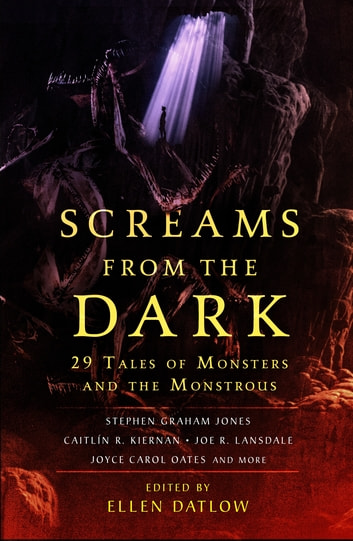
Six stories from Screams from the Dark, Edited by Ellen Datlow (Tor Nightfire, 2022)

Readers who are unfamiliar with the anthology Screams from the Dark may prefer to read these notes only after reading the stories.


*   *   *


         "The British saw the Hudson as key to their strategy. If they could control it, they could split the colonies, divide and conquer them. As plans go, it wasn't a bad one. It failed because their army was defeated at Saratoga, which initiated a series of events leading to them losing all of the state down to the City, where they remained until the end of the war. Before news of the loss at Saratoga spread, the British had sent thirty ships sailing up the Hudson. There were a few thousand soldiers on them. The idea was for these men to meet up with the British forces marching south along the river from their presumed victory at Saratoga. On their way, the British ships would create a diversion and perhaps more. They got off to a promising start, destroying a couple of colonial forts on the lower Hudson, capturing one right across from West Point. A little bit below Wiltwyck, the fleet received word of the defeat at Saratoga. With this message, their mission became pointless. To say the least, they were not pleased. Since Wiltwyck was the closest settlement, they visited their displeasure on the city. First, they subjected what was then the state capital to bombardment by their ships' cannons. Last I heard, one of the older buildings uptown still has a cannonball lodged in its basement wall. Fortunately, the city's residents had gotten wind of the ships' approach and had largely abandoned it. Once the cannons were done, the fleet sent several landing boats full of soldiers to shore. Reports vary as to how many redcoats set foot on Wiltwyck Point, with some claiming six hundred, others a thousand, and others still more. For the purposes of this story, the exact number doesn't matter. What does is there were at minimum hundreds of them marching on the city, which was lightly defended, most of the able-bodied men off fighting. The British shot at the handful who showed up to confront them, then set fire to the city. Over three hundred buildings, houses, barns, businesses, and places of worship burned down. The soldiers retreated to their boats, returned to their ships, and sailed for Manhattan, thus concluding their final, spiteful military success in this part of the Hudson Valley.

     "Among the soldiers who came ashore that day was a captain, Amos Black. He brought with him a pair of diminutive figures, whom the other troops referred to as Captain Black's little gray fellows. They were part of a group of five such fellows under the captain's command. As soon as it had become clear to the British that the battle against the colonists was not going to be over soon, they had sent across the Atlantic for Black, who was housed with his gray fellows separately from the rest of his regiment. Upon their arrival in New York, the six of them were billeted in a repurposed barn not far from Harlem Heights. From there, they were deployed on select missions, most of which were secret. None of the regular soldiers cared for the captain and his associates.

     "As the British troops fired on Wiltwyck's defenders and set torch to its buildings, Black and his two companions kept to the rear. He was a striking figure, a small, narrow man dressed not in the scarlet and white of a regular soldier, but entirely in black, with the exception of an emerald neckerchief. It was as if he was wearing his name, the troops joked. Only when the British were climbing back into their boats did Black take action. Before joining the rest of the landing party, he turned to his undersized companions, uttered words no one could make out, and pointed at the burning city. The little gray fellows turned and sprinted toward it. According to one observer, they ran more like dogs, or wolves, than men.

     "In the following days, there were a series of terrible murders in and around Wiltwyck's smoldering remains. Men, women, children, old, young, all were victims. They were killed sorting through the charred wreckage of their homes and businesses. They died attempting to recover what vegetables were left in their fields. They met their end on the road out of Wiltwyck to Hurley, where the majority of the city's residents had relocated. These were savage acts, bodies torn open, entrails strewn around them. Popular suspicion fell on wild animals, a pack of wolves, drawn to the devastated city and made bold by its ruin. There were organs missing from some of the victims, but what was remarkable was the lack of any substantial amount of blood at the sites of the crimes, which pointed to creatures other than wolves. A couple of young men who had spied on Captain Black ordering his undersized companions to remain behind made the connection between those strange figures and the outbreak of murders. The young men—they were boys, really—assembled a group to locate the little gray fellows and put a halt to their attacks. Its numbers consisted of men too old, too young, and too unwell to fight in the Continental Army, as well as a pair of ministers and a widow who had assumed the running of her farm after her husband had been struck down by a British musket ball at the Battle of Long Island.

     "Together, these men and women tracked the gray fellows to a barn on the road to Hurley. They circled the barn and attacked. A ferocious fight ensued. Although bloated with blood, the gray fellows were fearsome contestants, terrifically strong, inflicting horrific damage on their assailants with the fangs filling their wide mouths, the claws on their long hands and feet. They killed a full third of the party, and of the rest, no one went uninjured. Finally, the widow—whose name was Emma Dearborn—struck the head from one of the creatures with an axe. For a short while thereafter, his companion continued the fight, then leapt through the ranks of the attackers and fled. The group bound up their injuries, burned the remains of their foe, and set off in pursuit of his fellow.

     "For six days, they chased him through the Catskills, occasionally drawing within sight of the gray fellow, though never close enough to do more than waste a musket ball on him. At last, his trail disappeared on the shore of a lake. Assuming he'd hidden beneath the water, the members of the party stationed themselves around the lake and waited for their quarry to emerge. Another four days passed, at the end of which, they decided the gray fellow had either drowned or escaped. A careful search of the surrounding woods failed to turn up any sign the creature had slipped out of the water and through their ranks, so they concluded he had chosen his end in the water rather than at the edges of their knives and axes. They warned the few people living near the lake of what they had pursued into it, advised them to keep an eye out for anything unusual, then returned to Wiltwyck and their separate homes."

     "How did your grandmother know this?" I said. "I'm familiar with the burning of Wiltwyck; they reenact it every other Fourth of July. But the rest of it…"

     "She'd read about it," Doris said, "at the Woodstock library. One of her responsibilities was the local history section, whose shelves contained all sorts of things, personal journals, albums of old newspapers, unpublished manuscripts. She read all of them, in part to figure out how to catalogue the holdings and in part to learn more about the place she and Morfa had chosen to call home. Among the papers she examined was a handwritten document titled Concerning the Terrible and Strange Events of October 18–November 2, 1777. Fifty-six pages long, it was the work of Emma Dearborn, the widow who'd beheaded one of the gray fellows. During the winter after the battle with the creatures, she set down her account of it. There was no record of the means by which the manuscript found its way to the library.

     "When she reached the description of Captain Black's little gray fellows, she recognized the pair as blodsuger. How was that possible, right?"

     I nodded.

     "Mormor's grandmother had come to Denmark from Finland, Lapland, where she had been what the Danes called a heks, the Finns a noita, a witch. She had taught Mormor about the nisse, how to distinguish among them, the proper ways for dealing with the more dangerous varieties. Of course, my grandmother didn't imagine the lake behind her and Morfa's house was the lake from Emma Dearborn's story. It would have been too great a coincidence. But she shared the details of the widow's narrative with my grandfather. His father, a blacksmith, had passed along the same and similar folklore to him. As the one who went off fishing, he was more likely to encounter the remaining blodsuger, assuming there was any truth to the tale she had read and the creature had remained in its watery hiding place. Telling him was a precaution of the same order as reminding him to keep an eye out for rattlesnakes when he went hiking on Overlook Mountain. She didn't expect he would meet any of the reptiles on the paths he followed, but better to be prepared for something that never came than surprised by it shaking its rattle at your feet. The only thing neither of them had anticipated was discovering the blodsuger in the middle of such a ferocious storm. It was the way of life: you made your plans, and God chuckled at them…."


"Blodsuger" by John Langan


*   *   *


Screams from the Dark: 29 Tales of Monsters and the Monstrous Edited by Ellen Datlow (Tor Nightfire, 2022) is an ambitious attempt at a state-of-the-art horror fiction anthology. It includes over two dozen original short stories and novellas of high quality. 


I have already blogged about two stories that demanded my undivided attention:


My notes on the sublime "The Ghost of a Flea" by Priya Sharma can be found here.


An initial response to the gruesome, non-supernatural "'The Father of Modern Gynecology': J. Marion Syms, M.D. (1813–1883)" by Joyce Carol Oates is here.


The reader will find my thoughts on six other stories below.


*   *   *


"Children of the Night" by Stephen Graham Jones is an amusing joke. Tol, the organizer of a Montana cryptid group searching for Bigfoot, gets his prayer answered.


In The Darkening Garden: A Short Lexicon of Horror, John Clute reminds the horror reader that answered prayers are "wishes which are fulfilled in a fashion which punishes the wisher, the biter bit...."


While no sardonic genie or monkey's paw grants protagonist Tol's wish, there might as well have been.


The Bigfoot in question has been killed by a big rig on a lonely mountain highway. Tol  single handedly gets it into the back of the family minivan. (It never occurs to him to alert fellow team members.) Then he begins examining the body.


The author's droll conceit turns out to be that creatures of the night might wisely go in disguise on their errands. When Tol begins to "peel the onion," the reader knows it will all end in tears.


*   *   *


"Three Mothers Mountain" by Nathan Ballingrud also deals with the cost of answered prayers. Tom and his younger brother Scotty lose their father in a car accident. Maddened by grief, their mother mails his wedding ring to the three mountain witches who live above their North Carolina town, Toad Springs. There the ring is planted in a garden. The boys do not get their father back. They get a father-thing instead, a physically corrupt simulacra that wins their mother's single-minded devotion.


So one day Tom and Scotty set out for the witches' mountain cabin, determined to wreck everything.


     The path darkened as they walked. Tom no longer had a sense of what time it was, and he felt a flutter of fear in his gut. Common sense told him it couldn't be any later than two o'clock, two thirty at most. And yet the light filtering through the trees seemed diffuse and weak. This might have been due to the sun pursuing its course above them, and it might have had something to do with the heavy tangle of branches crowding them from either side, but he knew instinctively that the cause was something else: they were entering the Witch Wood. Darkness was an animal, and this is where it lived.


Ballingrud's craft is faultless in "Three Mothers Mountain." The emotional eloquence allowed to each character, the meticulous scene-building orchestrated at kitchen tables in two very different houses, the stoicism ultimately displayed by Tom when facing the consequences of his path, are testament to a writer able to convey every shade of horror. 


     The witches whispered, and then Mother Ingrid said, "Well, perhaps we can do something. Your mother paid. Will you?"

     Thank God, at last, a window. Yes, he would pay. Yes. "Yes."

     "You'll have to make friends with the dark," Mother Margaret said. "Do you have the heart for it?"

     He nodded.

     "We'll see."

     "Don't fret," said Mother Agnes, staring at his little brother. "The sweetest things grow in the dark."


*   *   *


As it begins, "Sweet Potato" sounds like another Joe R. Lansdale organ solo. 


....Though he had a good retirement plan, Tyler hadn't expected his job to end so abruptly, the boss having gone to prison for ass-fondling and grubbing money from the public trust. But there it was. She went and the business went, and now here he was, out in the wilds of unemployment, living off his considerable savings (thank goodness), and submerged way down deep in the cold-ass nothing.

     Dreaming for a while was so fine. No alarm clock, living in pajamas. What he liked best, at first, was that things that seemed silly in real life seemed fine in the dream world. He could be an old-fashioned hero in his dreams. Much younger, washboard abs, a baseball-bat dick, and balls like grapefruits. Carrying a sword, brave and relentless, six foot five and forever young. And then, one night, down in a dream, there was a soundless shift.


But after the early jokiness, a barbed and complicated tale unfolds. Tyler, unemployed and dangerously idle, figures out his increasingly strange waking and sleeping life is the product of something that finds him of use.


"Sweet Potato" carries a warning for men uninterested in the everyday world and its responsibilities.


     Visiting a friend from work, who was also out of a job with time for the coffee shop, Tyler said, after their conversation began to falter, "Have you ever had a dream that seemed real?"

     The friend, gray and heavy with lips like two red earthworms, rocked back in the booth and sipped his coffee before answering.

     "Of course. Though mostly they don't make sense when I wake up. But now and again, they feel real, could be real. Some of the most outlandish dreams seem real at the time."

     "Just for curiosity's sake. Have you ever felt something in a dream come back with you, being there when you woke up?"

     "No. Though I've heard of it. Some people believe your soul lets go sometimes and comes right out of you when you breathe awake. One moment you're breathing asleep, the next, you're breathing awake."

     "Your soul?"

     "If you believe in that sort of thing. Maybe a piece of your soul. Or something worse. A demon. A succubus, which is a kind of sex demon that rides in and out on your essence while you dream, fucks the shit out of you and takes your energy, borrows your soul, and finally keeps it. They can be created by your subconscious, or they can be night riders."

     "What's that?"

     "Loose souls looking for a place to light. A place to suck the energy out of. Men can be incubuses, you know."

     "I don't know."

     "Male sex demons. The succubus in reverse. I think succubuses and incubuses can switch-hit when it comes to sexual matters. You might even have to put Scotch tape over your dog's asshole if one of them is around."

     "I don't have a dog."

     "That's one less worry, then."

     "How do you know all of this?"

     "I read a lot. I found golf too tiring."

     "Well, I could use a sex demon actually," Tyler said.

     "I wouldn't mind one either. But it might be like that old saying about how you have to be careful what you wish for."


*   *   *


"Knock, Knock" by Brian Evenson is a story about two moral monsters, uncle and nephew, pitted against each other over ownership of a house and its land. In their contest, murder does not resolve conflict, it simply raises the stakes and increases the horror.


....You killed the bastard once, he told himself. Now all you have to do is kill him again.


*   *   *


"Bitten by Himself" by Laird Barron is a perfunctory story. It begins in a 

promising mode: a North American frontier scout and mountain man named Chick Poe, prone to wallowing in his own crapulence as a way of life, stumbles upon his doppelganger in a forest clearing one night. They fight and he is bitten, infected with rabies.


From there the tale's missteps and wrong turns commenced. Rather than pursue the rich potential in the story's historical setting, Barron decided to pad the remainder with solipsistic winks, smirks, and reverses.


This is a disappointment for readers who appreciated the riveting if uneven 2013 story "The Beatification of Custer Poe."


But it is an even greater disappointment for readers who thrilled to the sheer storytelling skill seen in stories like "Mysterium Tremendum" (2010), "The Men from Porlock" (2011), and "In a Cavern, in a Canyon" (2015). (Speaking for myself, I found it hard to sleep the first night after I read "Porlock.")


Compared to those sublime stories, "Bitten by Himself" is dully soporific.


*   *   *


"Blodsuger" by John Langan is about the longest story in Screams from the Dark, and is probably the most satisfying. The story's formal elegance is admirable: two people meet at a community social event in the Catskill mountains of New York state. The older protagonist, Doris, tells the narrator the beautifully articulated story of a horror from her adolescence. Langan tells the entire story in dialogue between these two people at a picnic table in a barn. 


"Blodsuger" places horror outdoors, on the land and imbricated in the region's history. Doris is not the victim of answered prayers; she tells the story of her "attempted rescue" of herself, and the way the outcome taught her to know better in future.


The excellence and eloquence of "Blodsuger" is staggering. It reminded me of several earlier Langan stories that have rewarded rereading: "On Skua Island" (2001), "Mr. Gaunt" (2002), and "What Is Lost, What Is Given Away" (2016). 


Langan's stories allow the reader to luxuriate in a horror-filled region made strange by narrative distance.


Jay

4 July 2022

Tuesday, June 7, 2022

"Jasper Dodd's Handbook of Spirits and Manifestations" by Nathan Ballingrud (2019)

I have been a reader of Nathan Ballingrud for several years, and have previously sung his praises here, here, and here.  He is a skilled stylist with a talent for organizing his material: one note prompts another, and before long an entire collection is sublimely reverberating.


"Jasper Dodd's Handbook of Spirits and Manifestations" (2019) is an acute short story. Set in the rural south, it gives us a few days of ten year old Jasper Dodd's summer. The family house is, according to his dad, beset by supernatural enemies. Jasper's dad is the kind of man who writes his sins on scraps of paper and uses them as bait to trap trespassing demons and seal them in Mason jars. 


Before the story begins, Jasper has lost his little sister to bee stings; his mother has left on her scooter for parts unknown. Or so Jasper begins to hope. But in his homemade handbook, he writes questions he fears only the dead can answer.


Ballingrud does a superb job with the natural world in "Jasper Dodd's Handbook of Spirits and Manifestations." 


     It was late August, and the sun still lingered well into the evening. Jasper kept a wary eye on it as he hurried along the empty blacktop toward home. It winked through the leaves, dipping a little further each time he turned away. Shadows flitted through the trees on either side, swelling from the earth. Fireflies drifted in glittering tides. He thought about the feral ghosts, the ones who kept their vigil on the outskirts of the woods, waiting for the protections around their house to fail. He hurried his step.

      Jasper pulled the Hershey bar from his pocket. Mama would have disapproved. Sweetness attracts the devil, she said. But it didn't seem like an evil thing. It seemed like a kindness. He tore off the outer wrapper, gently peeled down the silver paper, and bit the corner from it. He

let it sit in his mouth for a moment, the warm flavor soaking into him, filling his awareness like a sweet and gentle word.

     They'll sniff you out. They'll follow your stink all the way home. That's why you leave the honey out. Evil gonna lap it right up.

     Jasper devoured the chocolate in a few great bites, the guilt of it almost enough to ruin the flavor. He liked sweet things too; was that a sign of wickedness? Could the dark spirits smell him even now?


As with many contemporary short stories, "Jasper Dodd's Handbook of Spirits and Manifestations'' ends abruptly, as though an arbitrary halt is a suitable substitute for a proper conclusion. Endings are hard, which is what makes the finale in Ballingrud's collection Wounds so memorable. It sets off echoes, while "Jasper Dodd's Handbook of Spirits and Manifestations"   collapses in timidity.


_______

Echoes: The Saga Anthology of Ghost Stories (2019)

Edited by Ellen Datlow


Friday, November 29, 2019

Reading: North American Lake Monsters: Stories by Nathan Ballingrud


by Nathan Ballingrud 
(2013: Small Beer Press)

The genius of the system is that it keeps saddling us with a self-image of atomised passivity and acquiescence, then lets us tear ourselves apart when its individual solutions fail to save us from its carnage. Is it any wonder opioids have become the opium of working people?

I feel very close to Nathan Ballingrud's characters because of this shared class predicament. Some of his men are husbands, some fathers, and some sons. Some are facing-down eviction, bankruptcy, homelessness. One just came home after six years in prison. Another is haunted by the New Orleans drowned by Katrina.

Many are the real monsters, but Ballingrud always gives this genre cliche a twist. No easy answers when even the questions break our hearts.


You Go Where It Takes You

"I got to ask you something," he said. "I been wondering about this lately. Do you think it's possible for something beautiful to come out of an awful thing? Do you think a good life can redeem a horrible act?"

"Of course I do," she said quickly, sensing some second chance here, if only she said the right words. "Yes."

Alex touched the blade to his scalp just above his right ear and drew it in an arc over the crown of his head until it reached his left ear. Bright red blood crept down from his hairline in a slow tide, sending rivulets and tributaries along his jaw and his throat, hanging from his eyelashes like raindrops from flower petals. "God, I really hope so," he said. He worked his fingers into the incision and began to tug.


Wild Acre

A man loses his small contracting business and gets his best friend and best worker killed in the process.

…Tara sobbed once, both hands still clutching the steering wheel. Her face was twisted in misery. "You have to get a hold of yourself," she said. "I don't know what's happening to you. I don't know what to do."

He leaned his head back and closed his eyes. He felt his guts turn to stone. He knew he had to say something, he had to try to explain himself here, or someday she would leave. Maybe someday soon. But the fear was too tight; it wouldn't let him speak. It would barely let him breathe.


S.S.

….The horse's big body jerked as it tried to right itself, and Nick heard bones crack somewhere inside it. The horse screamed. It lay next to the overturned car, amidst a glittering galaxy of broken glass, its legs crooked and snapped, its blood spilling onto the asphalt and trailing away in diluted rivers. It was beautiful, even in these awful circumstances; its body seemed phosphorescent in the rain.

Nick knelt beside it and brushed his fingers against its skin. The flesh jumped, and he was overwhelmed by a powerful scent of urine and musk. Its eye rolled to look at him. Nick stared back, paralyzed. The horse's blood pooled around his shoe. It seemed an astonishing end for this animal, that it should come to die on some hard ground its ancestors never knew, surrounded by machines they never dreamed. Its absurdity offended him.

Someone splashed by him and dropped to his knees, peering into the overturned BMW; he shouted Oh my God, oh my God, and tugged frantically, futilely, at its door. Nick sensed a larger movement around him as people left their cars and began shouting, milling around the scene in a vortex of chaos and adrenaline.

"Nick!"

Trixie materialized behind him and pulled at his shoulders.

"Come on, we have to get out of here!"

He came to his feet.

"Nick, let's go. The police are coming. We can't get caught with that gun."

The gun. Nick brushed roughly past her, nearly knocking her to her knees. He retrieved the gun from her glove compartment and headed back to the horse. Trixie intercepted him, tried to push him back. "No, no, are you fucking crazy? It's gonna die anyway!"

He wrenched her aside, and this time she did fall. He walked over to the horse and the gun cracked twice, two bright flashes in the rain, and the horse was dead. A kind of peace settled over him then, a floating calm, and he stuffed the gun into his trousers, ignoring the heat of the barrel pressing into his flesh. Trixie had not bothered to get up from the pavement. She sat there, watching him, the rain sluicing over her head and down her body. Her face was inscrutable behind the curtain of rain, as was everything else about her. He left her there.

Behind her, the car was hopelessly ensnared in the traffic jam. He would have to walk home, to his mother, broken and beautiful, crashed in her own foreign landscape. Bewildered and terrified. Burning love like a gasoline. He started down the highway, walking along the edge of stopped traffic. He felt the weightlessness of mercy. He was a striding christ….


The Crevasse

"Okay," he said. "Okay, Atka."

Kneeling, Garner caressed the dog. It growled and subsided, surrendering to his ministrations.

"Good boy, Atka," he whispered. "Settle down, boy."

Garner slid his knife free of its sheath, bent forward, and brought the blade to the dog's throat. Atka whimpered—"Shhh," Garner whispered—as he bore down with the edge, steeling himself against the thing he was about to do—

Something moved in the darkness beneath him: a leathery rasp, the echoing clatter of stone on stone, of loose pebbles tumbling into darkness. Atka whimpered again, legs twitching as he tried to shove himself back against the wall....


The Monsters of Heaven

....Amy never told Brian that she blamed him. She elected, rather, to avoid the topic of the actual abduction, and any question of her husband's negligence. Once the police abandoned them as suspects, the matter of their own involvement ceased to be a subject of discussion. Brian was unconsciously grateful, because it allowed him to focus instead on the maintenance of grief. Silence spread between them like a glacier. In a few months, entire days passed with nothing said between them.


Sunbleached

....Their father left right after the hurricane. He used to work on the oil rigs. He'd get on a helicopter and disappear for a few weeks, and money would show up in the bank account. Then he'd come home for a week, and they'd all have fun together. He'd fight with their mother sometimes, but he always went back out to sea before things had a chance to get bad.

After the hurricane, all that work dried up. The rigs were compromised and the Gulf Coast oil industry knocked back on its heels. Dad was stranded in the house. Suddenly there was no work to stop the fighting. He moved to California shortly thereafter, saying he'd send for them when he found another job. A week later their mother told them the truth....


North American Lake Monsters

....They did not speak much as they walked. Out of jail for only three days after six years inside, Grady was struggling to recognize his thirteen-year-old daughter in the sullen-eyed, cynical presence striding along beside him. She had undergone some bizarre transformation since he'd last seen her. She'd dyed her hair black; strange silver adornments pocked her face: she had a ring in her left eyebrow, and a series of rings along the curve of one bejeweled conch of an ear. Worst of all, she'd put a stud through her tongue....


The Way Station

"You have a problem," Davis says.

The words push through the dream, and it's gone. He waits for his throat to open up again, so he can speak. He says, "I think I'm haunted."

Davis keeps his eyes locked on him. "I think so too," he says.

Beltrane can't think of what else to say. His hand rubs absentmindedly over his chest. He knows he can't see his daughter while this is happening to him.

"I was haunted once, too," Davis says quietly. He opens a drawer in his desk and withdraws a pack of cigarettes. He extends one to Beltrane and keeps one for himself. "Then the ghost went away."

Beltrane stares at him with an awed hope as Davis slowly fishes through his pockets for a lighter. "How you get rid of it?"

Davis lights both cigarettes. Beltrane wants to grab the man, but instead he takes a draw, and the nicotine hits his bloodstream. A spike of euphoria rolls through him with a magnificent energy.
                                                                                                             "I don't want to tell you that," Davis says. "I want to tell you why you should keep it. And why you shouldn't go see your daughter tomorrow."


The Good Husband

She will never be happy. 

The thought came to him with the force of a revelation. It was as though God spoke a judgment, and he recognized its truth as though it had been with them all along, the buzzard companion of their late marriage. Some people, he thought, are just incapable of happiness. Maybe it was because of some ancient trauma, or maybe it was just a bad equation in the brain. Kate's reasons were mysterious to him, a fact which appalled him after so many years of intimacy. If he pulled her from the water now, he would just be welcoming
her back to hell.

With a flutter of some obscure emotion—some solution of terror and relief—he closed the door on her. He went back to bed and, after a few sleeping pills of his own, fell into a black sleep. He dreamed of silence....


Jay
29 November 2019


Wednesday, November 27, 2019

Reading: Wounds: Six Stories from the Border of Hell By Nathan Ballingrud (2019)


New maps of Hell


By Nathan Ballingrud (2019)

Ballingrud is a careful and exacting stylist; some of his tales begin with situations that have become cliche, but he rings the changes so swiftly in each, and with prose of such dexterity, that it is a pleasure to surrender to his spell.

THE ATLAS OF HELL
Ballingrud's characters in this story inhabit the lumpen criminal world of noirish you-can't-win dead-ends. An occult Travis Magee, salvager/book-collector Jack Oleander, gets pulled back into the orbit of an underworld kingpin who wants to lay his hands on an atlas of Hell.

....I keep a small studio apartment overhead, but when Patrick started banging on my door half an hour ago I took him down here instead. I don't want him in my home. That he's here at all is a very bad sign.

My place is called Oleander Books. I sell used books, for the most part, and I serve a sparse clientele: mostly students and disaffected youth, their little hearts love-drunk on Kierkegaard or Salinger. That suits me just fine. Most of the books have been sitting on their shelves for years, and I feel like I've fostered a kind of relationship with them. A part of me is sorry whenever one of them leaves the nest.

The bookstore doesn't pay the bills, of course. The books and documents I sell in the back room take care of that. Few people know about the back room, but those who do pay quite well. Patrick's boss, Eugene, is one of those people. We parted under strained circumstances a year or so ago. I was never supposed to see him again

The Kingpin sends Jack after a four-flusher named Tobias. Ballingrud's elision here is sublime: "Who knows what got into the guy. Some big dream climbed up his butt and opened him like an umbrella."

The story turns into a heart-of-darkness journey into a Louisiana swamp probably last visited by Lovecraft's Inspector LeGrasse:

....I see a row of huge, bobbing purple flowers, each with a bleached human face in the center, mouths gaping and eyes palely blind. The sight of it shocks me into silence; our guide fixes his stare on the horizon, refusing to acknowledge anything unusual. Eyes perch along the tops of reeds; great kites of flesh stretch between tree limbs; one catches a light breeze from our passage and skates serenely through the air, coming at last to a gentle landing on the water, where it folds in on itself and sinks into the murk.

The atlas Tobias is hiding in a swamp cabin turns out not to be a book at all.

...."The skull was in a black, iron box," he says. "Sitting on its side in the corner. There's a hole in the bottom of the box, like the whole thing was meant to fit around someone's head. It had a big gouge in the side of it, like someone had chopped it with something. I don't know what cuts through metal like that though. And inside, this skull . . . talking."

"It's one of the astronauts," Johnny says.

I rub my fingers in my eyes. "Astronauts? What?"

Johnny leans in, grateful for his moment. He tells us that occasionally there are men and women who wander through Hell in thin processions, wearing heavy gray robes and bearing lanterns to light their way. They are invariably chained together and led through the burning canyons by a loping demon: some malformed, tooth-spangled pinwheel of limbs and claws. They tour safely because they are shuttered against the sights and sounds of Hell by the iron boxes around their heads, which give them the appearance of strange astronauts on a pilgrimage through fire.

"I recognized the box," Johnny says. "This skull is from one of the astronauts of Hell. The box was broken, so I guess something bad happened to him."

The skull radiates violence like a diabolical Chernobyl, warping minds and the physical world around it.

Whether Oleander, like Hammett's Continental Op, can turn the tables on multiple antagonists is a solution too perfect to spoil. Let's hope Oleander returns.

But not too often


THE DIABOLIST
An assured story about a very uncharming nest of fiction subjects: reconciliation, children, parents, lost loves.


SKULLPOCKET
An epic fantasy in what I would call the "ghoul mythos." A fine addition to such short works as Duane Pesice's "Ghoul Picnic," "Meryphilia" by Brian McNaughton, and several works by Caitlin Kiernan, including "The Peddler's Tale."

....Ghouls had been living under the cities of the sunlight people for as long as there have been sunlight people, and for the most part they had kept their existence hidden. They were afraid of what would happen if they were discovered. Can you blame them for that?


THE MAW
Several city blocks seem to have been colonized by the forces of Hell.

....Hollow City was not a city at all, but a series of city blocks that used to be part of the Fleming and South Kensington neighborhoods, and had acquired its own peculiar identity over the last few months. Its informal name came from its emptiness: each building a shell, scoured of human life, whether through evacuation or the attentions of the Surgeons. The atmosphere had long turned an ashy gray, as though under perpetual cloud cover, even around the city beyond the afflicted neighborhood. Elsewhere in the city, lamps burned day and night; but not in here. Electricity had been cut off weeks ago. Nevertheless, light still swelled from isolated pockets, as though furnaces were being stoked to facilitate some awful labor transpiring beyond the sight of any who might venture in.

....fewer and fewer people were paying to be escorted through Hollow City, and those who were tended to be adrenaline junkies, who were likely to get you killed, or—worse—religious nuts and artists, who felt entitled to bear witness to what was happening here due to some perceived calling. It was a species of narcissism that offended her on an obscure, inarticulate level. A few weeks ago she had guided a poet out to the center of the place and almost slipped away while he scribbled furiously, self-importantly, in his notebook. The temptation was stronger than she would have believed possible; she'd fantasized about how long she'd hear him calling out for her before the Surgeons stopped his tongue for good, or turned it to other purposes.

She didn't leave the poet, but she learned that there was an animal living inside her, something that celebrated when nature did its work upon the weak. She came to value that animal. She knew it would keep her alive.

....What he saw was impossible. A man, eight feet tall or more, skinny as a handful of sticks, crossing a street only a block away with eerie, doe-like grace. He was a shape in the sodium lights, featureless and indistinct, like a child's drawing of a nightmare. He was stretching what looked like thin, bloody parchment from one streetlight to another; suspended from one end of the parchment was a human arm, flexing at the elbow again and again, like an animal in distress.

....There was nothing about this on the news. It was as though the city suffered its own private nightmare, which would continue unobserved until it could wake up and talk about it, or until it died in its sleep.


THE VISIBLE FILTH
I wrote about this protean novella here.


THE BUTCHER'S TABLE
"The Butcher's Table" is a short novel about 18th century diabolists and cannibals in high places in the British colonial and slave-owning hierarchy. And the crooks, cut-throats, and pirates they employ. (Or think they employ…) 

All have their own plans, conspiracies, and agendas, not all of them meshing. They all revolve around access to Hell and actual travel to the infernal region in the age of fighting sail.

This is an ambitious historical tale, like the historical "romances" of Conrad and Gerald Kersh. It is an audacious fictional enterprise, one to be savored and applauded.

In a breathtaking finale, "The Butcher's Table," like a Worm Ouroboros, slingshots the reader back around/forward to the collection's first story, "The Atlas of Hell."


Jay
27 November 2019