Subscribe to my Substack

Showing posts with label novella. Show all posts

Monday, September 19, 2022

"Pork Pie Hat" (1994) by Peter Straub

Readers unfamiliar with "Porkpie Hat" may prefer to read these notes only after reading the story.


A disturbance in the texture of reality: "Pork Pie Hat" (1994) by Peter Straub


....we isolate the dire facts of being alive by relegating them to a remote compartment of our minds.


....To keep our minds unreflective of a world of horrors, we distract them with a world of trifling or momentous trash.


– Thomas Ligotti, The Conspiracy Against the Human Race (2010)


*   *   *


The truth is hard to live with. Straub was concerned with men and women trying to figure out a puzzle, a mystery, a tragedy of some kind, even if some of them would not be able to reconcile it with their waking life. 


Straub took delight in partial views, skewed perspectives, unreliable recollections. His witnesses fought for equipoise within a tangle of partial information, groping to understand what they may have witnessed.


[....]Hat had lived forty-nine years as a black man in America, and I'd spent all of my twenty-one years in white suburbs. He was an immensely talented musician, a man who virtually thought in music, and I can't even hum in tune. That I expected to understand anything at all about him staggers me now. Back then, I didn't know anything about grief, and Hat wore grief about him daily, like a cloak. Now that I am the age he was then, I see that most of what is called information is interpretation, and interpretation is always partial.


*   *   *


"Porkpie Hat" (1994) is one of the most accomplished pieces of short fiction produced by a US horror writer in the 1990s. It approaches both historical and family trauma (and failed recovery therefrom) with bold and challenging choices of point of view.


Straub was always accomplished at defamiliarization: estranging protagonists (and readers). His fictions usually have knotty crimes at their core, and many traps to thwart his investigators. 


Solving "the case" can become discoraging in a story of typical Straubian length, say 600 to 700 pages. Happily, this is not the case with "Porkpie Hat," a modest novella of under 100 pages.


Jazz saxophonist Hat, interviewed by the unnamed narrator, has a profound self-interest in telling his story wrong: to keep shielding himself from its full implications after half a century. He spends his days drinking and sleepwalking through the last chapter of his life, cocooned in an almost cosmic sorrow. He only comes alive when performing.  


Ultimately, we will learn Hat found out about adult realities much too soon: as an eleven year old in depression-era Jim Crow Mississippi.


*   *   *


What appeared to be a long slide from joyous Mastery to outright exhaustion can be seen in another way altogether.


[....] Hat had lived forty-nine years as a black man in America, and I'd spent all of my twenty-one years in white suburbs. He was an immensely talented musician, a man who virtually thought in music, and I can't even hum in tune. That I expected to understand anything at all about him staggers me now. Back then, I didn't know anything about grief, and Hat wore grief about him daily, like a cloak. Now that I am the age he was then, I see that most of what is called information is interpretation, and interpretation is always partial.


"Porkpie Hat" is a story about why a grown man stays home every Halloween night as neighborhood kids run wild. Hat's antipathy to the date stems from a horrific night he and a childhood friend spent in The Backs.


[....] "No matter where you live, there are places you're not supposed to go," he said, still gazing up. "And sooner or later, you're gonna wind up there." He smiled at me again. "Where we lived, the place you weren't supposed to go was called The Backs. Out of town, stuck in the woods off one little path. In Darktown, we had all kinds from preachers on down. We had washerwomen and blacksmiths and carpenters, and we had some no-good thieving trash, too, like Eddie Grimes, that man who came back from being dead. In The Backs, they started with trash like Eddie Grimes, and went down from there. Sometimes, our people went out there to buy a jug, and sometimes they went there to get a woman, but they never talked about it. The Backs was rough. What they had was rough. " He rolled his eyes at me and said, "That witch-lady I told you about, she lived in The Backs." He snickered. "Man, they were a mean bunch of people. They'd cut you, you looked at 'em bad. But one thing funny about the place, white and colored lived there just the same—it was integrated. Backs people were so evil, color didn't make no difference to them. They hated everybody anyhow, on principle." Hat pointed his glass at me, tilted his head, and narrowed his eyes. "At least, that was what everybody said. So this particular Halloween, Dee Sparks says to me after we finish with Darktown, we ought to head out to The Backs and see what the place is really like. Maybe we can have some fun.


The Backs on Halloween night turns out for Dee and Hat to be a hellish borderland. Reanimated thug Eddie Grimes will be the least insidious threat they face. Facts and implications flowing from that Halloween, the truth about what happened (as opposed to the story Hat will tell the narrator about what happened) will take our narrator years to unravel.

*   *   *


A deep irreversible sadness


"Porkpie Hat" is ripe with peripeteias for Hat and the narrator. 


In fact, Hat seems to have infected the narrator with some of his own affectless ennui. The young man who moved from Illinois to NYC to attend Columbia when "Porkpie Hat" began was on the road to an academic career. He apparently ends up married with children and working as a Chicagoland corporate drone who feels the pinch of paying $35 for a hardcover biography of Grant Kilbert. He also reveals he rarely listens anymore to jazz.


*   *   *


The narrator's ultimate success in assembling the real story of that Halloween night, and what it revealed about Hat's life and career, leaves the careful reader with a story of stunning emotional power. Art, whether jazz or literature, may ultimately be nothing more significant than an attempt to use  "trifling or momentous trash" to distract us from "a world of horror."


Jay

18 September 2022


Saturday, July 16, 2022

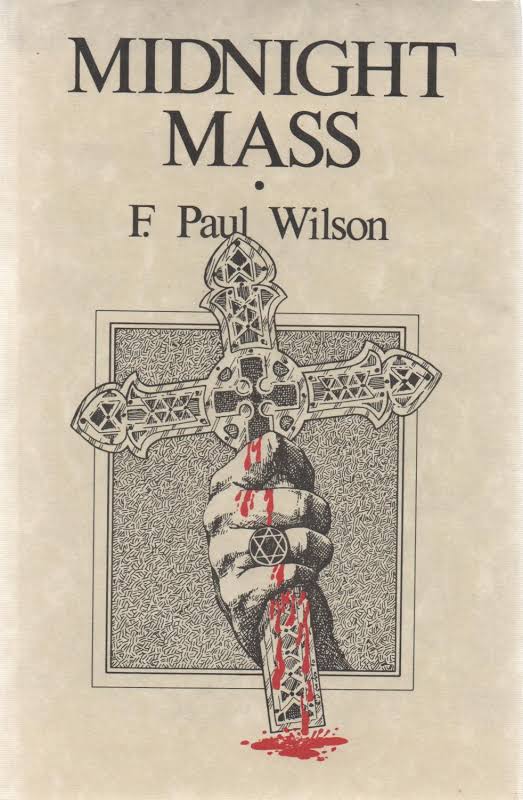
"Midnight Mass" (1990) by F. Paul Wilson

Readers unfamiliar with the novella "Midnight Mass" (1990) and the novel Midnight Mass (2004) may prefer to read these notes only after reading the stories.


A priest and a rabbi walk into a church together.


     For a moment he was disoriented, like someone peering out the window of a city apartment and seeing the rolling hills of a Kansas farm. This could not be the interior of St Anthony's.

     In the flickering light of hundreds of sacramental candles he saw that the walls were bare, stripped of all their ornaments, of the plaques for the stations of the cross; the dark wood along the wall was scarred and gouged wherever there had been anything remotely resembling a cross. The floor too was mostly bare, the pews ripped from their neat rows and hacked to pieces, their splintered remains piled high at the rear under the choir balcony.

     And the giant crucifix that had dominated the space behind the altar – only a portion of it remained. The cross-pieces on each side had been sawed off and so now an armless, life-size Christ hung upside down against the rear wall of the sanctuary.

     Joe took in all that in a flash, then his attention was drawn to the unholy congregation that peopled St Anthony's this night. The collaborators – the Vichy humans, as Zev called them – made up the periphery of the group. They looked like normal, everyday people but each was wearing a crescent moon earring.

     But the others, the group gathered in the sanctuary – Joe felt his hackles rise at the sight of them. They surrounded the altar in a tight knot. Their pale, bestial faces, bereft of the slightest trace of human warmth, compassion, or decency, were turned upward. His gorge rose when he saw the object of their rapt attention.

     A naked teenage boy – his hands tied behind his back, was suspended over the altar by his ankles. He was sobbing and choking, his eyes wide and vacant with shock, his mind all but gone. The skin had been flayed from his forehead – apparently the Vichy had found an expedient solution to the cross tattoo – and blood ran in a slow stream down his abdomen and chest from his freshly truncated genitals. And beside him, standing atop the altar, a bloody-mouthed creature dressed in a long cassock. Joe recognized the thin shoulders, the graying hair trailing from the balding crown, but was shocked at the crimson vulpine grin he flashed to the things clustered below him.

     "Now," said the creature in a lightly accented voice Joe had heard hundreds of times from St Anthony's pulpit.

     Father Alberto Palmeri.

     And from the group a hand reached up with a straight razor and drew it across the boy's throat. As the blood flowed down over his face, those below squeezed and struggled forward like hatchling vultures to catch the falling drops and scarlet trickles in their open mouths.

     Joe fell away from the window and vomited. He felt Zev grab his arm and lead him away. He was vaguely aware of crossing the street and heading toward the ruined legal office.


• • •


Stories about humanity "under the fang" don't come much bloodier, more sanctimonious, and populated with more caricatues than F. Paul Wilson's 1990 novella "Midnight Mass."


Father Joseph Cahill, a handsome and winning young priest, has been framed-up as a pedophile and exiled from his parish before the action begins. He is found in the basement Morton's Liquors and recalled to life by an old theological sparring partner, Rabbi Zev Wolpin. Zev is a Jackie Mason Jew stereotype from central casting. For Wilson he only exists to maneuver Fadda Joe into inspiring a mass fightback against the vampire occupation.


Wilson later shaped this novella and other material into the 2004 paste-up novel Midnight Mass. That novel, with alternating situations for a variety of characters as they converge and unite to fight the vampires, is very good.


So, all proportions guarded, is "Midnight Mass." I have read enough Wilson to know his use of caricature for rabbis and whiskey priests and colorful parishioners is not aimed maliciously. It's mass market fiction, and of a very high order.


Jay

16 July 2022

_____

The Mammoth Book of Vampires ([1992] 2004 edition) edited by Stephen Jones


Wednesday, June 29, 2022

Twentieth Anniversary Screening (2021) by Jeff Strand

Twentieth Anniversary Screening (2021) by Jeff Strand is a novella in the form of an online article. It digs into the ill-starred twentieth anniversary showing of the already benighted slasher movie, "The Roofer." 


During its initial 1991 run, an audience member at a theater in Cincinnati showing "The Roofer" was killed when a fellow audience member (disgruntled loner type) tried to perpetrate a massacre using weapons inspired by the film. Now, in 2011, three different individuals are inspired with the same goal, and attempt to do the massacre right.


*   *   *


I have not read anything by Jeff Strand before, but Twentieth Anniversary Screening is such a black-hearted, dead-pan, screwball novella that I will shortly correct the oversight. In a hundred pages, Twentieth Anniversary Screening consolidates material that could have made a very tedious 500-page multiple-viewpoint novel, and puts a match to the heap. Every aesthetic danger is anticipated, every rough edge is beautifully smoothed and folded into a story of bold and gorey economy.


Jay

29 June 2022


Sunday, June 26, 2022

"Noctuidae" (2016) by Scott Nicolay

Readers unfamiliar with "Noctuidae" may prefer to read these notes only after reading the story.


….Their ascent angled, the trees grew too dense, the vehicles and men fell too small from her height. The trio had left behind every contemporary human trace.

    The ridge widened while they were unaware so once they reached a level where it grew mostly flat they realized they could no longer scan its full span side to side. The pines were taller here, the low oaks tight in clumps. Postage stamp meadows separated random rock outcrops and jagged bits of ridge. They'd ascended into a patchwork and come sans compass or GPS. Their original plan had been to follow the river, and how could they get lost then? But they'd lost the river, at least for now. Pete thought the canyon must be to their left, as best any of them could remember left. Ron thought they should head back down or at least to the right to relocate the Blue River edge of the ridge. Pete prevailed before either asked Sue-Min's opinion and they all three began meandering toward a hypothetical directionless port, expecting their way always to open onto a new canyon but coming only into more motley oak and pine after each distinctive bit they traversed, Sue-Min damping her emotions down just short of panic. Ron and Pete? If they were worried, she couldn't tell. They all three tramped along, the guys offering random inanities —At least the weather's good. —I think we're getting close. . . But mostly in silence.

    They'd just come onto a stretch of bare rock strewn with stones when Sue-Min concluded to call for a retreat, but before she could speak up Pete called out —Look at this! It's some kind of pattern!

    His words still in her ears, she saw it too, gray stones around softball size set in wandering arcs and arabesques on the granite ground. Several closed cells remained intact though the arms of their neighbors disintegrated at inconsistent lengths. Ron shook his head. —Somebody built this—but who?

    Pete's reply struck Sue-Min as ridiculous, asinine —Maybe it was the rancher's kids.

    Ron swept three stones over soccer style with the side of his foot, bent to inspect them. —No lichen on their undersides, only above. They've been here a long, long time.

    Pete's next reply seemed even more out of whack than his first —Maybe it was a Pueblo.

    Sue-Min wanted so bad to get up in his face and yell These aren't walls! Where's the rest of the stone then? If this is a dissipated site where is the rest of the stone? Yes, Ancestral Puebloans, Mimbres, or some backwoods branch of the Mogollon had inhabited this canyon, though not right here, not like this. Walter Hough had marked and mapped sites up and down the Blue back before World War I, and Steve Swanson had revisited the area almost a hundred years later. She knew as much, had met Swanson more than once, could share that information, but she had no desire to engage the creeper, let alone antagonize him. Nor to drag things out. She had his number and was maintaining the wall of chill. Measured, measured. Weighed. She spoke as little as she could, kept interaction at the barest min.

    He must've read something in her gaze though, fixed his own eyes on her expectantly and tilted his head an inch to the left, and after long enough she'd said nothing, gave the least of shrugs, staring at her still. For once Ron came to her aid.

    —Hey, look, there's a gap ahead. He pointed beyond their present patch of patterned mystery stones, between the scrub oaks and scraggly pines. Sue-Min and Pete aligned their eyes to his extended finger's course, saw through the dregs of forest to what seemed an empty span. At least a place with no visible trees, little scrub, no upthrust rocks. . . A shadowed background. Either a seriously major meadow ahead, or Blossom Creek Canyon. Some damn canyon anyway…


*   *   *


"Noctuidae" (2016) by Scott Nicolay is a well-written novella. Very modern, too, in that the author uses dashes instead of quotation marks when denoting dialogue! (A definition of noctuidae can be found here). 


The story explores two characters in extremis as they hide in a cave in the US desert southwest. What are they hiding from? The characters do not know and the reader never finds out: just hints and the awfulness of... inexplicability.


Sue-Min and her boyfriend Ron and Ron's creepy pal Pete decide to spend the night in a cave in what they think is Blossom Creek Canyon, New Mexico. Before dawn the next morning, Sue-Min wakes to Pete on top of her, his hand over her mouth. She immediately begins calculating strategies to confront the jerk she always suspected would turn out to be a rapist. But she realizes Pete is only terrified, and wants silence; then she sees the silhouette of something large moving outside the cave mouth. And Ron has disappeared. And is time at a standstill? Or going in reverse? Or is Pete's watch malfunctioning?


Sue-Min knows she is still not safe with Pete so near. And Pete's idea of making a pass does in fact turn out to be a lot like trying to rape her.


 *   *   *


If I sound glib, it is because so little in "Noctuidae" is offered to the reader outside its two stock characters and their trite emotions. Can cliches even make a character rounded?


Now, I am not suggesting Nicolay should have violated his own "Dogme 2011 for Weird Fiction." But the conclusion of that set of commandments was "I swear as a writer that my supreme goal is to force the truth out of my characters and settings; out of the universe itself." 


"Noctuidae" is happy to leave the reader with commonplaces about middle class professionals falling apart in a crisis, already bromide sixty years ago on "The Twilight Zone." We are left no wiser than Sue-Min and Pete. Inexplicability is all well and good, but it does not rule out an explicable story arc for the characters confronting the mystery.


In this sense, "Noctuidae" lags aesthetically behind, say, George Allan England's "The Thing from Outside" (1923).


*   *   *


I wrote about Nicolay's excellent inexplicable story "Do You Like to Look at Monsters?" (2014) here.


Jay

26 June 2022


Friday, April 15, 2022

Ray Russell's "Sagittarius" (1962)

"If Mr. Hyde had sired a son," said Lord Terry, "do you realize that the loathsome child could be alive at this moment?"
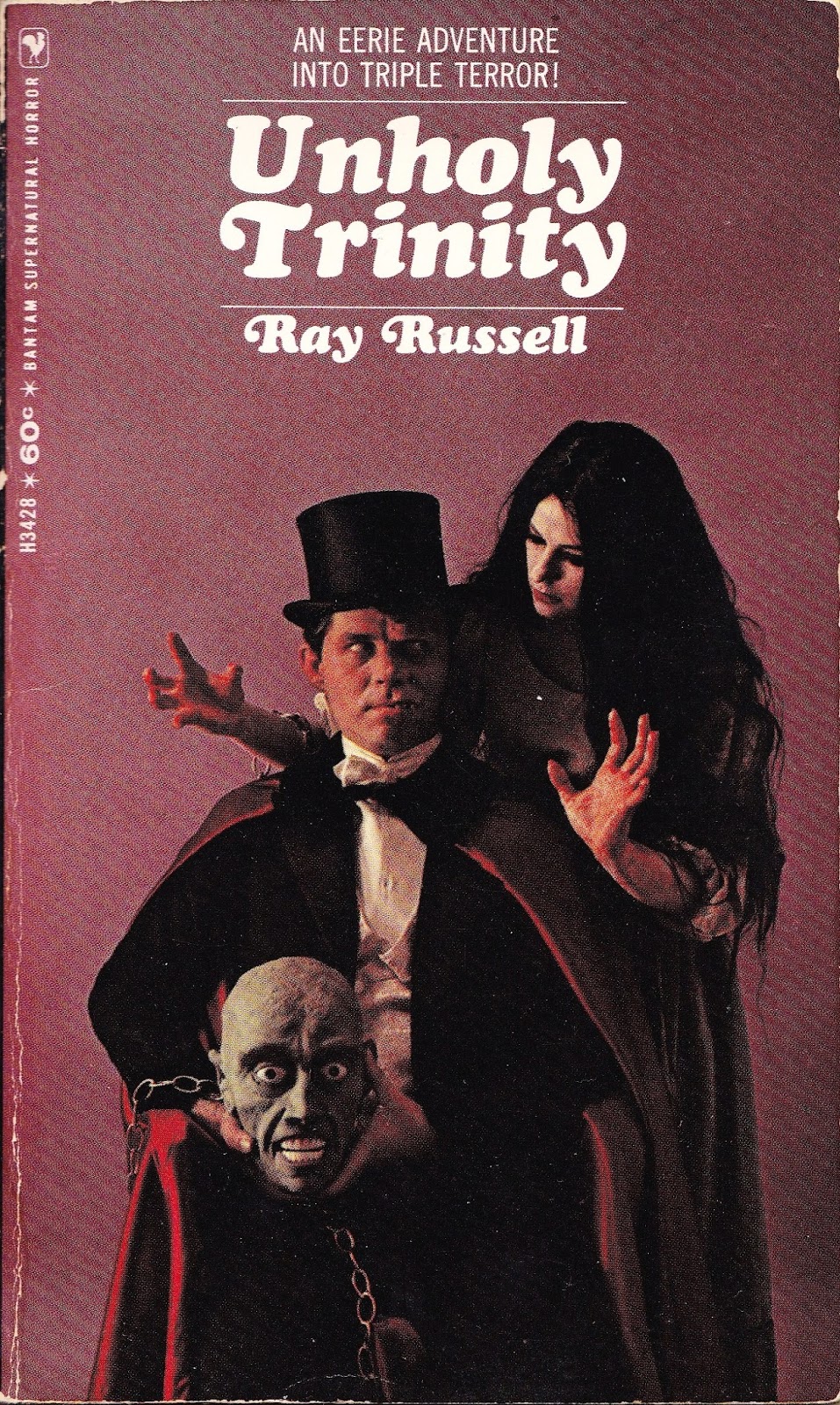


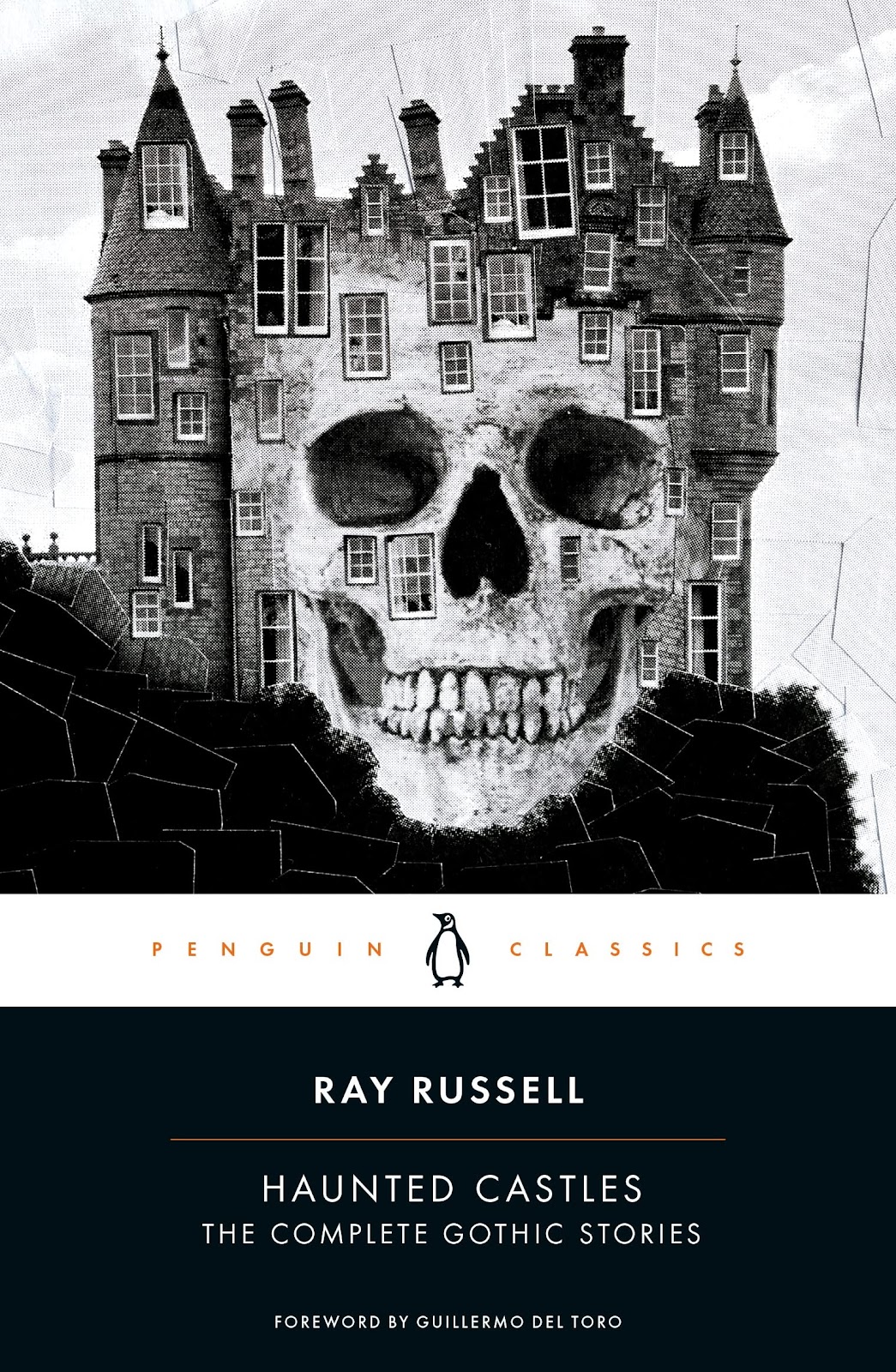
"Sagittarius" (1962) from Haunted Castles: The Complete Gothic Tales of Ray Russell (1985)


*   *   *


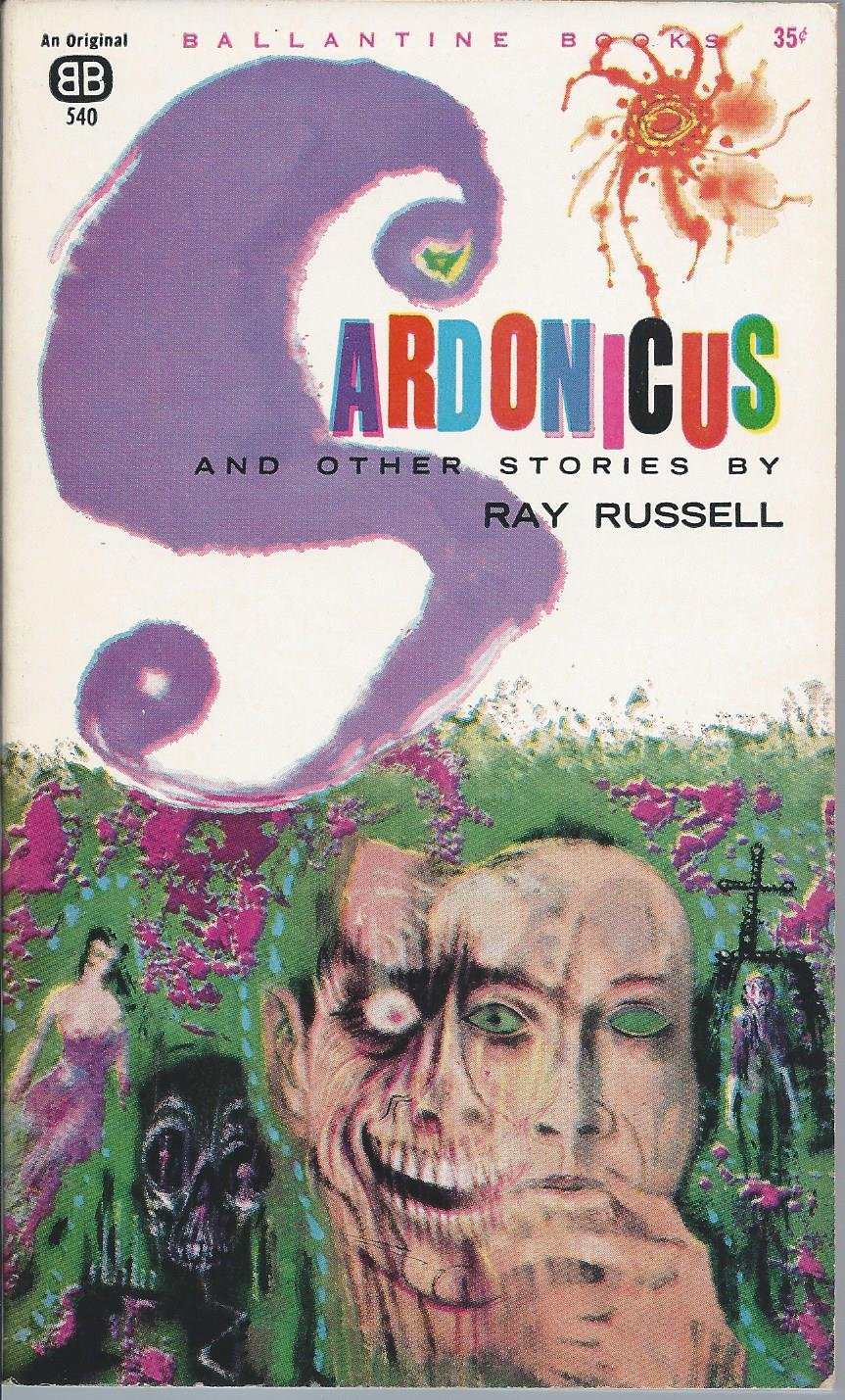
"Sagittarius" is for me the most satisfying of Ray Russell's trilogy of "S" faux-Gothic novellas. Third-person point of view that also imbricates extended first-person narration was clearly a salutary choice of approach.


"Sagittarius" is a club story, told in an Anglophile NYC gentlemen's club by an English lord to a U.S. (?) theater historian.


Though of different ages, Lord Terry and Rolfe Hunt appear deeply simpatico. Russell excels in his opening here, as the two men discuss the possibility that Stevenson's Edward Hyde character might have been "drawn from life" and sired a son.


....It was a humid summer evening, but he and his guest, Rolfe Hunt, were cool and crisp. They were sitting in the quiet sanctuary of the Century Club (so named, say wags, because its members all appear to be close to that age) and, over their drinks, had been talking about vampires and related monsters, about ghost stories and other dark tales of happenings real and imagined, and had been recounting some of their favorites. Hunt had been drinking martinis, but Lord Terry—The Earl Terrence Glencannon, rather—was a courtly old gentleman who considered the martini one of the major barbarities of the Twentieth Century. He would take only the finest, driest sherry before dinner, and he was now sipping his third glass. The conversation had touched upon the series of mutilation-killings that were currently shocking the city, and then upon such classic mutilators as Bluebeard and Jack the Ripper, and then upon murder and evil in general; upon certain works of fiction, such as The Turn of the Screw and its alleged ambiguities, Dracula, the short play A Night at an Inn, the German silent film Nosferatu, some stories of Blackwood, Coppard, Machen, Montague James, Le Fanu, Poe, and finally upon The Strange Case of Dr. Jekyll and Mr. Hyde, which had led the Earl to make his remark about Hyde's hypothetical son....


*   *   *


"Sagittarius" excels "Sardonicus" in control and execution. "Sardonicus" is gothic recrudescence at play with old cliches. "Sagittarius" strikes the first-time reader as  an ambitious reinvigoration of tradition. For anyone who values skillful storytelling, it is a pleasure to read and to master.


After its clubland opening, "Sagittarius" begins again: Lord Harry relates a youthful  adventure in the theater world of fin de siècle Paris, and his encounters with an actor named Sébastien Sellig, a man now lost to history.


He was appearing at the Théâtre Français, in Racine's Britannicus. He played the young Nero. And he played him with such style and fervor and godlike grace that one could feel the audience's sympathies being drawn toward Nero as to a magnet. I saw him afterward, in his dressing room, where he was removing his make-up. César introduced us.

     He was a man of surpassing beauty: a face like the Apollo Belvedere, with classic features, a tumble of black curls, large brown eyes, and sensuous lips. I did not compliment him on his good looks, of course, for the world had only recently become unsafe for even the most innocent admiration between men, Oscar Wilde having died in Paris just nine years before. I did compliment him on his performance, and on the rush of sympathy which I've already remarked.

     "Thank you," he said, in English, which he spoke very well. "It was unfortunate."

     "Unfortunate?"

     "The audience's sympathies should have remained with Britannicus. By drawing them to myself—quite inadvertently, I assure you—I upset the balance, reversed Racine's intentions, and thoroughly destroyed the play."

     "But," observed César lightly, "you achieved a personal triumph."

     "Yes," said Sellig. "At irreparable cost. It will not happen again, dear César, you may be sure of that. Next time I play Nero, I shall do so without violating Racine."

     César, being a professional, took exception. "You can't be blamed for your charm, Sébastien," he insisted.

     Sellig wiped off the last streak of paint from his face and began to draw on his street clothes. "An actor who cannot control his charm," he said, "is like an actor who cannot control his voice or his limbs. He is worthless." Then he smiled, charmingly. "But we mustn't talk shop in front of your friend. So very rude. Come, I shall take you to an enchanting little place for supper."

     It was a small, dark place called L'Oubliette. The three of us ate an enormous and very good omelette, with crusty bread and a bottle of white wine. Sellig talked of the differences between France's classic poetic dramatist, Racine, and England's, Shakespeare. "Racine is like"—he lifted the bottle and refilled our glasses—"well, he is like a very fine vintage white. Delicate, serene, cool, subtle. So subtle that the excellence is not immediately enjoyed by uninitiated palates. Time is required, familiarity, a return and another return and yet another."

     As an Englishman, I was prepared to defend our bard, so I asked, a little belligerently: "And Shakespeare?"

     "Ah, Shakespeare!" smiled Sellig. "Passionel, tumultueux! He is like a mulled red, hot and bubbling from the fire, dark and rich with biting spices and sweet honey! The senses are smitten, one is overwhelmed, one becomes drunk, one reels, one spins . . . it can be a most agreeable sensation."

     He drank from his glass. "Think of tonight's play. It depicts the first atrocity in a life of atrocities. It ends as Nero murders his brother. Later, he was to murder his mother, two wives, a trusted tutor, close friends, and untold thousands of Christians who died horribly in his arenas. But we see none of this. If Shakespeare had written the play, it would have begun with the death of Britannicus. It would then have shown us each new outrage, the entire chronicle of Nero's decline and fall and ignoble end. Enfin, it would have been Macbeth."

     I had heard of a little club where the girls danced in shockingly indecorous costumes, and I was eager to go. César allowed himself to be persuaded to take me there, and I invited Sellig to accompany us. He declined, pleading fatigue and a heavy day ahead of him. "Then perhaps," I said, "you will come with us tomorrow evening? It may not tempt a gentleman of your lofty theatrical tastes, but I'm determined to see a show at this Grand Guignol which César has told me of. Quite bloody and outrageous, I understand—rather like Shakespeare." Sellig laughed at my little joke. "Will you come? Or perhaps you have a performance . . ."

     "I do have a performance," he said, "so I cannot join you until later. Suppose we plan to meet there, in the foyer, directly after the last curtain?"

     "Will you be there in time?" I asked. "The Guignol shows are short, I hear."

     "I will be there," said Sellig, and we parted.


Fascinated by Sellig's thespian skill, Lord Harry almost simultaneously becomes obsessed with another performer at a more plebeian venue. (This is not the last doubling or twinning author Ray Russell will explore in "Sagittarius".)


….the evening following my first meeting with Sellig, César and I were seated in this unique little theatre with two young ladies we had escorted there; they were uncommonly pretty but uncommonly common—in point of fact, they were barely on the safe side of respectability's border, being inhabitants of that peculiar demimonde, that shadow world where several professions—actress, model, barmaid, bawd—mingle and merge and overlap and often coexist. But we were young, César and I, and this was, after all, Paris. Their names, they told us, were Clothilde and Mathilde—and I was never quite sure which was which. Soon after our arrival, the lights dimmed and the Guignol curtain was raised.

     The first offering on the programme was a dull, shrill little boudoir farce that concerned itself with broken corset laces and men hiding under the bed and popping out of closets. It seemed to amuse our feminine companions well enough, but the applause in the house was desultory, I thought, a mere form . . . this fluttering nonsense was not what the patrons had come for, was not the sort of fare on which the Guignol had built its reputation. It was an hors d'oeuvre. The entrée followed:

     It was called, if memory serves, La Septième Porte, and was nothing more than an opportunity for Bluebeard—played by an actor wearing an elaborately ugly make-up—to open six of his legendary seven doors for his new young wife (displaying, among other things, realistically mouldering cadavers and a torture chamber in full operation). Remaining faithful to the legend, Bluebeard warns his wife never to open the seventh door. Left alone on stage, she of course cannot resist the tug of curiosity—she opens the door, letting loose a shackled swarm of shrieking, livid, rag-bedecked but not entirely unattractive harpies, whose white bodies, through their shredded clothing, are crisscrossed with crimson welts. They tell her they are Bluebeard's ex-wives, kept perpetually in a pitch-dark dungeon, in a state near to starvation, and periodically tortured by the vilest means imaginable. Why? the new wife asks. Bluebeard enters, a black whip in his hand. For the sin of curiosity, he replies—they, like you, could not resist the lure of the seventh door! The other wives chain the girl to them, and cringing under the crack of Bluebeard's whip, they crawl back into the darkness of the dungeon. Bluebeard locks the seventh door and soliloquizes: Diogenes had an easy task, to find an honest man; but my travail is tenfold—for where is she, does she live, the wife who does not pry and snoop, who does not pilfer her husband's pockets, steam open his letters, and when he is late returning home, demand to know what wench he has been tumbling?

     The lights had been dimming slowly until now only Bluebeard was illumined, and at this point he turned to the audience and addressed the women therein. "Mesdames et Mademoiselles!" he declaimed. "Écoute! En garde! Voici la septième porte—Hear me! Beware! Behold the seventh door!" By a stage trick the door was transformed into a mirror. The curtain fell to riotous applause.

     Recounted baldly, La Septième Porte seems a trumpery entertainment, a mere excuse for scenes of horror—and so it was. But there was a strength, a power to the portrayal of Bluebeard; that ugly devil up there on the shabby little stage was like an icy flame, and when he'd turned to the house and delivered that closing line, there had been such force of personality, such demonic zeal, such hatred and scorn, such monumental threat, that I could feel my young companion shrink against me and shudder.

     "Come, come, ma petite," I said, "it's only a play."

     "Je le déteste," she said.

     "You detest him? Who, Bluebeard?"

     "Laval."

     My French was sketchy at that time, and her English almost nonexistent, but as we made our slow way up the aisle, I managed to glean that the actor's name was Laval, and that she had at one time had some offstage congress with him, congress of an intimate nature, I gathered. I could not help asking why, since she disliked him so. (I was naïf then, you see, and knew little of women; it was somewhat later in life I learned that many of them find evil and even ugliness irresistible). In answer to my question, she only shrugged and delivered a platitude: "Les affaires sont les affaires—Business is business."

     Sellig was waiting for us in the foyer. His height, and his great beauty of face, made him stand out. Our two pretty companions took to him at once, for his attractive exterior was supplemented by waves of charm.

     "Did you enjoy the programme?" he asked of me.

     I did not know exactly what to reply. "Enjoy? . . . Let us say I found it fascinating, M'sieu' Sellig."

     "It did not strike you as tawdry? cheap? vulgar?"

     "All those, yes. But at the same time, exciting, as sometimes only the tawdry, the cheap, the vulgar, can be."

     "You may be right. I have not watched a Guignol production for several years. Although, surely, the acting . . ."

     We were entering a carriage, all five of us. I said, "The acting was unbelievably bad—with one exception."

     "Really? And the exception?"

     "The actor who played Bluebeard in a piece called La Septième Porte. His name is—" I turned to my companion again.

     "Laval," she said, and the sound became a viscous thing.

     "Ah yes," said Sellig. "Laval. The name is not entirely unknown to me. Shall we go to Maxime's?"

     We did, and experienced a most enjoyable evening. Sellig's fame and personal magnetism won us the best table and the most efficient service. He told a variety of amusing—but never coarse—anecdotes about theatrical life, and did so without committing that all-too-common actor's offense of dominating the conversation. One anecdote concerned the theatre we had just left:

     "I suppose César has told the story of the Guignol doctor. No? Ah then, it seems that at one point it was thought a capital idea to hire a house physician—to tend to swooning patrons and so on, you know. This was done, but it was unsuccessful. On the first night of the physician's tour of duty, a male spectator found one particular bit of stage torture too much for him, and he fainted. The house physician was summoned. He could not be found. Finally, the ushers revived the unconscious man without benefit of medical assistance, and naturally they apologized profusely and explained they had not been able to find the doctor. 'I know,' the man said, rather sheepishly, 'I am the doctor.'"

     At the end of the evening, César and I escorted our respective (but not precisely respectable) young ladies to their dwellings, where more pleasure was found. Sellig went home alone. I felt sorry for him, and there was a moment when it crossed my mind that perhaps he was one of those men who have no need of women—the theatrical profession is thickly inhabited by such men—but César privately assured me that Sellig had a mistress, a lovely and gracious widow named Lise, for Sellig's tastes were exceedingly refined and his image unblemished by descents into the dimly lit world of the sporting house. My own tastes, though acute, were not so elevated, and thus I enjoyed myself immensely that night.

     Ignorance, they say, is bliss. I did not know that my ardent companion's warmth would turn unalterably cold in the space of a single night.


"Sagittarius" is an impeccable celebration of theatrical Paris, of assumed and hidden identities, and of the perils of pretense. It richly rewards careful reading and rereading.


Jay

15 April 2022