Subscribe to my Substack

Showing posts with label James Machin. Show all posts

Wednesday, May 11, 2022

The experience of class defeat: Notes on H. P. Lovecraft and At The Mountains of Madness


[....]Lovecraft's fiction is haunted by the spectre of cosmic fatalism: the idea that human beings can never possibly fathom the mysteries of the universe and that the universe, in turn, remains indifferent to humanity. To Lovecraft, human beings had as little chance of understanding the inner mechanisations of hyperspace as an ant does planet Earth. It's a viewpoint that chimes perfectly with the lumbering, misanthropic gait of Electric Wizard: the world cast as a pitiless void, life a cosmic accident.


--   Sword, H. (2022). Monolithic undertow: In search of sonic oblivion. White Rabbit.


[....] There they were—the three sledges missing from Lake's camp—shaken by a hard usage which must have included forcible dragging along great reaches of snowless masonry and debris, as well as much hand portage over utterly unnavigable places. They were carefully and intelligently packed and strapped, and contained things memorably familiar enough—the gasoline stove, fuel cans, instrument cases, provision tins, tarpaulins obviously bulging with books, and some bulging with less obvious contents—everything derived from Lake's equipment. After what we had found in that other room, we were in a measure prepared for this encounter. The really great shock came when we stepped over and undid one tarpaulin whose outlines had peculiarly disquieted us. It seems that others as well as Lake had been interested in collecting typical specimens....


-- end of chapter nine, Lovecraft, H. P. (2005). At the Mountains of Madness: The Definitive Edition. Modern Library.


*   *   *


[....]Lovecraft was notoriously not only an elitist and a reactionary, but a bilious lifelong racist. His idiot and disgraceful pronouncements on racial themes range from pompous pseudoscience—"The Negro is fundamentally the biologically inferior of all White and even Mongolian races"—to monstrous endorsements—"[Hitler's] vision is . . . romantic and immature . . . yet that cannot blind us to the honest rightness of the man's basic urge . . . I know he's a clown, but by God, I like the boy!"


-- excerpt from China Miéville's 2005 introduction to:   Lovecraft, H. P. (2005). At the Mountains of Madness: The Definitive Edition. Modern Library.


❖


Several days ago I woke at 2 a.m. to find myself listening to the end of chapter nine of  HorrorBabble's audiobook of At the Mountains of Madness. An enchanting experience: akin to reading a page without being given the title, date, plot or author's name.


As a Marxist I'm passionate about context: dates of both production and reception are crucial. Production of what? Production of anything whose use-value is the product of human labor. 


Free of accreted layers of literary and historical context, listening to At the Mountains of Madness in this way was an uncanny and sublime experience.


*   *   *


At the Mountains of Madness (1936)


My first reading of ATMM was in one of the early-1980s Del Rey / Ballantine paperback reprints: At the Mountains of Madness and Other Tales of Terror. This was Christmas money well-spent by my sixteen year old self, and undoubtedly a peak instance of reception, as I read ATMM during the cold and snowy final week of December 1982.


To the first-time reader ATMM is a staunchly distanced story. Dramatized action does not begin until the halfway point; prior to that, we might be reading a report by one of J. G. Ballard's corporate or civil service psychiatrists. Only after reading another late Lovecraft novella are we able to deduce the first-person narrator's name: geologist William Dyer of Miskatonic U.


Such distancing, such absolute absence of conventional melodrama, makes for a beautifully concise piece of fiction. The later toing and froing of stories like "Who Goes There?" is absent: there is no genre veil between readers and protagonists as Dwyer and Danforth climb up through millenia of levels from an underground labyrinth toward daylight and salvation in the city of the Old Ones:


      So we glanced back—simultaneously, it would appear; though no doubt the incipient motion of one prompted the imitation of the other. As we did so we flashed both torches full strength at the momentarily thinned mist; either from sheer primitive anxiety to see all we could, or in a less primitive but equally unconscious effort to dazzle the entity before we dimmed our light and dodged among the penguins of the labyrinth-centre ahead. Unhappy act! Not Orpheus himself, or Lot's wife, paid much more dearly for a backward glance. And again came that shocking, wide-ranged piping— "Tekeli-li! Tekeli-li !"

     I might as well be frank—even if I cannot bear to be quite direct—in stating what we saw; though at the time we felt that it was not to be admitted even to each other. The words reaching the reader can never even suggest the awfulness of the sight itself. It crippled our consciousness so completely that I wonder we had the residual sense to dim our torches as planned, and to strike the right tunnel toward the dead city. Instinct alone must have carried us through—perhaps better than reason could have done; though if that was what saved us, we paid a high price. Of reason we certainly had little enough left. Danforth was totally unstrung, and the first thing I remember of the rest of the journey was hearing him light-headedly chant an hysterical formula in which I alone of mankind could have found anything but insane irrelevance. It reverberated in falsetto echoes among the squawks of the penguins; reverberated through the vaultings ahead, and—thank God—through the now empty vaultings behind. He could not have begun it at once—else we would not have been alive and blindly racing. I shudder to think of what a shade of difference in his nervous reactions might have brought.

     "South Station Under—Washington Under—Park Street Under—Kendall—Central—Harard. . . ." The poor fellow was chanting the familiar stations of the Boston-Cambridge tunnel that burrowed through our peaceful native soil thousands of miles away in New England, yet to me the ritual had neither irrelevance nor home-feeling. It had only horror, because I knew unerringly the monstrous, nefandous analogy that had suggested it....


All respect to Dwyer's conclusion, but I would also propose that Danforth's action in counting-off the subway stops presents a mind desperate for "home-feeling," fumbling at a last means to preserve sanity and keep running.


*   *   *


What Dwyer and Danforth found under the mountains of madness in the seemingly uninhabited city of the Old Ones was exotic, but not unknown in earth's history. Hydraulic and agricultural societies  built on slave labor have not been rare. Lovecraft's exoticism is in creating a civilization so ancient its artworks and preserved knowledge have withstood and depicted ice ages, warming ages, and physical ravages today understood as the action of plate tectonics.


The Old Ones, keepers of the flame, preservers of splendor and learning, lost the class war against slaves they themselves created. A few slaves apparently remain, inquisitive in their own way (or simply aping their rulers?), but the first contact between them and human explorers follows a familiar pattern to other encounters in history.


The "flight by night" out of the labyrinth as Dwyer and Danforth race to their aircraft recapitulates many similar night journeys in world literature. The two men are committed to warning the world. Many individuals over millenia were probably similarly motivated to halt the development of evident catastrophes. Certainly, we know they all failed in their efforts.


*   *   *


In his introduction to the Modern Library edition of At the Mountains of Madness: The Definitive Edition, UK petty bourgeois socialist China Miéville claims that for all H. P. Lovecraft's reactionary opinions, "he became a socialist, advocating some social programs and government control of the economy." (This smacks of Miéville trying to have his cake and eat it, too. JR)


No political opinions expressed by Lovecraft during his adulthood were unusual for a man or woman of his class. Many men and women left similar circumstances behind when they joined the labor movement and its revolutionary socialist vanguard. Alas, Lovecraft was not won to Bolshevism, or even by an electoral brand of social democracy. Instead, his tendency was toward a US version of National Socialism, a mystifying sop designed to preserve the dictatorship of capital.


Fear of social degeneration/decline was the pauperized Lovecraft's motivation. He apparently did not show any interest in joining Pelley's Silver Shirts or the Coughlin organization, but many with similar backgrounds and skills did.


Miéville correctly points out Lovecraft's adaptation to Spengler's geopolitical rationalizations. It strikes me that Lovecraft might have also been a passionate reader of pseudoscience books like Degeneration by Max Nordau, a best seller in the fin de siècle middle class milieu of Europe.


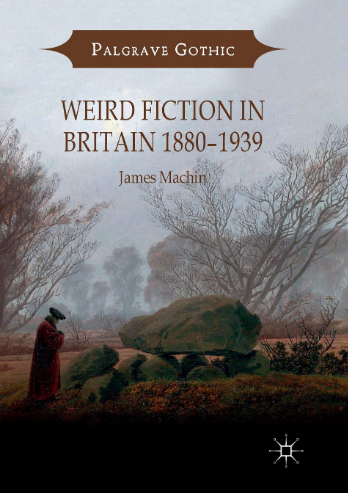
In his superb 2018 study Weird Fiction in Britain 1880–1939, James Machin writes:


[....]in Degeneration (1892), the German sociologist Max Nordau made explicit links between Decadent literature and actual social and biological decline, evoking pseudoscientific and garbled Darwinism in his use of the term 'degeneration' and propagating the specious sub-Lamarckian notion that moral recidivism and physical dissolution could be inherited and could fatally weaken a bloodline within generations.

     For Nordau , the fin de siècle and Decadence became pejorative synonyms for an amorality, morbidity, and incontinence that threatened not only the social fabric but the future of civilization itself. Atavism was evidenced by physical, cultural, and psychological symptoms, and manifestations of degeneracy were to be found in the 'stigmata' of misshapen physiognomy ('disproportionate growth of particular parts'), the 'inchoate liminal presentations' of degenerate contemporary art, and the 'mental imbalance' of the artist (Nordau 1895, 23, 1895, 61). According to Nordau , some figures, such as Paul Verlaine, had the dubious honour of exhibiting all these symptoms simultaneously (Nordau1895, 119–120). Over the course of nearly 600 pages, Nordau details a bewildering quantity and variety of symptoms of degeneration, including 'emotionalism', being 'tormented by doubts', the seeking after 'the basis of all phenomena', revolutionary and anarchist activity, political inclination, Buddhism, and pessimism. Even the tendency to 'associate in groups' is included on a charge sheet that seems to encompass the sum of all human activity, and Nordau identifies figures as disparate as Wagner, the children's illustrator Kate Greenaway, furniture-designer Rupert Carabin, and Oscar Wilde as all exhibiting the atavistic neurological disorders of the degenerate mind.

     The absurd reach of Nordau's thesis was certainly identified and criticized at the time, although typically with a concession to the ambition of Nordau's vision: Israel Zangwill described it as being 'as brilliant as it is wrong-headed' and the Review of Reviews called it a 'bad but interesting book' in which Nordau's 'idea' is 'pressed home unsparingly with manifold examples, and with a continuous vigour of writing' (Zangwill 1895, 160). George Bernard Shaw was moved to write a lengthy riposte for the American journal Liberty , and although he would later claim that with his rebuttal of Nordau the ' Degeneration boom was exhausted', Nordau's treatise still ran into seven editions in the year of its publication alone in Britain. Moreover, his perception that some contemporary cultural trends were predicated upon a 'contempt for traditional views of custom and morality' certainly resonated with more reactionary commentators (Shaw 1919, 12; Nordau1895, 5). The influence of Degeneration was also intensified by the concurrency of its popularity with the Wilde trial, the first British edition being published four days after 'the Marquess of Queensbury left his libellous card at the Albemarle' (Söder 2009, 63).


*   *   *


H. P. Lovecraft was never a socialist.


Many revolutionary socialists like myself don't demand Lovecraft and other 20th century writers pass a political purity test before we purchase and enjoy their work.


A mainstream writer who shared many of Lovecraft's political rationalizations and habits of petty bourgeois moralizing until his death in 2012, Gore Vidal is another example from my reading list. (John Buchan, Evelyn Waugh, Simone Weil, Flannery O'Connor, and Simon Raven: the list quickly grows.)


Lovecraft's class, the petty bourgeoisie, lost all remaining social and political independence in the 20th century. In the 1930s, the best and brightest were won to the working class movement. Sadly, at that time a growing bureaucratic caste internationally made a treacherous counterfeit of that movement; counterrevolutionary Stalinism led the working class world-wide into one defeat and bloodbath after another.


In response, many 1930s radicals turned to the right by 1949. Authors like Robert Heinlein were part of a sociological cohort that became the initial cadre of cold war publicists. James Burnham, a 1930s Trotskyist leader, would have found nothing objectionable in a novel like 1964's Farnham's Freehold.


*   *   *


The "mountains" in question in ATMM are a conscious symbol for disaster. They strike a chord similar to the blasted landscape of Nahum Gardner's farm in "The Colour Out of Space" (1927) and the subterranean Chesuncook, Maine section of "The Thing on the Doorstep" (1933).


Lovecraft's skill, his aesthetic of pleasing remoteness and formal distancing, becomes the objective correlative for what Joshi and others have called his "cosmic indifferentism."


[....]Throughout his life Lovecraft wavered between (validly) recommending tradition for himself and (invalidly) recommending it for everyone. In 1928 he had properly asserted the relativity of values (the only thing possible in a universe that has no governing deity): "Value is wholly relative, and the very idea of such a thing as meaning postulates a symmetrical relation to something else. No one thing, cosmically speaking, can be either good or evil, beautiful or unbeautiful; for entity is simply entity."[15] To Derleth in 1930 he wrote: "Each person lives in his own world of values, and can obviously (except for a few generalities based on essential similarities in human nature) speak only for himself when he calls this thing 'silly and irrelevant' and that thing 'vital and significant', as the case may be. We are all meaningless atoms adrift in the void."


Harold Bloom's summation of Ernest Hemingway's impact is useful to remember: "....he alone

in this American century has achieved the enduring status of myth."


Jay

10 May 2022


Sunday, March 20, 2022

My review of Supernatural Tales 49

I have purchased more issues of Supernatural Tales than I have read. Each issue has at least one story by an author I enjoy, and the ebook price is always right. Issue 49 is the first issue of ST I have read cover to cover. 


*   *   *


"The Woofle Dust" by Steve Duffy is a wonderful evocation of UK end-of-the-pier entertainment in late August 1939. Regular readers will not be surprised at Duffy's skill here. In stories as varied in setting and historical period as "The Vanishing Hitchhiker," "The Oram County Whoosit," and "The Clay Party," Duffy has displayed superb skill in the short story and novella modes.


"The Woofle Dust" is a trap for the unwary, both the reader and the story's protagonist. It has a sunset mood: the shadow of impending imperialist war skews each human act and interaction.


*   *   *


Hardy's sublime story "The Withered Arm" came to mind repeatedly as I read "Godless" by Sam Dawson. It has a historically indeterminate rural village setting, and Dawson does a skilful job conveying a pre-industrial era.


By any means necessary, protagonist Ruth Darnell works to ensure her son, hung for murder, ends up buried in consecrated ground. Dawson is at his best in the story when delineating this struggle: a woman against men and against a man's world.


*   *   *


"All Talk" by Rosalie Parker is a carefully observed timeslip story. The narrator tells us about her employee Gregory, a successful young family man who, for a  while, lives two lives in two different years. Ultimately, one life must win over the other, and one does.


Est enim magnum chaos.


*   *   *


"Another One To Love Them" by David Buchan


She wondered where they had learnt the game that they were playing. It certainly couldn't have come from their aunt. The woman had seemed too self-absorbed to teach something like that to the children, something that was....


Gwendolyn shepherds three siblings around a stately home, once the site of a terrible crime. The children, working class and normally unruly, surprise her by seeming to rise to the occasion.


In the end they are happy to sit on the lawn, playing together with something that "had the texture and colour of aged leather, and what might have been strands of hair that sprouted from one edge."


*   *   *


"Candler's Ceremony" by Sam Hicks describes urban disorientation in the early Covid period: empty streets, few and different faces. 


"I wanted, hoping all this would only happen once, to go somewhere where I could really see the change," our narrator says. So he heads to London's City, and wandering the emptiness meets Candler. Is Candler simply another person unmoored by the pandemic's dissolution of routine? Or an altogether different order of guide?


This is the first Sam Hicks story I have read; its brevity lends an almost molecular weight to each sentence. The sense of "last things and last people" is palpable.


*   *   *


"Not That Kind of Place" by James Everington starts out as a search for two runaway daughters. It ends atomization into contingency and uncertainty, conveyed with the confusions and unreason of dream. 


Stories that refuse to make conventional sense, or tell their stories in a conventional way, have always challenged me. (And by challenged, I mean annoyed). When a writer gets it right in this game, the case for their method is irrefutable. Everington's story falls short, but the world he builds is initially compelling.


*   *   *


James Machin's use in "Cave Canem'' of skewed perspectives and intentional lacunae recall de la Mare and Aickman here, but also the queerly suggestive landscapes of Buchan and Ramsey Campbell. Repressed motivations and apparently arbitrary clueing are in play, but action is sharply grounded for all the strange-making procedures afoot.

In a way, the story's skewed assignments and god-building are objective correlatives for the protagonist Mark's developmental prosopagnosia.


These rhetorical wire-modelings aside, "Cave Canem" is a compelling story about the risk of calling up that which cannot be put down again. 


*   *   *


"Four Vignettes" by Jane Jakeman is a bravura collection of short-short stories. They display real skill at deftly renewing different historical periods and horror clichés.


*   *   *

Jay

19 March 2022


Monday, July 13, 2020

Reading: Weird Fiction in Britain 1880-1940

I see that according to Facebook it was a year ago today I was digging into Machin's magnificent study Weird Fiction in Britain 1880-1940.  I posted the below excerpts that day:


....the short story form was, to the point of inevitability, a crucible for the creation of weird fiction: in both its provenance (with Poe and Stevenson), the commercial potential, and platform provided by the fin-de-siècle publishing field (which led to writers having a pecuniary motive for imitating not only the form but the content of Poe and Stevenson) and also—inextricable from these aforementioned—the short form and the weird tale's predication on mystery, dread, and lack of closure, the associated potency of which was also resonant with the uncertain mood of the later nineteenth century. The oft-repeated (and previously quoted) paragraph by Lovecraft, in which he adumbrates his notion of the 'weird tale', concludes with an important but regularly neglected sentence: 'And of course, the more completely and unifiedly a story conveys this atmosphere, the better it is as a work of art in the given medium' (Lovecraft 1985, 427). Implicit in this is an endorsement of Poe's advocacy of the short form's potency in this respect. Taking all these things into account provides an explanation for the rise of a 'high phase' of weird fiction still impacting, directly or otherwise, on popular and literary culture to this day....


James Machin

WEIRD FICTION IN 

BRITAIN 1880–1939


* * *


....The ensuing claim for cultural value above that normally afforded 'genre' fiction has been discussed in the Introduction and will be discussed in further detail elsewhere in this book. It is, at root, predicated on the same high/low cultural divide precipitated by the fin-de-siècle publishing boom and intensified by Modernism. Also implicit is a distinction between two conceived groups: the consumers of populist lowbrow texts and a more educated cultural elite who can identify and appreciate literature of value.


Ironically, in terms of contemporary cultural impact, only the materialist, extraterrestrial horrors of H. P. Lovecraft can compete with the 'zombies, werewolves, mummies, [and] ghouls' which still overwhelmingly dominate contemporary horror fiction and cinema, and the previously unassailable centrality of Lovecraft to weird fiction is now being lobbied against accordingly from some quarters, Lovecraft increasingly becoming a critical victim of his own posthumous success (VanderMeer 2012). The nebulosity of preLovecraftian weird fiction means that it is far harder to commodify, which has also perhaps resulted in a lack of direct visibility in popular culture. However, the influence of writers like Machen and Shiel is certainly still present albeit filtered through the work of more culturally impactful writers like Lovecraft and Stephen King. Their lack of direct visibility has also resulted in a culture of self-identifying 'connoisseurship', in which networks of collectors, enthusiasts, and writers can wear the obscurity of their enthusiasms as a badge of honour, a mark of authentic understanding and appreciation of weird fiction, particularly of this pre-Lovecraftian period, and, importantly, of what demarcates it from the arguably cruder albeit more popular 'horror' genre, especially from the latter's schlockier manifestations ('the literature of mere physical fear and the mundanely gruesome') (Lovecraft 1985, 426).


It is this tendency that has resulted in small but dedicated and passionate coteries of 'collector-fans' (so described by Kirsten MacLeod) or 'connoisseurs', who Baudrillard distinguishes as those who respond to 'singularity and differentness', keeping alive the names of otherwise almost entirely forgotten writers such as Count Eric Stenbock, discussed below (MacLeod 2004, 121; Baudrillard 1994, 10). Although most often associated with small presses and amateur societies, this culture of 'connoisseurship' is also participated in by, for example, Stephen King and director Guillermo del Toro, who—hugely successful and popular—perhaps also harbour a desire to demonstrate and reinforce to the cognoscenti (i.e., their fellow connoisseurs rather than their wider audience) their cultural capital, where their economic capital is self-evident to the population at large. Both King and del Toro, for example, are effusive and unequivocal in their enthusiasm for Machen, an otherwise little-read 'minor' writer whose brief periods of commercial success were limited to the 1890s in Britain and a brief revival in America in the 1920s, but who King, particularly, imbues with an artistic value even to the detriment of his own work ("StephenKing.Com – Messages from Stephen" 2008; del Toro 2011).


One anomalously dependable demarcation of weird fiction is its tendency towards the short form. There are of course always exceptions to prove the rule, but the multicharacter narrative usually necessitated by the long form normally results in a novel that might incorporate weird elements but not be purely identifiable as weird in and of itself. Or, as Lovecraft puts it, the weird can appear 'in memorable fragments scattered through material whose massed effect may be of a very different cast' (Lovecraft 1985, 427). Machen's novel The Three Impostors could perhaps be cited here but only if one were to ignore the fact that it is a portmanteau assembly of short stories, some of which had seen print before....


WEIRD FICTION IN 

BRITAIN 1880–1939

James Machin 

2018: Palgrave


* * *


....Several convergent factors precipitated a publishing boom in the closing decades of the nineteenth century. One of the most prominent was the 1870 Education Act, which considerably (and not without controversy) increased literacy rates and led to the creation of a far larger potential reading audience, from a far wider social demographic, than ever before. Peter Keating argues that of at least as much significance was the accompanying 'growth in numbers of teachers as training colleges and universities expanded to meet the new educational demands':


Nothing is more characteristic of the fundamental social changes taking place at the end of the nineteenth century than this new class of meritocrats and the neat, brick buildings in which they worked. As far as the future of literature was concerned, their taste and judgment were to be vital. (Keating 1989, 143)


Another impetus was the gradual repeal of various publishing taxes from the mid-century onwards. The abolition of the advertising tax in 1853, stamp tax in 1855, and of paper duty in 1861, saw production costs fall, cover prices drop, and circulations and profits increase exponentially (Gillies n.d.; Brake 2001, 8). This combination of increased potential revenues from an expanded reading public and the lifting of the tax burden on publishing created an unprecedented demand for new fiction. Traditionally, fiction had been produced and consumed in the form of the serial (with each part issued monthly) and the Victorian 'three-decker', the latter a form promoted by the prominent lending library Mudie's. The three-volume novel was too expensive for the average reader to purchase outright, and therefore accessed through the circulating libraries through which, for a more widely affordable fee, one could keep up with the latest titles.


By the 1880s, however, the circulating libraries were essentially monopolized by Mudie's, and to a lesser extent, W. H. Smith & Son's ('Mudie's only serious national rival'), which, finding themselves in the position of effectively controlling the fiction put before the general reading public, were also therefore in the assumed position of unofficial censors (Smith the younger's austere Protestantism had earned him the soubriquet 'Old Morality') (Keating 1989, 23; Davenport-Hines 2004). It wasn't financially viable for writers and publishers to produce work deemed too morally dubious or adventurous by Mudie's, as they would simply refuse to stock the book, resulting in the publisher being denied the bulk order through which the overwhelming majority of the profit was to be made and a career as an author maintained.


That this situation was not to everyone's satisfaction was made clear in December 1884 when George Moore (1852–1933)—a 'young and then relatively unknown novelist'—questioned the 'power and moral authority of the circulating libraries' in the pages of the Pall Mall Gazette (Llewellyn and Heilmann 2007, 372):


At the head, therefore, of English literature, sits a tradesman, who considers himself qualified to decide the most delicate artistic question that may be raised, and who crushes out of sight any artistic aspiration he may deem pernicious. And yet with this vulture gnawing at their hearts writers gravely discuss the means of producing good work; let them break their bonds first, and it will be time when they are free men to consider the possibilities of formulating a new aestheticism. (Moore 1884, 1)


Mark Llewellyn and Ann Heilmann have observed that while 'from the mid-century onwards writers had waged war on the circulating libraries for placing a stranglehold on the literary marketplace', Moore's attack precipitated 'fierce debate in the Pall Mall Gazette that raged over several weeks, drawing not only long-suffering authors but also readers and publishers into the public arena' (Llewellyn and Heilmann 2007, 372–373). Subsequent correspondents argued against Moore, claiming that writing, being a 'trade', was quite rightly dependent on the simple laws of supply and demand that the circulating libraries fulfilled, a view which provoked the novelist George Gissing (1857–1903) to reclaim fiction as an art rather than a trade, lamenting the failure of novelists to take more commercial risks 1 : 'English novels are miserable stuff for a very miserable reason, simply because English novelists fear to do their best lest they should damage their popularity, and consequently their income' (J. W. 1884; Gissing 1884). That the risk of flouting the circulating library standard of propriety in letters was a genuine one was demonstrated in 1888 when W. T. Stead, in association with the National Vigilance Committee, launched an investigation into Vizetelly & Co.'s distribution of several of Zola's works in 'unmutilated' (and therefore unexpurgated) editions (Llewellyn and Heilmann 2007, 378). An ensuing House of Commons debate on 'the rapid spread of demoralizing literature in this country' called for 'the law against obscene publications and indecent pictures and prints [… to be …] vigorously enforced, and, if necessary, strengthened' and led to a court action, with disastrous consequences for the defendant (378). Vizetelly & Co. continued to distribute expurgated versions of the texts after misinterpreting the verdict of the first trial, leading to a second trial resulting in 'the bankruptcy of Vizetelly & Co., and the six-month imprisonment of the seventy-year-old Henry Vizetelly on 30 May 1889' (379). That the writer in question in the Vizetelly trial was Zola was indicative of the wider francophobic mood of the times and the 'vulgar [British] superstition that French things were naughty', that 'French art, novels, dress, habits, were all alike immoral' (Croft-Cooke 1967, 165).


However, despite such controversies, by the 1890s, the market had been liberated from the pressure of onerous tax burdens and the stultifying effect of the monopoly of the circulating libraries on literature was significantly eased by the appearance of the new magazines, and the newly profitable, affordable one-volume novel, the latter reducing 'the price of much new high and middle zone fiction […] by at least two-thirds' (Brake 2001, 23). Publishers could subsequently afford to take more, albeit significant, risks and one such was taken by John Lane, who, despite the antipathetic mood outlined above, launched the Yellow Book in April 1894, a journal through which, according to its detractors at least, Lane had given its contributors 'license to talk about ugly things inartistically' and exhorted them to 'be mystic, be weird, be precious, be without value' (Wedmore 1894, 349; "A Yellow Melancholy" 1894, 468). In its prospectus for the title, the Bodley Head announced that the Yellow Book would be a departure from the 'bad old traditions of periodical literature' and would 'not tremble at the frown of Mrs Grundy', the apocryphal personification of pompous middle-class censoriousness ("The Yellow Book: Prospectus to Volume 1" 1894).


James Machin

WEIRD FICTION IN 

BRITAIN 1880–1939


Saturday, November 16, 2019

Supernatural Tales 41: Autumn 2019

Supernatural Tales 41: Autumn 2019 


I've seen announcements for the journal Supernatural Tales for several years. But issue 41 is the first I have purchased and opened. (I am usually wary of contemporary genre writing, but that's another story). Issue 41 has two stories by writers I esteem very highly: James Machin and Steve Duffy.


Machin is the author of the superb study Weird Fiction in Britain 1880–1939 (Palgrave, 2018), whose virtues I sang this summer. 


His story, "The Sea Man," is a nesting-doll of a story, framed by a scholar's morose anecdotes, but at the heart a 14th century letter from a titled lady in one of the Kent Cinque ports, to her husband, travelling in Canterbury. 


The story she tells, weird and beautifully unresolvable, details the collision of locals with a "man from the sea."


Naturally, he is held captive. 


....His bindings at the wrists still allowed him movement, and he lifted his hands, his palms towards his face, and extended all his fingers, moving them like worms, or eels, like no man should. He extended his arms towards the sea, and fingers still moving like eels, right strange, he drew his hands slowly towards himself. He then looked at us, a smile on his face that seemed most wicked. I could not prevent the bailie from striking him across the face, but felt no pity since I too beheld only insolence and mocking spite in the sea man's countenance. The bailie peaced but sayeth to the sea man ye are no Christian. The sea man seemed not to feel the blow, for he recovered at once. He then, with some effort, began pushing the sand upon which he sat, into a small pile next to him. He made gesture at the pile, then up at the cliff, upon which St Mary's stands, smiling all the while. He then, with an awful fury, beat down with his bound hands upon the pile of sand until it was wrecked utterly, and he was dragged crazed and howling back to the barn....


***


"No Passage Landward" by Steve Duffy


Phoebe, spending a free day aimlessly sightseeing on a Welsh headland, oversleeps and fails to exit the area by the 5pm closing time; she finds the toll gate padlocked shut.


....Hunching into the folds of her thick woollen cardy, Phoebe walked down to the shingle beach on the north side of the headland.  Her sandals were too thin for the pebbles, though, and so she made her way around to the rocky foreshore that lay below the three houses, taking care not to slip on the strands of dark slimy laver.  Across the mouth of the strait, she could see the headlights of cars on the A55. It was the most curious feeling, to see the modern world within touching distance, almost, and yet to be trapped here on the strand.  Was it reassuring, or would it get on one's nerves after a while?


She enters one of the houses on the isolated headland. The house is occupied by a woman.


"Isn't there any way of getting in touch with outside?  Somebody must be in charge of that barrier?" 


"Someone will be along," the woman said.  "But not now."


There's lots more of that kind of cross-purpose dialogue, which is for me a pleasure of the classical UK horror genre. The woman also says, "I've been here time and time again."


Jay

16 November 2019


Tuesday, October 8, 2019

James Machin on Oliver Onions

'this vague we know not what' 

Vernon Lee


....Another author of weird fiction associated with the Edwardian period is Oliver Onions (1873–1961), an erstwhile illustrator who began writing for the periodicals in the 1890s, publishing his first novel in 1900 (Kemp et al. 2002b, 301). His most well-known story, 'The Beckoning Fair One', is an example of the clear influence of Henry James on his writing, effective as it is in its own right. This, and several other of Onions' stories, is concerned with an artist struggling with the creation of their art, expressed through a supernaturally inflected narrative. Even though Onions was clearly drawn to psychic phenomena and ghost lore—explicitly referencing the Society for Psychical Research in 'Benlian' (1911) for example (Onions 1911, 177)—his oeuvre evades being subsumed within the ghost story genre proper, a fact not lost on contemporary critics:


The stories are by no means all to be dismissed as 'ghost' stories. They deal rather with various forms of supernaturalism which man does not profess, or is unable, to account for. (Athenaeum 1911, 274)


A good example of this weirder valence of his writing is the 1910 story 'Rooum', which concerns an invisible presence stalking the titular character, an itinerant construction engineer. Onions blends the traditional trope of supernatural persecution (a nineteenth-century example being Sheridan Le Fanu's 'The Familiar' (1872)) with contemporary scientific theory. In his attempts at explaining his strange affliction, Rooum speaks vaguely of 'osmosis' and 'molecules', which the narrator, although demonstrating greater scientific education, struggles to parse (Onions 1910, 1118). Typically, Onions never offers a definite explanation in terms of any specific supernatural agency (there is no ghost, as such), and never closes the door on the possibility that what is being described is a purely psychological affliction. Despite its brevity, Onions' execution of the narrative is compellingly suggestive: is Rooum's crisis over his identity, and the alleged threat to it, based on his own ethnicity (he is described by the narrator as mixed race and 'very dark' (1115))? Or is it connected with the liminal spaces of construction, and (again) the metropolitan suburbs in which the story is set (the 'eruption of red-brick houses' (1117))?


As I have discussed, this latter trope was a particular Edwardian hobby horse, but despite this, Onions' work refuses to conform neatly to retroactive periodization. Reviewing Widdershins—the collection that included

'Rooum'—the Saturday Review objects to Onions' alleged preoccupation with 'decay', leading them to place him with the 'decadent class of writers who, tired of the beautiful, seek only sensations and find them in the

study of all that is repulsive' (Saturday Review 1911, 214). The reviewer repeatedly criticizes Onions for 'taking the ugly theme of madness for so many of the stories', a preoccupation the reviewer again associates with decadence, 'the flowers of evil', and Charles Baudelaire (214–15). This reading of Widdershins as a series of investigations into degenerate psychological maladies sidelines any supernatural element to the work. For instance, 'The Beckoning Fair One' is described as 'a pitiless record of the various stages traversed by a man on his way from perfect sanity to the lunatic asylum,' though 'disguised as a ghost story' (the reviewer here echoing Max Nordau).


Indeed, this fin-de-siècle atmosphere is readily evident throughout the collection: the bohemian studio milieu of 'Hic Jacet' (1911) for instance, or the Classical Paganism of 'Io' (1911). In this latter story, which the

Saturday Review concedes to be a 'wonderfully clever piece of writing' (215), a woman is transported from her humdrum middle-class existence into a Bacchic frenzy; whether this is through actual invocation of a divine

agency or insanity is unresolved. The English Review said of the story that it was 'a masterly and beautiful conjunction of clerkly life and Dionysiac ecstasy', a description that could also apply to several of Machen's works, including 'A Fragment of Life' (English Review 1911, 755). Here again there is a through line between torrid fin-de-siècle paganism and what Carey identifies as the Pan-worship provoked by the quotidian suburbs:

the quiet external lives of their inhabitants, a stability interrupted, destabilized, and enriched by the resurgence of the romantic imagination.


Although it is certainly possible, as I have demonstrated, to identify various tropes and tendencies in Edwardian weird fiction, it is of course impossible to neatly distinguish fiction written after 1900 from that written before it. Onions in 1911, for example, was clearly being written about as an (unwelcome) outlier from the Yellow Nineties. In Chap. 4, I will discuss in detail the weird fiction of John Buchan, specifically in this context. Having acknowledged the possibility of an Edwardian weird fiction, therefore, I will once again subsume it within the more capacious ambit of the long nineteenth century.


___________________________________


James Machin

Weird Fiction in Britain 1880–1939

2018: Palgrave Macmillan