Subscribe to my Substack

Thursday, April 22, 2021

A Book of Bargains by Vincent O'Sullivan (1896)

"One tremendous, straining effort"


The Weird and the Wonderful YouTube show has a brief overview of A Book of Bargains here. O'Sullivan had not been on my radar before, but this is an exciting collection of stories.


O'Sullivan's bargains naturally have their hidden costs. Sometimes they are hidden from protagonists, sometimes by them. 


In the world of O'Sullivan' characters, payoffs are always steep. Some succumb in the pitiless steel mesh of personal logic or social consequence. Others race toward suicide like it's the last plane out.


A Book of Bargains gives us a look at various insiders, outsiders, successes, failures, and those lumpen figures who've simply fallen off the bottom rung of class society. The stories are bleak, brief, and direct in their evocation of life in its febrile succulence.


The First Bargain: The Bargain of Rupert Orange 


Orange, near destitute, is offered material wealth and physical invulnerability for five years. He becomes a successful and respected writer and social fixture.


As with all such deals, the harvest reaped by accepting the bargain is worse than what the artist produced while starving:


....Yesterday afternoon I took from amongst my books a novel of Rupert Orange, and as I turned over the leaves, I fell to pondering how difficult it is to obtain any of his works to‐day, while but a few years ago all the world was reading them; and to lose myself in amaze at our former rapturous and enthusiastic admiration of his literary art, his wit, his pathos. For in truth his art is a very tawdry art to my present liking; his wit is rather stale, his pathos a little vulgar. And the charm has likewise gone out of his poetry: even his "Chaunt of the Storm‐ Witch," which we were used to think so melodious and sonorous, now fails to please. To explain the precise effect which his poetry has upon me now, I am forced to resort to a somewhat unhappy figure; I am forced to say that his poetry has an effect on me like sifted ashes! I cannot in the least explain this figure; and if it fail to convey any idea to the reader, I am afraid the failure must be set down to my clumsy writing. And yet what praise we all bestowed on these works of Rupert Orange! How eagerly we watched for them to appear; how we prized them; with what zeal we studied the newspapers for details of his interesting and successful life!


"The Bargain of Rupert Orange" is the most substantial story in A Book of Bargains. It deals in detail with all its implications, deft in point of view and unafraid in its grotesque heft.


*     *     *


The Second Bargain: My Enemy and Myself 


Romance, jealousy, betrayal, and vengeance.


....One moment I paused to peer through the window, and make sure of my man. Then I fetched a run, and was on him like a panther, holding him close, with his hot breath scorching my face. Coming on him from behind, as I did, the middle finger of my left hand struck his eye, and now, as I pressed, the eye bulged out.

     "My friend," he groaned, "for Christ's sake, have pity!"

     "To hell with your friendship!" I said. "Much pity you had for my honour!" says I, and with that I let him have the knife in his throat, and the blood spurted over my hands hot and sticky. As soon as I could get free of his clutch, I looked up at Jacquette's bedroom window, and there she was, sure enough! in her nightdress, with the blind in her hand, gazing out. Straight up to her room I went, and flung open the door. She turned to me gray and whingeing.

     "My little love —," she began.

     I put my hands on my hips and spat hard into her face. Then I tramped down stairs and out of the lonely cottage.

     I had not the least fear of detection: the servants slept in an out‐house, and the place was too desolate for any chance passenger. I stood triumphing by the corpse of my enemy; but even as I looked the moon shewed from a rift of cloud, lighting the blood, and the hue left by violent death in the features, and I ran for my life from that hideous one‐eyed thing.


*     *     *


The Third Bargain: The Business of Madame Jahn 


To support an expensive boulevardier lifestyle, clerk Gustave kills his wealthy aunt, shop owner Madame Jahn.


On the night after the funeral, Gustave was sitting alone before the fire in Madame Jahn's room, smoking and making his plans. He thought, that when all this wretched mock grief and pretence of decorum was over, he would again visit the cafés which he greatly savoured, and the little Mademoiselle with yellow hair would once more smile on him delicious smiles, with a gleaming regard. Thus he was thinking when the clock on the mantel‐piece tinkled eleven; and at that moment a very singular thing happened. The door was suddenly opened: a girl came in, walked straight over to the writing‐desk, pulled out the small drawer, and then sat staring at the man by the fire. She was distinctly beautiful; although there was a certain old‐fashionedness in her peculiar silken dress, and the manner of wearing her hair. Not once did it occur to Gustave, as he gazed in terror, that he was gazing on a mortal woman: the doors were too well bolted to allow any one from outside to enter, and besides, there was a strange baffling familiarity in the face and mien of the intruder. It might have been an hour that he sat there; and then, the silence becoming too horrible, by a supreme effort of his wonderful courage he rushed out of the room and up‐stairs to get his hat. There in his murdered aunt's bedroom,— there, smiling at him from the wall — was a vivid presentment of the dread vision that sat below: a portrait of Madame Jahn as a young girl. He fled into the street, and walked, perhaps two miles, before he thought at all. But when he did think, he found that he was drawn against his will back to the house to see if It was still there: just as the police here believe a murderer is drawn to the Morgue to view the body of his victim. Yes; the girl was there still, with her great reproachless eyes; and throughout that solemn night Gustave, haggard and mute, sat glaring at her. Towards dawn he fell into an uneasy doze; and when he awoke with a scream, he found that the girl was gone.


*     *     *


The Fourth Bargain: A Study in Murder 


"How odd it is," says Gladwin, as we strolled towards the Empire, "that all this stir and bustle which I am in the midst of to‐night, will be going on just the same to‐morrow night, as though I had never existed."

     "Yes," I replied; "how proud you must feel as you move amongst this commonplace throng ! Dr. Johnson said, that when a man has resolved to kill himself, he may go and take the king of Prussia by the nose, at the head of his army. It is a fair question whether a man has not a right to take leave of life when it ceases to charm — to be beautiful."

     "If you are so much in love with suicide," says Gladwin, rather irritably for him, "why on earth don't you do it yourself?"

     "Oh! I have a great many reasons. The chief of them is, that so many people depend on my life. Take my valet, for instance. That young man supports his mother and three sisters. Now if I were to die, I should be a cause of misfortune to all of them. No; I cannot commit suicide, because of my valet."

     "Of course you are right," said Gladwin, as we turned into the theatre; "and I am a fool!"


*     *     *


The Fifth Bargain: Original Sin 


Alphonse D'Aubert, a "morbidly good-natured" gentleman, battles with himself in this black-hearted hair-raising tale.  He has a great affection for Madame Dantonel. But he has an even greater desire to strangle her four-year-old daughter Clotilde. He does everything he can think of to distract himself. There is no escape.


     Things having come to this point, you may ask fairly: Why did he not turn to the obvious remedy — self‐destruction? Yes! But upon reflection it does not seem so likely. Indeed, upon reflection it would appear, that when a man has a desire, a fierce lust to satisfy, he prefers, however the powers of his soul may rebel, to live for the gratification of that desire, that fierce lust. Be that as it will, the man I am writing about did not contemplate suicide; did not, for a moment, glance along that road of escape. But he gave a dainty supper, to which he invited some of his male acquaintance, and a few ladies of generous virtue. There sat by him a superb creature, with gleaming shoulders and snapping black eyes; and as the mirth grew more disordered, he laid his hand on her swelling throat and tried to tempt himself to kill her in the sight of the revellers. Any one rather than the child! But even as he thought it, the child floated before his eyes; the remembrance of the strange satiety he would feel when he had choked out her life, which he would not feel at all were he to kill this woman, caused his hand to fall listlessly to his side; and pleading a sudden dizziness, he left the merry‐makers to themselves.

     So on the next afternoon, we find him once more repairing to the Champs‐Elysées and the house of Madame Dantonel He was feeling easier to‐day; and he discovered at Madame Dantonel's, one visitor who helped to soothe his irritated nerves. This was an old military officer: and Alphonse found his cheerfulness and honest geniality of character very pleasant. He had sat for about twenty minutes, when Madame Dantonel exclaimed:—

     "My poor little Clotilde! She has a cold, a slight sore throat, and this is the time when the bonne goes down‐stairs, so she will be quite alone. Forgive me if I go to her."

     The time had come. "Permit me!" said Alphonse, on his feet in an instant. It was as though a stranger were talking: he could no more help the words than he could help breathing. "Pray do not deprive Monsieur of your company. I will go to Clotilde; it will delight me to see her, and I know the room quite well."

     He hardly waited for the murmured pleasure, but ran, trembling with eagerness, up the stairs. The little girl was in bed playing with her doll, and she greeted him with a smile and a glad cry. He clenched his teeth....


*     *     *


The Sixth Bargain: When I Was Dead 


An I'm-dead-already story saved by O'Sullivan's droll style and precise observation.


....On an autumn evening, when the wind soughed and wailed through the trees in the park, and the dead leaves whistled and chattered, while the rain clamoured at the windows, small wonder that folk with gentle nerves went a‐straying in their wits! An acute nervous system is a grievous burthen on the deck of a yacht under sunlit skies: at Ravenel the chain of nerves was prone to clash and jangle a funeral march. Nerves must be pampered in a tea‐drinking community; and the ghost that your grandfather, with a skinful of port, could face and never tremble, sets you, in your sobriety, sweating and shivering; or, becoming scared (poor ghost!) of your bulged eyes and dropped jaw, he quenches expectation by not appearing at all. So I am left to conclude that it was tea which made my acquaintance afraid to stay at Ravenel. Even Wilvern gave over; and as he is in the Guards, and a polo player, his nerves ought to be strong enough. On the night before he went I was explaining to him my theory, that if you place some drops of human blood near you, and then concentrate your thoughts, you will after a while see before you a man or a woman who will stay with you during long hours of the night, and even meet you at unexpected places during the day. I was explaining this theory, I repeat, when he interrupted me with words, senseless enough, which sent me fencing and parrying strangers, — on my guard.

     "I say, Alistair, my dear chap!" he began, "you ought to get out of this place, and go up to town and knock about a bit — you really ought, you know."

     "Yes," I replied, "and get poisoned at the hotels by bad food, and at the clubs by bad talk, I suppose. No, thank you: and let me say that your care for my health enervates me."

     "Well, you can do as you like," says he, rapping with his feet on the floor; "I'm hanged if I stay here after to‐morrow — I'll be staring mad if I do!"

     He was my last visitor. Some weeks after his departure I was sitting in the library with my drops of blood by me. I had got my theory nearly perfect by this time; but there was one difficulty.

     The figure which I had ever before me, was a figure of an old woman with her hair divided in the middle; and her hair fell to her shoulders, white on one side and black on the other. She was a very complete old woman; but, alas! she was eyeless, and when I tried to construct the eyes she would shrivel and rot in my sight. But to‐night I was thinking, thinking, as I had never thought before, and the eyes were just creeping into the head, when I heard a terrible crash outside as if some heavy substance had fallen. Of a sudden the door was flung open, and two maid‐servants entered. They glanced at the rug under my chair, and at that they turned a sick white, cried on God, and huddled out.


*     *     *


The Seventh Bargain: Hugo Raven's Hand 


Hugo Raven, successful lawyer, moves to free himself from bonnet shop salesgirl Grace Casket so that he can proceed with marriage to the socially appropriate Hilda Chancel.


....On Tuesday he was busy; and it was after six o'clock when he arrived at Acton Green. Grace Casket was waiting for him.

     "How late you are!"

     "How could I get here before?" he asked crossly.

     Then he subdued the irritation which this girl always caused him, and went on quietly: "I came as soon as I could. I was engaged all day."

     "Yes, I know, dear. I was stupid to say that!"

     "Have you been here long?" he asked, not because he cared, but because he could think of nothing else to make conversation.

     "Since four o'clock. I know you said five, but I had an idea that I might miss you, and I have something important to say." She looked as if she had been crying.

     "Well! won't you say it now?"

     "Not yet, please! I would rather wait awhile."

     They walked on through the strange, pretty village — strange, because it is like a toy, or model, village, set down in the midst of one of the ugliest parts of London — till they came to a stile, on the other side of which was a path which led over the fields to Willesden. It was very still. Overhead, the leaves of the trees intermingling looked like patterns of Brussels lace. The sun having hung in the sky for some time, like a plate of red‐hot metal, suddenly dropped down; and night was there.

     "Tell me your important thing, Gracie."

     "Not yet! not yet!— oh, I can't yet!"

     She was only playing on him in her old silly way, he thought. It was her troublesome, tortuous method again, and it maddened him.

     They climbed the stile, and walked some yards till they came to a clump of bushes. Hugo looked all around.

     "Why won't you tell me?"

     "Hugo dearest, you did not kiss me when we met; and I feel so tired. You have not kissed me to‐day."

     "No, by God! but I'll kiss you now!" and with that he drove a knife into her neck, behind the ear.

     She gave a deep groan, and Hugo put his hand over her mouth to stifle her. She caught his hand between her teeth and bit it. Then they fell on the ground together, and Hugo saw her eyes staring up at him full of hate or love — he could not tell which; only recognised a great longing for the power of speech — to say one word — in them. She dug her fingers into the earth, and stretched out straight — stiff and straight. She was dead.

     He bound his bleeding hand with his handkerchief, and fled from the corpse, leaving the knife — a common one, not easily to be recognised — in the neck. As he sped over the field he had but one thought. "She is dead! I shall not have to marry her. No exposure! She is dead. Marry a girl like that, who could hardly spell! and her rough hands! No! a thousand times, no!" He ran, and this thought ran in his company, till he came face to face with a man whom he took to be a tramp. By one of those uncontrollable impulses, which impel us at times to do just what we would not, he was moved to accost the man and ask the way to Willesden. The man told him civilly enough; and then begged. Hugo gave him two shillings, and started off again. How mad of him to speak to the tramp. The man must have noted, even in the dusk, his disturbed air. And to give him two shillings — a ridiculously large sum! It was like hush‐money.


Jay

22 April 2021

Wednesday, April 21, 2021

Edgar A. Poe: Five droll stories


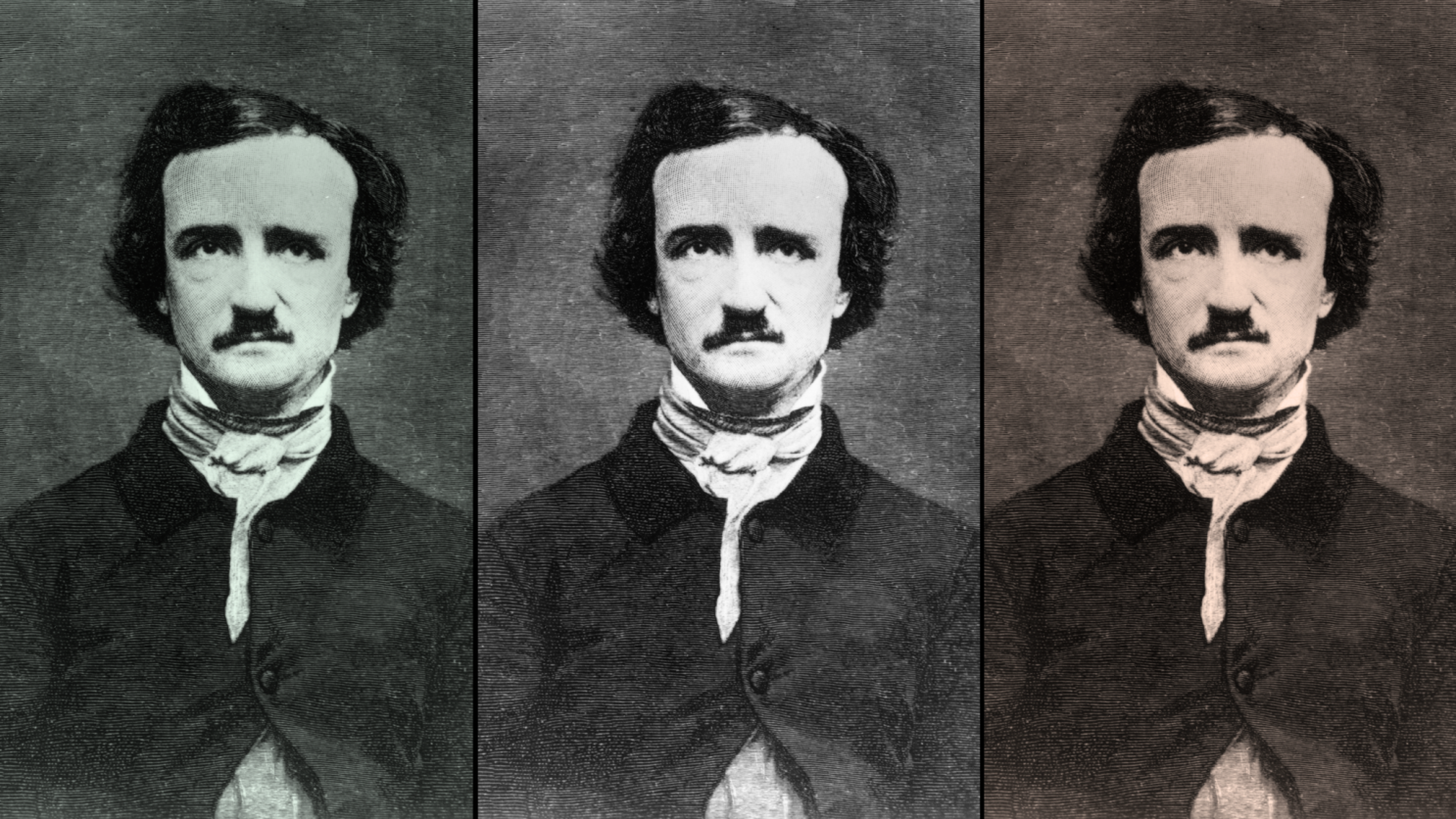
William Carlos Williams, another "pure product of America," wrote a scintillating chapter on Poe in his book In the American Grain (1925).


To understand what Poe is driving at in his tales, one should read first NOT the popular, perfect— Gold Bug, Murders in the Rue Morgue , etc., which by their brilliancy detract from the observation of his deeper intent, but the less striking tales—in fact all, but especially those where his humor is less certain, his mood lighter, less tightly bound by the incident, where numerous illuminating faults are allowed to become expressive, The Business Man, The Man That Was Used Up, Loss of Breath, BonBon, Diddling, The Angel of the Odd— and others of his lesser Tales.


*     *     *


The Man That Was Used Up (1839)


"The Man That Was Used Up" is a clever story -- though not as droll as Poe clearly hopes -- in which our narrator interviews various acquaintances about the career of living legend and fine figure of a man, Brevet Brigadier General John A. B. C. Smith "in the late tremendous swamp-fight away down South, with the Bugaboo and Kickapoo Indians."


The narrator interviews Miss Tabitha T. We at the Church of the Reverend Doctor Drummummupp, the Misses Arabella and Miranda Cognoscenti as they attend the Rantipole theatre to take in a performance by that fine tragedian Climax as Iago, the social butterfly  and lovely widow Mrs. Kathleen O'Trump, the graceful Mrs. Pirouette, and finally Mr. Theodore Sinivate.


Ultimately the narrator goes in search of the general himself:


....It was early when I called, and the General was dressing, but I pleaded urgent business, and was shown at once into his bedroom by an old negro valet, who remained in attendance during my visit. As I entered the chamber, I looked about, of course, for the occupant, but did not immediately perceive him. There was a large and exceedingly odd looking bundle of something which lay close by my feet on the floor, and, as I was not in the best humor in the world, I gave it a kick out of the way.


"Hem! ahem! rather civil that, I should say!" said the bundle, in one of the smallest, and altogether the funniest little voices, between a squeak and a whistle, that I ever heard in all the days of my existence.


"Ahem! rather civil that I should observe."


I fairly shouted with terror, and made off, at a tangent, into the farthest extremity of the room.


"God bless me, my dear fellow!" here again whistled the bundle, "what—what—what—why, what is the matter? I really believe you don't know me at all."


What could I say to all this—what could I? I staggered into an armchair, and, with staring eyes and open mouth, awaited the solution of the wonder.


"Strange you shouldn't know me though, isn't it?" presently resqueaked the nondescript, which I now perceived was performing upon the floor some inexplicable evolution, very analogous to the drawing on of a stocking. There was only a single leg, however, apparent.


"Strange you shouldn't know me though, isn't it? Pompey, bring me that leg!" Here Pompey handed the bundle a very capital cork leg, already dressed, which it screwed on in a trice; and then it stood upright before my eyes.


"And a bloody action it was," continued the thing, as if in a soliloquy; "but then one mustn't fight with the Bugaboos and Kickapoos, and think of coming off with a mere scratch. Pompey, I'll thank you now for that arm. Thomas" [turning to me] "is decidedly the best hand at a cork leg; but if you should ever want an arm, my dear fellow, you must really let me recommend you to Bishop." Here Pompey screwed on an arm.


"We had rather hot work of it, that you may say. Now, you dog, slip on my shoulders and bosom. Pettit makes the best shoulders, but for a bosom you will have to go to Ducrow."


"Bosom!" said I.


"Pompey, will you never be ready with that wig? Scalping is a rough process, after all; but then you can procure such a capital scratch at De L'Orme's."


"Scratch!"


"Now, you nigger, my teeth! For a good set of these you had better go to Parmly's at once; high prices, but excellent work. I swallowed some very capital articles, though, when the big Bugaboo rammed me down with the butt end of his rifle."


"Butt end! ram down!! my eye!!"


"O yes, by the way, my eye—here, Pompey, you scamp, screw it in! Those Kickapoos are not so very slow at a gouge; but he's a belied man, that Dr. Williams, after all; you can't imagine how well I see with the eyes of his make."


I now began very clearly to perceive that the object before me was nothing more nor less than my new acquaintance, Brevet Brigadier General John A. B. C. Smith. The manipulations of Pompey had made, I must confess, a very striking difference in the appearance of the personal man. The voice, however, still puzzled me no little; but even this apparent mystery was speedily cleared up.


"Pompey, you black rascal," squeaked the General, "I really do believe you would let me go out without my palate."


Hereupon, the negro, grumbling out an apology, went up to his master, opened his mouth with the knowing air of a horse-jockey, and adjusted therein a somewhat singular-looking machine, in a very dexterous manner, that I could not altogether comprehend. The alteration, however, in the entire expression of the General's countenance was instantaneous and surprising. When he again spoke, his voice had resumed all that rich melody and strength which I had noticed upon our original introduction.


"D-n the vagabonds!" said he, in so clear a tone that I positively started at the change, "D-n the vagabonds! they not only knocked in the roof of my mouth, but took the trouble to cut off at least seven-eighths of my tongue. There isn't Bonfanti's equal, however, in America, for really good articles of this description. I can recommend you to him with confidence," [here the General bowed,] "and assure you that I have the greatest pleasure in so doing."


I acknowledged his kindness in my best manner, and took leave of him at once, with a perfect understanding of the true state of affairs- with a full comprehension of the mystery which had troubled me so long. It was evident. It was a clear case. Brevet Brigadier General John A. B. C. Smith was the man—the man that was used up.


*     *     *


The Business Man (1840)


Narrator Peter Proffit recounts his successful careers in Tailor's Walking-Advertisement, Eye-Sore owner, Assault-and-Battery artist, Mud-Dabbler, Organ-Grinder (sans monkey), Sham-Postman, and finally:


....My eighth and last speculation has been in the Cat-Growing way. I have found that a most pleasant and lucrative business, and, really, no trouble at all. The country, it is well known, has become infested with cats—so much so of late, that a petition for relief, most numerously and respectably signed, was brought before the Legislature at its late memorable session. The Assembly, at this epoch, was unusually well-informed, and, having passed many other wise and wholesome enactments, it crowned all with the Cat-Act. In its original form, this law offered a premium for cat-heads (fourpence a-piece), but the Senate succeeded in amending the main clause, so as to substitute the word "tails" for "heads." This amendment was so obviously proper, that the House concurred in it nem. con.


As soon as the governor had signed the bill, I invested my whole estate in the purchase of Toms and Tabbies. At first I could only afford to feed them upon mice (which are cheap), but they fulfilled the scriptural injunction at so marvellous a rate, that I at length considered it my best policy to be liberal, and so indulged them in oysters and turtle. Their tails, at a legislative price, now bring me in a good income; for I have discovered a way, in which, by means of Macassar oil, I can force three crops in a year. It delights me to find, too, that the animals soon get accustomed to the thing, and would rather have the appendages cut off than otherwise. I consider myself, therefore, a made man, and am bargaining for a country seat on the Hudson.


*     *     *


Loss of Breath (1840)


Mr. Lackobreath, while trying to strangle his bride on the morning after their wedding, loses his breath.  "Loss of Breath" recounts, in whimsically grotesque picaresque form, his attempts to recapture it. On his search he is crushed in a carriage, hung for a thief, autopsied by a surgeon, and experimented on by an apothecary with a Galvanic battery, before being interred in the "public vault." There he meets his neighbor, Mr. Windenough, who inadvertently acquired his breath while passing the Lackobreath house that morning.


As with "The Man That Was Used Up" and "The Business Man," there is an almost mathematical arrangement to these stories. Iteration and reiteration pulse as the narrator begins and then pursues his quest via interactions with various characters (out of Daumier, or Goya's late sketches). Humor in each episode is negation of terror. Rigorous stylistic trigonometry of framework supports the drollery.


There is no earthly commiseration in this schema for victims of what Poe terms life's "quantum of absurdity."


*     *     *


Bon-Bon (1840)


The devil, perennial devourer of and commenter upon philosophers, makes an evening visit to the brilliant Parisian chef/philosopher/wheeler-dealer Pierre Bon-Bon.


But in "Bon-Bon" Poe sets himself a few too many rhetorical hurdles in the chase after laughs, dulling the piece's overall conceit.  It is a minor but clever conceit, as Bon-Bon tries to maneuver the devil into negotiations for his own soul.


("Hic-cup!")


*     *     *


Diddling Considered as One of the Exact Sciences (1843)


"Diddling" is another acid anatomy of US business psychology.


....Your diddler is minute. His operations are upon a small scale. His business is retail, for cash, or approved paper at sight. Should he ever be tempted into magnificent speculation, he then, at once, loses his distinctive features, and becomes what we term "financier." This latter word conveys the diddling idea in every respect except that of magnitude. A diddler may thus be regarded as a banker in petto —a "financial operation," as a diddle at Brobdignag. The one is to the other, as Homer to "Flaccus"—as a mastodon to a mouse—as the tail of a comet to that of a pig.


The tale is a catalogue of some of the "modern instances"' of diddling.


....A neat diddle is this. A friend holds one of the diddler's promises to pay, filled up and signed in due form, upon the ordinary blanks printed in red ink. The diddler purchases one or two dozen of these blanks, and every day dips one of them in his soup, makes his dog jump for it, and finally gives it to him as a bonne bouche . The note arriving at maturity, the diddler, with the diddler's dog, calls upon the friend, and the promise to pay is made the topic of discussion. The friend produces it from his escritoire , and is in the act of reaching it to the diddler, when up jumps the diddler's dog and devours it forthwith. The diddler is not only surprised but vexed and incensed at the absurd behavior of his dog, and expresses his entire readiness to cancel the obligation at any moment when the evidence of the obligation shall be forthcoming.


*     *     *


The Angel of the Odd — An Extravaganza (1844)


Our drunken narrator has a hallucinatory nighttime encounter with the Angel: "....he said that he was the genius who presided over the contretemps of mankind, and whose business it was to bring about the odd accidents which are continually astonishing the skeptic."


The next day the narrator gets a special helping of such contretemps:


His departure afforded me relief. The very few glasses of Lafitte that I had sipped had the effect of rendering me drowsy, and I felt inclined to take a nap of some fifteen or twenty minutes, as is my custom after dinner. At six I had an appointment of consequence, which it was quite indispensable that I should keep. The policy of insurance for my dwelling house had expired the day before; and, some dispute having arisen, it was agreed that, at six, I should meet the board of directors of the company and settle the terms of a renewal. Glancing upward at the clock on the mantel-piece (for I felt too drowsy to take out my watch), I had the pleasure to find that I had still twenty-five minutes to spare. It was half past five; I could easily walk to the insurance office in five minutes; and my usual post prandian siestas had never been known to exceed five and twenty. I felt sufficiently safe, therefore, and composed myself to my slumbers forthwith.


Having completed them to my satisfaction, I again looked toward the time-piece, and was half inclined to believe in the possibility of odd accidents when I found that, instead of my ordinary fifteen or twenty minutes, I had been dozing only three; for it still wanted seven and twenty of the appointed hour. I betook myself again to my nap, and at length a second time awoke, when, to my utter amazement, it still wanted twenty-seven minutes of six. I jumped up to examine the clock, and found that it had ceased running. My watch informed me that it was half past seven; and, of course, having slept two hours, I was too late for my appointment "It will make no difference," I said; "I can call at the office in the morning and apologize; in the meantime what can be the matter with the clock?" Upon examining it I discovered that one of the raisin-stems which I had been flipping about the room during the discourse of the Angel of the Odd had flown through the fractured crystal, and lodging, singularly enough, in the key-hole, with an end projecting outward, had thus arrested the revolution of the minute-hand.


"Ah!" said I; "I see how it is. This thing speaks for itself. A natural accident, such as will happen now and then!"


I gave the matter no further consideration, and at my usual hour retired to bed. Here, having placed a candle upon a reading-stand at the bed-head, and having made an attempt to peruse some pages of the "Omnipresence of the Deity," I unfortunately fell asleep in less than twenty seconds, leaving the light burning as it was.


My dreams were terrifically disturbed by visions of the Angel of the Odd. Methought he stood at the foot of the couch, drew aside the curtains, and, in the hollow, detestable tones of a rum-puncheon, menaced me with the bitterest vengeance for the contempt with which I had treated him. He concluded a long harrangue by taking off his funnelcap, inserting the tube into my gullet, and thus deluging me with an ocean of Kirschenwasser, which he poured, in a continuous flood, from one of the long-necked bottles that stood him instead of an arm. My agony was at length insufferable, and I awoke just in time to perceive that a rat had ran off with the lighted candle from the stand, but not in season to prevent his making his escape with it through the hole. Very soon, a strong suffocating odor assailed my nostrils; the house, I clearly perceived, was on fire. In a few minutes the blaze broke forth with violence, and in an incredibly brief period the entire building was wrapped in flames. All egress from my chamber, except through a window, was cut off. The crowd, however, quickly procured and raised a long ladder. By means of this I was descending rapidly, and in apparent safety, when a huge hog, about whose rotund stomach, and indeed about whose whole air and physiognomy, there was something which reminded me of the Angel of the Odd,—when this hog, I say, which hitherto had been quietly slumbering in the mud, took it suddenly into his head that his left shoulder needed scratching, and could find no more convenient rubbing post than that afforded by the foot of the ladder. In an instant I was precipitated, and had the misfortune to fracture my arm....


"The Angel of the Odd" clearly looks forward to Poe's sublime 1845 story-essay "The Imp of the Perverse."


*     *     *


Poe's droll stories should be taken in small doses. Too much of his prehensile humor can set the reader's teeth on edge. Still, the material is rewarding. Poe clearly foresaw the all-against-all nature of post-Civil War capitalist exploitation, the way it permeated all social interaction, dissolved class solidarity, and bred perverse and contrary destructive and self-destructive behavior. The acid of Twain and Bierce is also germinated in these tales.


William Carlos Williams, not Eliot (or Harold Bloom) is the most sympathetic critic of Poe that I have read. As he closes his chapter on the writer in In the American Grain, he notes:


....Of this method in the Tales, the significance and the secret is: authentic particles, a thousand of which spring to the mind for quotation, taken apart and reknit with a view to emphasize, enforce and make evident, the method. Their quality of skill in observation, their heat, local verity, being overshadowed only by the detached, the abstract, the cold philosophy of their joining together; a method springing so freshly from the local conditions which determine it, by their emphasis of firm crudity and lack of coordinated structure, as to be worthy of most painstaking study—The whole period, America 1840, could be rebuilt, psychologically (phrenologically) from Poe's "method."


Jay

21 April 2021


Sunday, April 18, 2021

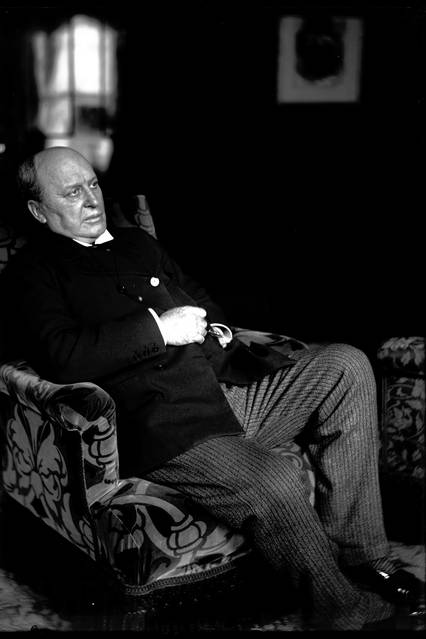
Morbid symptoms: Five strange stories by Henry James

Nevertheless, among all her feverish transitions from hope to fear, from exaltation to despair, she never, for a moment, ceased to keep a cunning watch upon her physical sensations, and to lie in wait for morbid symptoms.


-- "De Grey: A Romance" (1868)


"De Grey: A Romance" (1868)


...."Let me read you ten words," said the priest, opening at a fly-leaf of the volume, on which a memorandum or register had been inscribed in a great variety of hands, all minute and some barely legible. "God be with you!" and the old man crossed himself. Involuntarily, Margaret did the same. "'George De Grey,'" he read, "'met and loved, September, 1786, Antonietta Gambini, of Milan. She died October 9th, same year. John De Grey married, April 4th, 1749, Henrietta Spencer. She died May 7th. George De Grey engaged himself October, 1710, to Mary Fortescue. She died October 31st. Paul De Grey, aged nineteen, betrothed June, 1672, at Bristol, England, to Lucretia Lefevre, aged thirty-one, of that place. She died July 27th. John De Grey, affianced January 10th, 1649, to Blanche Ferrars, of Castle Ferrars, Cumberland. She died, by her lover's hand, January 12th. Stephen De Grey offered his hand to Isabel Stirling, October, 1619. She died within the month. Paul De Grey exchanged pledges with Magdalen Scrope, August, 1586. She died in childbirth, September, 1587.'" Father Herbert paused. "Is it enough?" he asked, looking up with glowing eyes. "There are two pages more. The De Greys are an ancient line; they keep their records."


Margaret had listened with a look of deepening, fierce, passionate horror,—a look more of anger and of wounded pride than of terror. She sprang towards the priest with the lightness of a young cat, and dashed the hideous record from his hand.


​"What abominable nonsense is this!" she cried. "What does it mean? I barely heard it; I despise it; I laugh at it."


The old man seized her arm with a firm grasp. "Paul De Grey," he said, in an awful voice, "exchanged pledge with Margaret Aldis, August, 1821. She died—with the falling leaves."


Poor Margaret looked about her for help, inspiration, comfort of some kind. The room contained nothing but serried lines of old parchment-covered books, each seeming a grim repetition of the volume at her feet. A vast peal of thunder resounded through the noon-day stillness. Suddenly her strength deserted her; she felt her weakness and loneliness, the grasp of the hand of fate. Father Herbert put out his arms, she flung herself on his neck, and burst into tears.


"Do you still refuse to leave him?" asked the priest "If you leave him, you're saved."


"Saved?" cried Margaret, raising her head; "and Paul?"


"Ah, there it is.—He'll forget you."


The young girl pondered a moment. "To have him do that," she said, "I should apparently have to die." Then wringing her hands with a fresh burst of grief, "Is it certain," she cried, "that there are no exceptions?"


Whether today we consider "De Grey'' a tyro potboiler or an example of higher commercial melodrama, it suffers by comparison with "The Romance of Certain Old Clothes." Yet for the lover of strange and uncanny stories, "De Grey'' has a place and an unmistakable flavor.


In writing it, James must have felt close to the kind of aesthetic impulses that motivated Hawthorne to work on a tale like "The Ancestral Footstep." The De Grey family, on the surface innocuous to the point of boredom, turns out to harbor a historical and still living curse.


*     *     *


"The Last of the Valerii" (1874)


Here we arrive at an antiquarian -- or anthropomorphist? -- supernatural tale; perhaps international Hawthornianism. Bleiler gives it a demerit for the "maundering American narrator," but James has perfectly realised the tone of an older, cultured American painter witnessing a crisis of his Yankee goddaughter, who has just married the heir to a destitute Italian house. 


....It was a help to ungrudging feelings that the Count, yielding to his wife's urgency, had undertaken a series of systematic excavations. To excavate is an expensive luxury, and neither Marco nor his latter forefathers had possessed the means for a disinterested pursuit of archæology. But his young wife had persuaded herself that the much-trodden soil of the Villa was as full of buried treasures as a bride-cake of plums, and that it would be a pretty compliment to the ancient house which had accepted her as mistress to devote a portion of her dowry to bringing its mouldy honours to the light. I think she was not without a fancy that this liberal process would help to disinfect her Yankee dollars of the impertinent odour of trade. She took learned advice on the subject, and was soon ready to swear to you, proceeding from irrefutable premises, that a colossal gilt-bronze Minerva, mentioned by Strabo, was placidly awaiting resurrection at a point twenty rods from the north-west angle of the house. She had a couple of asthmatic old antiquaries to lunch, whom, having plied with unwonted potations, she walked off their legs in the grounds; and though they agreed on nothing else in the world, they individually assured her that researches properly conducted would probably yield an unequalled harvest of discoveries. The Count had been not only indifferent but even unfriendly to the scheme, and had more than once arrested his wife's complacent allusions to it by an unaccustomed acerbity of tone. "Let them lie, the poor disinherited gods, the Minerva, the Apollo, the Ceres you are so sure of finding," he said, "and don't break their rest. What do you want of them? We can't worship them. Would you put them on pedestals to stare and mock at them? If you can't believe in them, don't disturb them. Peace be with them!" I remember being a good deal impressed by a confession drawn from him by his wife's playfully declaring, in answer to some remonstrances in this strain, that he was really and truly superstitious. "Yes, by Bacchus, I am superstitious!" he cried. "Too much so, perhaps! But I'm an old Italian, and you must take me as you find me. There have been things seen and done here which leave strange influences behind! They don't touch you, doubtless, who come of another race. But me they touch often, in the whisper of the leaves and the odour of the mouldy soil and the blank eyes of the old statues. I can't bear to look the statues in the face. I seem to see other strange eyes in the empty sockets, and I hardly know what they say to me. I call the poor old statues ghosts. In conscience, we have enough on the place already, lurking and peering in every shady nook. Don't dig up any more, or I won't answer for my wits!"


This account of Marco's sensibilities was too fantastic not to seem to his wife almost a joke; and though I imagined there was more in it, he made a joke so seldom that I should have been sorry to convert the poor girl's smile into a suspicion....


Marco's warning is sadly prophetic. When a statue of Juno is excavated on the Villa's grounds and erected, it becomes the sole object of Marco's worship. 


....The next day, meeting in the garden the functionary who had conducted the excavation, I shook my finger at him with an intention of portentous gravity. But he only grinned like the malicious earth-gnome to which I had always compared him, and twisted his moustache as if my menace were a capital joke. "If you dig any more holes here," I said, "you shall be thrust into the deepest of them, and have the earth packed down on top of you. We have made enough discoveries, and we want no more statues. Your Juno has almost ruined us."


He burst out laughing. "I expected as much – I had my notion!"


"What was your notion?"


"That the Signor Conte would begin and say his prayers to her."


"Good heavens! Is the case so common? Why did you expect it?"


"On the contrary, the case is rare. But I have fumbled so long in the monstrous heritage of antiquity that I have learned a multitude of secrets – learned that ancient relics may work modern miracles. There is a pagan element in all of us – I don't speak for you, illustrissimi forestieri – and the old gods have still their worshippers. The old spirit still throbs here and there, and the Signor Conte has his share of it. He's a good fellow, but, between ourselves, he's an impossible Christian!" And this singular personage resumed his impertinent hilarity. 


Stories about Gilded Age American railroad or tinned beef barons and their children loosed on Europe are a rich stream in supernatural literature. Wilde certainly showed this when he sent-up the genre with "The Canterbury Ghost." Even tales of getting to and from Europe, like F. Marion Crawford's "The Upper Berth," compel reader attention and loyalty.


"The Last of the Valerii" is certainly redolent in mood of the crepuscular shade the poet Robert Lowell referred to with his sublime line "the sun on brick at dusk."


*     *     *


"The Aspern Papers" (1888)


The narrator arrives in Venice in search of papers of the U.S. poet Jeffrey Aspern. They are in the possession of the ancient Misses Bordereau, aunt and niece. The aunt is reputed to be a former lover of Aspern, hence her possession of letters, etc.


The narrator insinuates himself into the household as a renter. Over the weeks he learns what each Miss Bordereau apparently desires. When the aunt is taken ill and put to bed, his plan to play the long game swamped in an impulsive late night prowl around the palazzo.


With this, Poe's "imp of the perverse" enters the macabre equation:


....I went out of the house and took a long walk, as far as the Piazza, where my restlessness declined to quit me. I was unable to sit down (it was very late now but there were people still at the little tables in front of the cafés); I could only walk round and round, and I did so half a dozen times. I was uncomfortable, but it gave me a certain pleasure to have told Miss Tita who I really was. At last I took my way home again, slowly getting all but inextricably lost, as I did whenever I went out in Venice: so that it was considerably past midnight when I reached my door. The sala, upstairs, was as dark as usual and my lamp as I crossed it found nothing satisfactory to show me. I was disappointed, for I had notified Miss Tita that I would come back for a report, and I thought she might have left a light there as a sign. The door of the ladies' apartment was closed; which seemed an intimation that my faltering friend had gone to bed, tired of waiting for me. I stood in the middle of the place, considering, hoping she would hear me and perhaps peep out, saying to myself too that she would never go to bed with her aunt in a state so critical; she would sit up and watch—she would be in a chair, in her dressing-gown. I went nearer the door; I stopped there and listened. I heard nothing at all and at last I tapped gently. No answer came and after another minute I turned the handle. There was no light in the room; this ought to have prevented me from going in, but it had ​no such effect. If I have candidly narrated the importunities, the indelicacies, of which my desire to possess myself of Jeffrey Aspern's papers had rendered me capable I need not shrink from confessing this last indiscretion. I think it was the worst thing I did; yet there were extenuating circumstances. I was deeply though doubtless not disinterestedly anxious for more news of the old lady, and Miss Tita had accepted from me, as it were, a rendezvous which it might have been a point of honour with me to keep. It may be said that her leaving the place dark was a positive sign that she released me, and to this I can only reply that I desired not to be released.


The door of Miss Bordereau's room was open and I could see beyond it the faintness of a taper. There was no sound—my footstep caused no one to stir. I came further into the room; I lingered there with my lamp in my hand. I wanted to give Miss Tita a chance to come to me if she were with her aunt, as she must be. I made no noise to call her; I only waited to see if she would not notice my light. She did not, and I explained this (I found afterwards I was right) by the idea that she had fallen asleep. If she had fallen asleep her aunt was not on her mind, and my explanation ought to have led me to go out as I had come. I must repeat again that it did not, for I found myself at the same moment thinking of something else. I had no definite purpose, no bad intention, but I felt myself held to the spot by an acute, though absurd, sense of opportunity. For what I could not have said, inasmuch as it was not in my mind that I might commit a theft. Even if it had been I was confronted with the evident fact that Miss Bordereau ​did not leave her secretary, her cupboard and the drawers of her tables gaping. I had no keys, no tools and no ambition to smash her furniture. None the less it came to me that I was now, perhaps alone, unmolested, at the hour of temptation and secrecy, nearer to the tormenting treasure than I had ever been. I held up my lamp, let the light play on the different objects as if it could tell me some thing. Still there came no movement from the other room. If Miss Tita was sleeping she was sleeping sound. Was she doing so—generous creature—on purpose to leave me the field? Did she know I was there and was she just keeping quiet to see what I would do—what I could do? But what could I do, when it came to that? She herself knew even better than I how little.


I stopped in front of the secretary, looking at it very idiotically; for what had it to say to me after all? In the first place it was locked, and in the second it almost surely contained nothing in which I was interested. Ten to one the papers had been destroyed; and even if they had not been destroyed the old woman would not have put them in such a place as that after removing them from the green trunk would not have transferred them, if she had the idea of their safety on her brain, from the better hiding-place to the worse. The secretary was more conspicuous, more accessible in a room in which she could no longer mount guard. It opened with a key, but there was a little brass handle, like a button, as well; I saw this as I played my lamp over it. I did something more than this at that moment: I caught a glimpse of the possibility that Miss Tita wished me really to understand. If she did not ​wish me to understand, if she wished me to keep away, why had she not locked the door of communication between the sitting-room and the sala? That would have been a definite sign that I was to leave them alone. If I did not leave them alone she meant me to come for a purpose—a purpose now indicated by the quick, fantastic idea that to oblige me she had unlocked the secretary. She had not left the key, but the lid would probably move if I touched the button. This theory fascinated me, and I bent over very close to judge. I did not propose to do anything, not even—not in the least—to let down the lid; I only wanted to test my theory, to see if the cover would move. I touched the button with my hand—a mere touch would tell me; and as I did so (it is embarrassing for me to relate it), I looked over my shoulder. It was a chance, an instinct, for I had not heard anything. I almost let my luminary drop and certainly I stepped back, straightening myself up at what I saw. Miss Bordereau stood there in her night-dress, in the doorway of her room, watching me; her hands were raised, she had lifted the everlasting curtain that covered half her face, and for the first, the last, the only time I beheld her extraordinary eyes. They glared at me, they made me horribly ashamed. I never shall forget her strange little bent white tottering figure, with its lifted head, her attitude, her expression; neither shall I forget the tone in which as I turned, looking at her, she hissed out passionately, furiously:


'Ah, you publishing scoundrel!'


I know not what I stammered, to excuse myself, to explain; but I went towards her, to tell her I ​meant no harm. She waved me off with her old hands, retreating before me in horror; and the next thing I knew she had fallen back with a quick spasm, as if death had descended on her, into Miss Tita's arms....


This is a droll comedy of frustration and misunderstanding. The narrator wrong-foots himself every time events seem to be turning to his advantage. 


*     *     *


"Sir Edmund Orme" (1891)


....I closed the door and turned round to find that Sir Edmund Orme had during the moment my back was presented to him retired by the window. Mrs. Marden stood there and we looked at each other long. It had only then—as the girl flitted away—come home to me that her daughter was unconscious of what had happened. It was that, oddly enough, that gave me a sudden, sharp shake, and not my own perception of our visitor, which appeared perfectly natural. It made the fact vivid to me that she had been equally unaware of him in church, and the two facts together—now that they were over—set my heart more sensibly beating. I wiped my forehead, and Mrs. Marden broke out with a low distressful wail: "Now you know my life—now you know my life!"


"In God's name who is he—what is he?"


"He's a man I wronged."


"How did you wrong him?"


"Oh, awfully—years ago."


"Years ago? Why, he's very young."


"Young—young?" cried Mrs. Marden. "He was born before I was!"


"Then why does he look so?"


She came nearer to me, she laid her hand on my arm, and there was something in her face that made me shrink a little. "Don't you understand—don't you feel?" she murmured, reproachfully.


"I feel very queer!" I laughed; and I was conscious that my laugh betrayed it.


"He's dead!" said Mrs. Marden, from her white face.


"Dead?" I panted. "Then that gentleman was — ?" I couldn't even say the word.


​"Call him what you like—there are twenty vulgar names. He's a perfect presence."


"He's a splendid presence!" I cried. "The place is haunted—haunted!" I exulted in the word as if it represented the fulfilment of my dearest dream.


"It isn't the place—more's the pity! That has nothing to do with it!"


"Then it's you, dear lady?" I said, as if this were still better.


"No, nor me either—I wish it were!"


"Perhaps it's me," I suggested with a sickly smile.


"It's nobody but my child—my innocent, innocent child!" And with this Mrs. Marden broke down—she dropped into a chair and burst into tears. I stammered some question—I pressed on her some bewildered appeal, but she waved me off, unexpectedly and passionately. I persisted—couldn't I help her, couldn't I intervene? "You have intervened," she sobbed; "you're in it, you're in it."


"I'm very glad to be in anything so curious," I boldly declared.


"Glad or not, you can't get out of it."


"I don't want to get out of it—it's too interesting."


"I'm glad you like it. Go away."


"But I want to know more about it."


"You'll see all you want—go away!"


"But I want to understand what I see."


"How can you—when I don't understand myself?"


"We'll do so together—we'll make it out."


At this she got up, doing what she could to obliterate her tears. "Yes, it will be better together—that's why I've liked you."


"Oh, we'll see it through!" I declared.


"Then you must control yourself better."


​"I will, I will—with practice."


"You'll get used to it," said Mrs. Marden, in a tone I never forgot. "But go and join them—I'll come in a moment."


"Sir Edmund Orme" is a story of developing trust and comradeship between a young man and the older woman whose daughter he wants to wed.


Mrs. Marden in youth motivated the suicide of her fiance Sir Edmund Orme when she overthrew him. Now Orme pays Mrs. Marden and Miss Marden intermittent visits; only the mother, and eventually our narrator, can see him.


Both the narrator and Mrs. Marden leverage devotion for Miss Marden through several encounters. Some are in broad daylight, others at night; Orme is not confined to place, but but to person.


James clearly intends the story to be a supernatural episode in a larger mosaic of stories about the material and moral contradictions of wooing and betrothal. It is a confident tale of modest clarity.


*     *     *


"Jersey Villas" or, "Sir Dominick Ferrand" (1892)


....On leaving the house (he lived at No. 3, the door of which stood open to a small front garden), he encountered the lady who, a week before, had taken possession of the rooms on the ground floor, the "parlours" of Mrs. Bundy's terminology. He had heard her, and from his window, two or three times, had even seen her pass in and out, and this observation had created in his mind a vague prejudice in her favour. Such a prejudice, it was true, had been subjected to a violent test; it had been fairly apparent that she had a light step, but it was still less to be overlooked that she had a cottage piano. She had furthermore a little boy and a very sweet voice, of which Peter Baron had caught the accent, not from her singing (for she only played), but from her gay admonitions to her child, whom she occasionally allowed to amuse himself—under restrictions very publicly enforced—in the tiny black patch which, as a forecourt to each house, was held, in the humble row, to be a feature. Jersey Villas stood in pairs, semi-detached, and Mrs. Ryves—such was the name under which the new lodger presented herself—had been admitted to the house as confessedly musical. Mrs. Bundy, the earnest proprietress of No. 3, who considered her "parlours" (they were a dozen feet ​square), even more attractive, if possible, than the second floor with which Baron had had to content himself—Mrs. Bundy, who reserved the drawing-room for a casual dressmaking business, had threshed out the subject of the new lodger in advance with our young man, reminding him that her affection for his own person was a proof that, other things being equal, she positively preferred tenants who were clever.


This was the case with Mrs. Ryves; she had satisfied Mrs. Bundy that she was not a simple strummer. Mrs. Bundy admitted to Peter Baron that, for herself, she had a weakness for a pretty tune, and Peter could honestly reply that his ear was equally sensitive. Everything would depend on the "touch" of their inmate. Mrs. Ryves's piano would blight his existence if her hand should prove heavy or her selections vulgar; but if she played agreeable things and played them in an agreeable way she would render him rather a service while he smoked the pipe of "form." Mrs. Bundy, who wanted to let her rooms, guaranteed on the part of the stranger a first-class talent, and Mrs. Ryves, who evidently knew thoroughly what she was about, had not falsified this somewhat rash prediction. 


In "Jersey Villas" James gives us several overlapping duos of interacting characters crisscrossing fluidly over documents discovered in an old davenport. The handling of the papers will either unite or ruin future romantic prospects for unsuccessful writer Peter Baron and unsuccessful music composer Mrs. Ryves. They will also unite or ruin business prospects for Peter Baron and Mr. Locket, editor of the journal Promiscuous.


Unlike the muniment cupboard in Reggie Oliver's story "Feng Shui," the davenport papers play a non-malevolent role in "Jersey Villas." They have a soft supernatural force that can scotch or defer decisions, clouding common sense thought.


All of which leads Mr. Baron and Mrs. Ryves to a lot of expensive toing and froing, spending train and cab fare they do not have. In the end, however, they are able to weather the hazzards of fortune, uniting as romantic and creative partners.


"Jersey Villas" is a fun story, one with scrapes and obstacles whose melodrama never inflates to dread; like the early chapters of Machen's "A Fragment of Life," the young couple just have too much going for them to fail.


*     *     *


Jay

18 April 2021