Subscribe to my Substack

Showing posts with label Rosalie Parker. Show all posts

Sunday, March 20, 2022

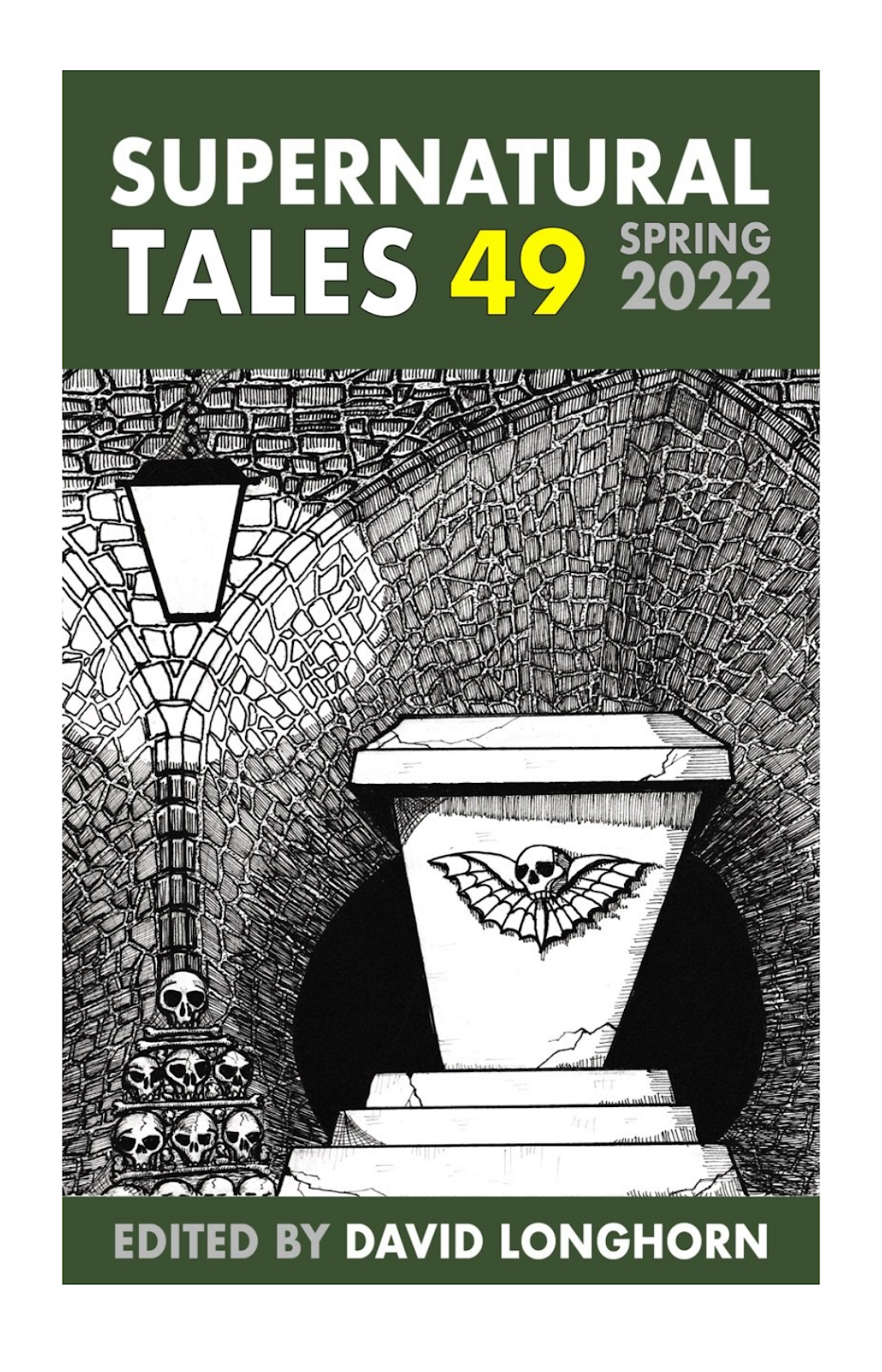
My review of Supernatural Tales 49

I have purchased more issues of Supernatural Tales than I have read. Each issue has at least one story by an author I enjoy, and the ebook price is always right. Issue 49 is the first issue of ST I have read cover to cover. 


*   *   *


"The Woofle Dust" by Steve Duffy is a wonderful evocation of UK end-of-the-pier entertainment in late August 1939. Regular readers will not be surprised at Duffy's skill here. In stories as varied in setting and historical period as "The Vanishing Hitchhiker," "The Oram County Whoosit," and "The Clay Party," Duffy has displayed superb skill in the short story and novella modes.


"The Woofle Dust" is a trap for the unwary, both the reader and the story's protagonist. It has a sunset mood: the shadow of impending imperialist war skews each human act and interaction.


*   *   *


Hardy's sublime story "The Withered Arm" came to mind repeatedly as I read "Godless" by Sam Dawson. It has a historically indeterminate rural village setting, and Dawson does a skilful job conveying a pre-industrial era.


By any means necessary, protagonist Ruth Darnell works to ensure her son, hung for murder, ends up buried in consecrated ground. Dawson is at his best in the story when delineating this struggle: a woman against men and against a man's world.


*   *   *


"All Talk" by Rosalie Parker is a carefully observed timeslip story. The narrator tells us about her employee Gregory, a successful young family man who, for a  while, lives two lives in two different years. Ultimately, one life must win over the other, and one does.


Est enim magnum chaos.


*   *   *


"Another One To Love Them" by David Buchan


She wondered where they had learnt the game that they were playing. It certainly couldn't have come from their aunt. The woman had seemed too self-absorbed to teach something like that to the children, something that was....


Gwendolyn shepherds three siblings around a stately home, once the site of a terrible crime. The children, working class and normally unruly, surprise her by seeming to rise to the occasion.


In the end they are happy to sit on the lawn, playing together with something that "had the texture and colour of aged leather, and what might have been strands of hair that sprouted from one edge."


*   *   *


"Candler's Ceremony" by Sam Hicks describes urban disorientation in the early Covid period: empty streets, few and different faces. 


"I wanted, hoping all this would only happen once, to go somewhere where I could really see the change," our narrator says. So he heads to London's City, and wandering the emptiness meets Candler. Is Candler simply another person unmoored by the pandemic's dissolution of routine? Or an altogether different order of guide?


This is the first Sam Hicks story I have read; its brevity lends an almost molecular weight to each sentence. The sense of "last things and last people" is palpable.


*   *   *


"Not That Kind of Place" by James Everington starts out as a search for two runaway daughters. It ends atomization into contingency and uncertainty, conveyed with the confusions and unreason of dream. 


Stories that refuse to make conventional sense, or tell their stories in a conventional way, have always challenged me. (And by challenged, I mean annoyed). When a writer gets it right in this game, the case for their method is irrefutable. Everington's story falls short, but the world he builds is initially compelling.


*   *   *


James Machin's use in "Cave Canem'' of skewed perspectives and intentional lacunae recall de la Mare and Aickman here, but also the queerly suggestive landscapes of Buchan and Ramsey Campbell. Repressed motivations and apparently arbitrary clueing are in play, but action is sharply grounded for all the strange-making procedures afoot.

In a way, the story's skewed assignments and god-building are objective correlatives for the protagonist Mark's developmental prosopagnosia.


These rhetorical wire-modelings aside, "Cave Canem" is a compelling story about the risk of calling up that which cannot be put down again. 


*   *   *


"Four Vignettes" by Jane Jakeman is a bravura collection of short-short stories. They display real skill at deftly renewing different historical periods and horror clichés.


*   *   *

Jay

19 March 2022

Sunday, June 20, 2021

[Review] The Ghost Stories of Oliver Onions and the case for "Tragic Casements"

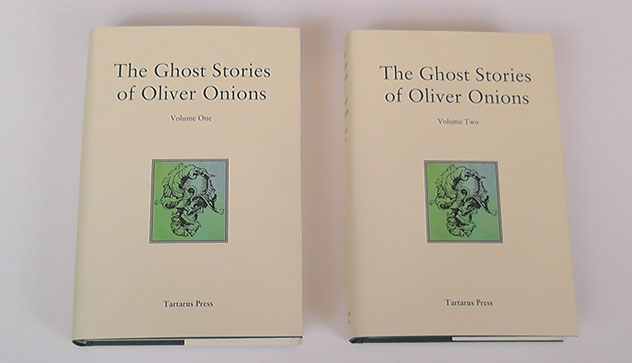
Tartarus Press has just released a new two-volume edition of their The Ghost Stories of Oliver Onions


I have written previously about Onions here.


The new edition features the first publication of the novella "Gambier." No date is provided for the story, but in her introduction editor Rosalie Parker says it is an early work. 


Parker goes on to say that "Gambier" will "be of interest to enthusiasts of Folk Horror." It certainly has elements that Folk Horror has gone back to claim: an isolated rural setting; old ways that are peculiarly maintained.


"Gambier" is the first person narrative of a new-minted country doctor, John Wilson. It begins:


Few, even, of my friends, have looked on me as a man whose nerves are lightly set a-start; and for this, I fancy, I have to thank a certain heaviness and immobility of countenance, together with a bigness of frame, not generally associated with high-strung natures. And, indeed, my training as a doctor of medicine has ridded of all terrors for me such things as deathbeds, wounds, and the like, regarded by most folks as dreadful. Nevertheless, I confess here that this big, bragging body of mine holds a spirit sometimes bold (I hope), but sometimes timorous as a child's. And in particular, I have always been extremely sensitive to that kind of Spirit of a Place, be it gay or gloomy, which has its commonest manifestation in the desire folks have to cast themselves from heights, as if an imp within them urged them to their end.

     The most remarkable instance of this sensitiveness that I can remember happened to me in the year 1778. I am able to give the month, from the fact that I was at the time hastening, fresh from college, to take up my first practice, that of my friend James Rewell, who had lately died; and it would be the first or second week in September. As the incident is all of a piece with my story, I will begin at that point.


Wilson finds that the village of Wastley is ruled by Father Gambier, and that the area was untouched by the Reformation and Cromwell's rule. 


"Gambier" presents the struggle between Wilson and a few local allies against Gambier's personal dictatorship. It is a no-quarter-given battle between the two men: a battle of wits and brute force with plenty of shocking and bloody violence. I have only read Onions' supernatural fiction, and "Gambier" has an eloquently ferocious tone that the reader of stories like "The Beckoning Fair One" and "The Cigarette Case" will be completely unprepared for.


*     *     *


In her introduction to the new edition, Rosalie Parker writes:


Selecting the stories for this volume has been a positive joy. We have been able to adopt a policy of inclusivity wherever possible, but, in order to maintain the quality of the collection, four stories which might have been included have been omitted. These are 'The Master of the House', a mystery novella included in the original Collected Ghost Stories of 1935, 'Two Trifles' ('The Mortal' and 'The Ether Hogs') and the recently rediscovered 'Tragic Casements'.


(The missing stories are available in The Dead of Night: The Ghost Stories of Oliver Onions [Wordsworth, 2010].)


The omission of "Tragic Casements" is a serious mistake. While the story does not have the scope or aesthetic authority of earlier Onions tales, it is an accomplished story of supernatural horror, well-organized and finely executed. On these strengths, and as a rarity, it deserves inclusion in any Onions collection that hopes to present the scope  of the author's career. (Especially when the collection has two volumes of space to work with.)


Jay

20 June 2021


Friday, April 2, 2021

On "The Picture" by Rosalie Parker

"The Picture" by Rosalie Parker

Supernatural Tales 15 

Summer 2009


"The Picture" by Rosalie Parker is told deftly and finishes too soon.


It is a haunted picture story. Or perhaps a possessed picture (pencil sketch) story?


....In it, a dark-haired, curiously androgynous figure, half-draped in a voluminous white garment, gazed adoringly, imploringly, in profile at some unseen entity above. His slender, long-fingered hands (Sadie decided it was a he, despite the shoulder length hair) were clasped together over his chest. She thought it was mid-Victorian, probably Continental, possibly French, and of a very high standard of draughtsmanship.


Protagonist Sadie spends her life scouring junk shops and flea markets for items of at best marginal value, pieces that might be mistaken for treasures by internet auction bettors.


Not all online responses are constructive, however.


....She found that she had three messages asking questions about items; two of them concerned the picture. The first was more of an essay than a question.

     From carazon

       You say that he is in adoration of an unseen loved one but are you quite sure this is a romantic picture? I'd say we have here a religious subject, one of the saints, or Judas, perhaps, repenting. Anyway a very fine picture but not for me. I'd rather keep religious emotionalism out of my home! And anyway, he's a bit creepy. No restraint at all!

     The second was downright peculiar.

     From fallen angel

       This is a warning. You are meddling with something you do not understand. The picture must be returned from whence it came, otherwise you will be held responsible. It should not be displayed. HEED THIS WARNING OR SUFFER THE CONSEQUENCES.

     Sadie let out a little laugh. She had learnt that there were many strange people populating the internet. There were no bids on the picture yet but some of her other items were doing very well, in particular a silver gilt, enamelled matchbox cover by David Anderson of Norway that she had found at a car boot sale and which was currently yielding £110. 


Once purchased by Sadie, the picture seems to power a turnaround in 

business. Several valuable pieces are discovered, and then a Fabergé egg. However, once the picture is sold and shipped, the good fortune slips away.


At Christie's:


The valuer took his lens away from his eye and looked curiously at Sadie. 

       'You do know what this is?' he asked.

       'Yes, I think so,' said Sadie. 'My grandmother left it to me, but I need some cash so I thought I would sell it.'

       'Well, it's Fabergé, obviously, but perhaps you don't know that its one of a group of three ornaments called, colloquially, The Holy Trinity. There are two more, one in the Hermitage in St Petersburg and the other in a private collection in Russia. This one has been missing for about eighty-five years – it was brought out of Russia by a White Russian family who emigrated to London after the Revolution of 1917. It disappeared from their house in mysterious circumstances in 1923. This is the main piece, the central ornament, designed to be flanked by the other two. If this was an ordinary piece of Faberge then I'd say it was worth around £4,000, but as its from The Holy Trinity, it is literally priceless.'

       Sadie could hardly keep a lid on her excitement. He looked at her over his spectacles and continued.

       'However, I think we'd have to ask some serious questions about its provenance. Where did your grandmother, for instance, get it from? It was probably stolen from the Pretovskis, so can we really say that it belongs to you? We'd have to weigh up these matters very carefully before proceeding with any sale.'

       Sadie grabbed the ornament and bolted.


The man who purchased the picture from her has his own complaint to make.


David Swinton returned the picture.

       He emailed to ask for his money back and wrote that, although he loved it, and had hung it in his bedroom, some odd things had been happening to him since he bought it. He had had two days of good luck – he had been given a longed for promotion, a premium bond had come up, some medical test results turned out to be negative - but then, things had begun to go wrong. 

       His wife had taken against the picture, claiming that it was mawkish and unsettling, and had made him take it down. The promotion turned out to be a poisoned chalice, he was expected to work unreasonably long hours and his new boss was a Gorgon.

       The doctor had called him in for some more tests, and the premium bond money was soon eaten up in paying off a couple of loans his wife had taken out without telling him. What's more, every time he looked at the picture he seemed to see something different, and he had become tormented by not knowing what it was the subject was contemplating with such ecstasy. 

       He was sorry, and could only apologise, but he really couldn't live with it any more.


All of which builds to a swift and poignant climax. 


Sadie is not presented as any more immoral than other side-gig parasites hunting for their niche; she is not lying to her bidders, just facilitating their own habits of self-deception. Ultimately the picture and the story it tells brings this home to her, sharp like teeth closing on meat.


Jay

2 April 2021