Subscribe to my Substack

Showing posts with label Robert Westall. Show all posts

Monday, May 17, 2021

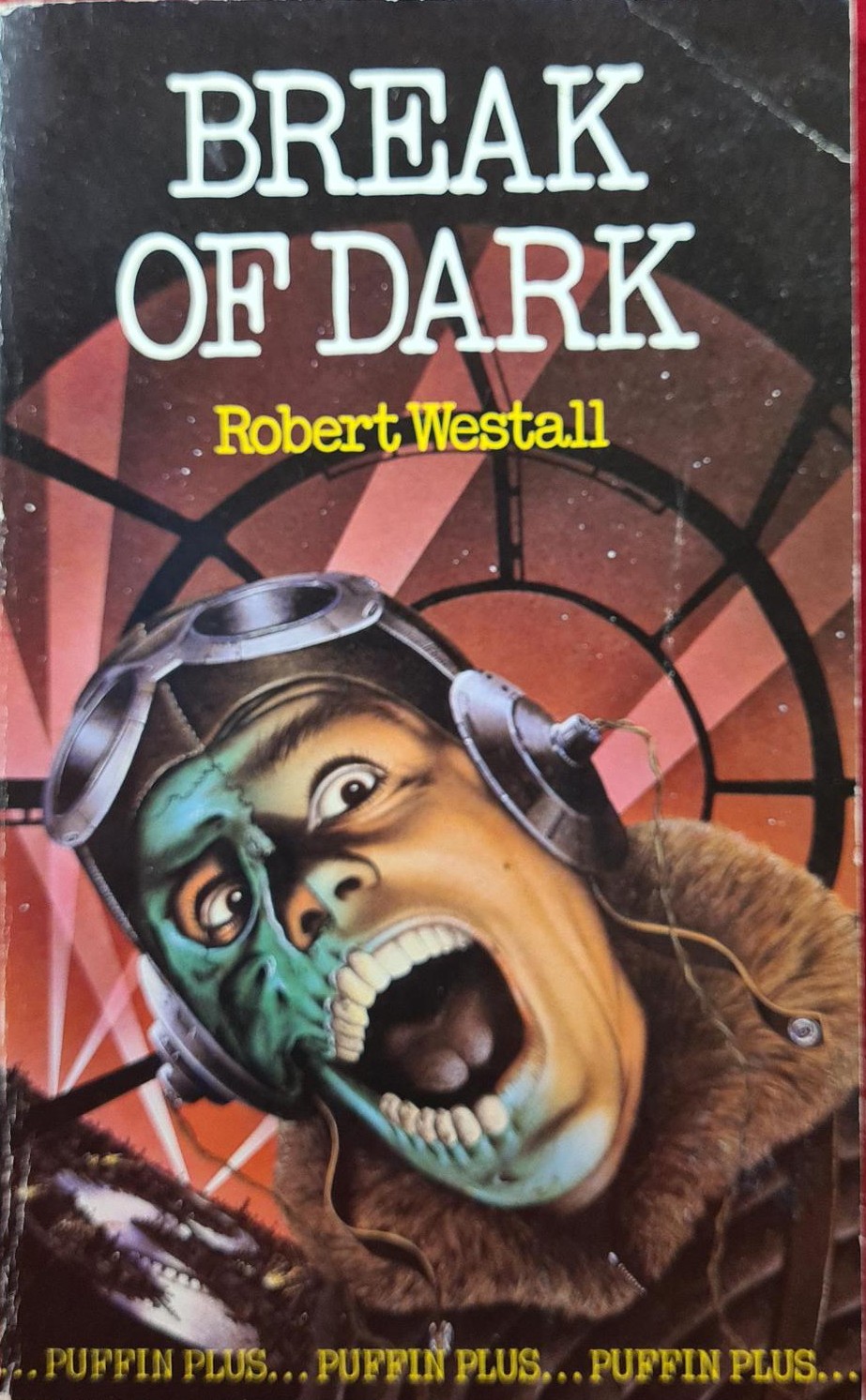
Break of Dark by Robert Westall (1982)

I have not read any of Robert Westall's non-supernatural fiction, so my judgments are based solely on enjoying the collections Antique Dust (1989), Spectral Shadows (2016), The Stones of Muncaster Cathedral (1991), and now Break of Dark (1982).


At his best, Westall is a superb writer. A novel like The Wheatstone Pond (1993) is unmatched in richness in an era known for excellent and unique UK voices: Bernard Taylor and John Blackburn, among others. Westall has a real strength in conveying uncanny locations, whether urban or rural. "Yaxley's Cat" (1991), for instance, is a strong evocation of rural wrongness and hidden crime; Westall's sure hand at pace and structure makes it a pleasure for the reader to assemble his puzzle. That he does it in under a hundred pages is stunning.


First person narrators are another strength of Westall's craft. Jeff Morgan, the worldly, successful antique dealer of The Wheatstone Pond (1993), completely sane and cosmopolitan at the start, slowly finds himself degenerating into a half-maddened vigilante as the pond reveals its horrors. 


I would hesitate to term all the tales in Break of Dark (1982) supernatural stories. Weird, yes. Uncanny, definitely.


"Hitch-hiker" is one of the strangest and most entertaining. It suggests fey or faerie glamour: the seductive authority of (seemingly) easy money. Certainly it is a droll story of euphoria, then tears, flowing from answered prayers. In the last few pages Westall escalates from the frustration of granted wishes to true nightmare. 


"Blackham's Wimpey" is a refreshingly hardboiled story about a haunted Wellington bomber. It's initial crew cheered and revelled at the fiery death of a German night-fighter pilot they shot down; the new crew must live through the aftermath of that earlier mission, and of the ever-increasing consequences of wartime bloodlust. Westall's treatment of this material is free of pacifist deck-stacking of petty-bourgeois moralizers when they handle similar material.


Domestic melodrama enriches the supernatural elements in "Fred, Alice and Aunty Lou." It is a story of mind-over-matter and the power of suggestion. It is also a story of insidious menace. That it starts as a practical joke just makes it worse.


     They dined at Mission Control the day after Boxing Day. Angela spent a frantic first half-hour, Martini in hand, admiring and surreptitiously looking inside all Roger's three hundred Christmas cards. Certainly, she thought, the atmosphere seemed cordial enough. Peter couldn't have done anything too dreadful.

     'Your card was most unusual,' called Biddy, head round the kitchen door.

     Angela broke out in a cold sweat and slopped Martini down a swollen green-and-purple version of the Three Wise Men that made them look like week-old corpses. Biddy hurried across, wiping floury hands on her apron, and held up a positively huge Rembrandt card.

     'It was sweet of Peter; it must have cost the earth – we're thinking of having it framed after Christmas.'

     Even Roger beamed. Peter said:

     'Trying to educate the New Illiterate. It'll be some years before the mini-chip gets round to Rembrandt.'

     'Oh, yes, some years,' said Roger, almost jovially. Full of Christmas spirit. A happy moment, everybody smiling, like the cover of a glossy gift catalogue.

     Then Roger's smooth white brow creased in a frown. 'Not like the other thing,' he said. He took a deep gulp of Martini. 'Show them, Biddy.'

     Biddy searched carefully among the back ranks of cards for something small and hidden. 'I didn't like not to put it up at all. I mean, whoever they are, they meant well. And it is Christmas . . .' She fished it up and held it out to Angela.

     It was a horrid little card, a mean little card. The cheapest and nastiest little card Angela had ever seen. Holly, robins and bells, and even carol-singers, all crammed into a three-inch square, smudgily printed in viciously dull shades of black and green.

     'Look inside,' said Roger, with thin disgust in his voice. Angela looked. It said:

     From Fred, Alice and Aunty Lou

     'Well?' asked Angela.

     'We don't know any Fred, Alice or Aunty Lou,' said Biddy. 'And look what else they've written.'

     Angela looked.

     Ever so nice to see you at Blackpool this summer. Will call between Christmas and New Year.

     'We've never been to Blackpool in our lives,' screeched Roger. Well, it was nearly a screech anyway.

     'Perhaps it came to the wrong house,' said Angela. 'Perhaps it wasn't meant for you, and you opened it by mistake.'

     'I thought of that,' said Roger. 'No way. I looked through the dustbin till I found the envelope. It was addressed to us all right.'

     'It was right at the bottom of the bin. He was out there till after midnight, looking. By torchlight. I went to bed in the end and left him to it. Then he brings this stinking little envelope up to the bedroom and drops tea leaves all over the white bedspread. Acting like he'd found the crown jewels . . .'

     'Must have been good exercise for you, old man,' said Peter. 'Keep you in shape.'

     Angela silenced him with a look. But Roger did not even seem to have noticed the jibe. He blundered on.

     'But who are they? Who are they?'

     Peter took the card from Angela, and assumed a heavily judicious air.

     'Well, speaking as a non-computer, a mere scribbler, I would say they are definitely not our sort of people.'

     Roger flinched. Peter continued.

     'Definitely your workers, these. About fifty years old, I'd say; Fred and Alice, that is. I can almost see them. Fred in a cardigan, unbuttoned to let his paunch hang out. Shirt done up, but no tie. Balding, and so many wrinkles on his forehead, he could screw his hat on. Fond of his pint. Laughs at his own jokes. Alice . . . Alice is a bit more difficult. Tight-permed, blue-rinsed hair. Blue fly-away spectacles. Big handbag full of snaps of Darren and Tracy and the other grandchildren. As for Aunty Lou . . . thick, grey, lisle stockings and a smell . . .'

     Angela could have screamed. That was exactly as she had seen them too. Was Peter a magician? Or was she just used to living with him, knowing the way his mind worked? He was certainly having a terrible effect on Roger; Roger had turned quite green around the gills. But why; why was he reacting so strongly? Then she had a vision. Roger and Biddy with their parties between Christmas and New Year, almost perpetual parties . . . bosses, colleagues – smart parties. And then a ring on the bell and . . . in walk Fred, Alice and Aunty Lou. Instant disaster.

     Only it wasn't going to happen. Because Fred, Alice and Aunty Lou were inside her own husband's head. This was the second card he'd sent. She opened her mouth to spill the beans. Then she looked at Peter. And he firmly shook his head at her, with a look that froze up her mouth.

     'If they come near here,' said Roger desperately, 'I'll call the police.'

     'Oh, darling, you can't,' wailed Biddy. 'It's Christmas . . .'

     She didn't tackle him about it until they were drinking their Horlicks. He was sitting in the bedroom chair, wearing a large-checked dressing gown that he must have had since he was fourteen; both the tassels of the cord had unravelled, and one elbow was paling into a hole. She had twice bought him nice new dressing gowns; he had never worn either. But he looked reassuringly harmless in this one; still a fourteen-year-old, wearing a false beard for a joke. Or like an amiable dancing bear.

     She decided on the casual approach. 'That Christmas card. What a scream. Roger's face! I could have died. How did you fake the writing?'

     It had been a mean, crabbed script, totally unlike Peter's wild, generous hand.

     He looked at her; she couldn't read the expression in his eyes.

     'I didn't fake any writing.'

     'You got someone to write it for you. Go on, admit it. That was the second card you sent them.'

     He took a deep swig of Horlicks, and stroked the brindled cat on his knee. The brindle pushed her cheek against his face enthusiastically; all the cats adored him; queued up, had fights to sit on his knee.

     He looked at her. 'Drop it, Angel. It's got nothing to do with you.'

     She still felt absolutely safe with him, because she knew he loved her. But it suddenly struck her that he did not love everybody. That perhaps not everybody was as safe as she was . . .

     The second card came in the middle of January. From Blackpool. It said:

     Just having a few days winter break. Weather is quite bracing. Wish you were here. Will call soon.

     Love,

         Fred, Alice and Aunty Lou

     The front was a picture of Blackpool Prom., with a row of hotels. One window of one of the hotels was marked with an X in blue biro.

     'You could check on that,' suggested Peter.

     'I did,' said Roger. 'I phoned. They were registered. Mr and Mrs F. Brown. And a Mrs Louise Brown, booked into an adjoining room. I drove up there – and I wish I hadn't. I saw the register; the hotel staff thought I was barmy. It was the same handwriting – I took a photocopy for the police. The address they gave was 26 Brannen Street, Flamborough.'

     'And?' asked Peter.

     'The whole of Brannen Street is derelict – empty. They're demolishing it next week to build a factory for the Japs.'

     'Didn't you make enquiries?'

     'No one to ask.'

     'Get any description from the hotel staff?'

     'It was one of those cheap, pensioner block-bookings. They couldn't remember a thing.'

     'So you wished you hadn't gone,' Peter said gently.

     'Oh, that's not why I wished I hadn't gone,' replied Roger grimly. 'On the way home down the motorway, a bloody juggernaut crossed the central reservation and came straight at me. I shouldn't be alive. The Jag's a write-off.'

     There was a long pause, then, before Biddy asked Peter how the latest book was going.

     Angela and Biddy were sitting in the kitchen of Mission Control having coffee. It dawned on Angela after half an hour that, every so often, Biddy was giving a surreptitious sniff.

     'Got a cold coming?' asked Angela sympathetically. Biddy did look rather under the weather.

     'No, why?' asked Biddy with a manufactured burst of brightness.

     'You keep sniffing.'

     'There seems to be a smell,' said Biddy. 'Can you smell anything?'

     Angela sniffed in turn. The idea of any smell in Mission Control was almost sacrilege. There were things for dealing with smoke and fumes (in their little white containers like knights' helmets), not just in the kitchen and loo, but in every room. Angela had noticed that since her marriage, Biddy too had gone completely odourless, like water with the faintest hint of pine. Now, in the deodorized bleakness of Mission Control, there was a faint odour, obvious as a distant lighthouse at sea on a dark night.

     'Yes, I can smell something,' said Angela.

     'I've changed all the air-fresheners twice this week,' said Biddy fretfully. 'But they don't seem to be working. I couldn't get Roger to bed until two o'clock this morning. He kept wandering round and round, snatching open doors and looking under cushions over and over again, like a mad thing. Threatening to call the police.'

     'Why, for heaven's sake?'

     Biddy shrugged despairingly. 'That smell you can smell – what's it a smell of?'

     Angela drew in deeply through her finely-flaring nostrils. Finally she said, 'An old lady. Mints and . . . and . . .'

     Biddy nodded grimly.

     'But surely you've had old people here?' The Jungle saw a fair number of elderly relatives from time to time, including Peter's father, who smoked a pipe that smelled like the corporation incinerator.

     'Never a one,' said Biddy. 'We go to them – when we have to – twice a year. I miss my gran a lot. Roger can't stand old people.'

     'Oh.' Angela sniffed again. She was rather proud of her sense of smell. She got up and moved around the room.

     'Not you as well,' protested Biddy, weakly. But Angela was hot on the scent, keen as a schoolgirl with a new game.

     'It seems to be coming more from the lounge.' 


Pity the privileged life of a vicar. Until he crosses paths with an uncanny mystery. "St Austin Friars'' is parish horror, the young vicar slowly uncovering something unimaginable. 


     The meal was good, though a little strange and spicy. So was the wine. The daughter – no, the granddaughter – whose name was Celicia, moved about serving it as silently as a cat on the thick, red carpet. The rest of the time, from the side, she watched Martin as he talked. Or rather, listened.

     Mr Drogo talked. In between eating with the most exquisite manners, he talked about Muncaster; he talked about St Austin's, right back to the time of the Augustinian canons. He talked with the authority of a historian. Martin was fascinated, the way he showed one thing growing out of another. He made it sound as if he'd lived right through it. Martin stopped trembling eventually. But if he listened to the grandfather, he secretly watched the girl. The girl watched him, too, a slight smile playing about the corners of her mouth.

     'About that phone call.' Martin's voice, almost a shout, broke through the smooth flow of Mr Drogo's talk. 'Was I meant to come and tell you?'

     'Yes, you were meant to come and tell me.' Mr Drogo pulled a grape from a bunch that lay on a dish near him and popped it into his mouth with evident enjoyment.

     'But . . . why?'

     'I am going to die – on March 26th.' He helped himself, unhurriedly, to another grape.

     'Oh, I see. The doctor's told you. I'm so sorry.' Then reality broke in like a blizzard. 'But . . . but he can't have told you the exact date!'

     'I chose the date.' Mr Drogo extracted a grape pip from the back of his excellent teeth, with the delicacy of a cat. He looked as healthy as any man Martin had ever seen.

     'But what—'

     'Do you know how old I am?' asked Mr Drogo. He might have been asking the right time. 'I am one hundred and ninety-two years old, on March 26th. I thought that made it rather neat.'

     Martin stared wildly at the girl, as if assessing how much help she would be against this madman.

     'And I am eighty-four next birthday,' said the girl. She smiled, showing all her perfect white teeth. Martin noticed that the canines were slightly, very slightly, longer than usual. But not more than many people's were . . .

     Martin leapt to his feet, knocking over his chair behind him with a thud. 'I came here in good faith,' he cried. 'I didn't come here to be made a fool of!'

     'We are not making a fool of you. Have you got your birth certificate, my dear?'

     The girl disappeared into the hall, returning moments later with the certificate in her hand. She passed it across to Martin. Even now, in his rage and fear, her perfume was soothing . . . Hands trembling again, he unfolded the paper roughly, tearing it along one fold. It was old and frail and yellow.

     Celicia Margaret Drogo. Born July 8th, 1887, To William Canzo Drogo and Margaret Drogo, formerly Betyl.

     'Do you want to see her parents' marriage certificate?' asked Mr Drogo gently. 'I want your mind to be absolutely satisfied.'

     'I'd like my coat,' shouted Martin, only half hoping he would be given it.

     'As you wish,' said Mr Drogo. 'But,' he added, 'it would be easier for you if you went with my granddaughter now. She could make everything perfectly clear to you. She helped Canon Maitland to see things clearly. We gave Canon Maitland a very contented life for many years. He was almost one of us.'

     'Get lost!' shouted Martin, most regrettably. 'All I want from you is my coat!'

     They did not try to stop him. Celicia came with him, but only to help him on with his coat. Her fingers were still gentle, pleading, on the nape of his neck. Then he was outside and running for the car. He drove out of the drive like a lunatic, narrowly avoiding a collision with a Rover that hooted at him angrily until it turned a corner. He made himself pull up, then, and sit still till he had calmed down. Then he drove home shakily and painfully slowly. Sheila was just standing on the doorstep, pulling on her gloves before going to the pictures; she had a distaste for being in the rectory on her own at night and went to watch whatever film was on, however stupid.


"Sergeant Nice '' recounts events whose cause and source can only be unknowable, redolent of the Fortean. The sergeant of the title is pushed to extremes of action when he confirms the weird experiences effecting holiday-makers at the local beach.


     At five o'clock the next afternoon, young Thomas shouted and waved from his shop when Sergeant Nice was still the other side of Front Street. He was positively jumping up and down, like a chimpanzee before a tea party, causing passing holiday-makers to give him odd looks and his shop a wide berth.

     He seized Sergeant Nice by his neatly starched shirt. The sergeant removed the sweaty hands with some distaste.

     'C'mon, c'mon – I've got my projector set up in the back room – it's incredible – incredible. You won't believe it!'

     From the look on Mrs Thomas's face, the chimp act had been going on for some time, and she obviously laid all the blame at the sergeant's door. Ignoring her ominous silence, Thomas bustled the sergeant into the back room, which was so dark that the sergeant walked straight into the projector, almost sending it crashing to the floor, and practically had to grope and crawl to a seat.

     'All set!' yodelled Thomas. 'All set? Columbia Pictures present . . . the greatest mystery of all time . . . fit to stand with the sea drama of the Mary Celeste . . .'

     The projector began to whirr. A perfectly focused picture of the clocktower bloomed on the screen, after the flashed sequence of numbers. It really couldn't have been clearer. There were the motorbikes; there were the bikers. The scene brightened momentarily, before the electronic exposure meter adjusted. A bright white glow coming from the right, lighting up the right-hand side of the bikers' faces.

     'That's the street light exploding,' said young Thomas, needlessly.

     The bikers' faces turned towards the light; looks of glee appeared on them. The bikers as a man ran off to the right and out of the picture. Other passers-by remained, motionless, looking at the invisible shower of sparks that lit up their faces. Nobody looking anywhere near the horse trough. Except the camera . . . Now for it! Now for a picture of the thief, good enough to give to every policeman in Oldcastle.

     Nobody. Nobody. Nobody went near the horse trough.

     The light from the right faded. The bikers began to drift back towards their bikes. One looked into the trough, saw his helmet was missing, began to gesticulate . . .

     The reel of film ran out and the screen went blank, then dark.

     'Run it through again,' said Sergeant Nice, letting out a long-held breath.

     'I didn't spot it the first time either,' said young Thomas, smugly.

     This time the sergeant watched the piled helmets in the horse trough. Their bulbous, shiny tops were quite visible over the rim. He ignored the departing figures of the bikers, kept his eyes so fixed on the helmets that he did not even blink.

     'Stop!' said the sergeant. 'Run it back a bit. Now on again. Good God, I don't believe it! Run it through again.'

     They ran it through ten times in all, while the sergeant chain-smoked four of the five cigarettes he allowed himself a day. Finally he said, and he was glad the room was in darkness,

     'The helmets don't just vanish . . . they sink. Through the bottom of the trough . . .'

     'Yeah,' said Thomas, breathily. 'They just sink. Did you see one of them suddenly roll clear of the rest?'

     'Yes.'

     'I've got it all worked out,' said Thomas, triumphantly. 'I've had time to think about it. That horse trough's a fake; it's got a false bottom. Did you know, there's an old manhole cover under there? I worked it out from the pattern of cobbles in the road. What a way to nick things! Everybody puts their bags in that trough. Distract people's attention, work the trap door and, bingo, you've got a new Japanese camera. Crafty sods, lurking down a manhole cover.'

     'Let's go and have a look,' said Sergeant Nice, heavily. He knew there was something wrong with the whole theory.

     They walked across and stared down into the sunlit depths of the horse trough. A woman was sitting on the far edge of the trough, with her bag inside, among the crisp bags and lolly-sticks. Sergeant Nice asked her to move it and herself; and for once he wasn't nice about it. He cleaned out the litter thoughtfully, as if he were recovering the Crown Jewels.

     There was no crack or slit anywhere in the horse trough. Like most of its kind, it had been carved from one massive block of limestone. Sergeant Nice went over every inch of its surface, scraping away with his massive, many-bladed Swiss pocket-knife.

     Nothing.

     'That's mad!' exploded Thomas. 'There's got to be a trap door. We'll have to look from underneath – down the sewer.' People began to stare at him curiously. Sergeant Nice hauled him away by brute force, just in time.


Jay

17 May 2021


Monday, May 10, 2021

The Stones of Muncaster Cathedral: Two Stories of the Supernatural by Robert Westall

This week I have continued reading Robert Westall with The Stones of Muncaster Cathedral: Two Stories of the Supernatural (Valancourt Books, 2015).


"The Stones of Muncaster Cathedral" (1991) is a magnificently ambitious novella about steeplejack Joe Clarke confronting the rotten stones of Muncaster Cathedral's notorious South-west tower.


Westall excels at rich depictions of work where men of skill get their hands dirty. As Joe and his assistant begin their work on the tower, evidence of its wrongness accumulates. Reverend Morris, the vicar, begins researching its past: recurring waves of noisomeness and tragedy every twenty years when the stonework has to be redone. The tower also acts as a beacon, attracting two young local boys to their deaths.


Joe, the vicar, and Inspector Allardyce form an ad hoc alliance to deal with the tower's increasingly destructive evil.


....The spiral stair had little landings on it, every complete twist through three hundred and sixty degrees. And on the landing, under the lancet window that lit the stairs by day, was a stone ledge jutting out of the wall. And I began thinking of that word cella that had been in the Latin writings the Reverend Morris had translated. Those cellas must've been left where the masons could reach them easy; why not on the spiral stair?

     'Hang on,' I said, and inspected the next ledge thoroughly.

     The top was a stone slab; and on the slab was a mason's mark; several mason's marks, and none of them known to me; they had a foreign look.

     'Something?' asked Hughie. His voice seemed to echo away up the stone spiral. Something, something, something, something, coming back off every turn of the wall.

     'Maybe,' I said, and got as good a swing on the hammer as I could, in that confined space, and hit the jutting-out corner of the ledge.

     Sparks flew; the slab broke free from the surrounding stonework and moved out a couple of inches, leaving a wedge of darkness below. And out of that wedge of dark came a stink, the like of which I'd never smelt in my life.

     'Dead rat?' gasped Morris, gagging on his own breath.

     'Dead rat nothing,' I said, reversing the sledgehammer and using the handle as a lever to widen the crack of darkness.

     Then we shone a torch down; down a deep narrow slot about ten inches wide.

     Something shone in the light of the torch. Something round and white like an oversized billiard-ball, only with strands coming out of dark holes, strands of shining grey that seemed to grow into the stonework. Like a spider's web, but with much thicker strands. More like the roots of some plant. But the round billiard-ball thing . . .

     'A . . . skull,' said Hughie Allardyce. 'A little . . . child's . . . skull.' And hardened policeman that he was, he turned away and threw up, down the spiral stair. You could hear the spew splashing away, down below.

     But I looked further. There was more than a skull; there was a whole tiny skeleton wedged down into the narrow slot, still sitting with its knees forced up near its head, and its arms folded in between. And down below, the grey shining strands grew thicker and thicker through the bones, tying the tiny form to the stone.

     'The miracles of Jacopo of Milan,' said Morris in a very small voice.

     'Aye,' I said. 'The Abbot got what he wanted. At a price. No wonder they smashed his face out of that stained-glass window.'

     'He could never have known . . .'

     'He never even bothered to find out. He got his tower. That was enough for him.'

     'I can't believe . . .'

     'Oh, c'mon,' I said. 'Any cathedral was built on the deaths of children. Where d'you think the money came from? How else could they afford to build, in a country where half the people nigh starved to death every winter? The money came from the workers, and the workers' children starved. Every stone must be a death, nearly. To the glory of God. This Jacopo just had a new recipe, that was all.'

     But he wasn't listening any more. His face, in the torchlight, was an agony of pity. 'This child . . . can't have been more than eight or nine.'

     'Maybe older. You stay small, when you're starving . . .'

     'This . . . stuff . . . growing on it. It's like a plant. Is it dry rot?'

     'No, it's not dry rot. I've seen dry rot at its worst. It's never like this. I reckon it's taking the goodness out of the child, feeding it into . . . the stone. All these years . . .'

     His hand reached down into that dreadful space. I think he had some thought of rescuing the tiny frail bones. Something . . . the very look of the strands warned me.

     'Don't touch it!'

     But it was too late. He was trying to pull the thick strand from the tiny knees.

     The next second, he screamed.

     I grabbed his shoulders and pulled him back. His shoulders were as rigid as a board. The strand tore, and came away with his hand. The torn piece writhed, as if it was trying to dig into his flesh. There was blood on his hand, then red raw flesh, then a glint of white bone, as he held it up before his face. Then the piece of broken strand writhed once more, then curled up rigid and fell back into the slot where the child lay.

     'God,' said Hughie, 'half the flesh of his hand is gone.'

     'Get him out, quick! Get an ambulance! He could lose that hand. Go on, get moving,' I shouted.

     'What about you?'

     'I'll be all right,' I shouted. 'I know now. I know!'

     He gave me a white-faced look, and led the stumbling Reverend Morris back down the spiral stair.

     I listened to their retreating footsteps, until there was silence. Then I went on up that stair, by the light of my solitary torch, with my sledge-hammer in my other hand.

     'All right, mate,' I said to the walls. 'Don't you worry. I'm coming, I'm coming. I'm coming as quick as I can, you bastard.'


"The Stones of Muncaster Cathedral" is a peerless third-person supernatural thriller. It is completely modern in its milieu, but strongly evokes a heritage of evil in a way reminiscent of novels like John Blackburn's Bury Him Darkly (1969). 


***


"Brangwyn Gardens" (1991) begins with a young art student moving into an all-but empty rooming house in 1955. He finds the diary of a previous renter who lived there in 1940. The diary seduces him, and he begins to suspect the house is haunted by her spirit, and by the voices and sounds of 1940.


He was sitting in a daze on his bed, holding the diary, when he remembered he had seen something about 'A Nightingale Sang in Berkeley Square' in it. Not in a part he'd read properly. He'd just noted it in passing, because she had put it inside double inverted commas, instead of single inverted commas, which was the correct thing to do. While he was skimming through, the first time he'd opened the diary, he'd noticed it. He'd sneered a bit, and passed on.

     Now he searched for it desperately, so that he was a long time in finding it. But he found it in the end.

     'February 11th. Last week, I got a record of "A Nightingale Sang in Berkeley Square". Sung by Judy Campbell. From the West End show New Faces. It is all the rage at the moment, so with the shortages and all, I was very lucky to get it. I took it home and played it and played it. I'm afraid I wept, because it reminded me of London in happier times. Well, if I'm to be honest, not just that. It is so romantic. I thought it would make me think of poor Ben, out in Egypt. But it didn't. It made me want some other man, whose face I can't even see – a man who lives only in my mind, a man who will sweep me off my feet like poor Ben never did. A dark, secret man, with whom I will do dark, secret things. I sometimes think I am going crazy. But it is just the War. London is full of men, and, in the black-out, dark, secret things going on in dark, secret places. All the husbands and wives apart and alone; it is as if some Great Being has shuffled the pack of cards all over again, and the game can be won by anyone who dares to play it. But I don't dare to play it. The worst poor little innocent me can do is to change into my virginal nightdress and play my record over and over again and wish. While that mood is on me, I seem to go out of time altogether. Well, not tonight. Tonight I will drink cocoa, and go to bed early and sleep sound.'

     It was lying in bed that night that the whole thing seemed to become clear to him; on the very verge of sleep. As things so often do.

     She was still in the house.

     She had never found her lover.

     She was calling to him.

     But she was like a bird, timid, shy.

     And yet she wanted him so much.


"Brangwyn Gardens" is a spare and intimate story. In its early pages the ethereal atmosphere recalls "The Beckoning Fair One." The final revelation and climax is breathtaking.


Jay

10 May 2021


Sunday, May 9, 2021

Three supernatural masterpieces by Robert Westall

Spectral Shadows by Robert Westall (2016, Valancourt Books)


"Blackham's Wimpey" is a carefully earned imagining of Wellington bomber crews terror-bombing German cities in the early 1940s. It has a large cast of characters and a grimly serious topos, though not one cribbed from films like "12 O'clock High" or "One of Our Aircraft is Missing." It is free of preachy why-we-fight propaganda and woke all-war-is-pointless beats out of "Blackadder" and the fiction of Michael Morpurgo. Westall excels with a circumspect use of first-person narration here, and a superior sling-shot ending that safely skirts the temptation to bathos.


     Yes, we get a lot of time to think, in Coastal. Think about the old squadron; all new faces by now, nobody left who remembers the end of Dieter Gehlen. Think about all the English ex-­schoolgirls filling bombs till their backs ache, all the German schoolgirls making shells. Think about the guts of German mothers in Hamburg, sheltering their kids with their own bodies from the fire-­typhoon we started. Think about the craftsmen's skill in a Rolls-­Royce Merlin, and a German medieval cathedral. All those people with all that guts, and our top brass are just turning them all into one great big rubbish tip that's slowly covering Europe. While we watch seagulls.

     I sometimes think, towards the end of a thirteen-­hour flight, that we died after all, that we're in some kind of peaceful grey Valhalla where good little aircrews go. But where are the rest? Blackham and Reaper and Edwards? And Dieter Gehlen?


***


"The Wheatstone Pond" is a richly layered masterpiece of supernatural horror.


Jeff Morgan, local antiques dealer in the the London suburb of Wheatstone, is witness to, and then participant in, attempts to salvage lost toy boats from a pond when the local council decides to fill it in. The pond has a long history as a site of suicide, violence and other misfortunes.


Morgan is an excellent point of view character: knowing, glib, and cynical as Lovejoy. But "The Wheatstone Pond" is more than just his story; Westall gives us a host of different characters involved in mysteries and tragedies past and present. Only by their action and investigations do the incredible supernatural origins of the trouble come to light.


"The Wheatstone Pond" is a fully-fledged supernatural thriller, wonderfully shaped and executed.


     'Ran Wheeler down to earth, in an old copy of "Strange Stories from the London Evening News". The reference librarian put me on to it. He's a bit into the occult, and seems to have his own little book-­cupboard, for those he favours. And, of course, this being a Wheatstone story, he knew all about it . . .

     'Wheeler was an East Ender, and a no-­good. A rag-­and-bone man, no less, and had several convictions for helping himself to stuff left lying about. Used to work the Wheatstone District, back around nineteen hundred and seven or eight.

     'Anyway, Abbeywalk wasn't built then. There was just a bit of derelict ground, with grand new houses growing up all round it, and a few tumble-­down sheds among the undergrowth. Apparently he rented the sheds to run his rag-­and-bone business from. Caused a hell of a stink among the nouveaux riches around there, but there wasn't much they could do about it.

     'And then, and here's the crazy thing, suddenly he has lots of money to spend. Enough to buy the land he had been renting, and then he suddenly begins to build the present house, about 1911.

     'People apparently hated the new house almost as much as they hated him; but again, in those free enterprise days, there was nothing they could do.

     'Then he starts flinging his money about, trying to get himself popular, trying to buy his way into their society. There was no Mrs Wheeler: said he was a widower; but he flung himself into the social whirl all right. Garden fêtes for charity; wonderful displays of fireworks on Guy Fawkes' Night; inviting people to dinner. But he didn't get very far, wasn't liked. And complaints of strange noises coming from the house late at night, with lights on in the windows until 5 a.m., and the sound of orchestras playing, and yet no one seen coming or going. And a fuss about one or two children vanishing and never being seen again. Nobody important of course . . . little serving-­girls, boot-­boys whose parents were too poor and crushed to make much fuss.

     'And then he joined the Neptune Yacht Club. Damned fool secretary let him join because he lived out of the district himself, and didn't know what Wheeler was like. Apparently it was very grand, the Neptune in those days. Wheeler tried to win the yacht-­sailing races, but was almost too fat to handle the boats he bought; so he failed. Much laughter. Then he turned his hand to steam-­yachts. Won the concours d'élégance, in 1912, by sheer weight of money, and Ross and Makepeace skill . . .

     'There was another move to get rid of him, but it failed. And he vowed to come back the following year, and show such a thing as would not be believed. District all agog, in spite of themselves.

     'And then, one night, he just vanished. With his two sons. Gave the staff – cook and housemaids – an extra evening off and they came in late and tiptoed up to bed so as not to disturb the family. The following morning, the housemaid takes in the early morning tea – no one there, the beds not slept in. After a day going hairless, they brought in the police.

     'No signs of forced entry, no signs of violence. Only one thing missing – the lovely new model steam-­yacht they'd spent the previous three days fiddling with, ever since it came from Ross and Makepeace. It had its own little four-­wheeled cart for conveying it about, and that was found by the shore of the Pond.

     'The Police dragged the Pond of course, for three days, but nothing unusual turned up. They thought the family had done a flit, and contacted Wheeler's solicitor, who was as puzzled as they were. The one thing he knew was that Wheeler had made most of his money speculating on the stock exchange. They waited for the usual things then – creditors to turn up, withdrawals from the bank – nothing. Wheeler didn't owe anybody anything, apart from Ross and Makepeace. He never tried to draw his money out, and there was close to £30,000 in the bank – that's about three million by today's standards.

     'After that – not a sign of them from that day to this. After seven years, the solicitor had them presumed dead, by the court, and that's when Ross and Makepeace must've finally been paid.'

     'Was there any will?' I managed to get out at last.

     'No will – no known relatives, though one or two people tried it on in the East End, and one man went to prison for attempted fraud. All the money went to the government in the end, under the intestacy laws. What do you make of that?'


***


"Yaxley's Cat" is a brilliant novella of city folk spending a week of vacation in the wrong part of rural East Anglia. 


Rose and her young son and daughter rent old Mr. Yaxley's cottage. Old Yaxley disappeared seven years before after a lifetime as local Cunning Man. His cottage is preserved as he left it. There's more than one strange book on hand.


Interactions with local people are fraught, and menace increases with each day. At first it is class resentment, the situation quickly deteriorates.


To say nothing of the cat!


     The church was busy with women in pinafores, and filled with the cheering odours of Brasso and furniture polish. The chatter was not particularly godly, being mainly about the ailments of the elderly and the adultery of the young. The talk stopped as she neared, but the women smiled and bobbed their heads, as if to reassure her that she was not among the topics of conversation. She started to study the bench-­ends, with great concentration, to indicate to the women what her business in their church was. Satisfied, they went back to dusting and chattering.

     She was so lost in the bench-­ends that the male voice startled her. 'Lovely, aren't they? The best in Norfolk, they say . . .' The voice was musical and warm, south Welsh.

     She turned and saw it was a little minister, very proper in clerical grey. Chubby face, and really nice smile. He looked young, with his wavy dark hair; a mere boy, except that he was going bald in front. Somehow she knew there was no danger of his going holy on her. Although she was quite religious herself, she had a horror of ministers who suddenly dragged God into a conversation by the scruff of His neck.

     'You're on holiday.' It was a statement, not a question.

     'Yes.' She smiled back; his smile was really very infectious.

     'We've got a cottage at Wallney . . .'

     'Wallney?' He raised dark smooth eyebrows. 'Some of my ladies do a good bed-­and-­breakfast, but I didn't know anybody down Wallney way . . .' He gave a little frown, though it might have been only a frown of concentration.

     'Miss Yaxley . . .'

     'Oh, Miss Yaxley, yes.' His face cleared. 'My only stalwart in the village of Wallney, I'm afraid to say. Never misses Christmas and Easter. Otherwise, I'm afraid they're a godless lot. If they'd all been like Wallney, I think they'd have broken my heart long since.' His mouth winced slightly, as if at unhappy memories.

     'Why should a whole village be godless?' She felt a surge of sympathy; ministers had an uphill struggle these days.

     'Oh,' he shrugged. 'They've never had their own church, of course. Country people are more loyal to their church than they are to God. The church is where their memories are . . . when I have an appeal for the tower or the organ or the roof, here, far more people give money than ever come to church, even for harvest festival. I think Wallney must always have resented not having its own church . . .' He went on frowning, as if there was more he hadn't said.

     'But it's more than just that?' she coaxed. She liked him; and she was nosy about Wallney.

     'Yes, well.' He made a gesture, as if shoving something away. 'There was . . . Miss Yaxley's brother. A troublesome man. Though of course I was sorry when he died,' he added hastily.

     'An atheist?' She had had bother with militant atheists all her life.

     'No, not an atheist exactly.' He seemed to come to some kind of decision. 'What the old Norfolk people used to call a Cunning Man. Almost the last of them, actually. Thank God. As far as I know, that is. At least we haven't got one in Cley any more. They say, last century, there used to be one or more in every town in East Anglia. Almost like doctors. The National Health Service seems to have finished them off.'

     'What did they do?'

     He shrugged. 'Charmed warts . . . herbal remedies, that sort of thing. People went to them . . .'

     'Father!' An irate female voice was raised from the far end of the nave. 'Will you come and settle something about the altar flowers?'

     'Not the damn flower-­rota again,' muttered the minister savagely under his breath. Then he gave her a bright smile, said, 'So nice to have met you,' and whisked away into the female huddle that, from the sound of its voices, was growing more irate by the minute.

     Rose waited for him to come back. She was remembering the child in Wallney, who had asked her if she was the lady who was staying at the Cunning's house.


Jay

9 May 2021