Subscribe to my Substack

Showing posts with label Joyce Carol Oates. Show all posts

Thursday, November 24, 2022

Three essays from On Writing Horror: A Handbook by The Horror Writers Association (2006) Edited by Mort Castle

When you consider what a slight part the weird plays in our moods, feelings, and lives, you can easily see how basically minor the weird tale must necessarily be. It can be art, since the sense of the uncanny is an authentic human emotion, but it is obviously a narrow and restricted form of art …. 


—H.P. Lovecraft
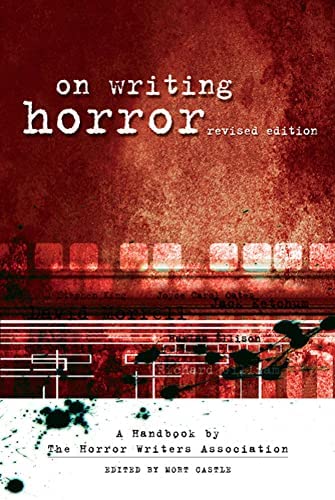


On Writing Horror: A Handbook by The Horror Writers Association 

Edited by Mort Castle

(Writer's Digest Books: 2006, Revised edition)


Like many Writer's Digest publications, On Writing Horror has many contributors who, as fiction writers, amounted to also-rans. Still, there are enough real contributions in the anthology to make the book valuable. My edition seems to straddle pieces from the late 1980s and late 1990s. References to the Meese Commission and Dr. Ruth, I am sure, will quicken the pulse of very few readers today.


The horror field has certainly come a long way in the right direction since On Writing Horror first appeared. It is, I think, a stronger and more varied field. 


Excerpts below are, it seemed to me, worth preserving


*   *   *


The Madness of Art —Joyce Carol Oates (1994)


[....]  In literature, the canonization of "classics" has resulted in the relative demotion of other writers and other kinds of writing; the elevation of "mainstream" and predominantly "realistic" writing has created a false topology in which numerous genres are perceived as inferior to, or at least significantly different from, the mainstream. If Edgar Allan Poe were alive and writing today, he would very likely not be accorded the acclaim given the putative "serious literary writer," but would be taxonomized as a "horror writer." Yet talent, not excluding genius, may flourish in any genre, provided it is not stigmatized by that deadly label "genre."


[....] this so-called genre fascinates me because it is so powerful a vehicle of truth-telling, and because there is no wilder region for the exercise of the pure imagination.


[....]  The Gothic work resembles the tragic in that it is willing to confront mankind's—and nature's—darkest secrets. Its metaphysics is Plato's, and not Aristotle's. There is a profound difference between what appears to be, and what is; and if you believe otherwise, the Gothicist has a surprise for you. The strained, sunny smile of the Enlightenment—"All that is, is holy;" "Man is a rational being"—is confronted by the Gothicist, who, quite frankly, considering the history and prehistory of our species, knows better.


[....]  the homogenization of culture, in which a single vision—democratic, Christian, liberal, "good"—has come to be identified with America generally.


[....]  If there is any problem with the Gothic as an art, it is likely to lie in the quality of execution.


[....]  To Lovecraft, too, "phenomena" rather than "persons" are the logical heroes of stories, one consequence of which is two-dimensional, stereotypical characters about whom it is difficult to care.


[....]  Gothic fiction is the freedom of the imagination, the triumph of the unconscious. Its radical premise is that, out of utterly plausible and psychologically realistic situations, profound and intransigent truths will emerge. And it is entertaining; it is unashamed to be entertaining.


[....]  We write in order not just to be read, but to read—texts not yet written, which only we can bring into being. Is this quest quixotic, perverse, or utterly natural? Normal? Do we have any choice? Henry James, one of our exemplary beings who understood the lure of the grotesque, the skull beneath the smiling face, as well as any writer, has characterized us all in these words: "We work in the dark—we do what we can—we give what we have. Our doubt is our passion, and our passion is our task. The rest is the madness of art."


*   *   *


What You Are Meant to Know: Twenty-One Horror Classics —Robert Weinberg (1996)


[....]  The biggest problem faced by many new writers is not lack of skills.... There is one area of their education that has been sorely neglected. They don't know much about their subject. It's difficult—nearly impossible, actually—to be original if you do not know what else has been written.


[....]  1. Frankenstein by Mary Wollstonecraft Shelley


[....]  2. Dracula by Bram Stoker


[....]  3. The Ghost Pirates by William Hope Hodgson


[....]  The Ghost Pirates.... tells in straightforward, almost journalistic manner how a ship is overwhelmed by ghostly invaders. Hodgson makes no effort to identify the menacing figures—they could be the ghosts of dead pirates or beings from another dimension. All that

counts is their gradual capture of the boat. It is one of the finest examples of the "tightly written" novel ever published.


[....]  4. The Collected Ghost Stories of M.R. James


[....]  5. Burn, Witch, Burn! by A. Merritt


[....]  Merritt wrote several novels that crossed over into the horror field. Of these, Burn, Witch, Burn! was the most successful and important. It deals with an evil crone who turns people into demonic dolls to commit crimes for her. What raises the book above standard pulp fare is that the witch's nemesis is a crime kingpin, a typical gangster of the 1930s, and his band of hoodlums. In an interesting reversal, a lesser evil battles a greater evil as the modern world fights a menace from ancient times....


[....]  6. To Walk the Night by William Sloane


[....]  In the 1930s, genre fiction was not so clearly defined and writers were more willing to bend the rules for the sake of a good story.


[....] Sloane's To Walk the Night....  combines horror, science fiction, and mystery into one of the smoothest presentations ever set on paper.


[....]  7. The Dunwich Horror and Others by H.P. Lovecraft


[....]  Lovecraft had his weaknesses (lack of characterization and dialogue are the worst), but his talent at hinting at the monstrous horrors lurking in the dark corners of our world remains unmatched more than a half century after his death.


[....]  9. Darker Than You Think by Jack Williamson


[....]  remains the definitive werewolf novel.


[....]  10. Conjure Wife by Fritz Leiber


[....]  11. I Am Legend by Richard Matheson


[....]  12. Rosemary's Baby by Ira Levin


[....]  13. Richard Matheson: Collected Stories, Vols. I, II, III


[....]  14. Hell House by Richard Matheson


[....]15. The October Country by Ray Bradbury


[....]  16. Something Wicked This Way Comes by Ray Bradbury


[....]  17. The Exorcist by William Peter Blatty


[....]  18. Falling Angel by William Hjortsberg


[....]  19. Salem's Lot by Stephen King


[....]  20. The Stand by Stephen King


[....]  21. Watchers by Dean Koontz


[....]  Tough, competent heroes and heroines engage in life-or-death struggles with sinister forces—from secret government agencies to science gone berserk—in a mad scramble....


*   *   *


Avoiding What's Been Done to Death —Ramsey Campbell (1987)


[....]  You can't avoid anything unless you know what it is.


[....]  The finest single introduction to it is Great Tales of Terror and the Supernatural , ed­ited by Wise and Fraser....


[....]  many of the themes we're dealing with are so large and pow­erful as to be essentially timeless.


[....]  one way to avoid what has already been done is to be true to yourself.


[....]  No writer has orchestrated terror in prose more carefully than Lovecraft, but you certainly won't learn how to write dialogue or deal with character from him. Such skills are best learned by reading writers outside the field (in my case, Nabokov and Graham Greene, among others).


[....]  It's no bad thing to follow the example of writers you admire, then, but only as a means to finding your own voice. You won't find that, of course, un­less you have something of your own to say.


[....]  I tried (and still do try) to take nothing on trust to describe things as they really are or would be.


[....]  the horror field is riddled with clichรฉs.


[....]  I think there are more fundamental clichรฉs in the field, and I think today's writers may be the ones to overturn them.


[....] evil.... Writing about evil is a moral act, and it won't do to recycle definitions of evil—to take them on trust.


[....]  If we're going to write about evil, then let's define it and how it relates to our­selves.


[....]  good fiction consists of looking at things afresh, but horror fiction seems to have a built-in tendency to do the opposite.


[....]  it's the job of writers to imagine how it would feel to be all their characters, however painful that may sometimes be.


[....]  if you feel the need to write about the stock figures of the horror story, that's all the more reason to imagine them anew.


[....]  many readers and publishers would rather see imita­tions of whatever they liked last year than give new ideas a chance.


[....]  tradition is a pretty poor excuse for perpetuating stereotypes


[....]  time-honored it may be, but that certainly doesn't make it honorable. In fact, these days, so many horror stories (and es­pecially films) gloat over the suffering of women that it seems clear the authors are getting their own back, consciously or not, on aspects of real life that they can't cope with.


[....]  I have my suspicions, too, about the argument that horror fiction defines what is normal by showing us what isn't.


[....]  it's time for more of the field to acknowledge that, when we come face-to-face with the monsters, we may find ourselves looking not at a mask but at a mirror.


*   *   *


Going There: Strategies for Writing the Things That Scare You —Michael Marano (2005)


[....]  Giving a strategic glimpse of what frightens you can lessen the effect of writing about that thing 's impact on you, and it can, at the same time, increase the impact of that thing (whatever it is) on your readers.


[....]  It's a given in horror that the unknown is a great source of fear. But what's known, in the right context, can be much worse.


*   *   *


Darkness Absolute: The Standards of Excellence in Horror Fiction —Douglas E. Winter (1987)


[....]  What makes great horror fiction?


[....]  What follows....  is a series of principles intended to offer general guidelines to the developing writer. As generalizations, they are subject to inevitable exceptions, and they must not, under any circumstances, be considered hard-and-fast rules.


[....]  Originality


[....]  most horror writers are, first and foremost, horror fans. Their stories naturally tend to emulate, in style and subject, the film or fiction that they like best. There are, then, hundreds of published and unpublished books that read like rote imitations of best-selling novels or popular films, replete with such well-worn icons as Indian burial grounds, small towns besieged by evil, and ghastly presences that are revealed. 


[....]  Imitation is a time-honored method of learning the fundamentals of writing


[....]  you will risk learning your craft at the feet of mediocrity.


[....]  the task of finding your own voice will be eased if you stop reading what the marketplace calls horror fiction and join me in an important bit of heresy: Horror is not a genre. It is an emotion.


[....]  Characterization


[....]  horror, as an emotion, is measured by its context—its time, its place, its characters.


[....]we care about the outcome of a story only if we have some emotional stake in its context.


[....]  "You have got to love the [characters]"


[....]  stories do not proceed from events, but from the perception of events.


[....]  acts and words of its characters should.... be colored by their personalities.


[....]  Reality


[....]  no effective horror without a context of normality.


[....]  best horror fiction effectively counterfeits reality, placing the reader firmly within the worldly, even as it invokes the otherworldly.


[....]  For this reason, Richard Matheson is the most influential horror writer of this generation.


[....]  Embrace the ordinary so that the extraordinary events depicted will be heightened when played out against its context.


[....]  Eschew exotic locales and the lifestyles of the rich and famous.... in favor of all that is mundane in your world.


[....] Mystery


[....]  The workaday world is indeed mundane.... But it is a world whose ultimate meaning is shrouded by unanswered and unanswerable questions. Where did we come from? Where are we going when we die? Does evil exist beyond the mind of man?


[....]  today, explanation, whether supernatural or rational, is simply not the business of horror fiction.


[....]  One source of horror's popularity is that its questions are unanswerable. At its heart is a single certainty—that, in Hamlet's words, "all that live must die"—and a single question: What then?


[....]  What we are looking for is a way to confess our doubts, our disbeliefs, our fears.


[....]  Bad Taste


[....]  most conventional horror stories proceed from the archetype of Pandora's box: the tense conflict between pleasure and fear that is latent when we face the forbidden and the unknown. In horror's pages, we open "the box," exposing what is taboo in our ordinary lives and witnessing both its dangers and its possibilities.


[....]  A horror writer should be prepared not only to indulge in bad taste, but also to grapple with the taboo, dragging our terrors from the shadows and forcing readers to look upon them and despair—or laugh with relief.


[....]  The writer must know when the boundary has been reached, and when he is stepping over the line into the no-man's land of taboo.


[....]Suggestion


[....]  few writers seem to recognize that such explicitness is often anathema to horror.


[....]  there is a more fundamental objection to explicitness. Too many purveyors of the "gross-out" are working from the proposition that the purpose of horror fiction is to shock the reader into submission.


[....]  Great horror fiction is rarely about shock, but rather more lasting emotions. It digs beneath our skin and stays with us. It is proof that an image is only as powerful as its context.


[....]  not only to scare, but also to disturb a reader, to invoke a memory that will linger long after the pages of the book are closed—is the true goal of every writer of horror fiction.


[....]  Subtext


[....]  D. H. Lawrence wrote of Edgar Allan Poe's horror fiction: "It is lurid and melodramatic, but it is true." Great horror fiction provides the shocks, the scares, all the entertainments of the carnival funhouse; but it also offers something more: a lasting impression, one both disturbing and oddly uplifting.


[....]  is also the means by which the traditional imagery of horror may be reenacted, updated, elevated.


[....]  Subversion


[....]  The best horror fiction is intrinsically subversive, striking against the pasteboard masks of fantasy to seek the true face of reality.


[....] great horror fiction being written today runs consistently against the grain of conventional horror, as if intent on forging something that might well be called the antihorror story.


[....]  The bogeymen of the Halloween and Friday the 13th films are the hitmen of homogeneity. Don't do it, they tell us, or you will pay an awful price. Don't talk to strangers.... Don't party. Don't make love. Don't dare to be different.


[....]  it is proper behavior, not crucifixes or silver bullets, that tends to ward off the monsters of our times.


[....]  antihorror story tells us that conformity is the ultimate horror—and that monsters are, perhaps, passรฉ.


[....]  Monsters


[....]  the great horror fiction being written today is rarely about monsters.


[....]  The vampire is an anachronism in the wake of the sexual revolution. The bite of Bram Stoker's Dracula (1897), sharpened in the repression of Victorian times, has been blunted by the likes of Dr. Ruth Westheimer.


[....]  The werewolf will live so long as we struggle with the beast within, but its modern incarnations, from Whitley Strieber's The Wolfen (1979) and Thomas Tessier's The Nightwalker (1979), suggest that the savage has already won and is loose on the streets of the urban jungle.


[....]  Endgame


[....] Ending a horror story, particularly one of novel length, is probably the writer's greatest challenge.


[....]  We know, if only implicitly, that consummate evil cannot be overcome, cast out of our world completely.


[....]  We also know that the good in this world is not free—that there must be payout as well as payback .


*   *   *


Jay

25 November 2022


Monday, July 4, 2022

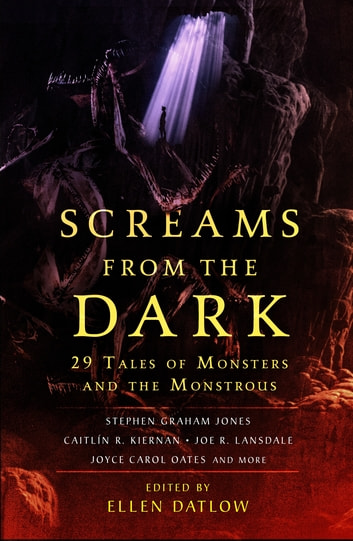
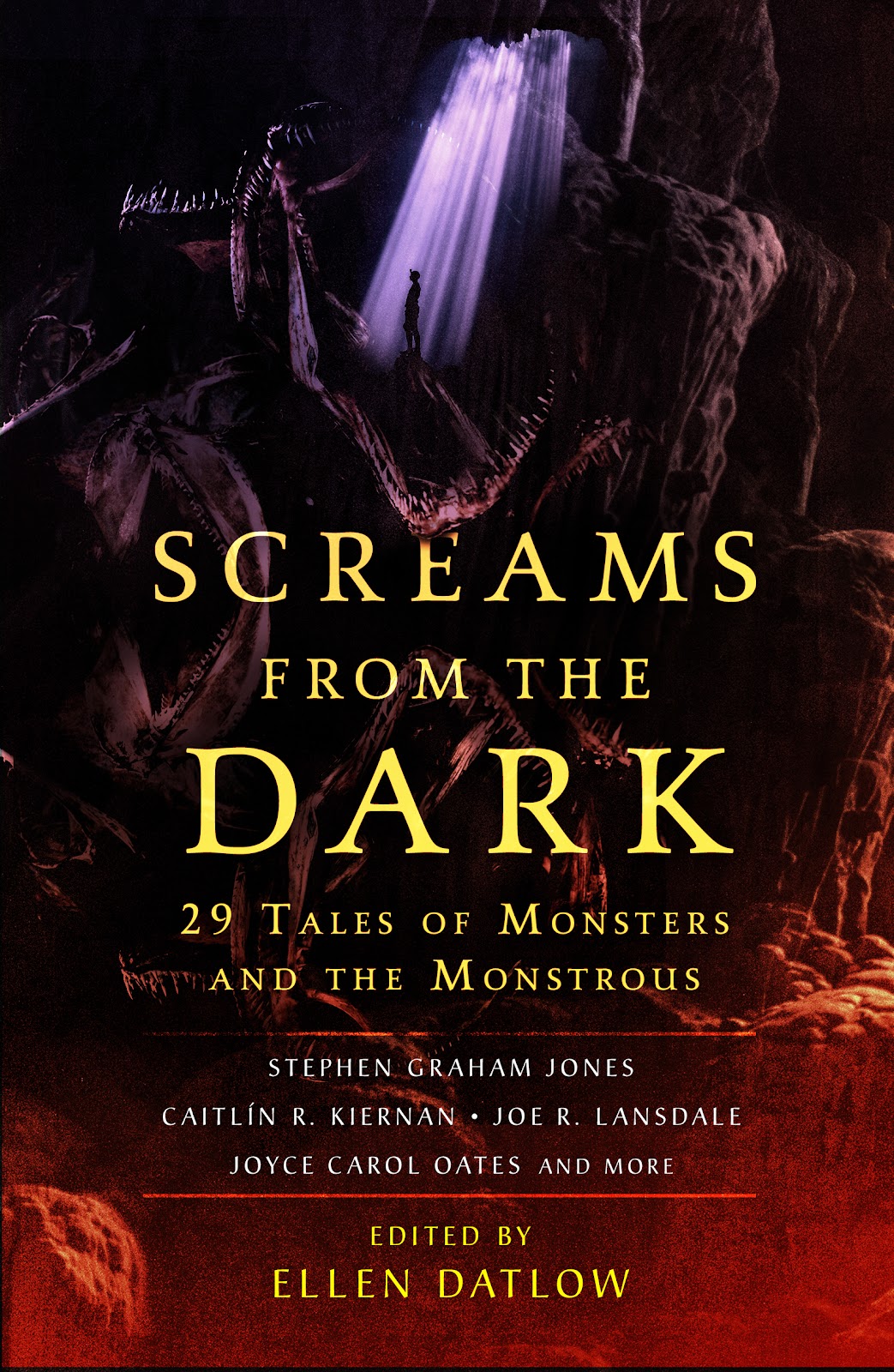
Six stories from Screams from the Dark, Edited by Ellen Datlow (Tor Nightfire, 2022)

Readers who are unfamiliar with the anthology Screams from the Dark may prefer to read these notes only after reading the stories.


*   *   *


         "The British saw the Hudson as key to their strategy. If they could control it, they could split the colonies, divide and conquer them. As plans go, it wasn't a bad one. It failed because their army was defeated at Saratoga, which initiated a series of events leading to them losing all of the state down to the City, where they remained until the end of the war. Before news of the loss at Saratoga spread, the British had sent thirty ships sailing up the Hudson. There were a few thousand soldiers on them. The idea was for these men to meet up with the British forces marching south along the river from their presumed victory at Saratoga. On their way, the British ships would create a diversion and perhaps more. They got off to a promising start, destroying a couple of colonial forts on the lower Hudson, capturing one right across from West Point. A little bit below Wiltwyck, the fleet received word of the defeat at Saratoga. With this message, their mission became pointless. To say the least, they were not pleased. Since Wiltwyck was the closest settlement, they visited their displeasure on the city. First, they subjected what was then the state capital to bombardment by their ships' cannons. Last I heard, one of the older buildings uptown still has a cannonball lodged in its basement wall. Fortunately, the city's residents had gotten wind of the ships' approach and had largely abandoned it. Once the cannons were done, the fleet sent several landing boats full of soldiers to shore. Reports vary as to how many redcoats set foot on Wiltwyck Point, with some claiming six hundred, others a thousand, and others still more. For the purposes of this story, the exact number doesn't matter. What does is there were at minimum hundreds of them marching on the city, which was lightly defended, most of the able-bodied men off fighting. The British shot at the handful who showed up to confront them, then set fire to the city. Over three hundred buildings, houses, barns, businesses, and places of worship burned down. The soldiers retreated to their boats, returned to their ships, and sailed for Manhattan, thus concluding their final, spiteful military success in this part of the Hudson Valley.

     "Among the soldiers who came ashore that day was a captain, Amos Black. He brought with him a pair of diminutive figures, whom the other troops referred to as Captain Black's little gray fellows. They were part of a group of five such fellows under the captain's command. As soon as it had become clear to the British that the battle against the colonists was not going to be over soon, they had sent across the Atlantic for Black, who was housed with his gray fellows separately from the rest of his regiment. Upon their arrival in New York, the six of them were billeted in a repurposed barn not far from Harlem Heights. From there, they were deployed on select missions, most of which were secret. None of the regular soldiers cared for the captain and his associates.

     "As the British troops fired on Wiltwyck's defenders and set torch to its buildings, Black and his two companions kept to the rear. He was a striking figure, a small, narrow man dressed not in the scarlet and white of a regular soldier, but entirely in black, with the exception of an emerald neckerchief. It was as if he was wearing his name, the troops joked. Only when the British were climbing back into their boats did Black take action. Before joining the rest of the landing party, he turned to his undersized companions, uttered words no one could make out, and pointed at the burning city. The little gray fellows turned and sprinted toward it. According to one observer, they ran more like dogs, or wolves, than men.

     "In the following days, there were a series of terrible murders in and around Wiltwyck's smoldering remains. Men, women, children, old, young, all were victims. They were killed sorting through the charred wreckage of their homes and businesses. They died attempting to recover what vegetables were left in their fields. They met their end on the road out of Wiltwyck to Hurley, where the majority of the city's residents had relocated. These were savage acts, bodies torn open, entrails strewn around them. Popular suspicion fell on wild animals, a pack of wolves, drawn to the devastated city and made bold by its ruin. There were organs missing from some of the victims, but what was remarkable was the lack of any substantial amount of blood at the sites of the crimes, which pointed to creatures other than wolves. A couple of young men who had spied on Captain Black ordering his undersized companions to remain behind made the connection between those strange figures and the outbreak of murders. The young men—they were boys, really—assembled a group to locate the little gray fellows and put a halt to their attacks. Its numbers consisted of men too old, too young, and too unwell to fight in the Continental Army, as well as a pair of ministers and a widow who had assumed the running of her farm after her husband had been struck down by a British musket ball at the Battle of Long Island.

     "Together, these men and women tracked the gray fellows to a barn on the road to Hurley. They circled the barn and attacked. A ferocious fight ensued. Although bloated with blood, the gray fellows were fearsome contestants, terrifically strong, inflicting horrific damage on their assailants with the fangs filling their wide mouths, the claws on their long hands and feet. They killed a full third of the party, and of the rest, no one went uninjured. Finally, the widow—whose name was Emma Dearborn—struck the head from one of the creatures with an axe. For a short while thereafter, his companion continued the fight, then leapt through the ranks of the attackers and fled. The group bound up their injuries, burned the remains of their foe, and set off in pursuit of his fellow.

     "For six days, they chased him through the Catskills, occasionally drawing within sight of the gray fellow, though never close enough to do more than waste a musket ball on him. At last, his trail disappeared on the shore of a lake. Assuming he'd hidden beneath the water, the members of the party stationed themselves around the lake and waited for their quarry to emerge. Another four days passed, at the end of which, they decided the gray fellow had either drowned or escaped. A careful search of the surrounding woods failed to turn up any sign the creature had slipped out of the water and through their ranks, so they concluded he had chosen his end in the water rather than at the edges of their knives and axes. They warned the few people living near the lake of what they had pursued into it, advised them to keep an eye out for anything unusual, then returned to Wiltwyck and their separate homes."

     "How did your grandmother know this?" I said. "I'm familiar with the burning of Wiltwyck; they reenact it every other Fourth of July. But the rest of it…"

     "She'd read about it," Doris said, "at the Woodstock library. One of her responsibilities was the local history section, whose shelves contained all sorts of things, personal journals, albums of old newspapers, unpublished manuscripts. She read all of them, in part to figure out how to catalogue the holdings and in part to learn more about the place she and Morfa had chosen to call home. Among the papers she examined was a handwritten document titled Concerning the Terrible and Strange Events of October 18–November 2, 1777. Fifty-six pages long, it was the work of Emma Dearborn, the widow who'd beheaded one of the gray fellows. During the winter after the battle with the creatures, she set down her account of it. There was no record of the means by which the manuscript found its way to the library.

     "When she reached the description of Captain Black's little gray fellows, she recognized the pair as blodsuger. How was that possible, right?"

     I nodded.

     "Mormor's grandmother had come to Denmark from Finland, Lapland, where she had been what the Danes called a heks, the Finns a noita, a witch. She had taught Mormor about the nisse, how to distinguish among them, the proper ways for dealing with the more dangerous varieties. Of course, my grandmother didn't imagine the lake behind her and Morfa's house was the lake from Emma Dearborn's story. It would have been too great a coincidence. But she shared the details of the widow's narrative with my grandfather. His father, a blacksmith, had passed along the same and similar folklore to him. As the one who went off fishing, he was more likely to encounter the remaining blodsuger, assuming there was any truth to the tale she had read and the creature had remained in its watery hiding place. Telling him was a precaution of the same order as reminding him to keep an eye out for rattlesnakes when he went hiking on Overlook Mountain. She didn't expect he would meet any of the reptiles on the paths he followed, but better to be prepared for something that never came than surprised by it shaking its rattle at your feet. The only thing neither of them had anticipated was discovering the blodsuger in the middle of such a ferocious storm. It was the way of life: you made your plans, and God chuckled at them…."


"Blodsuger" by John Langan


*   *   *


Screams from the Dark: 29 Tales of Monsters and the Monstrous Edited by Ellen Datlow (Tor Nightfire, 2022) is an ambitious attempt at a state-of-the-art horror fiction anthology. It includes over two dozen original short stories and novellas of high quality. 


I have already blogged about two stories that demanded my undivided attention:


My notes on the sublime "The Ghost of a Flea" by Priya Sharma can be found here.


An initial response to the gruesome, non-supernatural "'The Father of Modern Gynecology': J. Marion Syms, M.D. (1813–1883)" by Joyce Carol Oates is here.


The reader will find my thoughts on six other stories below.


*   *   *


"Children of the Night" by Stephen Graham Jones is an amusing joke. Tol, the organizer of a Montana cryptid group searching for Bigfoot, gets his prayer answered.


In The Darkening Garden: A Short Lexicon of Horror, John Clute reminds the horror reader that answered prayers are "wishes which are fulfilled in a fashion which punishes the wisher, the biter bit...."


While no sardonic genie or monkey's paw grants protagonist Tol's wish, there might as well have been.


The Bigfoot in question has been killed by a big rig on a lonely mountain highway. Tol  single handedly gets it into the back of the family minivan. (It never occurs to him to alert fellow team members.) Then he begins examining the body.


The author's droll conceit turns out to be that creatures of the night might wisely go in disguise on their errands. When Tol begins to "peel the onion," the reader knows it will all end in tears.


*   *   *


"Three Mothers Mountain" by Nathan Ballingrud also deals with the cost of answered prayers. Tom and his younger brother Scotty lose their father in a car accident. Maddened by grief, their mother mails his wedding ring to the three mountain witches who live above their North Carolina town, Toad Springs. There the ring is planted in a garden. The boys do not get their father back. They get a father-thing instead, a physically corrupt simulacra that wins their mother's single-minded devotion.


So one day Tom and Scotty set out for the witches' mountain cabin, determined to wreck everything.


     The path darkened as they walked. Tom no longer had a sense of what time it was, and he felt a flutter of fear in his gut. Common sense told him it couldn't be any later than two o'clock, two thirty at most. And yet the light filtering through the trees seemed diffuse and weak. This might have been due to the sun pursuing its course above them, and it might have had something to do with the heavy tangle of branches crowding them from either side, but he knew instinctively that the cause was something else: they were entering the Witch Wood. Darkness was an animal, and this is where it lived.


Ballingrud's craft is faultless in "Three Mothers Mountain." The emotional eloquence allowed to each character, the meticulous scene-building orchestrated at kitchen tables in two very different houses, the stoicism ultimately displayed by Tom when facing the consequences of his path, are testament to a writer able to convey every shade of horror. 


     The witches whispered, and then Mother Ingrid said, "Well, perhaps we can do something. Your mother paid. Will you?"

     Thank God, at last, a window. Yes, he would pay. Yes. "Yes."

     "You'll have to make friends with the dark," Mother Margaret said. "Do you have the heart for it?"

     He nodded.

     "We'll see."

     "Don't fret," said Mother Agnes, staring at his little brother. "The sweetest things grow in the dark."


*   *   *


As it begins, "Sweet Potato" sounds like another Joe R. Lansdale organ solo. 


....Though he had a good retirement plan, Tyler hadn't expected his job to end so abruptly, the boss having gone to prison for ass-fondling and grubbing money from the public trust. But there it was. She went and the business went, and now here he was, out in the wilds of unemployment, living off his considerable savings (thank goodness), and submerged way down deep in the cold-ass nothing.

     Dreaming for a while was so fine. No alarm clock, living in pajamas. What he liked best, at first, was that things that seemed silly in real life seemed fine in the dream world. He could be an old-fashioned hero in his dreams. Much younger, washboard abs, a baseball-bat dick, and balls like grapefruits. Carrying a sword, brave and relentless, six foot five and forever young. And then, one night, down in a dream, there was a soundless shift.


But after the early jokiness, a barbed and complicated tale unfolds. Tyler, unemployed and dangerously idle, figures out his increasingly strange waking and sleeping life is the product of something that finds him of use.


"Sweet Potato" carries a warning for men uninterested in the everyday world and its responsibilities.


     Visiting a friend from work, who was also out of a job with time for the coffee shop, Tyler said, after their conversation began to falter, "Have you ever had a dream that seemed real?"

     The friend, gray and heavy with lips like two red earthworms, rocked back in the booth and sipped his coffee before answering.

     "Of course. Though mostly they don't make sense when I wake up. But now and again, they feel real, could be real. Some of the most outlandish dreams seem real at the time."

     "Just for curiosity's sake. Have you ever felt something in a dream come back with you, being there when you woke up?"

     "No. Though I've heard of it. Some people believe your soul lets go sometimes and comes right out of you when you breathe awake. One moment you're breathing asleep, the next, you're breathing awake."

     "Your soul?"

     "If you believe in that sort of thing. Maybe a piece of your soul. Or something worse. A demon. A succubus, which is a kind of sex demon that rides in and out on your essence while you dream, fucks the shit out of you and takes your energy, borrows your soul, and finally keeps it. They can be created by your subconscious, or they can be night riders."

     "What's that?"

     "Loose souls looking for a place to light. A place to suck the energy out of. Men can be incubuses, you know."

     "I don't know."

     "Male sex demons. The succubus in reverse. I think succubuses and incubuses can switch-hit when it comes to sexual matters. You might even have to put Scotch tape over your dog's asshole if one of them is around."

     "I don't have a dog."

     "That's one less worry, then."

     "How do you know all of this?"

     "I read a lot. I found golf too tiring."

     "Well, I could use a sex demon actually," Tyler said.

     "I wouldn't mind one either. But it might be like that old saying about how you have to be careful what you wish for."


*   *   *


"Knock, Knock" by Brian Evenson is a story about two moral monsters, uncle and nephew, pitted against each other over ownership of a house and its land. In their contest, murder does not resolve conflict, it simply raises the stakes and increases the horror.


....You killed the bastard once, he told himself. Now all you have to do is kill him again.


*   *   *


"Bitten by Himself" by Laird Barron is a perfunctory story. It begins in a 

promising mode: a North American frontier scout and mountain man named Chick Poe, prone to wallowing in his own crapulence as a way of life, stumbles upon his doppelganger in a forest clearing one night. They fight and he is bitten, infected with rabies.


From there the tale's missteps and wrong turns commenced. Rather than pursue the rich potential in the story's historical setting, Barron decided to pad the remainder with solipsistic winks, smirks, and reverses.


This is a disappointment for readers who appreciated the riveting if uneven 2013 story "The Beatification of Custer Poe."


But it is an even greater disappointment for readers who thrilled to the sheer storytelling skill seen in stories like "Mysterium Tremendum" (2010), "The Men from Porlock" (2011), and "In a Cavern, in a Canyon" (2015). (Speaking for myself, I found it hard to sleep the first night after I read "Porlock.")


Compared to those sublime stories, "Bitten by Himself" is dully soporific.


*   *   *


"Blodsuger" by John Langan is about the longest story in Screams from the Dark, and is probably the most satisfying. The story's formal elegance is admirable: two people meet at a community social event in the Catskill mountains of New York state. The older protagonist, Doris, tells the narrator the beautifully articulated story of a horror from her adolescence. Langan tells the entire story in dialogue between these two people at a picnic table in a barn. 


"Blodsuger" places horror outdoors, on the land and imbricated in the region's history. Doris is not the victim of answered prayers; she tells the story of her "attempted rescue" of herself, and the way the outcome taught her to know better in future.


The excellence and eloquence of "Blodsuger" is staggering. It reminded me of several earlier Langan stories that have rewarded rereading: "On Skua Island" (2001), "Mr. Gaunt" (2002), and "What Is Lost, What Is Given Away" (2016). 


Langan's stories allow the reader to luxuriate in a horror-filled region made strange by narrative distance.


Jay

4 July 2022